Solid Surface Bathroom Sinks: A Practical Guide for Healthcare Facilities

Solid Surface Bathroom Sinks: A Practical Guide for Healthcare Facilities

Introduction

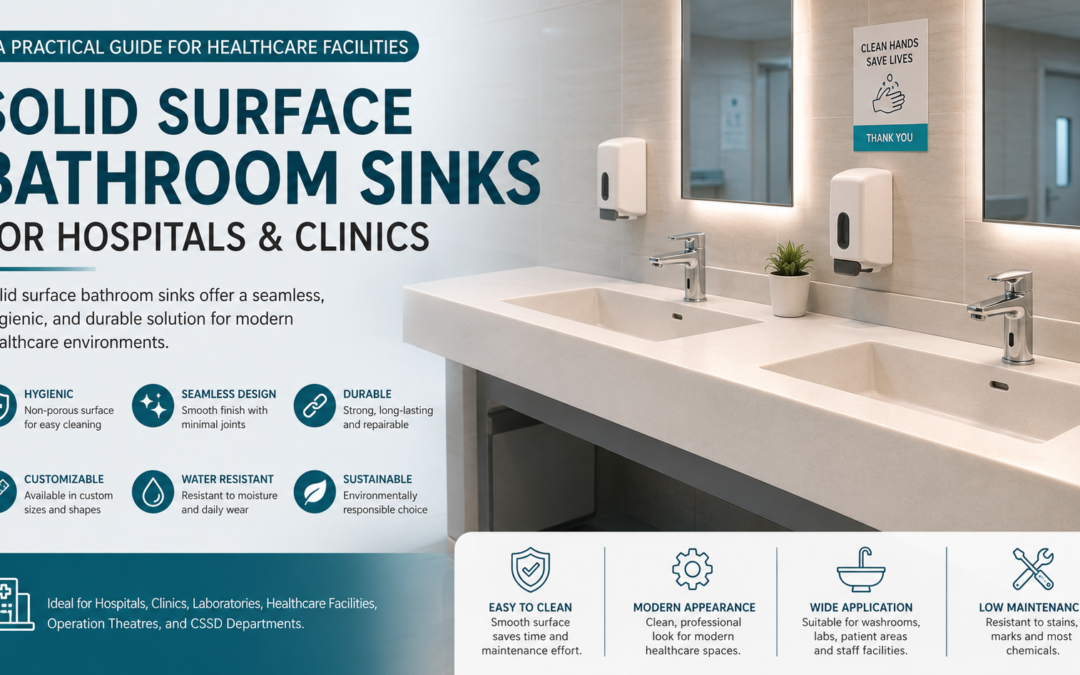
Choosing the right sink for a healthcare facility is about more than appearance. Hygiene, durability, easy cleaning, water resistance, and long-term maintenance all matter. Solid surface bathroom sinks are increasingly considered for hospitals, clinics, laboratories, and other professional environments because they offer a smooth, non-porous surface with flexible design options. This guide explains what solid surface sinks are, where they work best, their practical benefits, and what procurement teams should check before selecting a model for a healthcare project.

AI Overview Summary: Solid surface bathroom sinks are seamless, non-porous sinks made from engineered solid-surface materials. They are valued for easy cleaning, customizable designs, smooth finishes, and resistance to everyday moisture. Healthcare facilities can consider them for patient areas, washrooms, laboratories, and other spaces where hygiene and simple maintenance are important.

What is a Solid Surface Bathroom Sink?

A solid surface bathroom sink is a basin manufactured from an engineered solid-surface material rather than conventional ceramic or metal. The material can be shaped, cut, and fabricated into different sink configurations.

Because the material is consistent throughout its structure, minor surface damage can often be repaired and refinished. Depending on the specification, the sink can also be integrated with a countertop to create a cleaner, more seamless installation.

Why is it Important?

Healthcare wash areas need surfaces that can be cleaned frequently without creating unnecessary maintenance problems. Joints, gaps, and difficult-to-reach areas can make routine cleaning more challenging.

A properly designed solid surface installation can provide a smooth, easy-to-clean area. This makes it useful in hospital bathrooms, patient washrooms, clinics, laboratories, and healthcare staff areas.

For procurement teams, the focus should not only be on appearance. Material quality, fabrication standards, installation method, drainage design, and cleaning compatibility are equally important.

Key Features

  • Non-porous surface: Helps reduce moisture absorption and makes routine cleaning easier.
  • Smooth finish: Provides a clean appearance with fewer difficult surface areas.
  • Seamless fabrication: Certain designs can minimize visible joints between the sink and countertop.
  • Custom sizing: Fabricators can produce different dimensions to suit project requirements.
  • Repairable surface: Minor scratches and marks may be repairable through professional refinishing.
  • Design flexibility: Available in different shapes, basin sizes, colors, and configurations.

Benefits

  • Easy maintenance: Smooth surfaces can simplify everyday cleaning routines.
  • Hygienic design: Fewer unnecessary joints can make surface cleaning more convenient.
  • Long service life: Quality materials can withstand regular use when correctly specified and maintained.
  • Custom installation: Designs can be adapted to available wall and counter space.
  • Professional appearance: Suitable for modern healthcare interiors where functionality and appearance both matter.
  • Practical replacement options: Custom fabrication can help when standard sink dimensions do not fit an existing installation.

Applications

Solid surface sinks can be considered for several healthcare and institutional environments, including:

  • Hospital patient bathrooms and wash areas
  • Clinics and diagnostic centers
  • Healthcare staff washrooms
  • Private and government healthcare facilities
  • Laboratories and selected non-critical work areas
  • Medical institutions and educational healthcare facilities
  • Renovation projects requiring custom sink dimensions

A solid surface trough sink may also be useful where several users need access to the same wash area, provided the design meets the facility’s hygiene and plumbing requirements.

How to Choose the Right Solid Surface Bathroom Sink

Before purchasing, healthcare procurement teams should evaluate these factors:

  1. Material specification: Ask for the exact solid-surface material, thickness, finish, and technical specifications.
  2. Dimensions: Confirm basin size, counter dimensions, depth, height, and available installation space.
  3. Drainage: Check drain position, outlet size, overflow requirements, and compatibility with existing plumbing.
  4. Fabrication quality: Review edge finishing, joints, corners, and overall workmanship.
  5. Cleaning requirements: Confirm that the surface is compatible with the cleaning products routinely used by the facility.
  6. Customization: For unusual spaces, ask whether custom solid surface sinks can be manufactured to the required dimensions.

Product comparisons and solid surface sink reviews can provide useful background, but technical specifications should carry more weight than appearance or online ratings.

Common Mistakes to Avoid

One common mistake is selecting a sink based only on color and design. Healthcare projects require a closer review of material specifications and installation requirements.

Another mistake is ignoring the cleaning chemicals used at the facility. Buyers should verify chemical compatibility before finalizing the material.

Poor measurement is another avoidable issue. Confirm wall, counter, plumbing, drainage, and installation dimensions before placing a custom order.

Finally, do not assume that every solid-surface product has the same performance. Products such as Hanex solid surface sinks and other branded materials may have different specifications, so always review the manufacturer’s technical documentation.

Conclusion

Solid surface bathroom sinks can provide a practical combination of cleanability, design flexibility, durability, and customization for healthcare environments. The right choice depends on material quality, fabrication, dimensions, drainage, installation, and maintenance requirements rather than appearance alone.

Hospitals, clinics, and healthcare procurement teams should compare technical specifications carefully and discuss project requirements with an experienced medical furniture or solid-surface manufacturer before finalizing an installation.

FAQs

What are solid surface bathroom sinks?

Solid surface bathroom sinks are basins made from engineered solid-surface materials. They provide a smooth, non-porous surface and can be fabricated in different shapes and sizes. They are commonly considered for bathrooms, healthcare facilities, clinics, and institutional projects where easy cleaning and customized installation are important.

What are the main benefits of solid surface sinks?

The main benefits include easy cleaning, a smooth non-porous surface, design flexibility, customization, and the ability to create integrated sink-and-countertop designs. Quality solid-surface products can also be refinished if minor scratches or surface marks develop during regular use.

Where are solid surface sinks used?

They can be used in hospital bathrooms, patient wash areas, clinics, healthcare staff areas, laboratories, medical institutions, and other commercial or institutional environments. The exact suitability depends on the material specification, cleaning requirements, plumbing design, and intended application.

Can solid surface sinks be customized?

Yes. One of the major advantages of solid-surface fabrication is design flexibility. Manufacturers can often customize basin dimensions, countertop integration, shapes, colors, drainage positions, and installation configurations. Customization is particularly useful for hospital projects with unusual room layouts or specific architectural requirements.

Are solid surface sinks suitable for hospitals?

They can be suitable for selected hospital applications when the material and fabrication meet the project’s requirements. Procurement teams should assess cleanability, chemical compatibility, durability, drainage, installation, and maintenance requirements before choosing a particular solid-surface product.

What should I check before buying a solid surface sink?

Check the material specification, thickness, dimensions, surface finish, drainage arrangement, fabrication quality, cleaning compatibility, installation method, warranty, and customization options. For healthcare projects, it is also useful to request technical documentation and confirm that the proposed product is appropriate for its intended environment.
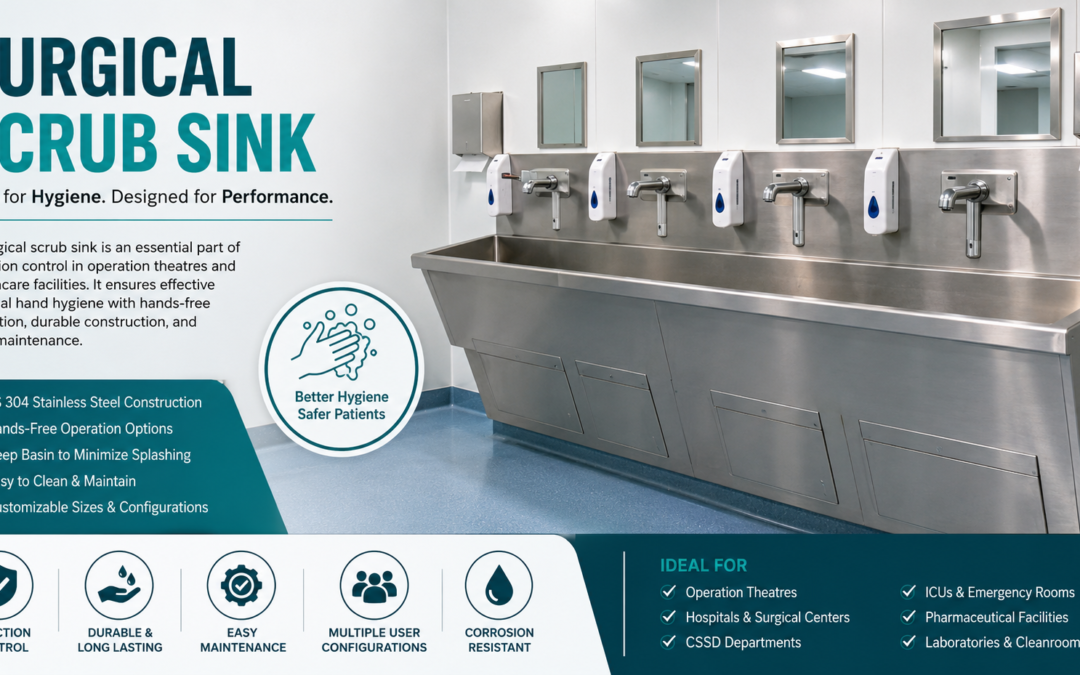
Surgical Scrub Sink: Complete Guide for Hospitals and Operation Theatres

Surgical Scrub Sink: Complete Guide for Hospitals and Operation Theatres

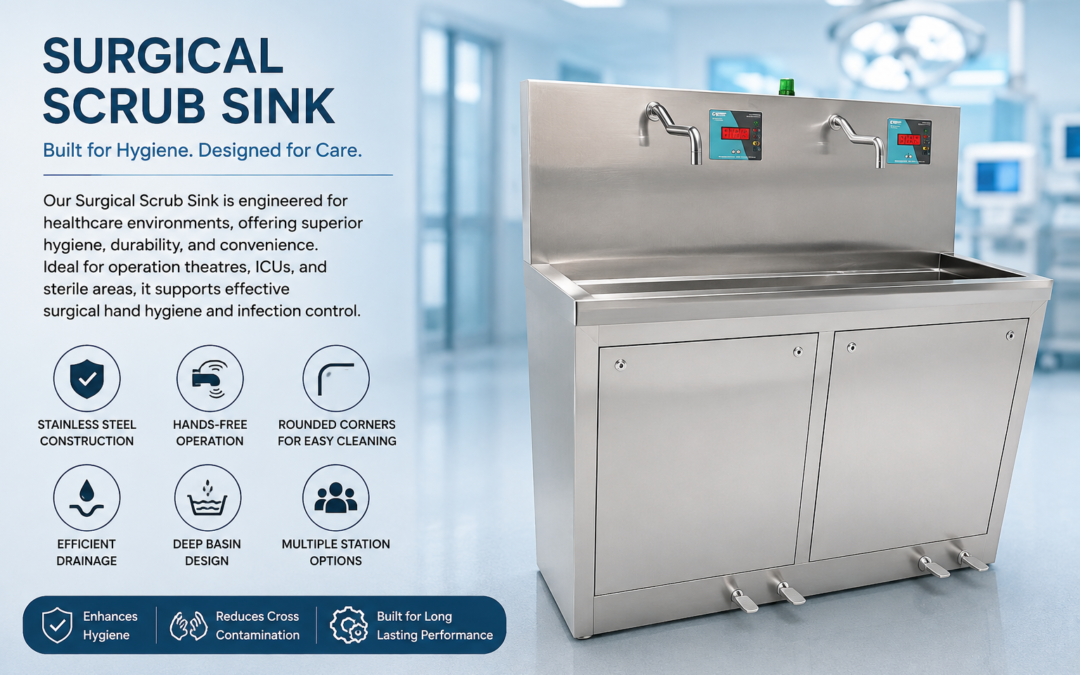
A surgical scrub sink is an important part of infection-control infrastructure in operation theatres, surgical centres, and other controlled healthcare areas. It provides healthcare professionals with a dedicated station for surgical hand washing before procedures. A properly designed sink supports hygienic workflows through easy-to-clean surfaces, suitable operating height, controlled water dispensing, and practical drainage. For hospitals planning a new OT or upgrading an existing facility, selecting the right scrub sink can improve workflow, maintenance, and hand-hygiene practices.

AI Overview Summary: A surgical scrub sink is a dedicated hand-washing station designed for surgeons and healthcare staff before surgical procedures. It is typically made from hygienic, corrosion-resistant materials and may include sensor, knee, elbow, or foot-operated controls. Its design supports effective hand hygiene, easy cleaning, and efficient OT workflows.

What Is a Surgical Scrub Sink?

A surgical scrub sink is a specialized washing station designed for healthcare professionals to perform surgical hand hygiene before entering or working in an operating area. Unlike a general wash basin, it is designed around healthcare hygiene, workflow, cleaning, and contamination-control requirements.

Common configurations include single, double, and triple-station models. Depending on the application, a sink may use sensor-operated, knee-operated, elbow-operated, or foot-operated water controls to reduce unnecessary hand contact with fixtures.

For example, SS 304 stainless steel is commonly selected because it provides corrosion resistance, durability, and a smooth surface that is practical to clean.

Why Is It Important?

Hand hygiene is a fundamental part of infection prevention in healthcare. WHO identifies hand hygiene as a key measure for reducing the transmission of harmful microorganisms, while CDC recommends appropriate hand hygiene before aseptic tasks and after contact with patients, body fluids, or contaminated surfaces.

A dedicated hospital scrub sink helps create a defined hand-washing point close to the surgical workflow. This can be particularly useful in:

  • Operation theatres and surgical preparation areas
  • Surgical centres and procedure rooms
  • CSSD and controlled healthcare areas
  • Cleanrooms and pharmaceutical facilities
  • Laboratories requiring hygienic hand-washing stations

Key Features

  • SS 304 construction: Offers durability and corrosion resistance for demanding healthcare environments.
  • Seamless or hygienic design: Reduces difficult-to-clean joints and supports easier routine cleaning.
  • Hands-free controls: Sensor, knee, elbow, or foot-operated options can reduce hand contact with fixtures.
  • Deep basin: Helps control splashing during hand washing.
  • Multiple stations: Single, double, and triple-user configurations support different OT capacities.
  • Custom dimensions: Manufacturers can adapt the design to available wall space and project requirements.
  • Easy maintenance: Accessible panels and practical plumbing arrangements simplify servicing.

Benefits

  • Supports effective surgical hand-hygiene practices.
  • Helps maintain a cleaner and more organized OT workflow.
  • Reduces unnecessary contact with taps and controls.
  • Stainless steel construction provides long-term durability.
  • Smooth surfaces make routine cleaning easier.
  • Multiple configurations allow facilities to match user capacity.
  • Custom designs can help optimize limited installation space.

Applications

An OT scrub sink is primarily used in operation theatres and surgical preparation areas. It is also suitable for hospitals, surgical centres, cleanrooms, pharmaceutical manufacturing areas, laboratories, diagnostic centres, medical colleges, and other controlled healthcare environments.

The correct configuration depends on the number of users, available space, plumbing arrangement, infection-control requirements, and facility workflow.

How to Choose the Right Surgical Scrub Sink

Consider these factors before purchasing:

  1. Check the material: SS 304 stainless steel is a practical choice for durability, corrosion resistance, and cleaning.
  2. Review surgical scrub sink dimensions: Measure the installation area, plumbing points, operating height, and clearance before finalizing the model.
  3. Select the right number of stations: Single, double, or triple stations should match expected staff usage.
  4. Choose the operating system: Sensor, knee, elbow, or foot operation can be selected according to workflow and user preference.
  5. Check cleaning and maintenance: Look for smooth surfaces, accessible service panels, and practical drainage.
  6. Compare total project cost: Surgical scrub sink price depends on size, material, number of stations, controls, accessories, and customization. Compare specifications rather than price alone.

Common Mistakes to Avoid

A common mistake is choosing a sink based only on appearance or initial price. Incorrect surgical scrub sink dimensions can create installation and workflow problems.

Buyers should also avoid selecting unsuitable materials, ignoring drainage requirements, overlooking service access, or choosing a control system without considering actual OT usage. It is also important to confirm whether customization is available before placing a project order.

Conclusion

A well-designed surgical scrub sink is more than a washing basin. It is an important component of a hygienic surgical environment, helping healthcare teams maintain effective hand-hygiene practices while supporting efficient OT workflows.

When selecting a model, focus on material quality, dimensions, operating controls, station capacity, cleaning requirements, and long-term maintenance. For healthcare projects requiring customized sizes or configurations, discuss the installation requirements with a qualified medical furniture manufacturer before finalizing the specification.

FAQs

What is a surgical scrub sink?

A surgical scrub sink is a dedicated hand-washing station designed for surgeons and healthcare staff before surgical procedures. It is generally installed near operation theatres and surgical preparation areas and may include hands-free controls, hygienic surfaces, and multiple washing stations.

What are the main benefits of a scrub sink?

A scrub sink provides a dedicated location for surgical hand hygiene and can support cleaner workflows in controlled healthcare areas. Features such as hands-free controls, smooth surfaces, deep basins, and stainless steel construction can make cleaning, operation, and routine maintenance more practical.

Where is a surgical scrub sink used?

Surgical scrub sinks are commonly used in operation theatres, surgical centres, hospitals, CSSD areas, cleanrooms, pharmaceutical facilities, laboratories, and other healthcare environments where controlled hand hygiene is important. The configuration should be selected according to the facility’s workflow and installation requirements.

How do I choose the right surgical scrub sink?

Start by measuring the available installation space and checking plumbing points. Then consider material, operating height, number of stations, control type, drainage, cleaning access, and customization. Comparing complete specifications is more useful than comparing the surgical scrub sink price alone.

Is a surgical scrub sink customizable?

Yes, many medical furniture manufacturers offer customized scrub sinks. Options may include overall dimensions, number of stations, operating controls, drainage arrangements, water connections, and accessories. Customization is particularly useful when the sink must fit an existing OT layout or a specific project specification.

What material is best for a hospital scrub sink?

SS 304 stainless steel is a widely used option for healthcare washing equipment because it combines durability, corrosion resistance, and ease of cleaning. The final material specification should depend on the facility’s cleaning chemicals, environment, design requirements, and applicable project standards.

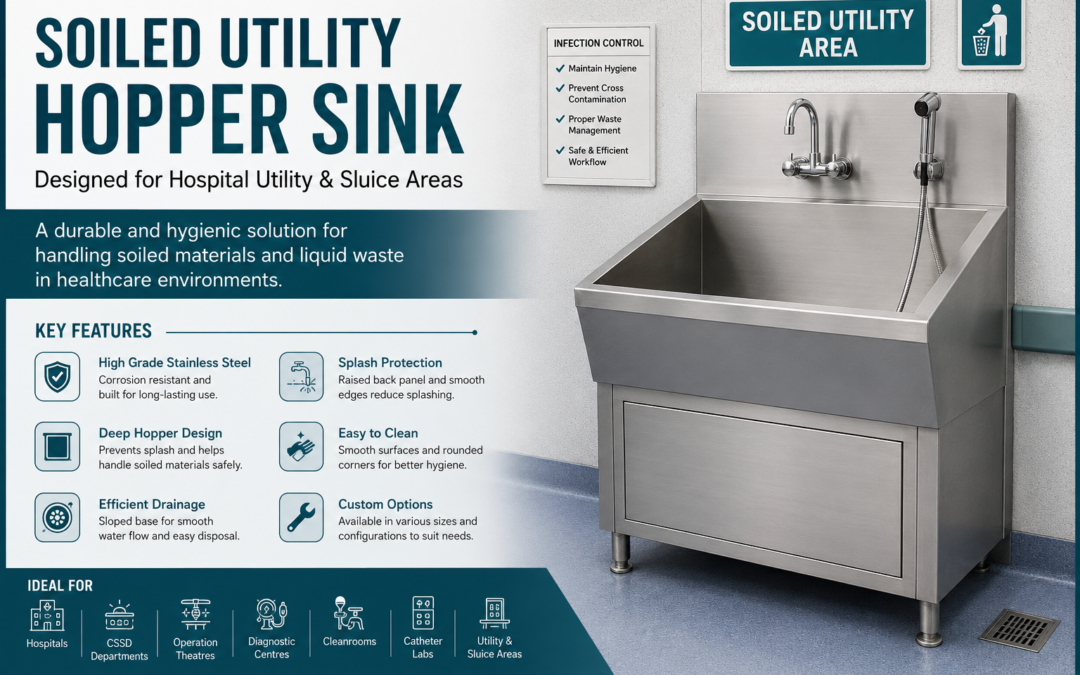
Soiled Utility Hopper Sink: A Practical Guide for Hospitals

Soiled Utility Hopper Sink: A Practical Guide for Hospitals

A soiled utility hopper sink is a specialized hospital fixture designed for handling, rinsing, and disposing of contaminated liquids and soiled materials in designated utility or sluice areas. Unlike a standard wash basin, it is built around the practical needs of healthcare cleaning workflows. Choosing the right hopper helps hospitals maintain better hygiene, improve staff safety, and support efficient environmental cleaning procedures.

Healthcare facilities need dedicated areas and equipment for managing soiled materials. WHO identifies water, sanitation, waste management, hygiene, and environmental cleaning as important parts of safe healthcare infrastructure.

A soiled utility hopper sink provides a dedicated point for disposing of suitable liquid waste and cleaning reusable containers or equipment according to the facility’s procedures. Its deep basin, durable construction, effective drainage, and easy-clean surfaces make it suitable for demanding healthcare environments.

What is a Soiled Utility Hopper Sink?

A soiled utility hopper sink is a deep, purpose-built sink used in healthcare utility or sluice areas for handling soiled items and appropriate liquid waste.

It is commonly associated with terms such as medical hopper, hospital hopper, slop hopper, or hopper in hospital environments. The design helps keep dirty utility activities separate from handwashing and clean preparation areas.

The hopper typically works by directing waste or rinse water into a dedicated drainage system. Depending on the installation, it may include a flushing arrangement, spray hose, splash protection, taps, and other accessories.

Why is it Important?

Hospitals regularly deal with contaminated liquids, reusable containers, cleaning materials, and other soiled items. Using an ordinary sink for these activities can create workflow and hygiene problems.

A dedicated hopper provides a controlled location for these tasks and supports separation between clean and dirty activities. CDC guidance also highlights the importance of appropriate sinks, hoppers, drains, cleaning practices, and splash control in healthcare environments.

This makes a hospital hopper particularly useful in:

  • Dirty utility rooms
  • Sluice rooms
  • Hospital sanitation areas
  • Ward utility rooms
  • Environmental services areas

Key Features

A well-designed medical hopper may include:

  • Deep basin: Provides sufficient space for handling soiled items and liquids while helping reduce overflow.
  • Stainless steel construction: Offers durability, corrosion resistance, and a surface that can be cleaned regularly.
  • Efficient drainage: Helps move wastewater away from the working area through the designated drainage system.
  • Easy-clean surfaces: Smooth surfaces and practical corners simplify routine cleaning.
  • Splash control: Appropriate basin and flushing design can help reduce unwanted splashing.
  • Wall or floor installation: Configuration can be selected according to available space and plumbing requirements.
  • Custom accessories: Spray arrangements, taps, flushing systems, and other components can be specified for the facility.

Benefits

  • Supports separation of soiled and clean workflows.
  • Provides a dedicated location for appropriate waste and rinsing activities.
  • Makes routine utility-room work more organized.
  • Durable construction can withstand frequent daily use.
  • Easy-clean surfaces support regular environmental cleaning.
  • Proper drainage can reduce standing wastewater.
  • Custom dimensions can help match available installation space.

Healthcare cleaning should always follow the facility’s infection prevention procedures and applicable plumbing requirements. CDC recommends regular cleaning and disinfection of sinks and wash basins and emphasizes reducing splash exposure around healthcare drains.

Applications

A hopper in hospital environments is generally installed where soiled utility work needs to be performed safely and separately from clean activities.

Typical applications include:

  • Hospitals and nursing facilities
  • Operation Theatre support areas
  • CSSD and sterilization support zones
  • Dirty utility and sluice rooms
  • Diagnostic centres
  • Catheter and clinical support areas
  • Cleanroom support areas
  • Healthcare sanitation departments
  • Medical storage and utility rooms

The exact application should be determined by the facility’s workflow, infection-control policy, plumbing design, and local regulations.

How to Choose the Right Soiled Utility Hopper Sink

Before purchasing a hospital hopper, consider these factors:

  1. Material quality: Choose a durable, corrosion-resistant material suitable for frequent cleaning and healthcare use.
  2. Basin depth: Select a depth appropriate for the items and liquids handled in the utility room.
  3. Drainage: Check drain size, location, trap arrangement, and compatibility with the existing plumbing.
  4. Splash control: Look for a design that minimizes unnecessary splashing during use and flushing.
  5. Installation space: Confirm wall, floor, height, clearance, and service-access requirements before ordering.
  6. Customization: For new hospitals or renovation projects, consider custom dimensions and accessories that match the workflow.

Common Mistakes to Avoid

A few purchasing mistakes can reduce the usefulness of a slop hopper:

  • Choosing a household sink instead of a healthcare-specific design.
  • Ignoring drainage and plumbing compatibility.
  • Selecting a basin that is too shallow for the intended workload.
  • Focusing only on price instead of durability and maintenance.
  • Installing the hopper without considering splash control.
  • Forgetting service access for cleaning and plumbing maintenance.
  • Failing to confirm the installation requirements with the project or plumbing team.

Conclusion

A soiled utility hopper sink is an important part of a well-planned healthcare utility area. It provides a dedicated point for appropriate soiled-item handling, rinsing, and liquid disposal while supporting cleaner workflows and routine environmental cleaning.

The right design should match the facility’s workload, available space, drainage system, cleaning procedures, and infection-control requirements. Hospitals, CSSD departments, diagnostic centres, and healthcare facility planners can contact a medical equipment manufacturer to discuss suitable sizes, materials, configurations, and customization options.

Frequently Asked Questions

What is a soiled utility hopper sink?

A soiled utility hopper sink is a deep healthcare fixture used in designated dirty utility or sluice areas for handling soiled items, rinsing suitable reusable containers, and disposing of appropriate liquid waste. It is designed for healthcare workflows rather than general handwashing and is normally connected to a dedicated drainage system.

What is a hopper sink used for in a hospital?

A hospital hopper is used for tasks involving soiled materials and suitable liquid waste in designated utility areas. It helps keep dirty activities separate from clean preparation and handwashing areas. The exact materials that may be discharged through it should always follow the facility’s waste-management and infection-control procedures.

What is a slop hopper?

A slop hopper is another commonly used term for a deep utility fixture found in healthcare sanitation or sluice areas. It is designed to support the controlled handling of soiled liquids and items. Depending on the model, it can include a flushing system, spray hose, splash protection, and dedicated drainage connections.

What is a medical hopper?

A medical hopper is a purpose-designed sink or disposal fixture intended for healthcare utility areas. Compared with a conventional sink, it generally provides a deeper basin, durable construction, appropriate drainage, and features suited to frequent cleaning. It is commonly installed in dirty utility rooms, sluice areas, and hospital sanitation zones.

What material is best for a hospital hopper?

Stainless steel is a practical choice for many hospital hopper applications because it offers durability, corrosion resistance, and a smooth surface that can be cleaned and maintained regularly. The specific grade, thickness, finish, welding, and construction should be selected according to the facility’s workload and project specifications.

How do I choose the right hospital hopper?

Choose a hospital hopper based on the intended use, basin size and depth, drainage requirements, installation space, material, splash-control features, and cleaning procedures. For new healthcare projects, it is also important to coordinate the hopper dimensions and plumbing connections with the architectural, MEP, and infection-control requirements.

Is a hospital hopper customizable?

Yes. Depending on the manufacturer, hospital hoppers can be customized for dimensions, mounting configuration, drainage arrangements, flushing systems, spray hoses, taps, and other accessories. Customization is particularly useful when the available utility-room space or hospital workflow requires a specific configuration.

How does a hopper in a hospital work?

A hopper provides a deep working basin connected to the facility’s drainage system. Suitable soiled materials or liquids are placed or rinsed in the basin, and water carries the resulting wastewater through the drain. Proper operation should follow the hospital’s waste-disposal, cleaning, infection-control, and plumbing procedures.

Stainless Steel Surgical Scrub Sink for Hospital Operation Theatre

Stainless Steel Surgical Scrub Sink for Hospital Operation Theatre

Introduction

A Surgical Scrub Sink is a specialized hand-washing station designed for surgeons, nurses, and healthcare staff before sterile procedures. Unlike standard sinks, it is built around infection-control requirements, hygienic operation, easy cleaning, and efficient water use. In operation theatres, emergency units, and other controlled healthcare areas, the right sink supports consistent hand hygiene and helps reduce contamination risks. Choosing suitable construction, configuration, fittings, and installation details is therefore an important part of planning a safe and efficient clinical environment.

AI Overview Summary: A Surgical Scrub Sink is a hygienic hand-washing station used before surgical and sterile procedures. It typically uses stainless steel construction, hands-free or low-contact controls, rounded surfaces, and controlled water flow to support infection prevention in operation theatres, hospitals, and other clinical environments.

What is a Surgical Scrub Sink?

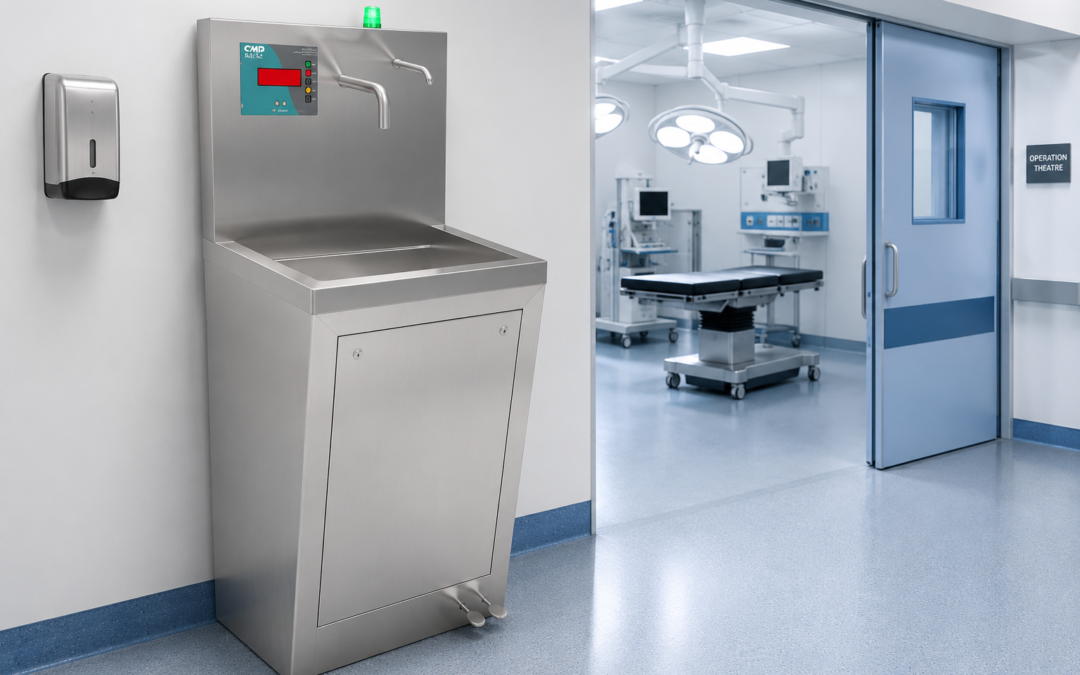
A Surgical Scrub Sink is a purpose-built Hospital Scrub Sink used by medical professionals for surgical hand and arm washing before procedures. It is commonly installed near operating theatres and other areas where strict hygiene standards are required.

Most units are manufactured from stainless steel because the material is durable, corrosion-resistant, non-porous, and relatively easy to clean. Depending on the clinical requirement, the sink may have one or more washing stations, hands-free controls, splash-reducing designs, and integrated drainage.

Why is it Important?

Effective hand hygiene is a fundamental part of infection prevention in healthcare facilities. A properly designed Medical Scrub Sink provides staff with a dedicated location for surgical hand preparation without relying on ordinary washbasins.

A well-planned OT Scrub Sink can also improve workflow. Its positioning, basin depth, water outlet, controls, and drainage system should allow healthcare workers to scrub comfortably while minimizing unnecessary contact with surfaces.

These sinks are particularly useful in:

  • Operation theatres
  • Surgical preparation areas
  • Emergency and trauma centres
  • Intensive care environments
  • Procedure rooms
  • Medical colleges and teaching hospitals

Key Features

  • Stainless steel construction: Provides a durable, corrosion-resistant and hygienic surface for demanding healthcare environments.
  • Hands-free operation: Elbow, knee, foot, sensor, or other low-contact controls can reduce unnecessary hand contact.
  • Rounded internal corners: Help reduce dirt accumulation and make routine cleaning easier.
  • Deep basin design: Helps control splashing during hand and arm washing.
  • Efficient drainage: Supports quick removal of wastewater and helps prevent standing water.
  • Multiple configurations: Single, double, or customized stations can accommodate different clinical workflows.
  • Smooth finish: A properly finished surface supports easier cleaning and maintenance.

Benefits

  • Supports consistent surgical hand hygiene.
  • Helps reduce unnecessary contact with taps and other surfaces.
  • Improves hygiene workflow around operating rooms.
  • Stainless steel construction provides long-term durability.
  • Smooth surfaces make routine cleaning easier.
  • Multiple station options can support simultaneous use.
  • Custom configurations can accommodate available space and clinical requirements.

Applications

A Scrub Sink for Hospitals is primarily used in healthcare environments where surgical or clinical hand hygiene is critical. Common applications include operation theatres, surgical suites, procedure rooms, emergency and trauma centres, ICU areas, and specialized treatment facilities.

Healthcare institutions, private hospitals, government hospitals, nursing homes, clinics, and medical colleges may also specify these sinks when designing or upgrading clinical infrastructure.

In pharmaceutical and controlled manufacturing environments, similar stainless steel washing stations may be used where hygienic processing and contamination control are important.

How to Choose the Right Surgical Scrub Sink

Consider these practical factors before purchasing:

  1. Material grade: Select an appropriate stainless steel grade based on the installation environment, cleaning chemicals, and expected service life.
  2. Size and configuration: Match the number of stations and overall dimensions to available space and expected user volume.
  3. Control mechanism: Consider sensor, elbow, knee, foot, or other low-contact controls according to the hygiene protocol.
  4. Basin design: Look for suitable depth, smooth surfaces, rounded corners, and effective splash control.
  5. Drainage: Confirm that the outlet and drainage arrangement can handle regular water flow without creating standing water.
  6. Customization: For new hospital projects, verify whether dimensions, fittings, backsplash, mounting, and station configuration can be adapted to the layout.

Common Mistakes to Avoid

One common mistake is selecting a standard commercial sink instead of a purpose-designed clinical washing station. Ordinary sinks may not provide the configuration needed for surgical environments.

Another mistake is focusing only on the purchase price. Construction quality, stainless steel grade, fittings, drainage, cleaning requirements, installation, and long-term maintenance can significantly affect overall value.

Buyers should also avoid choosing a sink without checking the available installation space, plumbing connections, user workflow, and required control mechanism.

Conclusion

A well-designed Surgical Scrub Sink is an important component of hygienic healthcare infrastructure. The right combination of stainless steel construction, low-contact operation, practical basin design, effective drainage, and suitable configuration can support safer and more efficient clinical workflows.

Hospitals and healthcare project teams should evaluate the sink according to their actual space, infection-control procedures, usage levels, and installation requirements. For project-specific dimensions, configurations, or technical information, contacting a qualified medical equipment manufacturer can help identify a suitable solution.

FAQ

What is a Surgical Scrub Sink?

A Surgical Scrub Sink is a specialized washing station designed for surgeons and healthcare staff to perform surgical hand and arm washing before sterile procedures. It is commonly installed in operating theatres and other clinical areas requiring controlled hygiene. These sinks generally use stainless steel construction and may include hands-free controls.

What are the benefits of a Surgical Scrub Sink?

A Surgical Scrub Sink provides a dedicated area for surgical hand hygiene and can reduce unnecessary contact through hands-free controls. Stainless steel construction offers durability and easy cleaning, while suitable basin and drainage designs help improve workflow. Properly selected configurations can also support multiple healthcare workers at the same time.

Where is a Surgical Scrub Sink used?

Surgical Scrub Sinks are commonly used in operation theatres, surgical preparation rooms, emergency and trauma centres, procedure rooms, and other clinical environments. They can also be installed in hospitals, nursing homes, medical colleges, and healthcare institutions where controlled hand hygiene is required before medical procedures.

How do I choose the right Surgical Scrub Sink?

Consider the available installation space, number of users, stainless steel grade, basin configuration, control mechanism, drainage arrangement, and cleaning requirements. For new or renovated healthcare facilities, also consider how the sink fits into the overall workflow. Custom dimensions and configurations may be useful when the clinical layout has specific requirements.

Is a Surgical Scrub Sink customizable?

Yes. Depending on the manufacturer and project requirements, a Surgical Scrub Sink may be customized in terms of dimensions, number of stations, mounting arrangement, backsplash, tap configuration, control system, drainage, and other fittings. Customization is particularly useful for hospitals working with specific architectural, plumbing, or clinical layouts.

What material is best for a Surgical Scrub Sink?

Stainless steel is widely used for surgical and hospital scrub sinks because it is durable, corrosion-resistant, non-porous, and easy to clean. The appropriate stainless steel grade should be selected according to the operating environment, cleaning chemicals, expected usage, and required durability. Surface finish and fabrication quality are also important considerations.

Solid Surface Sink for Hospitals | Complete Buying Guide

Solid Surface Sink for Hospitals | Complete Buying Guide

Introduction

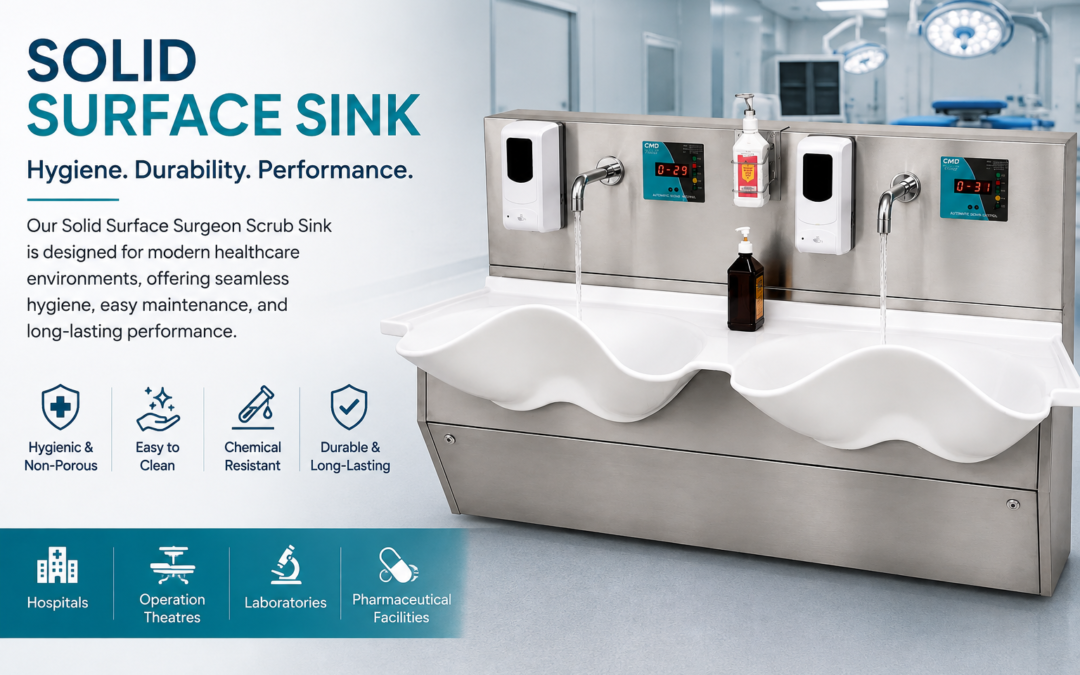
A Solid Surface Sink is an essential fixture in modern hospitals, operation theatres, and healthcare facilities where hygiene and infection control are top priorities. Unlike traditional stainless steel or ceramic sinks, solid surface sinks feature a seamless, non-porous design that minimizes bacterial growth and simplifies cleaning. Whether installed as a Medical Solid Surface Scrub Sink or a Solid Surface Surgeon Scrub Sink, these sinks help healthcare professionals maintain strict hygiene standards while improving durability and aesthetics. Choosing the right sink contributes to safer patient care, easier maintenance, and long-term operational efficiency.

What is Solid Surface Sink?

A Solid Surface Sink is a hygienic sink manufactured from a high-performance solid surface material that creates a smooth, seamless, and non-porous finish. Unlike conventional sinks with welded joints or grout lines, it has no visible seams where dirt, moisture, or bacteria can accumulate.

In healthcare settings, it is commonly used as a Medical Solid Surface Scrub Sink, Solid Surface Surgeon Washing Sink, or Seamless OT Scrub Sink to support proper hand hygiene before surgical procedures. The material resists stains, chemicals, moisture, and microbial growth, making it ideal for environments requiring strict infection control.

Why is it Important?

Healthcare facilities cannot compromise on cleanliness. Every surface in an operating theatre plays a role in preventing healthcare-associated infections (HAIs), and sinks are among the most frequently used fixtures.

A Solid Surface Surgeon surgical scrub sink helps create a safer environment by providing a smooth surface that is easy to disinfect after every use. Since there are no joints or crevices, harmful microorganisms have fewer places to hide.

These sinks also improve workflow by allowing surgeons and healthcare staff to perform surgical hand scrubbing comfortably while reducing maintenance requirements over time.

Key Features

  • Seamless Construction – Eliminates joints where bacteria and dirt typically collect.
  • Non-Porous Surface – Prevents moisture absorption, stains, and microbial growth.
  • Chemical Resistant – Withstands regular exposure to hospital-grade disinfectants.
  • Durable Material – Resists cracks, chips, and impact during daily use.
  • Easy to Clean – Requires minimal effort to maintain high hygiene standards.
  • Customizable Design – Available in multiple sizes, basin configurations, and mounting options.
  • Modern Appearance – Creates a clean and professional look for medical environments.

Benefits

  • Improves infection prevention by reducing bacterial hiding places.
  • Supports healthcare compliance with strict hygiene protocols.
  • Reduces long-term maintenance and repair costs.
  • Offers excellent resistance to moisture and harsh cleaning chemicals.
  • Enhances workflow for surgeons and medical staff.
  • Provides a longer service life compared to many traditional sink materials.
  • Maintains its appearance even after years of continuous use.

Applications

A Solid Surface Surgeon Sink is widely used across industries where cleanliness is essential.

Common applications include:

  • Hospital operating theatres (OT)
  • Surgical scrub areas
  • CSSD (Central Sterile Services Department)
  • Emergency departments
  • Intensive Care Units (ICU)
  • Medical laboratories
  • Pharmaceutical manufacturing facilities
  • Biotechnology laboratories
  • Research institutes
  • Healthcare training centres

How to Choose the Right Solid Surface Sink

When selecting a Solid Surface Sink, consider the following factors:

  1. Choose the correct sink size based on available installation space.
  2. Ensure the material is non-porous and resistant to hospital disinfectants.
  3. Select the appropriate number of washing stations for staff requirements.
  4. Look for ergonomic designs that improve user comfort during surgical scrubbing.
  5. Verify compatibility with sensor taps, soap dispensers, and other accessories.
  6. Purchase from an experienced manufacturer that offers quality assurance and customization options.

Common Mistakes to Avoid

Many buyers focus only on price and overlook important performance factors.

Avoid these common mistakes:

  • Choosing sinks made from low-quality materials.
  • Ignoring seamless construction.
  • Buying the wrong size for the available space.
  • Overlooking compatibility with hospital plumbing systems.
  • Not checking resistance to chemicals and disinfectants.
  • Selecting suppliers without healthcare manufacturing experience.

Conclusion

A Solid Surface Sink is much more than a washing station. It is an important component of infection control and healthcare safety. Its seamless construction, non-porous surface, durability, and easy maintenance make it an excellent investment for hospitals, laboratories, pharmaceutical facilities, and other hygiene-critical environments.

When selecting a Medical Solid Surface Scrub Sink or Solid Surface Surgeon Scrub Sink, focus on quality, durability, and functionality rather than price alone. Working with an experienced manufacturer can help you choose a solution that meets your facility’s operational needs while supporting long-term hygiene and efficiency.

Frequently Asked Questions (FAQs)

1. What is a Solid Surface Sink?

A Solid Surface Sink is a seamless, non-porous sink made from durable solid surface material. It is designed for environments where hygiene is critical, making it ideal for hospitals, laboratories, and pharmaceutical facilities. Its smooth construction helps reduce bacterial growth and simplifies cleaning.

2. What are the benefits of a Solid Surface Sink?

The main benefits include improved hygiene, seamless construction, chemical resistance, durability, easy maintenance, and a longer lifespan. These features help healthcare facilities maintain strict infection control standards while reducing maintenance costs.

3. Where is a Solid Surface Sink commonly used?

Solid surface sinks are commonly installed in operating theatres, surgical scrub rooms, CSSD departments, hospitals, laboratories, pharmaceutical manufacturing plants, research facilities, and other healthcare environments that require high hygiene standards.

4. How do I choose the right Solid Surface Sink?

Consider the sink size, installation area, material quality, number of users, compatibility with medical accessories, and the manufacturer’s experience. Selecting a non-porous, seamless design ensures better hygiene and long-term performance.

5. Can a Solid Surface Sink be customized?

Yes. Most manufacturers offer customization options, including basin size, number of stations, splashback design, integrated accessories, sensor-operated taps, and mounting styles to meet the specific needs of healthcare facilities.

6. Why is a seamless OT scrub sink better than a traditional sink?

A Seamless OT Scrub Sink has no joints or crevices where bacteria and dirt can accumulate. This makes cleaning faster, improves infection control, and provides a more hygienic solution compared to traditional welded or tiled sinks.

Surgical Scrub Sink: Essential for Safe and Hygienic Surgical Hand Preparation

Surgical Scrub Sink: Essential for Safe and Hygienic Surgical Hand Preparation

Introduction

A Surgical Scrub Sink is one of the most important hygiene stations in any healthcare facility. Before entering an operating room, surgeons and medical staff must perform proper hand and arm scrubbing to minimise the risk of infections during surgical procedures. A well-designed Hospital Scrub Sink helps maintain strict infection control standards while improving workflow efficiency. Whether installed in hospitals, pharmaceutical facilities, or cleanroom environments, choosing the right Operation Theatre Scrub Sink plays a vital role in maintaining patient safety and regulatory compliance.

What is Surgical Scrub Sink?

A Surgical Scrub Sink is a specially designed washing station installed outside operating theatres where surgeons and surgical staff perform a thorough hand and forearm scrub before entering sterile areas.

Unlike standard sinks, a Medical Scrub Sink is engineered to support infection prevention. Most modern units are manufactured using high-grade stainless steel and feature touch-free faucets, knee-operated controls, or Sensor Operated Scrub Sink technology to eliminate unnecessary contact and reduce contamination.

These sinks are available in single, double, triple, or multiple-user configurations to accommodate different hospital sizes and surgical workloads.

Why is it Important?

Proper surgical hand preparation is one of the most effective ways to reduce healthcare-associated infections (HAIs).

A high-quality OT Scrub Sink ensures healthcare professionals can perform surgical hand antisepsis efficiently while following international hygiene protocols.

Its importance includes:

  • Reducing the risk of surgical site infections (SSIs).
  • Supporting strict infection control procedures.
  • Improving operating room workflow.
  • Maintaining compliance with healthcare regulations.
  • Protecting both patients and medical professionals.

In modern healthcare environments, investing in the right Stainless Steel Scrub Sink contributes directly to patient safety and operational excellence.

Key Features

  • High-Grade Stainless Steel Construction – Offers excellent corrosion resistance, durability, and easy cleaning.
  • Sensor Operated Water Control – Enables completely touch-free operation to minimise cross-contamination.
  • Deep Ergonomic Basin – Prevents water splashing while allowing comfortable hand and arm washing.
  • Multiple User Options – Available in single, double, triple, or four-station configurations.
  • Integrated Soap and Disinfectant Dispensers – Supports efficient surgical hand preparation.
  • Hands-Free Controls – Available with sensor, knee-operated, or foot-operated systems.
  • Smooth Welded Finish – Eliminates dirt traps and simplifies maintenance.
  • Customisable Design – Can be manufactured according to hospital layout and project requirements.

Benefits

  • Improves infection prevention practices in surgical environments.
  • Supports compliance with hospital hygiene standards.
  • Reduces the possibility of cross-contamination.
  • Enhances workflow before surgical procedures.
  • Provides long service life with minimal maintenance.
  • Offers excellent resistance to chemicals, moisture, and frequent cleaning.
  • Creates a professional and hygienic operating theatre environment.
  • Suitable for heavy daily use in busy healthcare facilities.

Applications

A Surgical Scrub Sink is widely used across various industries that require strict hygiene and sterile working conditions.

Common applications include:

  • Hospitals
  • Operation Theatres
  • Specialty Surgical Centres
  • Pharmaceutical Manufacturing Units
  • Medical Device Manufacturing Facilities
  • Research Laboratories
  • Biotechnology Companies
  • Cleanrooms
  • Healthcare Institutions
  • Veterinary Hospitals

How to Choose the Right Surgical Scrub Sink

Selecting the right scrub sink depends on your facility’s requirements and future expansion plans.

Consider the following factors:

  1. Choose medical-grade 304 or 316 stainless steel for maximum durability.
  2. Select the correct number of stations based on surgical volume.
  3. Prefer Sensor Operated Scrub Sink models for touch-free hygiene.
  4. Ensure compatibility with your plumbing and operating theatre layout.
  5. Look for integrated soap, brush, and disinfectant dispensers.
  6. Purchase from an experienced manufacturer that offers customisation and after-sales support.

Common Mistakes to Avoid

Many buyers focus only on price instead of long-term performance.

Avoid these common mistakes:

  • Choosing low-quality stainless steel.
  • Ignoring infection control requirements.
  • Buying an undersized sink for a busy operating theatre.
  • Selecting manual taps where touch-free systems are recommended.
  • Overlooking maintenance accessibility.
  • Purchasing without checking available customisation options.

Making the right decision early helps reduce maintenance costs and improves operational efficiency over time.

Conclusion

A Surgical Scrub Sink is far more than a simple handwashing station. It is a critical component of every sterile healthcare environment, helping reduce infection risks while supporting safe surgical practices.

Whether you require a Hospital Scrub Sink, Operation Theatre Scrub Sink, or Sensor Operated Scrub Sink, choosing a durable stainless steel solution designed for healthcare environments ensures long-term performance and reliability. Consulting an experienced hospital furniture and CSSD equipment manufacturer can help you select the right configuration for your facility’s specific needs.

Frequently Asked Questions (FAQs)

What is a Surgical Scrub Sink?

A Surgical Scrub Sink is a specialised washing station used by surgeons and medical staff to clean and disinfect their hands and forearms before surgery. It supports infection prevention and maintains sterile conditions in operating theatres.

What are the benefits of using a Surgical Scrub Sink?

It helps reduce surgical site infections, improves hygiene compliance, minimises cross-contamination, enhances workflow efficiency, and provides a safe hand preparation area before surgical procedures.

Where is a Surgical Scrub Sink commonly used?

These sinks are commonly installed in hospitals, operation theatres, surgical centres, pharmaceutical manufacturing facilities, biotechnology laboratories, cleanrooms, research institutes, and medical device manufacturing plants.

How do I choose the right Surgical Scrub Sink?

Choose a model based on stainless steel quality, number of users, touch-free operation, available space, dispenser options, plumbing compatibility, and manufacturer support. Selecting the right size and features ensures long-term performance.

Can Surgical Scrub Sinks be customised?

Yes. Most manufacturers offer customised dimensions, single or multiple stations, sensor-operated controls, integrated dispensers, splash protection, and various installation options to suit different healthcare projects.

What material is best for a Surgical Scrub Sink?

Medical-grade 304 or 316 stainless steel is considered the best material because it resists corrosion, withstands frequent cleaning, maintains hygiene, and provides long service life in demanding healthcare environments.