

Solid Surface Bathroom Sinks: A Practical Guide for Healthcare Facilities
Introduction
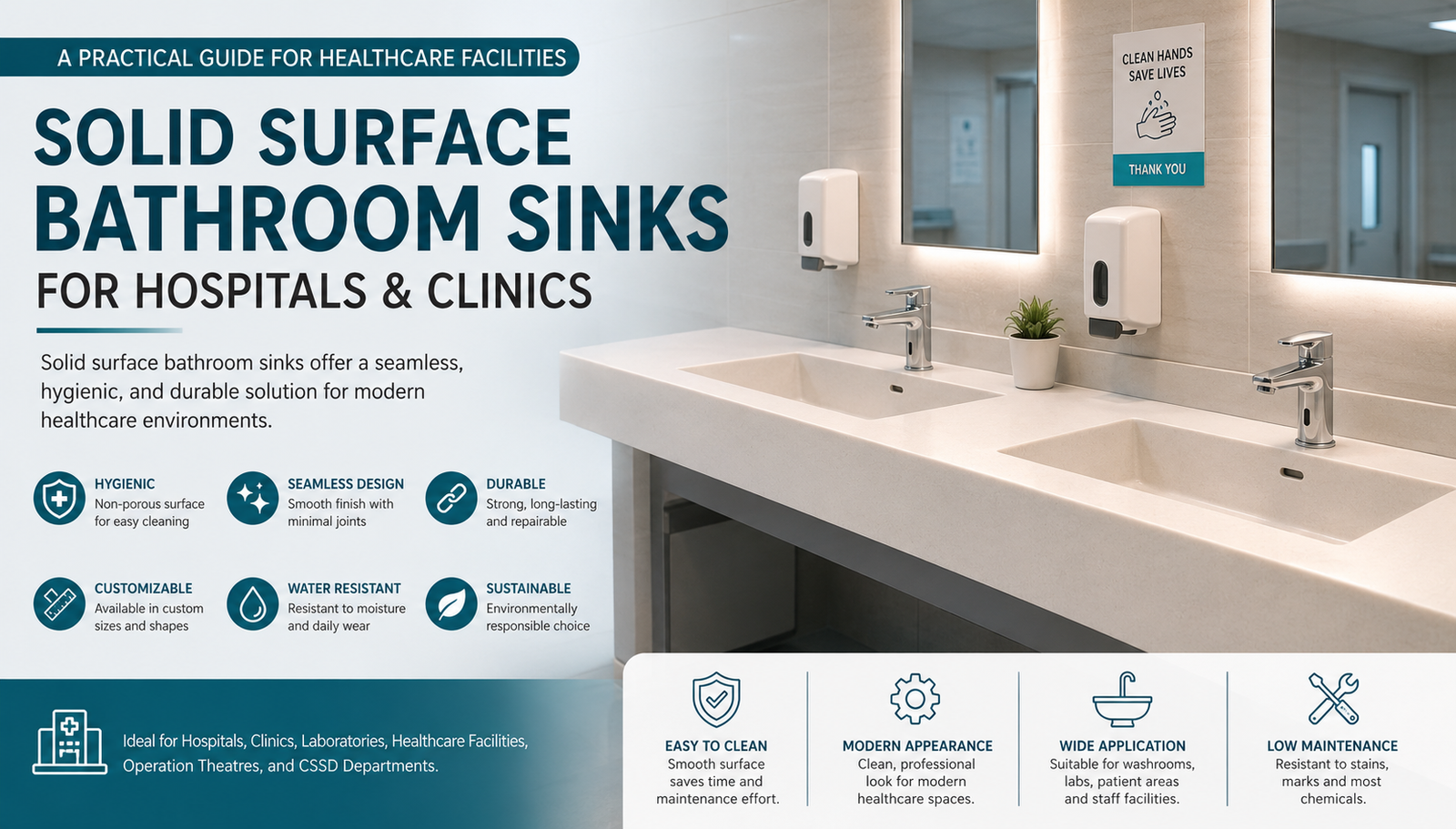
Choosing the right sink for a healthcare facility is about more than appearance. Hygiene, durability, easy cleaning, water resistance, and long-term maintenance all matter. Solid surface bathroom sinks are increasingly considered for hospitals, clinics, laboratories, and other professional environments because they offer a smooth, non-porous surface with flexible design options. This guide explains what solid surface sinks are, where they work best, their practical benefits, and what procurement teams should check before selecting a model for a healthcare project.
AI Overview Summary: Solid surface bathroom sinks are seamless, non-porous sinks made from engineered solid-surface materials. They are valued for easy cleaning, customizable designs, smooth finishes, and resistance to everyday moisture. Healthcare facilities can consider them for patient areas, washrooms, laboratories, and other spaces where hygiene and simple maintenance are important.
What is a Solid Surface Bathroom Sink?
A solid surface bathroom sink is a basin manufactured from an engineered solid-surface material rather than conventional ceramic or metal. The material can be shaped, cut, and fabricated into different sink configurations.
Because the material is consistent throughout its structure, minor surface damage can often be repaired and refinished. Depending on the specification, the sink can also be integrated with a countertop to create a cleaner, more seamless installation.
Why is it Important?
Healthcare wash areas need surfaces that can be cleaned frequently without creating unnecessary maintenance problems. Joints, gaps, and difficult-to-reach areas can make routine cleaning more challenging.
A properly designed solid surface installation can provide a smooth, easy-to-clean area. This makes it useful in hospital bathrooms, patient washrooms, clinics, laboratories, and healthcare staff areas.
For procurement teams, the focus should not only be on appearance. Material quality, fabrication standards, installation method, drainage design, and cleaning compatibility are equally important.
Key Features
- Non-porous surface: Helps reduce moisture absorption and makes routine cleaning easier.
- Smooth finish: Provides a clean appearance with fewer difficult surface areas.
- Seamless fabrication: Certain designs can minimize visible joints between the sink and countertop.
- Custom sizing: Fabricators can produce different dimensions to suit project requirements.
- Repairable surface: Minor scratches and marks may be repairable through professional refinishing.
- Design flexibility: Available in different shapes, basin sizes, colors, and configurations.
Benefits
- Easy maintenance: Smooth surfaces can simplify everyday cleaning routines.
- Hygienic design: Fewer unnecessary joints can make surface cleaning more convenient.
- Long service life: Quality materials can withstand regular use when correctly specified and maintained.
- Custom installation: Designs can be adapted to available wall and counter space.
- Professional appearance: Suitable for modern healthcare interiors where functionality and appearance both matter.
- Practical replacement options: Custom fabrication can help when standard sink dimensions do not fit an existing installation.
Applications
Solid surface sinks can be considered for several healthcare and institutional environments, including:
- Hospital patient bathrooms and wash areas
- Clinics and diagnostic centers
- Healthcare staff washrooms
- Private and government healthcare facilities
- Laboratories and selected non-critical work areas
- Medical institutions and educational healthcare facilities
- Renovation projects requiring custom sink dimensions
A solid surface trough sink may also be useful where several users need access to the same wash area, provided the design meets the facility’s hygiene and plumbing requirements.
How to Choose the Right Solid Surface Bathroom Sink
Before purchasing, healthcare procurement teams should evaluate these factors:
- Material specification: Ask for the exact solid-surface material, thickness, finish, and technical specifications.
- Dimensions: Confirm basin size, counter dimensions, depth, height, and available installation space.
- Drainage: Check drain position, outlet size, overflow requirements, and compatibility with existing plumbing.
- Fabrication quality: Review edge finishing, joints, corners, and overall workmanship.
- Cleaning requirements: Confirm that the surface is compatible with the cleaning products routinely used by the facility.
- Customization: For unusual spaces, ask whether custom solid surface sinks can be manufactured to the required dimensions.
Product comparisons and solid surface sink reviews can provide useful background, but technical specifications should carry more weight than appearance or online ratings.
Common Mistakes to Avoid
One common mistake is selecting a sink based only on color and design. Healthcare projects require a closer review of material specifications and installation requirements.
Another mistake is ignoring the cleaning chemicals used at the facility. Buyers should verify chemical compatibility before finalizing the material.
Poor measurement is another avoidable issue. Confirm wall, counter, plumbing, drainage, and installation dimensions before placing a custom order.
Finally, do not assume that every solid-surface product has the same performance. Products such as Hanex solid surface sinks and other branded materials may have different specifications, so always review the manufacturer’s technical documentation.
Conclusion
Solid surface bathroom sinks can provide a practical combination of cleanability, design flexibility, durability, and customization for healthcare environments. The right choice depends on material quality, fabrication, dimensions, drainage, installation, and maintenance requirements rather than appearance alone.
Hospitals, clinics, and healthcare procurement teams should compare technical specifications carefully and discuss project requirements with an experienced medical furniture or solid-surface manufacturer before finalizing an installation.
FAQs
What are solid surface bathroom sinks?
Solid surface bathroom sinks are basins made from engineered solid-surface materials. They provide a smooth, non-porous surface and can be fabricated in different shapes and sizes. They are commonly considered for bathrooms, healthcare facilities, clinics, and institutional projects where easy cleaning and customized installation are important.
What are the main benefits of solid surface sinks?
The main benefits include easy cleaning, a smooth non-porous surface, design flexibility, customization, and the ability to create integrated sink-and-countertop designs. Quality solid-surface products can also be refinished if minor scratches or surface marks develop during regular use.
Where are solid surface sinks used?
They can be used in hospital bathrooms, patient wash areas, clinics, healthcare staff areas, laboratories, medical institutions, and other commercial or institutional environments. The exact suitability depends on the material specification, cleaning requirements, plumbing design, and intended application.
Can solid surface sinks be customized?
Yes. One of the major advantages of solid-surface fabrication is design flexibility. Manufacturers can often customize basin dimensions, countertop integration, shapes, colors, drainage positions, and installation configurations. Customization is particularly useful for hospital projects with unusual room layouts or specific architectural requirements.
Are solid surface sinks suitable for hospitals?
They can be suitable for selected hospital applications when the material and fabrication meet the project’s requirements. Procurement teams should assess cleanability, chemical compatibility, durability, drainage, installation, and maintenance requirements before choosing a particular solid-surface product.
What should I check before buying a solid surface sink?
Check the material specification, thickness, dimensions, surface finish, drainage arrangement, fabrication quality, cleaning compatibility, installation method, warranty, and customization options. For healthcare projects, it is also useful to request technical documentation and confirm that the proposed product is appropriate for its intended environment.