Introduction
Maintaining hygiene and proper waste disposal is an important part of hospital management. Healthcare facilities handle liquid waste, contaminated water and soiled materials every day. A slop hopper provides a dedicated disposal facility in hospital dirty utility rooms, helping staff manage these activities more efficiently. A properly designed stainless steel slop hopper offers durability, easy cleaning and effective drainage. Understanding its construction, working principle, features and applications helps hospital administrators, architects and procurement managers select suitable equipment for modern healthcare facilities.
Quick Summary: A hospital slop hopper is a specialised sanitary fixture used for disposing of liquid waste and suitable soiled materials in designated utility rooms. It generally features a stainless steel receiving tray, circular hopper opening, flushing arrangement and drainage connection. Its design supports hygienic waste handling, routine cleaning and efficient hospital utility operations.
What Is a Slop Hopper?
A slop hopper is a specialised sanitary fixture commonly installed in hospital dirty utility rooms and soiled utility areas. It is designed for the disposal of liquid waste, bedpan contents and suitable contaminated wastewater.
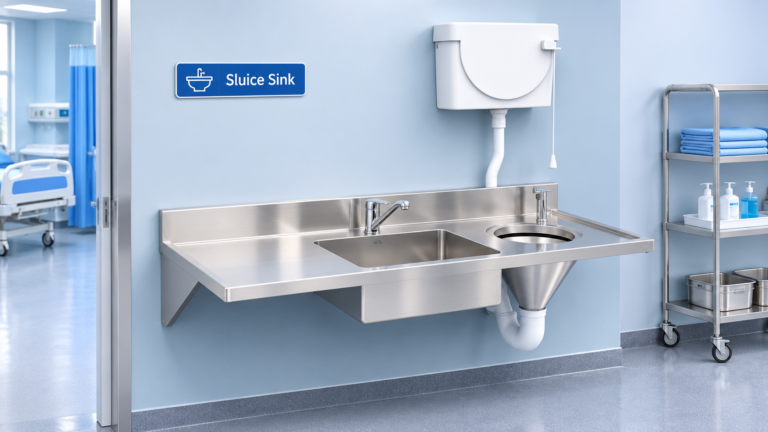
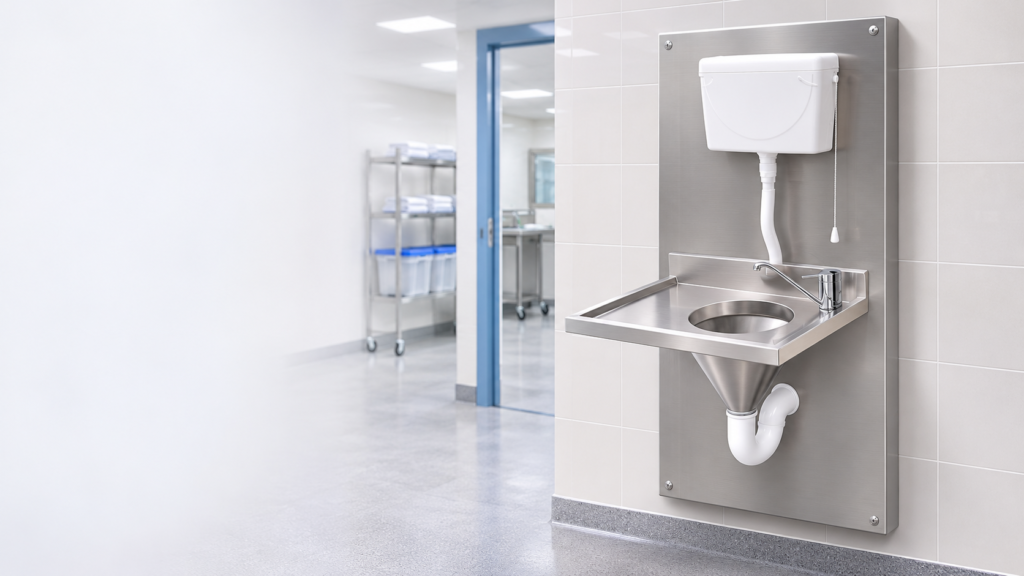
A Slop Hopper Sink, also called a hospital hopper sink or medical slop hopper, generally consists of a stainless steel receiving tray, circular waste opening, flushing system and drainage outlet.
Unlike an ordinary washbasin, a slop hopper has a dedicated waste-receiving design. Some models also include a wall-mounted flushing tank, manual pull chain and funnel-shaped drainage section.
Why Is a Slop Hopper Important in Hospitals?
Hospitals require dedicated facilities for handling contaminated waste. Using regular washbasins for these activities can create hygiene concerns and increase the risk of cross-contamination.
A properly installed Soiled Utility Hopper Sink helps maintain organised waste-handling practices.
Its importance includes:
- Hygiene Management: Provides a designated area for disposing of suitable liquid and soiled waste.
- Waste Disposal: Supports controlled disposal through a dedicated drainage arrangement.
- Infection Prevention: Helps reduce inappropriate use of ordinary washing facilities.
- Easy Cleaning: Stainless steel surfaces support routine cleaning and disinfection.
- Better Workflow: Makes daily utility activities more organised for housekeeping and healthcare staff.
How Does a Hospital Slop Hopper Work?
A hospital slop hopper works through a receiving section, flushing arrangement and drainage system.
- Waste Reception: Suitable liquid waste and bedpan contents are emptied into the receiving opening.
- Flushing Operation: The flushing mechanism releases water to rinse the hopper surface.
- Waste Discharge: The funnel-shaped lower section directs wastewater towards the drainage outlet.
- Cleaning: The receiving tray and surrounding surfaces are cleaned and disinfected according to hospital procedures.
The flushing arrangement may use a manual pull-chain mechanism or another specified operating system, depending on the product design.
Key Features of a Stainless Steel Slop Hopper
A well-designed Stainless Steel Slop Hopper includes several important construction and functional features:
- Stainless Steel Body: SS 304 is commonly used for its corrosion resistance and durability.
- Receiving Tray: A rectangular tray with raised edges helps manage splashes.
- Circular Hopper Opening: Provides a dedicated opening for waste disposal.
- Flushing Tank: Supplies water for rinsing the receiving section.
- Manual Pull Chain: Allows convenient operation of compatible flushing systems.
- Funnel-Shaped Bottom: Directs wastewater towards the drainage connection.
- Drainage Trap: Helps connect the hopper to the plumbing system.
- Smooth Surface Finish: Makes routine cleaning and maintenance easier.
Benefits of a Hospital Slop Hopper
Installing a suitable hospital slop sink provides several practical benefits:
- Supports organised waste disposal in healthcare facilities.
- Helps maintain cleaner dirty utility rooms.
- Reduces the need to use regular washbasins for soiled waste.
- Provides durable construction with suitable stainless steel.
- Simplifies routine cleaning and maintenance.
- Supports efficient housekeeping operations.
- Helps maintain proper separation between clean and soiled utility activities.
Applications of Slop Hopper Equipment
A Slop Hopper for Hospitals is commonly used in:
- Multispeciality Hospitals: For designated waste disposal activities in dirty utility rooms.
- Government Hospitals: For healthcare infrastructure and utility areas.
- Nursing Homes: For routine cleaning and waste-handling requirements.
- Clinics and Medical Centres: For suitable sanitary disposal activities.
- Healthcare Projects: In new hospital construction and renovation projects.
- Institutional Healthcare Facilities: For organised utility and housekeeping operations.
How to Choose the Right Slop Hopper?
Consider these factors before purchasing a hospital hopper sink:
- Material Grade: Check stainless steel grade, thickness and corrosion resistance.
- Tray Dimensions: Select suitable dimensions according to installation space and operational requirements.
- Flushing Arrangement: Evaluate the flush tank, water supply and operating mechanism.
- Drainage Compatibility: Check outlet size, trap design and plumbing connections.
- Installation Design: Review wall mounting, back panel and maintenance accessibility.
- Fabrication Quality: Examine welding, finishing, edges and overall product construction.
Common Mistakes to Avoid
- Selecting equipment without checking stainless steel specifications.
- Ignoring available installation space.
- Overlooking flushing performance and water connections.
- Choosing incompatible drainage arrangements.
- Ignoring cleaning and maintenance access.
- Not reviewing technical drawings before installation.
- Using the hopper for sharps or other waste that requires separate biomedical waste disposal.
Conclusion
A stainless steel slop hopper is an important utility fixture in modern healthcare facilities. Its dedicated receiving tray, flushing arrangement and drainage system support organised waste disposal and routine hygiene management.
Understanding material quality, construction, installation requirements and maintenance procedures helps hospitals select suitable equipment for their operational needs. Proper placement and regular cleaning also play an important role in maintaining hygienic utility areas.
Frequently Asked Questions (FAQs)
1. What is a slop hopper used for in hospitals?
A slop hopper is used for disposing of liquid waste, bedpan contents and suitable contaminated wastewater in designated hospital utility rooms. It provides a dedicated disposal facility and helps healthcare staff maintain organised waste-handling practices.
2. What material is best for a hospital slop hopper?
Stainless steel SS 304 is commonly preferred because it offers good corrosion resistance, durability and easy cleaning. The appropriate material grade should be selected according to the cleaning chemicals, operating environment and specific healthcare facility requirements.
3. What is the difference between a slop hopper and a regular sink?
A regular sink is designed mainly for handwashing and general cleaning. A slop hopper has a specialised receiving tray, waste opening, flushing arrangement and drainage system designed for handling suitable soiled waste and contaminated water.
4. How does a slop hopper flushing system work?
A slop hopper flushing system releases water into the receiving section to rinse away remaining waste. Depending on the model, flushing may be activated using a manual pull chain or another operating mechanism. The wastewater then flows through the drainage connection.
5. Where is a slop hopper installed?
Slop hoppers are generally installed in hospital dirty utility rooms and soiled utility areas. These locations provide a designated space for waste-handling activities while maintaining separation from clean preparation areas and patient-care spaces.
6. Can stainless steel slop hoppers be customised?
Yes. Slop hopper designs can be customised according to tray dimensions, mounting arrangements, flushing systems, drainage connections and available installation space. Technical drawings and plumbing requirements should be reviewed before finalising the design.
7. How should a hospital slop hopper be maintained?
Regular cleaning and disinfection should follow the healthcare facility’s approved procedures. Staff should inspect the flushing mechanism, drainage connections and visible surfaces periodically. Compatible cleaning chemicals should be used to protect the stainless steel finish and maintain hygiene.