

Soiled Utility Hopper Sink: A Practical Guide for Hospitals
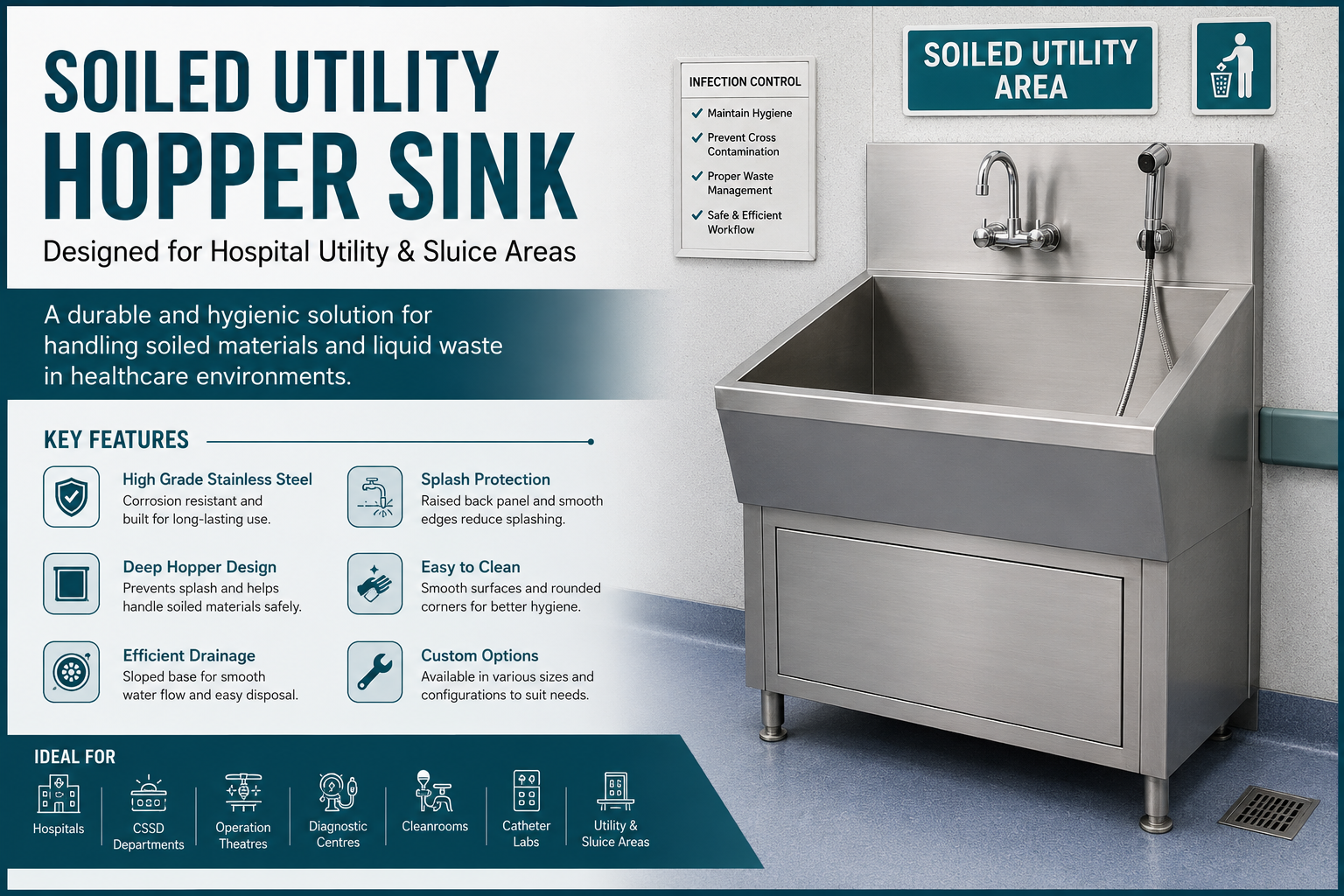
A soiled utility hopper sink is a specialized hospital fixture designed for handling, rinsing, and disposing of contaminated liquids and soiled materials in designated utility or sluice areas. Unlike a standard wash basin, it is built around the practical needs of healthcare cleaning workflows. Choosing the right hopper helps hospitals maintain better hygiene, improve staff safety, and support efficient environmental cleaning procedures.
Healthcare facilities need dedicated areas and equipment for managing soiled materials. WHO identifies water, sanitation, waste management, hygiene, and environmental cleaning as important parts of safe healthcare infrastructure.
A soiled utility hopper sink provides a dedicated point for disposing of suitable liquid waste and cleaning reusable containers or equipment according to the facility’s procedures. Its deep basin, durable construction, effective drainage, and easy-clean surfaces make it suitable for demanding healthcare environments.
What is a Soiled Utility Hopper Sink?
A soiled utility hopper sink is a deep, purpose-built sink used in healthcare utility or sluice areas for handling soiled items and appropriate liquid waste.
It is commonly associated with terms such as medical hopper, hospital hopper, slop hopper, or hopper in hospital environments. The design helps keep dirty utility activities separate from handwashing and clean preparation areas.
The hopper typically works by directing waste or rinse water into a dedicated drainage system. Depending on the installation, it may include a flushing arrangement, spray hose, splash protection, taps, and other accessories.
Why is it Important?
Hospitals regularly deal with contaminated liquids, reusable containers, cleaning materials, and other soiled items. Using an ordinary sink for these activities can create workflow and hygiene problems.
A dedicated hopper provides a controlled location for these tasks and supports separation between clean and dirty activities. CDC guidance also highlights the importance of appropriate sinks, hoppers, drains, cleaning practices, and splash control in healthcare environments.
This makes a hospital hopper particularly useful in:
- Dirty utility rooms
- Sluice rooms
- Hospital sanitation areas
- Ward utility rooms
- Environmental services areas
Key Features
A well-designed medical hopper may include:
- Deep basin: Provides sufficient space for handling soiled items and liquids while helping reduce overflow.
- Stainless steel construction: Offers durability, corrosion resistance, and a surface that can be cleaned regularly.
- Efficient drainage: Helps move wastewater away from the working area through the designated drainage system.
- Easy-clean surfaces: Smooth surfaces and practical corners simplify routine cleaning.
- Splash control: Appropriate basin and flushing design can help reduce unwanted splashing.
- Wall or floor installation: Configuration can be selected according to available space and plumbing requirements.
- Custom accessories: Spray arrangements, taps, flushing systems, and other components can be specified for the facility.
Benefits
- Supports separation of soiled and clean workflows.
- Provides a dedicated location for appropriate waste and rinsing activities.
- Makes routine utility-room work more organized.
- Durable construction can withstand frequent daily use.
- Easy-clean surfaces support regular environmental cleaning.
- Proper drainage can reduce standing wastewater.
- Custom dimensions can help match available installation space.
Healthcare cleaning should always follow the facility’s infection prevention procedures and applicable plumbing requirements. CDC recommends regular cleaning and disinfection of sinks and wash basins and emphasizes reducing splash exposure around healthcare drains.
Applications
A hopper in hospital environments is generally installed where soiled utility work needs to be performed safely and separately from clean activities.
Typical applications include:
- Hospitals and nursing facilities
- Operation Theatre support areas
- CSSD and sterilization support zones
- Dirty utility and sluice rooms
- Diagnostic centres
- Catheter and clinical support areas
- Cleanroom support areas
- Healthcare sanitation departments
- Medical storage and utility rooms
The exact application should be determined by the facility’s workflow, infection-control policy, plumbing design, and local regulations.
How to Choose the Right Soiled Utility Hopper Sink
Before purchasing a hospital hopper, consider these factors:
- Material quality: Choose a durable, corrosion-resistant material suitable for frequent cleaning and healthcare use.
- Basin depth: Select a depth appropriate for the items and liquids handled in the utility room.
- Drainage: Check drain size, location, trap arrangement, and compatibility with the existing plumbing.
- Splash control: Look for a design that minimizes unnecessary splashing during use and flushing.
- Installation space: Confirm wall, floor, height, clearance, and service-access requirements before ordering.
- Customization: For new hospitals or renovation projects, consider custom dimensions and accessories that match the workflow.
Common Mistakes to Avoid
A few purchasing mistakes can reduce the usefulness of a slop hopper:
- Choosing a household sink instead of a healthcare-specific design.
- Ignoring drainage and plumbing compatibility.
- Selecting a basin that is too shallow for the intended workload.
- Focusing only on price instead of durability and maintenance.
- Installing the hopper without considering splash control.
- Forgetting service access for cleaning and plumbing maintenance.
- Failing to confirm the installation requirements with the project or plumbing team.
Conclusion
A soiled utility hopper sink is an important part of a well-planned healthcare utility area. It provides a dedicated point for appropriate soiled-item handling, rinsing, and liquid disposal while supporting cleaner workflows and routine environmental cleaning.
The right design should match the facility’s workload, available space, drainage system, cleaning procedures, and infection-control requirements. Hospitals, CSSD departments, diagnostic centres, and healthcare facility planners can contact a medical equipment manufacturer to discuss suitable sizes, materials, configurations, and customization options.
Frequently Asked Questions
What is a soiled utility hopper sink?
A soiled utility hopper sink is a deep healthcare fixture used in designated dirty utility or sluice areas for handling soiled items, rinsing suitable reusable containers, and disposing of appropriate liquid waste. It is designed for healthcare workflows rather than general handwashing and is normally connected to a dedicated drainage system.
What is a hopper sink used for in a hospital?
A hospital hopper is used for tasks involving soiled materials and suitable liquid waste in designated utility areas. It helps keep dirty activities separate from clean preparation and handwashing areas. The exact materials that may be discharged through it should always follow the facility’s waste-management and infection-control procedures.
What is a slop hopper?
A slop hopper is another commonly used term for a deep utility fixture found in healthcare sanitation or sluice areas. It is designed to support the controlled handling of soiled liquids and items. Depending on the model, it can include a flushing system, spray hose, splash protection, and dedicated drainage connections.
What is a medical hopper?
A medical hopper is a purpose-designed sink or disposal fixture intended for healthcare utility areas. Compared with a conventional sink, it generally provides a deeper basin, durable construction, appropriate drainage, and features suited to frequent cleaning. It is commonly installed in dirty utility rooms, sluice areas, and hospital sanitation zones.
What material is best for a hospital hopper?
Stainless steel is a practical choice for many hospital hopper applications because it offers durability, corrosion resistance, and a smooth surface that can be cleaned and maintained regularly. The specific grade, thickness, finish, welding, and construction should be selected according to the facility’s workload and project specifications.
How do I choose the right hospital hopper?
Choose a hospital hopper based on the intended use, basin size and depth, drainage requirements, installation space, material, splash-control features, and cleaning procedures. For new healthcare projects, it is also important to coordinate the hopper dimensions and plumbing connections with the architectural, MEP, and infection-control requirements.
Is a hospital hopper customizable?
Yes. Depending on the manufacturer, hospital hoppers can be customized for dimensions, mounting configuration, drainage arrangements, flushing systems, spray hoses, taps, and other accessories. Customization is particularly useful when the available utility-room space or hospital workflow requires a specific configuration.
How does a hopper in a hospital work?
A hopper provides a deep working basin connected to the facility’s drainage system. Suitable soiled materials or liquids are placed or rinsed in the basin, and water carries the resulting wastewater through the drain. Proper operation should follow the hospital’s waste-disposal, cleaning, infection-control, and plumbing procedures.