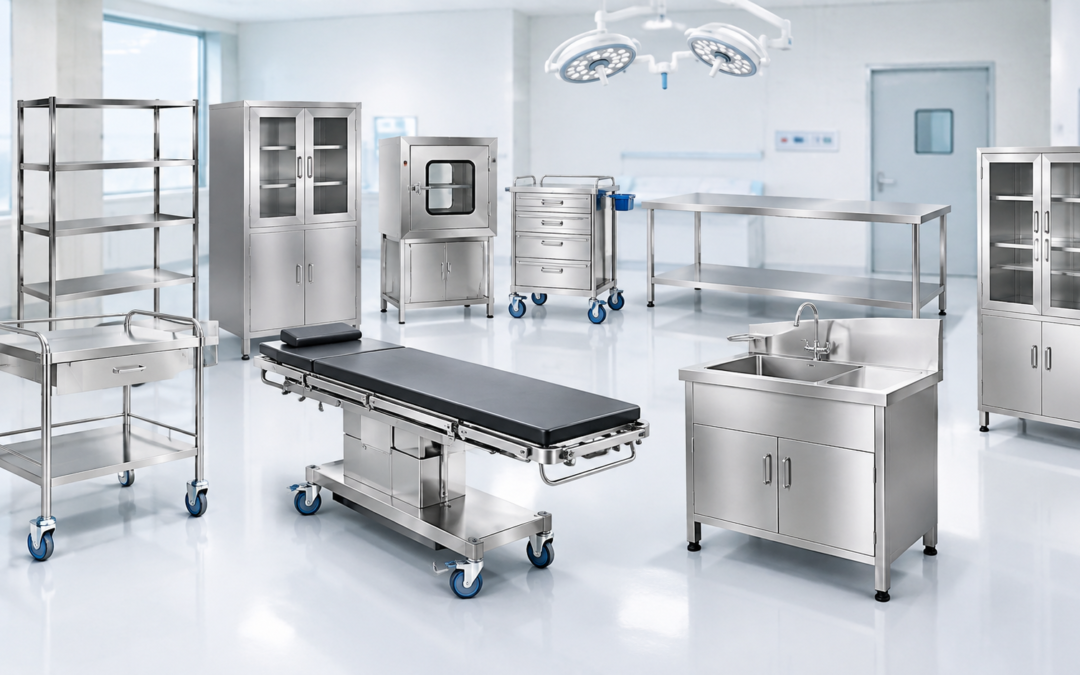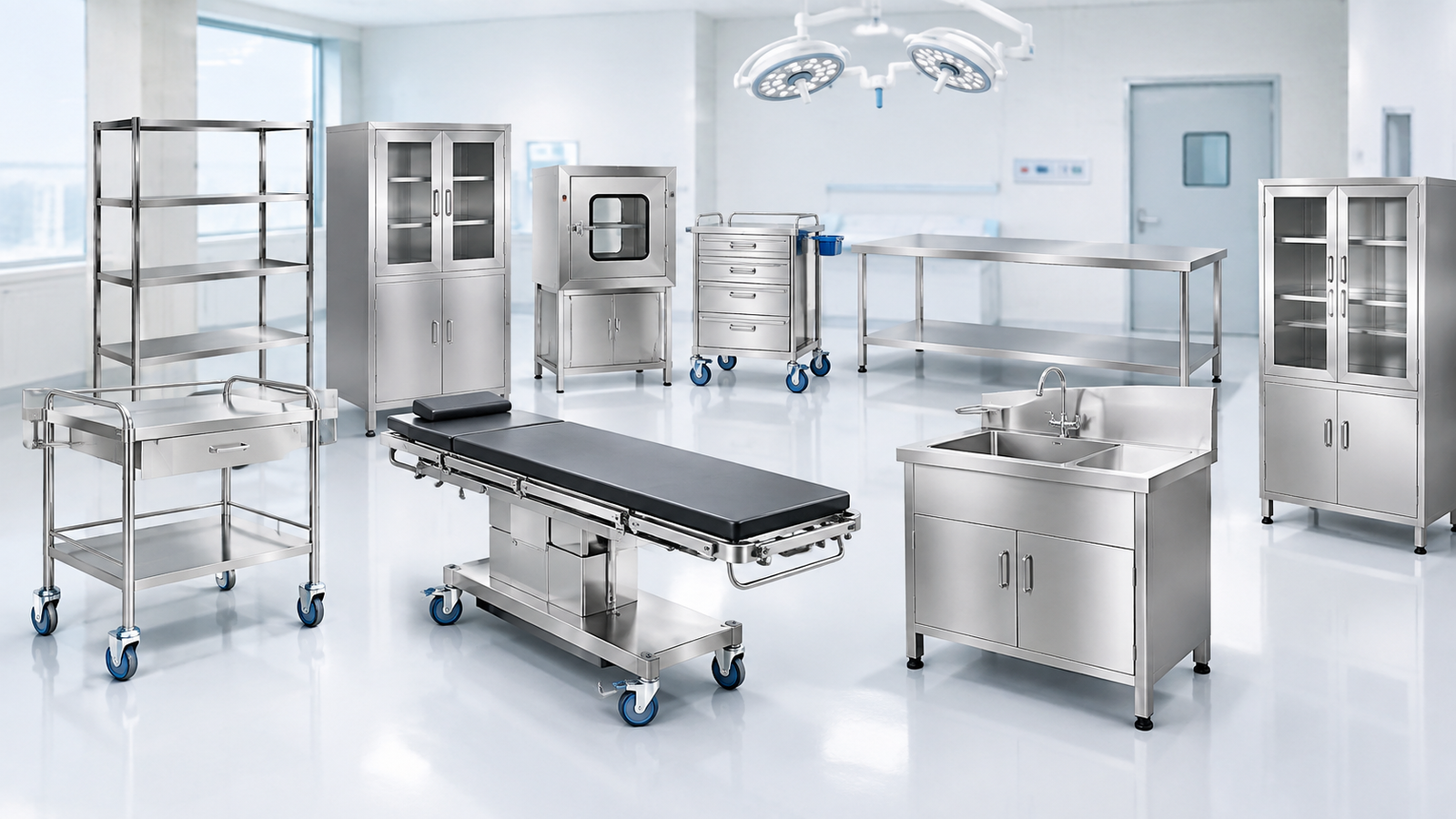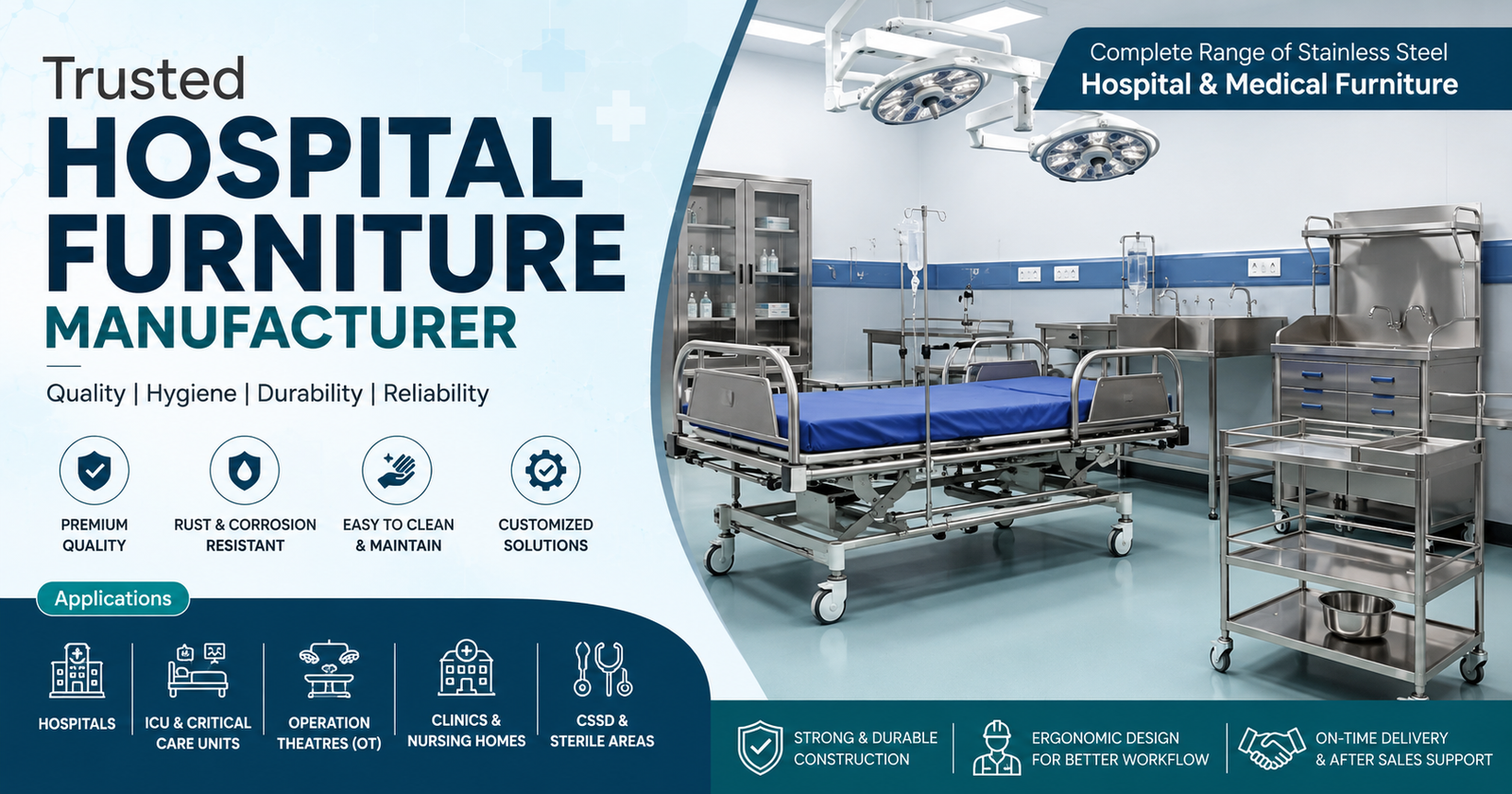
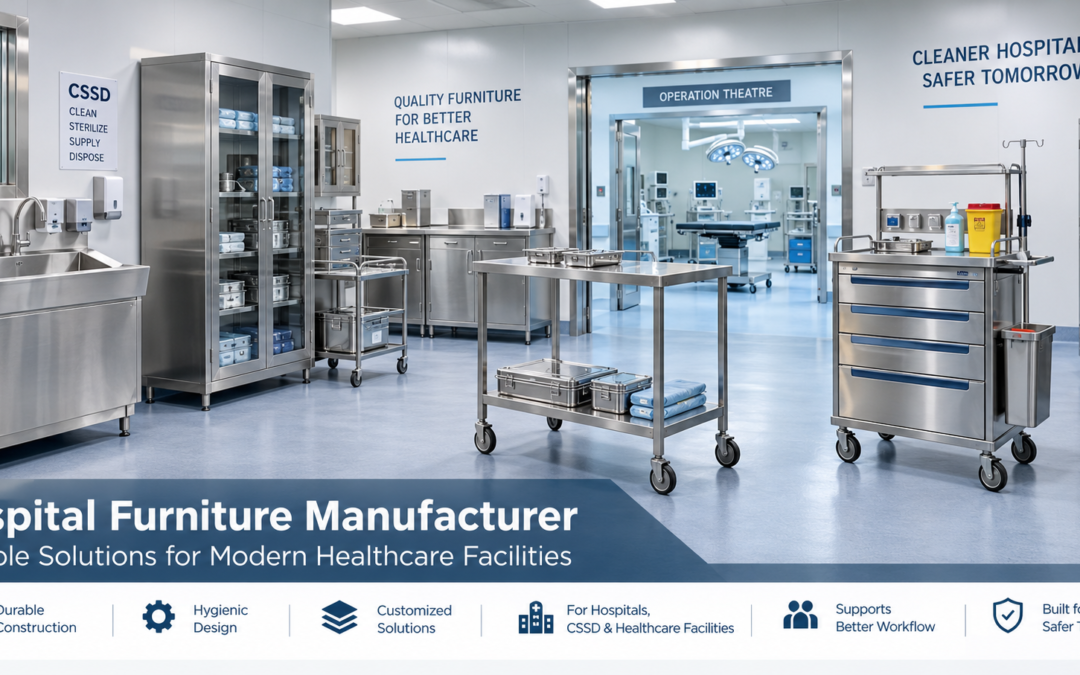
Hospital Furniture Manufacturer: Choosing the Right Healthcare Furniture

Hospital Furniture Manufacturer: Choosing the Right Healthcare Furniture
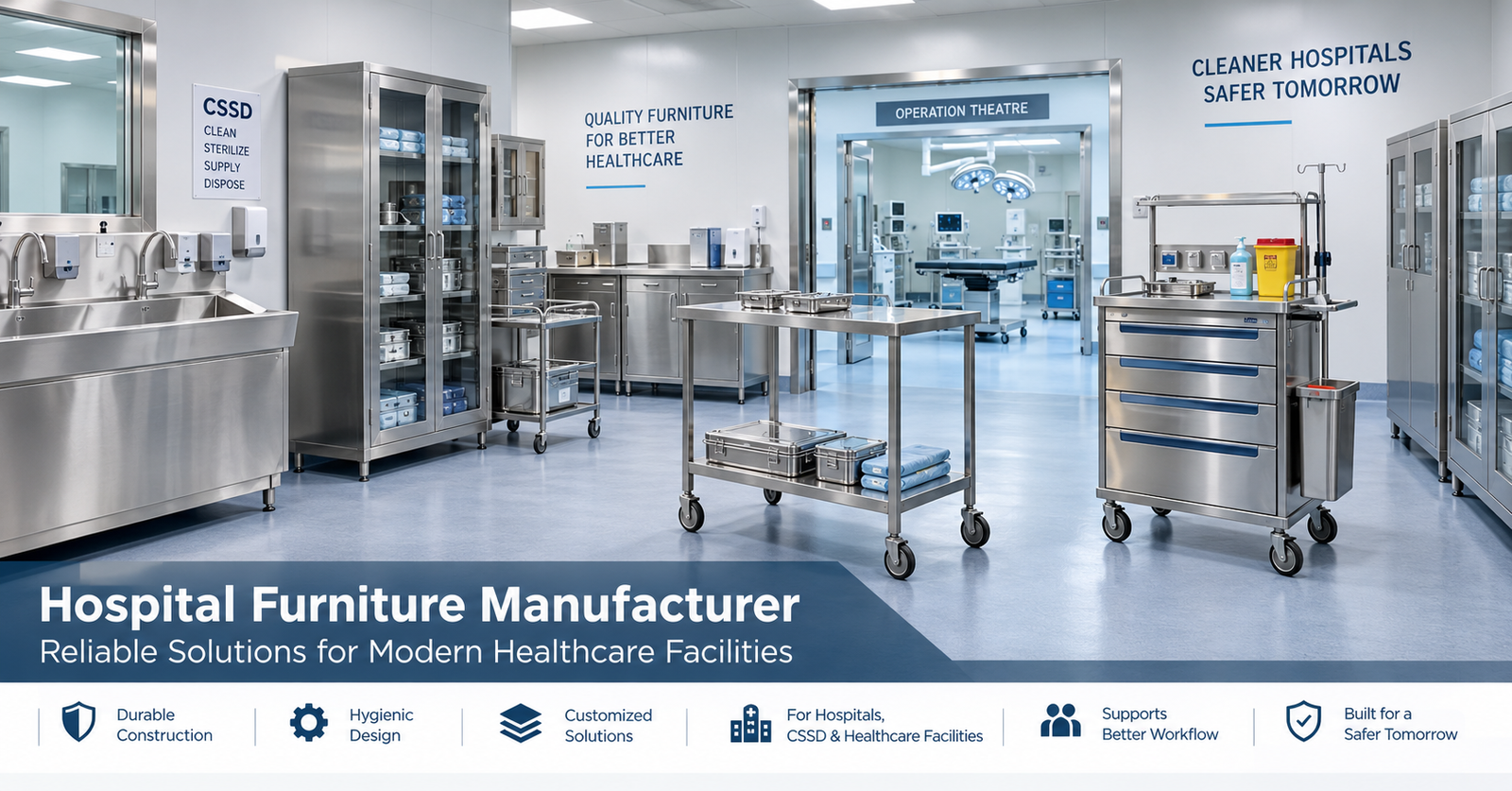
Hospital Furniture Manufacturer: Choosing the Right Healthcare Furniture

Hospital Furniture Manufacturer for Modern Healthcare Facilities
Modern healthcare facilities need furniture that supports patient care, infection control, staff safety, and efficient workflows. Choosing the right hospital furniture manufacturer is therefore an important procurement decision, especially for hospitals, operation theatres, laboratories, and CSSD departments. The right manufacturer can provide durable, hygienic, functional, and application-specific furniture instead of standard products that may not suit clinical environments. From stainless steel workstations and storage cabinets to CSSD furniture and hospital trolleys, every product should be selected according to the facility’s operational and hygiene requirements.

AI Overview Summary:
A hospital furniture manufacturer designs and produces specialized furniture for healthcare environments. These products are built for durability, hygiene, safety, workflow efficiency, and easy maintenance. Hospitals and CSSD departments use them for storage, preparation, transportation, cleaning, sterilization support, and organized clinical operations.

What is a Hospital Furniture Manufacturer?

A hospital furniture manufacturer is a company that designs, manufactures, and supplies furniture specifically for healthcare facilities. Unlike general commercial furniture, hospital furniture is developed to meet demanding requirements such as frequent cleaning, infection-control practices, heavy use, and organized clinical workflows.

Products may include hospital trolleys, stainless steel cabinets, sinks, workstations, instrument storage systems, lockers, and other hospital furniture and devices used across different departments.

A specialized hospital furniture manufacturer in India may also provide customized dimensions, layouts, materials, finishes, and configurations according to project requirements.

Why is Hospital Furniture Important?

Hospital furniture directly affects how efficiently staff can perform daily tasks. Poorly designed furniture can create storage problems, make cleaning difficult, or interfere with movement inside busy departments.

Well-designed hospital furniture helps healthcare teams maintain organized work areas while supporting hygiene and safety.

For example, stainless steel furniture is widely used where surfaces need frequent cleaning. In CSSD departments, properly designed storage and workstations can support the movement of instruments through preparation, sterilization, and storage areas.

Key Features of Quality Hospital Furniture

Important features to consider include:

  • Hygienic surfaces: Smooth, easy-to-clean surfaces help support regular sanitation procedures.
  • Durable construction: Strong materials withstand continuous use in demanding healthcare environments.
  • Corrosion resistance: Stainless steel construction can provide better resistance to moisture and cleaning chemicals.
  • Functional design: Proper layouts improve access to equipment, instruments, and supplies.
  • Easy maintenance: Simple construction reduces cleaning and maintenance difficulties.
  • Customization: Dimensions and configurations can be adapted to specific departmental requirements.
  • Safety-focused design: Rounded edges, stable structures, and suitable hardware can improve workplace safety.

Benefits of Hospital Furniture

Selecting furniture from an experienced manufacturer can provide several practical advantages:

  • Improved workflow: Properly positioned storage and work surfaces reduce unnecessary movement.
  • Better hygiene management: Cleanable materials and suitable designs support routine sanitation.
  • Longer service life: Commercial-grade healthcare furniture is designed for frequent and demanding use.
  • Efficient storage: Cabinets, lockers, and specialized units help organize medical supplies and instruments.
  • Better space utilization: Customized furniture can make effective use of available floor and wall space.
  • Simplified procurement: A capable supplier can provide multiple furniture categories for a healthcare project.

Applications of Hospital Furniture

Healthcare furniture is used across many areas, including hospitals, government healthcare facilities, private hospitals, clinics, laboratories, pharmaceutical facilities, and medical institutions.

CSSD departments have specific requirements for CSSD furniture and equipment, including workstations, storage cabinets, sinks, and instrument-handling areas. Operation theatres also require furniture that supports sterile workflows and regular cleaning.

Hospitals may work with CSSD furniture manufacturers when setting up new departments or upgrading existing sterilization areas. Choosing compatible furniture and equipment helps maintain a practical workflow between cleaning, preparation, sterilization, and storage zones.

How to Choose the Right Hospital Furniture Manufacturer

Before placing an order, procurement teams should evaluate the manufacturer carefully.

  1. Check healthcare experience: Look for a manufacturer with experience supplying hospitals and specialized departments.
  2. Evaluate material quality: Confirm the grade, thickness, finish, welding quality, hardware, and construction details.
  3. Review customization options: Ask whether the manufacturer can modify dimensions, shelves, drawers, layouts, or configurations.
  4. Consider hygiene requirements: Select designs with smooth surfaces, accessible cleaning areas, and minimal dirt-trapping gaps.
  5. Review project capability: For large hospitals, check production capacity, installation support, delivery timelines, and technical coordination.
  6. Compare specifications, not only price: A lower initial price may not provide the durability or functionality required for long-term healthcare use.

For buyers searching for hospital furniture suppliers in India, comparing technical specifications and previous healthcare projects can help narrow down suitable suppliers.

Common Mistakes to Avoid

Hospitals can face problems when furniture is selected without considering actual departmental requirements. Common mistakes include choosing general-purpose furniture, ignoring material specifications, focusing only on price, overlooking available space, and failing to confirm customization requirements.

Another mistake is treating CSSD furniture as ordinary storage furniture. CSSD areas require designs that support hygiene, workflow, instrument handling, and departmental processes.

Procurement teams should also confirm product dimensions, load capacity, finish, accessories, delivery scope, installation requirements, and after-sales support before finalizing an order.

Conclusion

The right hospital furniture manufacturer can help healthcare facilities create safer, cleaner, and more efficient working environments. From standard hospital furniture to specialized CSSD furniture, product design and material selection should match the actual needs of each department.

Healthcare procurement teams should compare manufacturers based on quality, customization, healthcare experience, technical specifications, and service capability rather than price alone. For hospitals planning a new project or upgrading an existing facility, contacting a qualified manufacturer such as CMP METAL can help clarify suitable furniture options and project requirements.

Frequently Asked Questions

What is a hospital furniture manufacturer?

A hospital furniture manufacturer designs and produces furniture specifically for healthcare environments. Its products can include trolleys, cabinets, sinks, workstations, storage units, lockers, and specialized CSSD furniture. These products are generally designed around durability, hygiene, cleaning requirements, workflow, and the practical needs of hospitals and other medical facilities.

What are the benefits of hospital furniture?

Hospital furniture can improve organization, hygiene, workflow, storage, and workplace efficiency. Purpose-built furniture is designed for frequent use and cleaning in healthcare environments. Choosing suitable materials and configurations can also improve durability and make better use of available space in departments such as operation theatres, CSSD units, laboratories, and patient-care areas.

Where is hospital furniture used?

Hospital furniture is used in hospitals, clinics, government healthcare facilities, laboratories, operation theatres, CSSD departments, pharmaceutical facilities, and other medical institutions. Different areas require different furniture designs. For example, CSSD departments may require specialized workstations, sinks, storage cabinets, and instrument-handling furniture to support their operational workflow.

How do I choose the right hospital furniture manufacturer?

Evaluate the manufacturer’s healthcare experience, material specifications, product quality, customization capability, manufacturing capacity, delivery support, and previous projects. Procurement teams should also compare technical specifications rather than focusing only on price. A suitable manufacturer should understand the operational requirements of hospitals and provide products appropriate for the intended department.

Is hospital furniture customizable?

Yes, many hospital furniture products can be customized according to project requirements. Customization may include dimensions, shelf arrangements, drawer configurations, cabinet layouts, worktop specifications, mounting options, and other functional details. Custom solutions are particularly useful when hospitals have limited space or specific workflow requirements in departments such as CSSD and operation theatres.

What material is best for hospital furniture?

Stainless steel is commonly preferred for many healthcare furniture applications because it offers durability, corrosion resistance, and surfaces that can be cleaned effectively. However, the appropriate material depends on the application, cleaning process, environmental conditions, and required performance. Procurement teams should evaluate the material grade and construction specifications before purchasing.
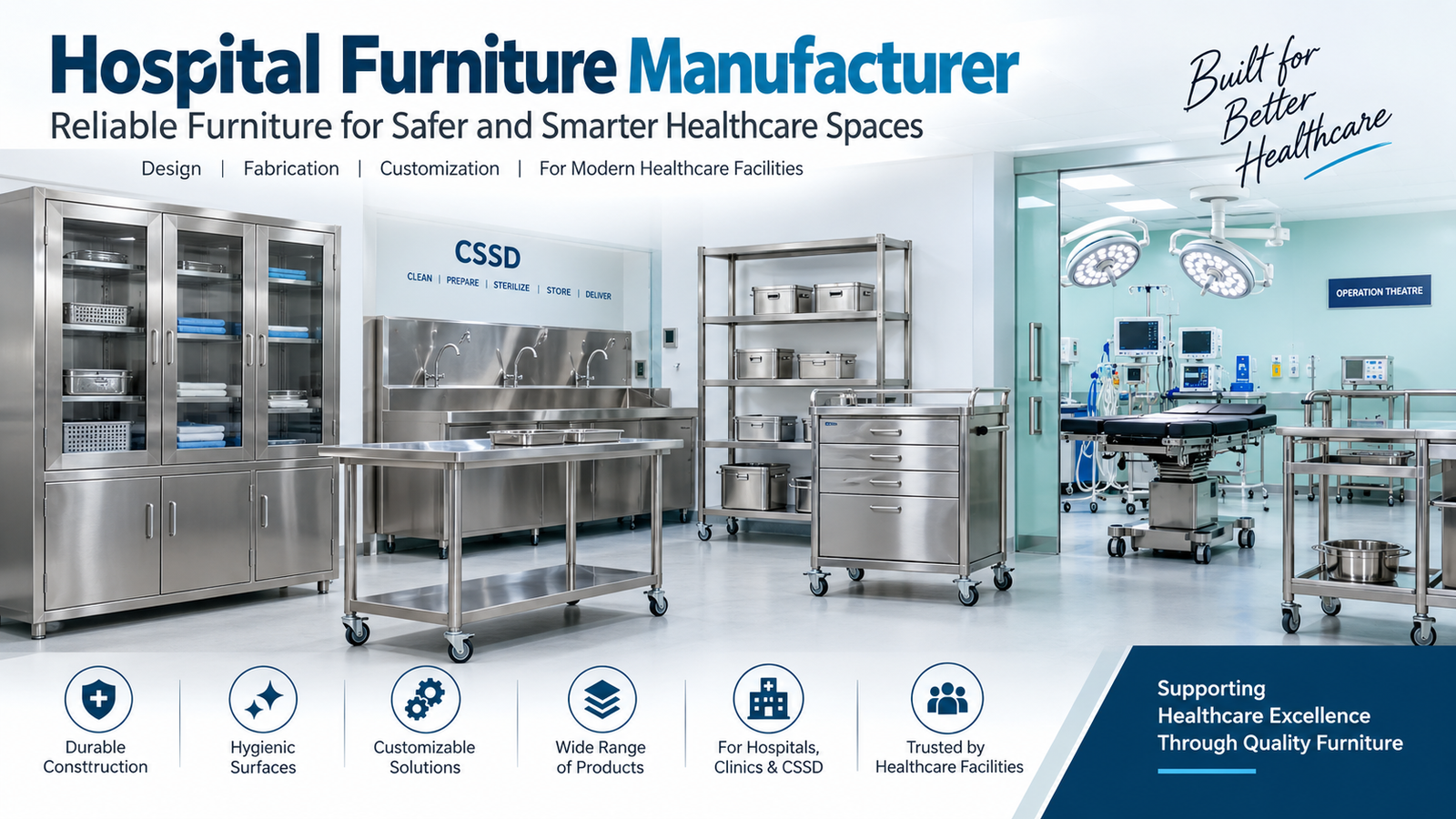
Hospital Furniture Manufacturer: How to Choose the Right Healthcare Furniture for Modern Hospitals

Hospital Furniture Manufacturer: How to Choose the Right Healthcare Furniture for Modern Hospitals

Hospital Furniture Manufacturer: How to Choose the Right Healthcare Furniture for Modern Hospitals

Hospital Furniture Manufacturer - Durable and Hygienic Healthcare Furniture

Introduction

Hospital furniture is more than tables, cabinets, trolleys, and storage units. In healthcare environments, every piece must support hygiene, workflow, durability, safety, and efficient use of space. Choosing the right hospital furniture manufacturer can therefore have a direct impact on daily hospital operations. From patient-care areas and operation theatres to CSSD departments, hospitals need furniture designed around real clinical requirements. The right manufacturing partner can help procurement teams select suitable materials, configurations, and customized solutions while maintaining practical cleaning and maintenance requirements.

AI Overview Summary

A hospital furniture manufacturer designs and supplies specialized furniture for hospitals, clinics, operation theatres, CSSD departments, and other healthcare facilities. Good hospital furniture combines durable materials, hygienic surfaces, functional design, easy cleaning, and customization to support safe and efficient healthcare workflows.

What is a Hospital Furniture Manufacturer?

A hospital furniture manufacturer is a company that designs, fabricates, and supplies furniture specifically for healthcare environments. Unlike conventional commercial furniture, hospital furniture is developed for frequent cleaning, intensive use, controlled workflows, and demanding operating conditions.

Products may include stainless steel cabinets, instrument tables, storage units, trolleys, sinks, workstations, racks, and other hospital furniture and devices used across clinical and support departments.

A specialized manufacturer can also provide customized dimensions, configurations, materials, and finishes according to a hospital’s layout and operational requirements.

Why is Hospital Furniture Important?

Hospital furniture directly supports the movement of people, instruments, supplies, and waste within healthcare facilities. Poorly designed furniture can create unnecessary workflow problems, difficult-to-clean surfaces, limited storage, and inefficient use of available space.

This is particularly important in infection-sensitive environments. WHO guidance highlights environmental cleaning and appropriate infrastructure as important parts of infection prevention and control.

For CSSD departments, furniture must also support the logical movement of instruments through receiving, cleaning, preparation, sterilization, storage, and distribution areas. WHO notes that medical-device reprocessing requires specific infrastructure and sequential processes.

Key Features

When evaluating a hospital furniture manufacturer in India, look for:

  • Hygienic surfaces: Smooth, non-porous surfaces are easier to clean and maintain.
  • Durable construction: Strong fabrication helps furniture withstand frequent daily use.
  • Corrosion resistance: Suitable stainless steel grades can improve service life in demanding areas.
  • Easy maintenance: Simple designs reduce cleaning and maintenance effort.
  • Functional storage: Proper cabinets, racks, and drawers help organize instruments and supplies.
  • Customized fabrication: Dimensions and configurations can be adapted to specific room layouts.
  • Workflow-focused design: Furniture should support the movement of staff, instruments, and materials.

Benefits

Working with experienced hospital furniture manufacturers in India can provide several practical advantages:

  • Better organization of medical instruments and supplies.
  • Easier cleaning and routine surface disinfection.
  • Improved utilization of available hospital space.
  • Reduced disruption caused by unsuitable furniture layouts.
  • Longer service life when appropriate materials are selected.
  • Better coordination between furniture design and departmental workflow.
  • Customized solutions for specialized areas such as CSSD and operation theatres.

Applications

Hospital furniture is used across many healthcare environments, including:

  • General hospitals and specialty hospitals
  • Government and private healthcare facilities
  • Clinics and nursing homes
  • Operation theatres
  • CSSD departments
  • Laboratories and diagnostic centres
  • Medical colleges and institutions
  • Intensive care and patient-care areas
  • Sterile storage and instrument preparation areas

In CSSD environments, CSSD furniture manufacturing may include instrument tables, storage cabinets, workstations, racks, sinks, and other equipment designed around sterile-service workflows. Proper CSSD furniture fabrication should consider cleaning, material handling, ergonomics, and available space.

How to Choose the Right Hospital Furniture Manufacturer

Before selecting a supplier or manufacturing partner, consider these factors:

  1. Check healthcare experience: Choose a company familiar with hospital environments rather than general commercial furniture.
  2. Review material specifications: Ask about stainless steel grades, sheet thickness, fabrication quality, finishes, and hardware.
  3. Evaluate customization: Confirm whether dimensions, layouts, drawers, shelves, sinks, and configurations can be modified.
  4. Consider hygiene requirements: Select designs with accessible surfaces and minimal areas where dirt or moisture can accumulate.
  5. Assess manufacturing capability: Look for evidence of fabrication, quality control, installation, and project-support capabilities.
  6. Compare complete value: Consider durability, maintenance, customization, delivery, installation, and after-sales support instead of comparing only the initial price.

Common Mistakes to Avoid

Hospitals often make avoidable procurement mistakes when furniture is selected only on appearance or price. Common issues include:

  • Choosing general-purpose furniture for specialized clinical areas.
  • Focusing on low initial cost instead of lifecycle value.
  • Ignoring the required stainless steel grade or material specifications.
  • Ordering standard sizes without checking room dimensions.
  • Overlooking cleaning and maintenance requirements.
  • Failing to coordinate furniture with department workflow.
  • Not confirming installation and customization capabilities.
  • Selecting a CSSD furniture supplier without understanding the department’s process flow.

Conclusion

The right hospital furniture can make healthcare spaces more organized, hygienic, durable, and efficient. A capable hospital furniture manufacturer should understand not only fabrication but also the practical requirements of hospitals, CSSD departments, operation theatres, and other healthcare environments.

For procurement teams, the best approach is to define workflow, material, dimensions, hygiene, customization, and maintenance requirements before placing an order. Hospitals looking for reliable furniture solutions can discuss their project requirements with an experienced manufacturer to identify suitable configurations and specifications.

FAQ

What is a hospital furniture manufacturer?

A hospital furniture manufacturer designs, fabricates, and supplies furniture specifically for healthcare environments. Its products may include cabinets, tables, trolleys, sinks, workstations, racks, and storage systems. Unlike conventional furniture, hospital furniture is designed with healthcare workflows, frequent cleaning, durability, hygiene, and practical maintenance requirements in mind.

What are the benefits of hospital furniture?

Hospital furniture helps organize equipment and supplies, supports efficient workflows, improves space utilization, and simplifies routine cleaning. Durable materials can also reduce replacement requirements over time. In specialized areas such as CSSD and operation theatres, purpose-designed furniture can help staff work more efficiently while supporting departmental processes.

Where is hospital furniture used?

Hospital furniture is used in hospitals, clinics, government healthcare facilities, medical colleges, laboratories, operation theatres, CSSD departments, intensive-care areas, sterile storage rooms, and other healthcare environments. The type of furniture required depends on the department’s workflow, available space, hygiene requirements, and equipment-storage needs.

How do I choose the right hospital furniture manufacturer?

Compare manufacturers based on healthcare experience, material quality, fabrication capabilities, customization options, hygiene-focused designs, installation support, and after-sales service. Ask for detailed specifications and confirm that the furniture can accommodate the intended room layout and workflow. Price should be evaluated together with durability and long-term maintenance requirements.

Is hospital furniture customizable?

Yes. Many hospital furniture solutions can be customized according to room dimensions, workflow, storage requirements, equipment sizes, and departmental needs. Manufacturers may modify cabinet layouts, shelf arrangements, dimensions, work surfaces, sinks, drawers, and other features. Custom fabrication can be especially useful for CSSD departments and operation theatres with specific space constraints.

What material is best for hospital furniture?

Stainless steel is widely used for many healthcare applications because appropriate grades offer durability, corrosion resistance, and surfaces that can be cleaned effectively. However, the best material depends on the application, exposure conditions, cleaning procedures, and required service life. Buyers should always confirm the material grade and construction specifications before procurement.

Hospital Furniture Manufacturer in Mumbai: A Practical Guide for Healthcare Facilities

Hospital Furniture Manufacturer in Mumbai: A Practical Guide for Healthcare Facilities

Hospital Furniture Manufacturer in Mumbai: A Practical Guide for Healthcare Facilities

Stainless steel hospital furniture and medical equipment

Introduction

Choosing the right hospital furniture is important for maintaining hygiene, safety, workflow, and patient comfort. Hospitals and healthcare facilities need equipment that can handle frequent use while remaining easy to clean and maintain. A reliable Hospital Furniture Manufacturer in Mumbai can provide products designed around the needs of hospitals, clinics, operation theatres, and CSSD departments. From stainless steel workstations to storage units and medical trolleys, the right furniture supports efficient daily operations and helps healthcare teams maintain organized and hygienic working environments.

AI Overview Summary:
A hospital furniture manufacturer supplies specialized furniture for healthcare environments, including stainless steel tables, cabinets, sinks, trolleys, and CSSD equipment. Hospitals should choose products based on material quality, hygiene, durability, dimensions, customization, safety, and after-sales support.

What is a Hospital Furniture Manufacturer in Mumbai?

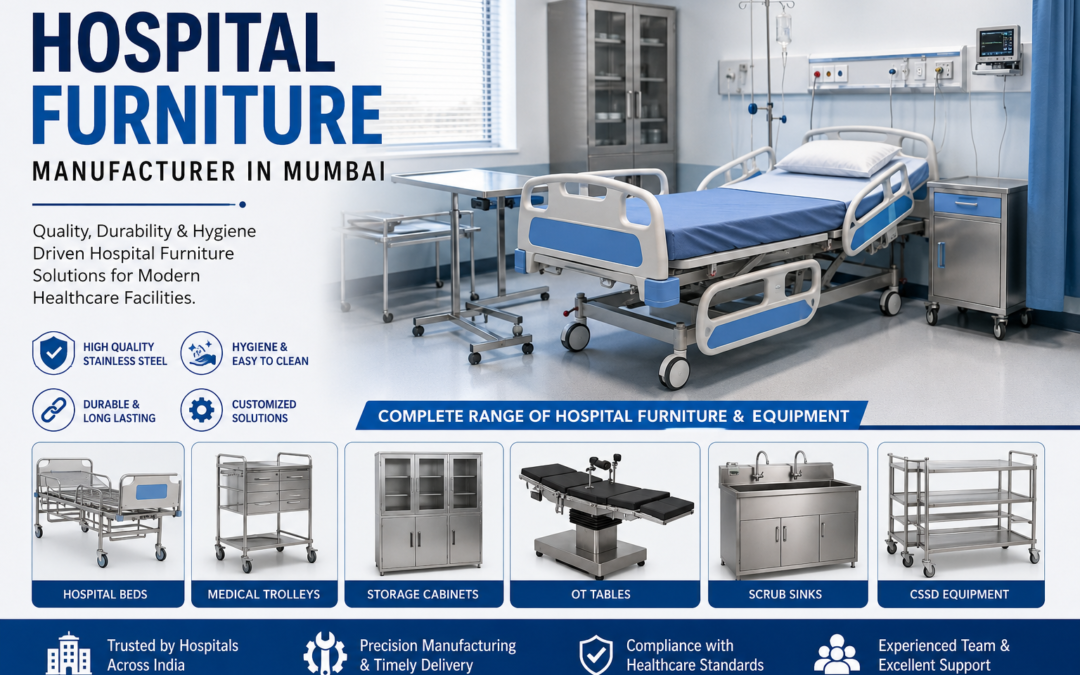
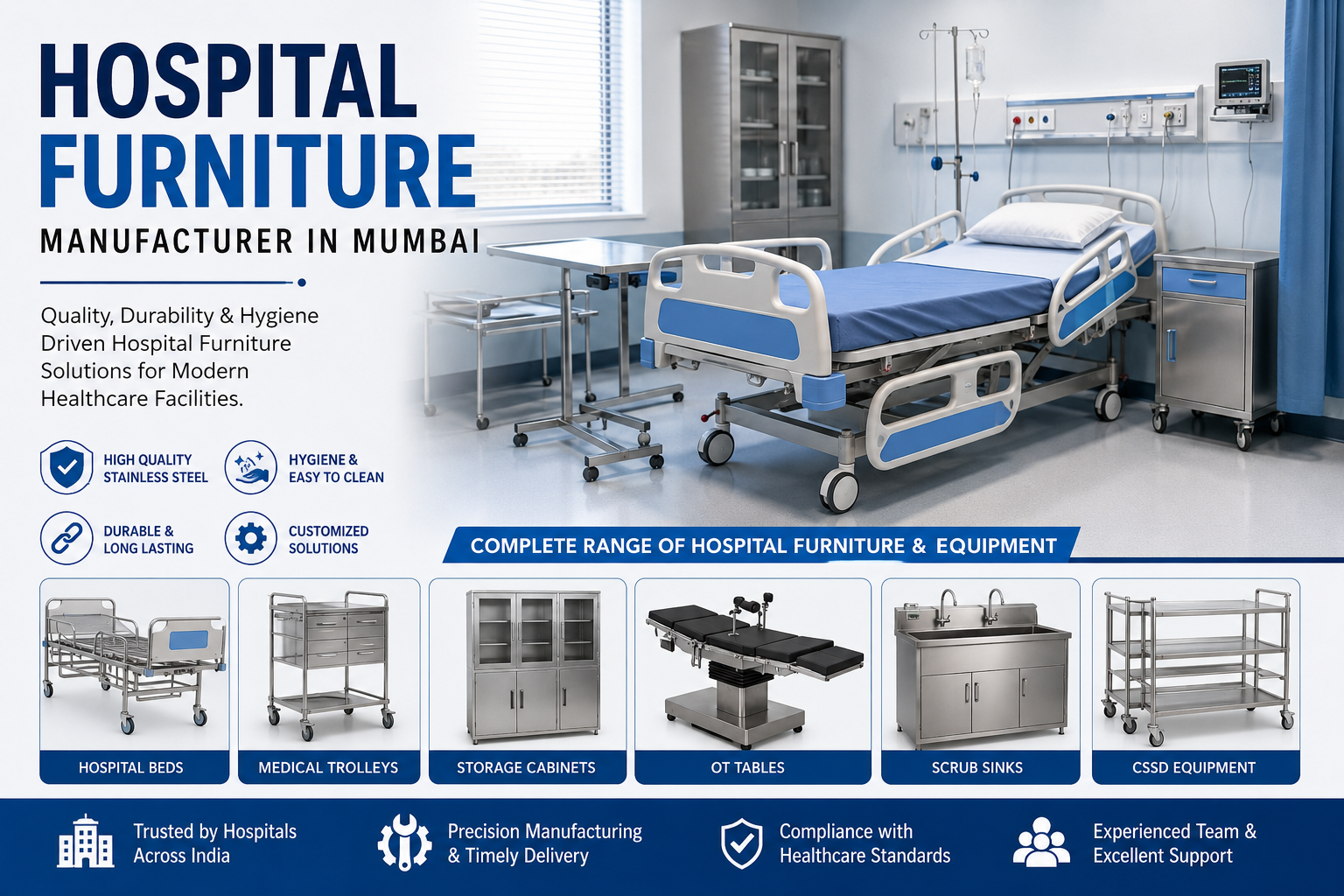
A Hospital Furniture Manufacturer in Mumbai designs and manufactures furniture and selected equipment specifically for healthcare environments. Unlike general furniture, hospital furniture is built around requirements such as hygiene, easy cleaning, durability, mobility, corrosion resistance, and efficient space utilization.

Products may include stainless steel tables, instrument trolleys, storage cabinets, scrub sinks, dressing trolleys, hospital racks, workstations, and other specialized equipment.

Why is it Important?

Healthcare environments require furniture that supports safe and efficient workflows. Poorly designed furniture can make cleaning difficult, waste valuable space, or interfere with staff movement.

A professional manufacturer understands these requirements and can produce equipment suitable for different departments. For example, CSSD departments need organized workstations and storage, while operation theatres require hygienic surfaces and easy-to-clean equipment.

Working with a Medical Equipment Manufacturer in Mumbai can also make it easier to coordinate multiple products for a healthcare project.

Key Features

Important features to consider include:

  • Stainless steel construction: Suitable grades such as SS 304 offer good corrosion resistance and easy cleaning.
  • Hygienic design: Smooth surfaces and fewer difficult-to-clean joints help support infection-control practices.
  • Strong construction: Reinforced frames and quality fabrication help products withstand regular hospital use.
  • Easy mobility: Lockable castors can make trolleys and mobile equipment easier to move safely.
  • Custom dimensions: Furniture can be manufactured according to available space and workflow requirements.
  • Practical storage: Cabinets, racks, and shelves help keep instruments and supplies organized.
  • Easy maintenance: Durable materials and simple construction can reduce routine maintenance requirements.

Benefits

Choosing properly designed hospital furniture can provide several practical benefits:

  • Improves organization of medical supplies and instruments.
  • Supports efficient movement of healthcare staff.
  • Makes routine cleaning and sanitization easier.
  • Helps maximize available floor and storage space.
  • Provides durable solutions for high-use environments.
  • Allows departments to select dimensions and configurations suitable for their workflow.
  • Supports consistent standards across multiple hospital departments.

For large projects, a Hospital Furniture Supplier in Mumbai may also help coordinate different furniture requirements under one procurement process.

Applications

Hospital furniture is used across many healthcare environments, including:

  • Government and private hospitals
  • Clinics and diagnostic centres
  • Operation theatres
  • CSSD departments
  • Emergency and treatment areas
  • Laboratories
  • Medical colleges and institutions
  • Pharmaceutical and healthcare facilities
  • Nursing homes and specialty hospitals

A CSSD Equipment Manufacturer can provide specialized products for sterile processing, instrument handling, storage, and related workflows.

How to Choose the Right Hospital Furniture Manufacturer in Mumbai

Before placing an order, healthcare procurement teams should evaluate the manufacturer carefully.

  1. Check material specifications: Confirm the stainless steel grade, thickness, and fabrication details rather than relying only on general product descriptions.
  2. Review product range: A manufacturer offering furniture for different departments can simplify procurement and project coordination.
  3. Ask about customization: Confirm whether dimensions, shelves, drawers, castors, fittings, and configurations can be adjusted.
  4. Evaluate fabrication quality: Inspect welding, polishing, edges, joints, finishing, and overall structural strength.
  5. Consider hygiene requirements: Products should have smooth, accessible surfaces that are practical to clean and disinfect.
  6. Verify documentation and support: Ask about quotations, technical specifications, warranty terms, delivery timelines, installation, and after-sales assistance.

Common Mistakes to Avoid

Healthcare buyers should avoid selecting products based only on the lowest price. A cheaper product may have thinner material, weaker fabrication, or a design that is difficult to clean.

Another common mistake is failing to confirm exact dimensions before ordering. Buyers should also avoid assuming that all stainless steel furniture uses the same grade or construction quality.

Finally, procurement teams should clearly define department requirements before requesting quotations to ensure suppliers are comparing equivalent specifications.

Conclusion

The right hospital furniture can improve hygiene, organization, durability, and workflow across healthcare facilities. When selecting a Hospital Furniture Manufacturer in Maharashtra, buyers should focus on material quality, fabrication standards, practical design, customization, and service support rather than price alone.

Hospitals, clinics, CSSD departments, and healthcare procurement teams can discuss their department requirements, dimensions, and technical specifications with a qualified manufacturer before finalizing their purchase.

Frequently Asked Questions

What is a Hospital Furniture Manufacturer in Mumbai?

A Hospital Furniture Manufacturer in Mumbai produces specialized furniture and equipment for hospitals, clinics, operation theatres, CSSD departments, laboratories, and other healthcare facilities. Products may include stainless steel tables, cabinets, sinks, trolleys, racks, workstations, and storage solutions designed around healthcare hygiene and workflow requirements.

What are the benefits of hospital furniture?

Hospital furniture can improve workplace organization, hygiene, durability, storage, and staff efficiency. Properly designed products are easier to clean and can withstand frequent use. Stainless steel furniture is particularly useful in many healthcare environments because it offers durability and practical cleaning characteristics.

Where is hospital furniture used?

Hospital furniture is used in operation theatres, CSSD departments, laboratories, emergency areas, patient-care spaces, storage rooms, clinics, diagnostic centres, and medical institutions. Different departments require different furniture configurations depending on their workflow, available space, hygiene requirements, and equipment-handling needs.

How do I choose the right hospital furniture manufacturer?

Compare manufacturers based on material specifications, fabrication quality, product range, customization options, technical documentation, delivery capability, warranty, and after-sales support. It is also important to provide accurate dimensions and department requirements so the manufacturer can recommend suitable products.

Is hospital furniture customizable?

Yes, many hospital furniture products can be customized according to dimensions, storage requirements, number of shelves or drawers, castor configuration, working height, fittings, and department-specific workflows. Buyers should discuss customization requirements with the manufacturer before production so specifications are clearly documented.

What material is best for hospital furniture?

Stainless steel is widely used for healthcare furniture because it is durable, corrosion-resistant, and relatively easy to clean. SS 304 is commonly selected for many hospital applications, while the appropriate material and grade should be determined according to the environment, cleaning procedures, and intended use.

What is the difference between a hospital furniture manufacturer and supplier?

A manufacturer produces the furniture and controls aspects such as fabrication, design, material selection, and customization. A supplier may source products from manufacturers and distribute them to customers. For customized or project-specific requirements, working directly with a manufacturer can provide better control over specifications.

Hospital Furniture Manufacturer: A Complete Guide for Healthcare Facilities

Hospital Furniture Manufacturer: A Complete Guide for Healthcare Facilities

Hospital Furniture Manufacturer: A Complete Guide for Healthcare Facilities

Stainless Steel Hospital Furniture Manufacturer

Introduction

Choosing the right hospital furniture is important for patient safety, infection control, workflow, and long-term operating costs. A reliable Hospital Furniture Manufacturer understands that healthcare furniture must handle frequent cleaning, heavy use, and demanding clinical environments. From ICU and OT furniture to CSSD workstations and stainless-steel storage systems, the right manufacturer can help hospitals create safer, more efficient, and easier-to-maintain spaces.

AI Overview Summary: A hospital furniture manufacturer designs and supplies specialized furniture for healthcare facilities, including patient-care, OT, ICU, CSSD, storage, and utility furniture. The right supplier focuses on durable materials, hygienic surfaces, ergonomic design, customization, quality control, and after-sales support to meet the practical needs of hospitals and healthcare professionals.

What is a Hospital Furniture Manufacturer?

A Hospital Furniture Manufacturer is a company that designs, manufactures, and supplies furniture specifically for healthcare environments. Its products can include hospital beds, examination tables, instrument trolleys, work tables, storage cabinets, scrub sinks, dressing trolleys, stainless steel furniture, and CSSD equipment.

Unlike general furniture, healthcare furniture must support hygiene, durability, safe movement, organized storage, and regular cleaning. WHO highlights environmental cleaning and disinfection as important parts of infection prevention in healthcare facilities?

Why is Hospital Furniture Important?

Hospital furniture directly affects how healthcare professionals perform daily tasks. Poorly designed furniture can make cleaning difficult, waste valuable space, and slow down clinical workflows.

Well-designed furniture supports:

  • Infection control: Smooth, accessible surfaces are easier to clean and disinfect.
  • Workflow efficiency: Properly positioned tables, trolleys, and cabinets keep essential items within reach.
  • Durability: Commercial-grade construction can withstand frequent daily use.
  • Safety: Stable frames, suitable dimensions, and practical layouts reduce operational risks.
  • Space management: Customized storage helps hospitals use available floor space efficiently.

These considerations also align with the broader focus of NABH hospital standards on infection control, patient safety, and facilities management.

Key Features

  • Stainless steel construction: Suitable grades provide corrosion resistance and support repeated cleaning.
  • Easy-to-clean surfaces: Smooth finishes reduce areas where dirt and contaminants can accumulate.
  • Strong construction: Reinforced frames help furniture withstand regular hospital use.
  • Ergonomic design: Appropriate working heights and accessible storage improve staff comfort.
  • Mobility options: Lockable castors allow selected trolleys to move safely between departments.
  • Customization: Dimensions, shelves, drawers, configurations, and accessories can be adapted to project requirements.

Benefits

  • Longer service life and lower replacement frequency.
  • Easier routine cleaning and maintenance.
  • Better organization of medical supplies and instruments.
  • Improved staff productivity and workflow.
  • More efficient use of hospital space.
  • Consistent furniture specifications across multiple departments.

Applications

Hospital furniture is used across multi-specialty hospitals, emergency and trauma centers, ICUs, operation theatres, clinics, nursing homes, medical colleges, diagnostic areas, and government and private healthcare institutions.

Specialized products are also required in CSSD, where workstations, instrument washing sinks, storage systems, pass boxes, and related equipment support the movement and handling of sterile and non-sterile items.

How to Choose the Right Hospital Furniture Manufacturer

  1. Check material specifications: Confirm the stainless-steel grade, thickness, finish, and construction method.
  2. Review product range: Choose a manufacturer capable of supplying multiple departments when possible.
  3. Ask about customization: Hospital layouts often require furniture made to specific dimensions.
  4. Evaluate quality control: Ask about fabrication, welding, finishing, load capacity, and inspection procedures.
  5. Consider installation and service: Clarify delivery, installation, warranty, spare parts, and after-sales support.
  6. Request technical documentation: Drawings, specifications, product datasheets, and relevant certifications can simplify procurement and evaluation.

For buyers searching locally, comparing a Hospital Furniture Manufacturer in Mumbai, Hospital Furniture Manufacturer in Maharashtra, or a Hospital Furniture Supplier India should focus on technical capability rather than location alone.

Common Mistakes to Avoid

  • Selecting furniture based only on the lowest quotation.
  • Ignoring stainless steel grade and material thickness.
  • Buying standard sizes without checking room dimensions.
  • Overlooking cleaning and disinfection requirements.
  • Failing to confirm warranty and service support.
  • Purchasing different products without checking compatibility across departments.

Conclusion

The right hospital furniture should support hygiene, safety, durability, workflow, and efficient space utilization. Whether a facility needs Stainless Steel Hospital Furniture, CSSD systems, storage cabinets, trolleys, sinks, or specialized workstations, selecting an experienced manufacturer can make procurement more reliable. Hospitals should compare specifications, customization capability, quality practices, documentation, and after-sales support before making a final decision.

Frequently Asked Questions

What is a Hospital Furniture Manufacturer?

A Hospital Furniture Manufacturer designs and produces furniture specifically for healthcare environments. Products may include hospital beds, trolleys, cabinets, sinks, workstations, examination furniture, and stainless-steel systems. These products are designed around practical healthcare requirements such as durability, cleaning, mobility, storage, ergonomics, and departmental workflow.

What are the benefits of hospital furniture?

Hospital furniture can improve workflow, organization, hygiene, durability, and staff efficiency. Properly designed furniture is easier to clean, supports safer handling of equipment and supplies, and can make better use of available space. Stainless steel options are particularly useful where frequent cleaning and resistance to corrosion are important.

Where is hospital furniture used?

Hospital furniture is used in ICUs, operation theatres, emergency departments, wards, clinics, nursing homes, laboratories, CSSD areas, treatment rooms, and storage spaces. Different departments require different designs, dimensions, materials, and mobility features depending on clinical activities and cleaning requirements.

How do I choose the right hospital furniture manufacturer?

Compare manufacturers based on material specifications, product quality, customization capability, technical documentation, manufacturing experience, delivery capability, warranty, and after-sales service. Buyers should also review samples or drawings where appropriate and confirm that the proposed furniture matches the intended room layout and operational requirements.

Is hospital furniture customizable?

Yes, many healthcare furniture products can be customized. Hospitals may require specific dimensions, drawer configurations, shelf arrangements, working heights, castors, accessories, or department-specific designs. Customization is particularly useful for OT, ICU, CSSD, laboratory, and storage areas where space and workflow requirements can vary considerably.

What material is best for hospital furniture?

Stainless steel is widely used for healthcare furniture because suitable grades offer durability, corrosion resistance, and surfaces that can be cleaned effectively. The appropriate grade, thickness, finish, and fabrication method depend on the application. Buyers should select material specifications based on the department, cleaning process, expected load, and operating environment.

MRI Compatible Patient Trolley: Safe and Efficient Patient Transport

MRI Compatible Patient Trolley: Safe and Efficient Patient Transport

MRI Compatible Patient Trolley: Safe and Efficient Patient Transport

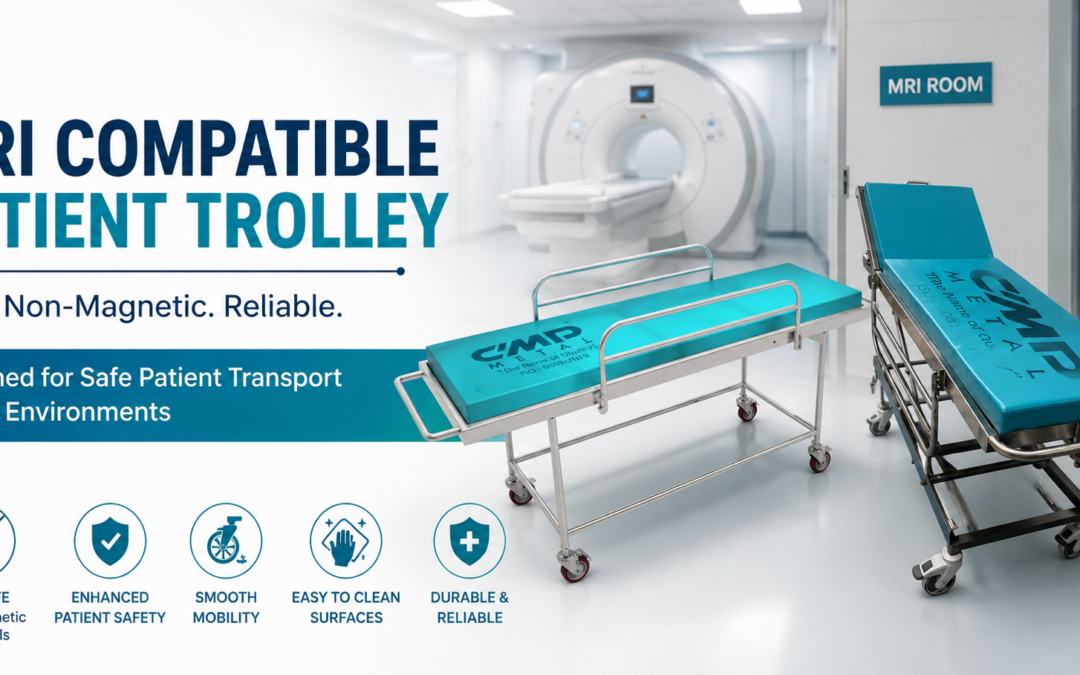
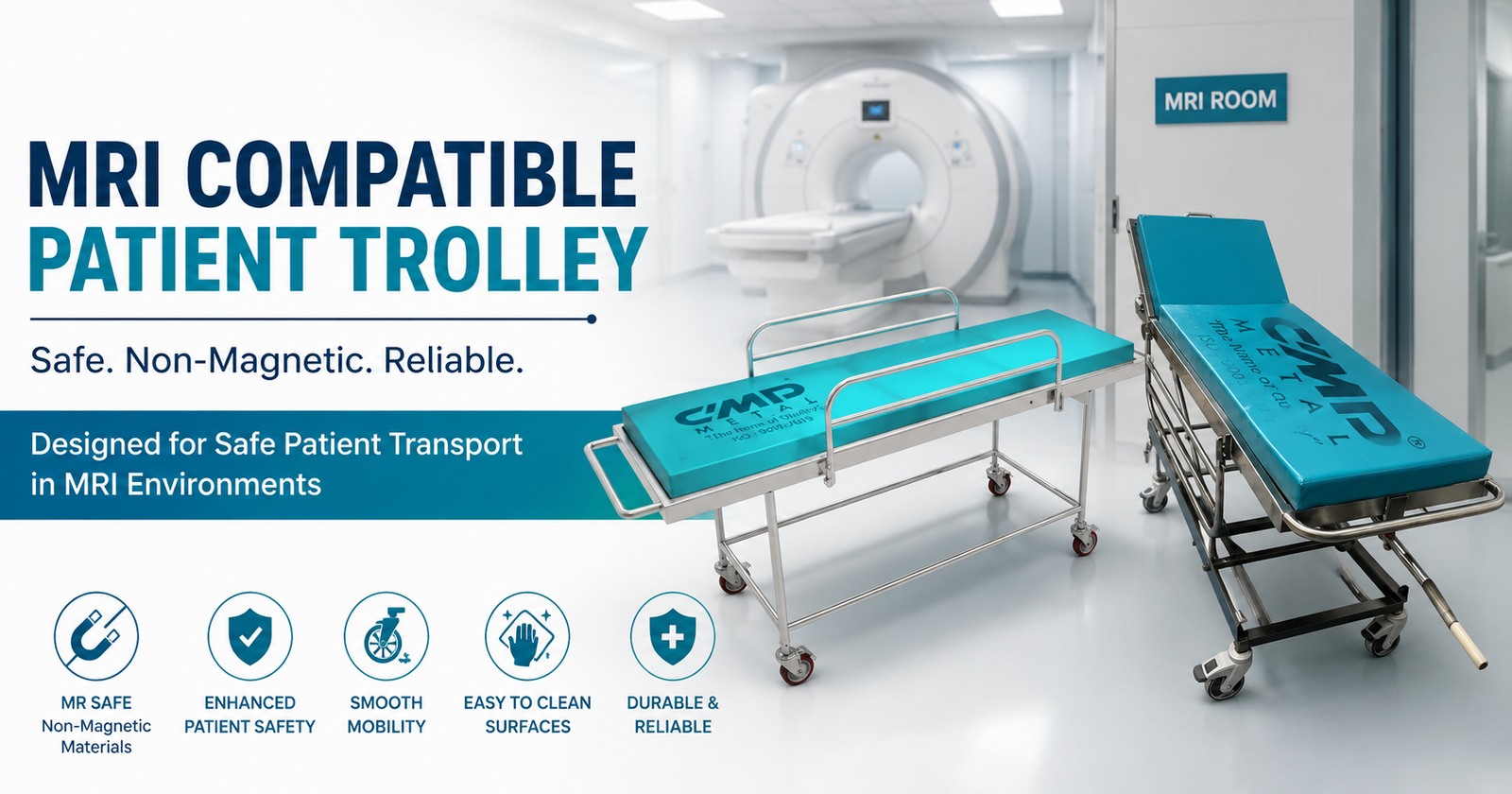
MRI Compatible Patient Trolley

Introduction

MRI departments require a different approach to patient transportation because the scanner generates a powerful magnetic field. A conventional hospital trolley may contain magnetic materials that can create serious safety risks near the MRI system. An MRI compatible patient trolley is designed to support safer patient movement in MRI areas using suitable materials, construction, and mobility features. For hospitals, emergency departments, and diagnostic centers, selecting the right trolley can improve patient handling, reduce transfer risks, and support a smoother MRI workflow.

AI Overview Summary: An MRI compatible patient trolley is a specialized patient transport system designed for use in MRI environments. It uses appropriately selected non-magnetic or MR-conditional components, stable mobility features, and patient-support surfaces to help healthcare teams move patients safely around MRI facilities.

What is an MRI Compatible Patient Trolley?

An MRI compatible patient trolley is a patient transport trolley specifically designed for use in or around a magnetic resonance imaging environment. Unlike ordinary hospital trolleys, its materials and components must be evaluated for their interaction with the MR environment.

The FDA notes that MRI environments can create risks such as magnetic displacement, torque, heating, device malfunction, and image-quality problems. Equipment intended to enter an MR environment therefore needs appropriate safety evaluation and labeling.

Why is it Important?

MRI scanners use strong static magnetic fields, so unsuitable equipment can become a projectile hazard or otherwise interfere with safe operations. The American College of Radiology recommends structured MR safety policies covering equipment, objects, patients, and personnel.

A dedicated trolley can help hospitals:

  • Move patients between wards and MRI areas more efficiently.
  • Reduce the risk associated with unsuitable transport equipment.
  • Support transfers for patients with limited mobility.
  • Improve workflow in busy diagnostic imaging departments.
  • Provide a controlled platform for patient transportation.

Key Features

A suitable MRI transport trolley may include:

  • MR-compatible construction: Materials and components are selected according to the specified MR environment and safety requirements.
  • Stable caster system: Smooth movement and reliable braking help control the trolley during patient transfers.
  • High load capacity: Supports patients safely according to the specified working load.
  • Patient safety features: Side rails, secure mattress surfaces, and locking mechanisms can improve transfer safety.
  • Easy-clean surfaces: Smooth surfaces simplify routine cleaning and infection-control procedures.
  • Ergonomic design: Appropriate height and handling features can reduce unnecessary physical strain on staff.
  • Custom configuration: Dimensions and accessories can be adapted to hospital workflow where appropriate.

Benefits

  • Improved patient safety: Helps reduce hazards associated with unsuitable equipment around MRI systems.
  • Faster patient movement: Makes transfers between departments more organized.
  • Better staff handling: Designed mobility can make patient transportation easier.
  • Reduced workflow interruptions: Dedicated equipment helps MRI teams avoid unnecessary equipment changes.
  • Hygienic operation: Easy-to-clean surfaces support healthcare cleaning procedures.
  • Flexible use: Appropriate designs can serve hospitals, imaging centers, and critical-care transport needs.

Applications

MRI-compatible patient transport solutions are useful in:

  • Hospitals and multi-specialty hospitals
  • Emergency and trauma centers
  • ICU and critical-care units
  • Operation theatres
  • Diagnostic imaging centers
  • Clinics and nursing homes
  • Medical colleges and teaching hospitals
  • Government and private healthcare institutions

Specialized transport wheel trolleys for MRI shifting can be used when patients need controlled movement to and from MRI areas. Equipment intended for moving MRI system components or magnets is a different application and should not be confused with a patient trolley.

How to Choose the Right MRI Compatible Patient Trolley

  1. Verify MR status: Check whether the trolley is MR Safe or MR Conditional and understand the exact conditions of use.
  2. Check the material specification: Do not rely only on terms such as “non-magnetic”; request appropriate technical documentation.
  3. Match the load capacity: Select a model suitable for the maximum expected patient weight and equipment load.
  4. Evaluate dimensions: Ensure the trolley fits through doors, corridors, transfer areas, and the intended MRI workflow.
  5. Check mobility and brakes: Wheels should provide controlled movement and secure positioning.
  6. Review hospital requirements: Consider side rails, height adjustment, mattress type, cleaning needs, and other required accessories.

The FDA advises that MR Conditional equipment is safe only when used according to its specified conditions.

Common Mistakes to Avoid

  • Assuming every stainless-steel trolley is automatically MRI compatible.
  • Buying without checking documented MR safety status.
  • Focusing only on price instead of safety specifications.
  • Ignoring trolley dimensions and patient load capacity.
  • Using a standard hospital trolley inside an MRI-controlled area.
  • Confusing a trolley for moving MRI magnets with a patient transport trolley.
  • Failing to involve the hospital’s MR safety personnel before introducing equipment.

Conclusion

An MRI compatible patient trolley is an important part of safe patient transportation in MRI facilities. The right model combines suitable materials, stable mobility, patient-support features, and clearly defined MR safety conditions. Hospitals should evaluate the trolley against their MRI zone requirements, patient needs, and internal safety procedures before purchase. For specifications, customization options, or product guidance, healthcare procurement teams can contact the manufacturer and request detailed technical information.

Frequently Asked Questions

What is an MRI compatible patient trolley?

An MRI compatible patient trolley is a specialized transport trolley designed for patient movement in an MR environment. Its materials and components are selected and evaluated according to applicable MRI safety requirements. The exact MR status and conditions of use should always be verified from the manufacturer’s documentation before the trolley enters an MRI-controlled area.

What are the benefits of an MRI compatible patient trolley?

The main benefits include safer patient transportation, controlled movement, easier transfers, improved workflow, and reduced risk from unsuitable equipment near MRI systems. Features such as stable wheels, brakes, side rails, suitable patient support, and easy-clean surfaces can further improve day-to-day usability in hospitals and diagnostic imaging departments.

Where is an MRI compatible patient trolley used?

It is primarily used in MRI departments, diagnostic imaging centers, hospitals, emergency areas, and other healthcare environments where patients must be transported to or from an MRI examination. The trolley’s specific MR status determines where it can safely be used, so facilities should follow the manufacturer’s conditions and their own MR safety procedures.

How do I choose the right MRI compatible patient trolley?

Start by checking the trolley’s documented MR safety status and conditions of use. Then evaluate load capacity, dimensions, wheel and brake performance, patient-support features, cleaning requirements, and compatibility with the hospital’s workflow. It is also important to confirm that the trolley can be safely used in the intended MRI zone.

Is an MRI patient trolley customizable?

Yes, some manufacturers can customize dimensions, patient-support features, side rails, height, wheel configuration, and other design elements according to healthcare requirements. However, customization should not be assumed to retain the original MR safety status. Any modified configuration should be properly evaluated and documented before use in an MR environment.

What material is best for an MRI compatible trolley?

There is no single material that is automatically best for every MRI application. Materials and components should be selected according to the intended MR environment and required safety status. Aluminum, suitable non-magnetic materials, polymers, and other appropriately evaluated components may be used depending on the design and manufacturer’s specifications.

Hospital Furniture Manufacturer in Mumbai

Hospital Furniture Manufacturer in Mumbai

Hospital Furniture Manufacturer in Mumbai

Hospital Furniture Manufacturer in Mumbai

Introduction

Healthcare facilities require durable, hygienic, and functional furniture to maintain smooth operations and patient safety. From hospital beds and trolleys to CSSD equipment and stainless steel storage systems, every product plays an important role in modern healthcare infrastructure.

Choosing the right Hospital Furniture Manufacturer in Mumbai is essential because low-quality hospital furniture can create hygiene issues, increase maintenance costs, and reduce operational efficiency. Hospitals, clinics, laboratories, and healthcare centers need furniture that is durable, easy to clean, and designed for medical environments.

Mumbai is one of India’s major healthcare and industrial hubs, making it a preferred destination for hospitals looking for reliable medical furniture and equipment manufacturers.

Why Hospital Furniture Quality Matters

Hospital furniture is designed for continuous use in demanding healthcare environments. Unlike regular furniture, medical furniture must support infection control, patient comfort, and healthcare workflows.

Poor-quality furniture can lead to:

  • Rusting and corrosion
  • Difficult cleaning and sanitization
  • Short product lifespan
  • Higher maintenance costs
  • Patient discomfort
  • Operational inefficiencies

A trusted Hospital Furniture Manufacturer in Maharashtra focuses on durability, ergonomic designs, and healthcare-specific manufacturing standards.

Common Problems Buyers Face

1. Low-Quality Materials

Inferior steel and poor fabrication reduce product lifespan and reliability.

2. Poor Hygiene Design

Furniture with rough surfaces and difficult-to-clean corners can increase infection risks.

3. Limited Product Customization

Hospitals often require customized sizes and configurations for different departments.

4. Delivery Delays

Project timelines may suffer due to delayed manufacturing and installation.

5. Weak After-Sales Support

Long-term maintenance and spare part support are important for hospital operations.

Types of Hospital Furniture

Patient Room Furniture

  • Hospital beds
  • Bedside lockers
  • Overbed tables
  • Patient trolleys
  • Examination couches

Operation Theatre Furniture

  • OT tables
  • Instrument trolleys
  • Mayo tables
  • Scrub sinks
  • Storage cabinets

CSSD Equipment

A reliable CSSD Equipment Manufacturer provides equipment for sterilization and infection control departments.

  • Sterile storage racks
  • Instrument washing sinks
  • Transfer trolleys
  • Packing tables
  • Pass boxes

ICU & Emergency Furniture

  • Crash carts
  • Monitor stands
  • Emergency trolleys
  • IV stands

Benefits of Stainless Steel Hospital Furniture

Modern healthcare facilities prefer Stainless Steel Hospital Furniture because of its durability and hygiene advantages.

  • Rust resistance
  • Easy cleaning and sanitization
  • Long service life
  • Professional appearance
  • Low maintenance
  • Better infection control

A trusted Stainless Steel Hospital Furniture Manufacturer in Mumbai provides products designed specifically for healthcare environments.

Features of High-Quality Hospital Furniture

Premium Stainless Steel

High-grade stainless steel improves durability and corrosion resistance.

Smooth Surface Finish

Seamless finishing helps maintain proper hygiene standards.

Ergonomic Design

Comfortable and functional designs improve usability for patients and healthcare staff.

Easy Mobility

Trolleys and movable equipment should have smooth wheel systems for easy handling.

Customization Options

Healthcare facilities often require customized dimensions and layouts.

Comparison: Stainless Steel vs Conventional Furniture

Feature Stainless Steel Furniture Conventional Furniture
Durability High Moderate
Rust Resistance Excellent Low
Hygiene Easy to sanitize Difficult to clean
Maintenance Low Higher
Lifespan Long-term Shorter
Appearance Modern and professional Basic

How to Choose the Right Hospital Furniture Supplier

1. Check Industry Experience

Select a manufacturer experienced in healthcare projects and hospital infrastructure.

2. Review Product Range

A complete product portfolio reflects strong manufacturing capability.

3. Verify Material Quality

Always confirm stainless steel grade and fabrication quality.

4. Ask About Customization

Hospitals often require department-specific furniture solutions.

5. Compare Long-Term Value

Focus on durability and reliability rather than only pricing.

Common Mistakes to Avoid

  • Choosing products based only on low cost
  • Ignoring material quality
  • Not checking product finishing
  • Skipping supplier verification
  • Overlooking customization requirements

Expert Tips Before Buying Hospital Furniture

  • Prioritize hygiene-friendly designs
  • Choose corrosion-resistant materials
  • Check product durability for long-term use
  • Ask for product demonstrations
  • Select experienced healthcare furniture manufacturers

An experienced Medical Equipment Manufacturer in Mumbai understands hospital workflow requirements and provides better healthcare solutions.

Why Mumbai is a Major Hub for Hospital Furniture Manufacturing

Mumbai has become a leading center for healthcare furniture manufacturing due to:

  • Strong industrial infrastructure
  • Advanced stainless steel fabrication
  • Skilled workforce
  • Growing healthcare sector
  • Better logistics and supply chain support

Conclusion

Selecting the right Hospital Furniture Manufacturer in Mumbai is important for maintaining healthcare quality, hygiene, and operational efficiency.

From patient care furniture to sterilization systems and stainless steel hospital equipment, healthcare facilities require durable and reliable products designed for long-term performance. Choosing a trusted manufacturer helps hospitals create safer, cleaner, and more efficient healthcare environments.

FAQs

1. Why is stainless steel used in hospital furniture?

Stainless steel is durable, rust-resistant, hygienic, and easy to clean.

2. What products are included in hospital furniture?

Hospital furniture includes beds, trolleys, OT equipment, cabinets, and CSSD systems.

3. How do I choose a hospital furniture supplier?

Check product quality, experience, customization options, and after-sales support.

4. What is CSSD equipment?

CSSD equipment is used for sterilization, cleaning, and safe storage of medical instruments.

5. Why is customization important in hospital furniture?

Different hospital departments require specific layouts and furniture dimensions.

6. What are the benefits of stainless steel hospital furniture?

It offers better hygiene, long lifespan, and low maintenance.

7. Does hospital furniture require maintenance?

Yes, regular cleaning and inspections improve durability and hygiene standards.