Instrument Washing Sink: Complete Guide for Hospitals, CSSD & Labs

Instrument Washing Sink: Complete Guide for Hospitals, CSSD & Labs

Instrument Washing Sink: Complete Guide for Hospitals, CSSD & Labs

instrument washing sink

In healthcare and laboratory environments, maintaining hygiene is not just important—it is critical. One of the most essential pieces of equipment used for cleaning and pre-sterilization is the instrument washing sink. These sinks are specifically designed to ensure proper cleaning of surgical instruments, medical tools, and laboratory equipment before sterilization.

This guide explains everything you need to know about instrument washing sinks, including their types, features, uses, and how to choose the right one for your facility.

What is an Instrument Washing Sink?

An instrument washing sink is a specialized stainless steel sink used in hospitals, CSSD (Central Sterile Services Department), and laboratories to clean and rinse medical instruments. Unlike regular sinks, these are designed to meet strict hygiene standards and ensure efficient water drainage.

They play a key role in infection control by removing contaminants from surgical tools before sterilization.

Why Instrument Cleaning is Important in Healthcare?

Cleaning medical instruments properly is the first and most crucial step in sterilization. If instruments are not cleaned thoroughly, sterilization may not be effective, leading to potential infections.

  • Removes biological contaminants
  • Prepares instruments for sterilization
  • Reduces risk of hospital-acquired infections (HAIs)
  • Ensures patient safety

Types of Instrument Washing Sinks

There are different types of instrument washing sinks for hospitals depending on the requirement and space availability.

1. Wall Mounted Instrument Washing Sink

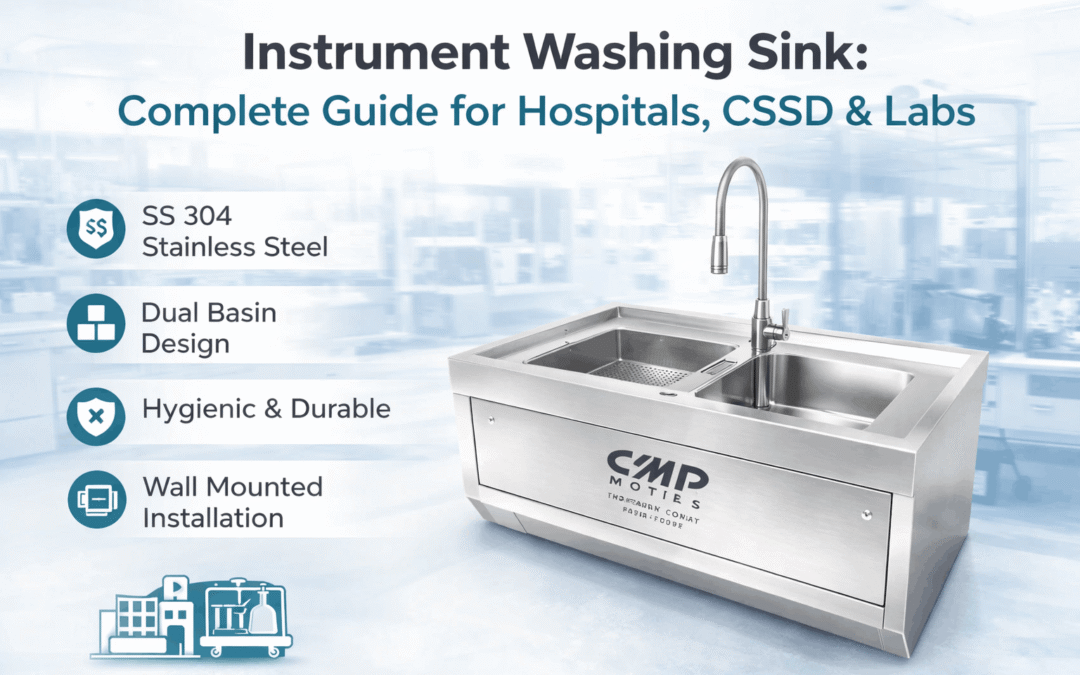
These sinks are fixed to the wall, making them ideal for areas where space is limited. They are easy to clean and maintain, making them suitable for sterile environments.

2. Instrument Washing Sink with Cabinet

This type includes storage space below the sink, allowing users to keep cleaning tools and chemicals organized.

3. Stainless Steel Instrument Washing Sink

Made from SS 304 material, these sinks are corrosion-resistant, durable, and hygienic, making them ideal for medical environments.

4. Medical Instrument Washing Sink

Designed for laboratories and research facilities, these sinks handle delicate instruments that require careful cleaning.

Key Features of Instrument Washing Sink

  • Constructed using SS 304 stainless steel
  • Dual basin or slope design for better workflow
  • Efficient drainage system
  • Wall-mounted or floor-mounted options
  • Compatible with sensor, elbow, or manual operation
  • Smooth surface for easy cleaning

Applications of Instrument Washing Sink

Instrument washing sinks are widely used in different sectors:

  • Hospitals and operation theatres
  • CSSD departments
  • Pharmaceutical manufacturing units
  • Biotech and research laboratories
  • Cleanroom environments

How Does an Instrument Washing Sink Work?

The process of using an instrument washing sink involves multiple steps:

  1. Pre-rinsing instruments to remove visible debris
  2. Applying cleaning solution or detergent
  3. Scrubbing instruments manually or using tools
  4. Rinsing with clean water
  5. Drying before sterilization

This process ensures that instruments are properly cleaned before entering the sterilization phase.

Factors to Consider Before Choosing an Instrument Washing Sink

Selecting the right hospital instrument washing sink depends on several factors:

  • Available space for installation
  • Number of users and workload
  • Type of instruments being cleaned
  • Water supply and drainage system
  • Material quality (prefer SS 304)

Advantages of Stainless Steel Instrument Washing Sink

  • Highly durable and long-lasting
  • Resistant to corrosion and chemicals
  • Easy to clean and maintain
  • Hygienic and suitable for medical use
  • Strong structure for heavy-duty usage

Difference Between Normal Sink and Instrument Washing Sink

Normal Sink Instrument Washing Sink
Used for general cleaning Used for medical instrument cleaning
No hygiene standards Designed for infection control
Basic drainage Advanced drainage system
Regular material SS 304 stainless steel

Maintenance Tips

  • Clean the sink daily after use
  • Use non-corrosive cleaning agents
  • Check drainage system regularly
  • Avoid harsh chemicals
  • Inspect for damage or leakage

Where to Find Instrument Washing Sink?

If you are looking for detailed specifications and design options, you can explore this wall mounted instrument washing sink page for better understanding of structure and usage.
 

Frequently Asked Questions (FAQs)

What is the purpose of an instrument washing sink?

It is used to clean and rinse medical instruments before sterilization to maintain hygiene and prevent infections.

Which material is best for instrument washing sinks?

Stainless steel (SS 304) is considered the best due to its durability, corrosion resistance, and hygienic properties.

Where are instrument washing sinks used?

They are commonly used in hospitals, CSSD departments, laboratories, and pharmaceutical industries.

Is wall mounted sink better?

Yes, wall mounted sinks are easy to clean, save space, and are ideal for sterile environments.


Conclusion

An instrument washing sink is an essential part of any healthcare or laboratory setup. It ensures proper cleaning of instruments, supports infection control, and improves overall workflow efficiency.

Choosing the right type and maintaining it properly can significantly impact hygiene standards and operational performance.
Closed Transport Trolley: Complete Guide for Hospital, CSSD & Pharma Use

Closed Transport Trolley: Complete Guide for Hospital, CSSD & Pharma Use

Closed Transport Trolley: Complete Guide for Hospital, CSSD & Pharma Use

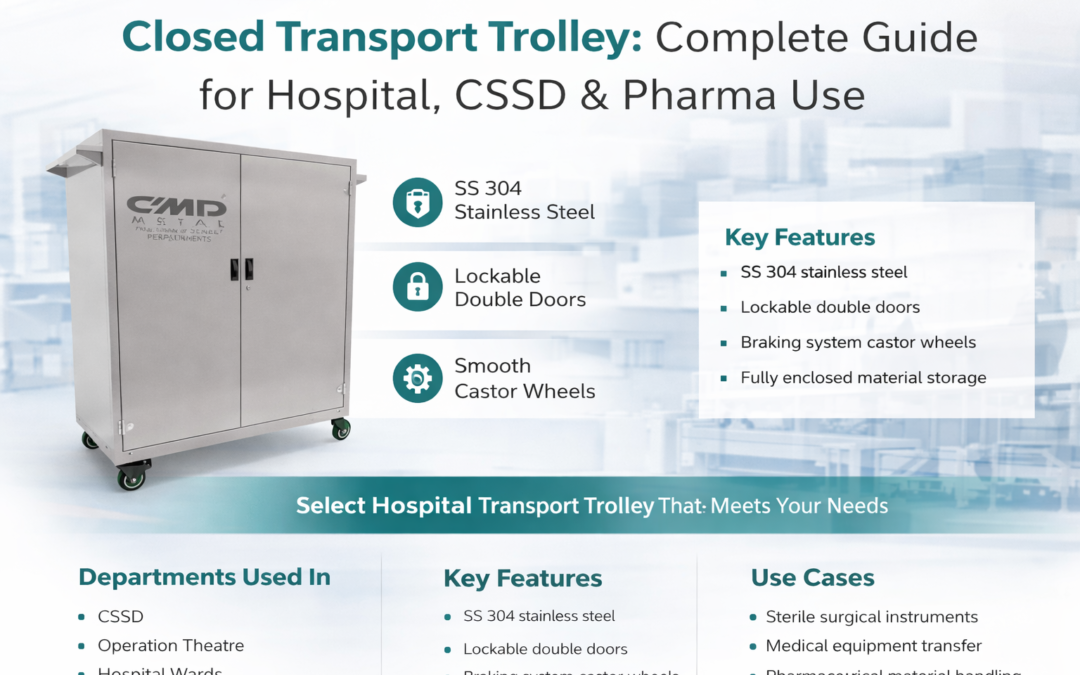
Closed transport trolley for hospital CSSD and pharmaceutical use with stainless steel body and lockable doors

In modern healthcare and pharmaceutical environments, maintaining hygiene, safety, and efficiency is critical. One of the most essential equipment used for controlled material movement is the Closed Transport Trolley. This type of trolley is widely used as a Hospital Transport Trolley in medical facilities where contamination control is a top priority.

Designed with a fully enclosed structure, a Stainless Steel Closed Transport Trolley ensures that instruments and materials remain protected from external exposure. It is commonly used in hospitals, CSSD departments, laboratories, and pharmaceutical industries for safe and hygienic handling.

What is a Closed Transport Trolley?

A Closed Transport Trolley is a specialized Medical Storage Trolley designed to transport equipment, surgical instruments, and materials within controlled environments. Unlike open trolleys, it features lockable doors and enclosed storage, which helps maintain sterility during movement.

Most trolleys are manufactured using SS 304 stainless steel, making them corrosion-resistant, durable, and easy to clean. This makes them suitable for high-standard environments such as hospitals and pharmaceutical facilities.

Importance of Closed Transport Trolley in Healthcare

  • Prevents contamination during material transport
  • Maintains hygiene standards in medical environments
  • Ensures safe and secure storage with lockable doors
  • Improves workflow efficiency across departments
  • Reduces manual handling risks

Using a CSSD Transport Trolley in sterile environments ensures that medical instruments remain safe from contamination while being transferred between departments. For advanced applications, choosing a high-quality hospital transport trolley can significantly improve workflow efficiency and safety.

Key Features of Stainless Steel Closed Transport Trolley

  • SS 304 stainless steel construction for long durability
  • Fully enclosed design for contamination control
  • Lockable double doors for added safety
  • Smooth castor wheels with braking system
  • Multiple shelves for organized storage
  • Easy to clean surface for hygienic use

Departments Where Closed Transport Trolley is Used

1. CSSD (Central Sterile Supply Department)

In CSSD, maintaining sterility is essential. A CSSD Transport Trolley is used to move sterilized instruments safely from sterilization units to operation theatres without contamination.

2. Operation Theatre (OT)

Inside operation theatres, a Hospital Transport Trolley ensures that surgical instruments are transported safely and remain sterile until they are used.

3. Hospital Wards

Closed transport trolleys are used for carrying medicines, equipment, and supplies between departments, ensuring hygiene and safe handling.

4. Pharmaceutical Industry

In pharma manufacturing, a Stainless Steel Closed Transport Trolley is used to transfer materials between cleanrooms and production zones while maintaining contamination control.

5. Laboratories & Cleanrooms

In labs and cleanroom environments, these trolleys support safe transport of sensitive materials while protecting them from external exposure.

Use Cases of Closed Transport Trolley

  • Transporting sterile surgical instruments
  • Moving medical equipment safely
  • Handling pharmaceutical materials
  • Carrying lab samples and tools
  • Secure storage and movement of sensitive items

How to Choose the Right Transport Trolley?

Choosing the right Medical Storage Trolley depends on operational needs. Consider the following factors:

  • Material quality (SS 304 recommended)
  • Size and storage capacity
  • Wheel quality and mobility
  • Locking mechanism for safety
  • Ease of cleaning and maintenance

Benefits for Hospitals & Pharma Industry

  • Improves infection control standards
  • Enhances operational efficiency
  • Ensures compliance with hygiene protocols
  • Reduces contamination risks
  • Provides safe and secure material handling

Maintenance & Cleaning Tips

  • Clean regularly using disinfectant solutions
  • Avoid harsh chemicals that damage stainless steel
  • Check wheels and brakes regularly
  • Ensure doors and locks function properly

Conclusion

Closed transport trolleys are an essential part of modern healthcare and pharmaceutical operations. Whether used as a hospital transport trolley or within CSSD departments, they ensure hygiene, safety, and efficiency in material handling.

For organizations looking for reliable and high-quality solutions, CMP METAL continues to deliver durable and hygienic equipment tailored for hospitals, pharma industries, and cleanroom applications.

Instrument Washing Sink with Cabinet for Hospitals: Features, Uses and Benefits

Instrument Washing Sink with Cabinet for Hospitals: Features, Uses and Benefits

Instrument Washing Sink with Cabinet for Hospitals: Features, Uses and Benefits

Stainless Steel Instrument Washing Sink With Cabinet for Hospitals

In modern healthcare facilities, maintaining strict hygiene and infection control standards is extremely important. Hospitals, laboratories, and CSSD departments handle surgical instruments that must be cleaned thoroughly before sterilization. Without proper cleaning, even the most advanced sterilization equipment cannot ensure complete safety.

This is why a Hospital Instrument Washing Sink plays a crucial role in healthcare environments. It provides a dedicated space for washing and disinfecting medical instruments before they move to the sterilization stage. A well-designed washing sink improves workflow efficiency, prevents contamination, and supports infection control protocols in hospitals. An Instrument Washing Sink With Cabinet further enhances functionality by providing organized storage for cleaning supplies, tools, and disinfectants. This combination of washing station and storage unit makes it an ideal solution for CSSD departments and healthcare laboratories.

Importance of Proper Instrument Cleaning in Hospitals

Surgical instruments are used in highly sensitive medical procedures. After use, they often contain blood residues, tissue particles, and microorganisms. If these contaminants are not removed properly, they may compromise the sterilization process.

Instrument cleaning is therefore the first and most important step before sterilization.

Healthcare facilities follow a multi-stage process that includes:

  • Pre-cleaning of instruments
  • Washing and rinsing
  • Disinfection
  • Sterilization

A well-designed washing sink ensures that the cleaning process is efficient and organized. It also reduces the risk of contamination within hospital environments.

In departments such as CSSD, where hundreds of surgical instruments are processed daily, proper washing infrastructure becomes essential for maintaining operational efficiency.

What is an Instrument Washing Sink With Cabinet?

An instrument washing sink is a specialized stainless steel sink designed for cleaning medical instruments in hospitals and laboratories. Unlike ordinary sinks, these units are engineered specifically for healthcare environments.

The Instrument Washing Sink With Cabinet combines washing compartments with storage space beneath the sink. This allows hospitals to store cleaning equipment, detergents, disinfectants, and other accessories in one convenient location.

These sinks are commonly installed in:

  • CSSD departments
  • Hospitals and clinics
  • Pharmaceutical laboratories
  • Diagnostic centers
  • Biotechnology research labs

Their ergonomic design allows healthcare professionals to wash instruments comfortably while maintaining a clean and organized workspace.

Key Features of Stainless Steel Instrument Washing Sinks

Hospital washing sinks must meet strict hygiene and durability standards. Most high-quality sinks are manufactured using stainless steel to ensure long-term performance.

Stainless Steel Construction

Most hospital sinks are made from SS304 stainless steel, which offers excellent resistance to corrosion, chemicals, and continuous exposure to water.

Multiple Washing Compartments

These sinks often include two or more washing sections, allowing staff to perform different cleaning stages such as washing, rinsing, and disinfecting.

Raised Edges for Spill Prevention

Raised edges around the sink prevent water and cleaning chemicals from spilling outside the workstation.

Flexible Faucet and Spray Gun

Flexible taps and spray guns help healthcare workers clean instruments thoroughly, even in hard-to-reach areas.

Storage Cabinet

The cabinet section beneath the sink provides additional storage space for cleaning accessories and hospital equipment.

Adjustable Height Legs

Adjustable legs allow proper leveling of the sink, ensuring stability on uneven floors.

These features make the Medical Instrument Cleaning Sink highly efficient for hospitals and laboratories that require strict hygiene standards.

Benefits of Using an Instrument Washing Sink

Installing a professional instrument washing sink provides multiple benefits for healthcare facilities.

Improved Infection Control

Proper washing helps remove contaminants before sterilization, reducing the risk of infection.

Efficient Workflow

Multiple washing compartments allow healthcare staff to clean instruments faster and more efficiently.

Organized Workspace

Cabinet storage helps maintain a clean and clutter-free working environment.

Long-Term Durability

Stainless steel construction ensures resistance to rust, chemicals, and heavy daily usage.

Easy Maintenance

Smooth stainless steel surfaces are easy to clean and disinfect, making them ideal for healthcare environments.

These advantages make the CSSD Instrument Washing Sink an essential part of hospital infrastructure.

Applications of Instrument Washing Sinks

Instrument washing sinks are used across various healthcare and pharmaceutical sectors where cleanliness and sterilization are critical.

Hospitals

Hospitals use washing sinks in CSSD departments to clean surgical instruments before sterilization.

Pharmaceutical Industry

Pharmaceutical companies require hygienic equipment to maintain contamination-free production environments.

Laboratories

Research laboratories use these sinks to clean sensitive instruments and lab equipment.

Diagnostic Centers

Diagnostic facilities require proper cleaning systems for testing instruments and tools.

Medical Research Facilities

These sinks help maintain sterile working environments required for medical research and testing.

Due to their durability and hygiene benefits, stainless steel washing sinks are widely used across healthcare industries.

Factors to Consider When Choosing an Instrument Washing Sink

Material Quality

Always choose sinks made from SS304 stainless steel for durability and corrosion resistance.

Number of Compartments

Hospitals processing a large number of instruments may require sinks with multiple washing sections.

Storage Requirements

Cabinet storage helps keep cleaning tools and accessories organized.

Drainage Design

Proper drainage prevents water accumulation and improves cleaning efficiency.

Ergonomic Design

Comfortable working height ensures better productivity for hospital staff.

Choosing the right washing sink helps hospitals maintain efficiency and hygiene standards.

Maintenance Tips for Long-Lasting Performance

  • Clean the sink daily with non-corrosive cleaners
  • Rinse thoroughly after each cleaning cycle
  • Check drainage systems regularly
  • Inspect faucets and spray guns for leaks
  • Avoid harsh abrasive chemicals

Proper maintenance helps extend the life of the equipment and ensures consistent performance.

Conclusion

Efficient cleaning of surgical instruments is a critical step in maintaining hygiene and infection control in hospitals and laboratories. A well-designed washing station improves workflow, prevents contamination, and supports the sterilization process.

A high-quality Stainless Steel Instrument Washing Sink provides durability, hygiene, and efficiency for healthcare environments. With features like multiple washing compartments, flexible faucets, and integrated storage cabinets, these sinks are essential for CSSD departments and medical laboratories.

Trusted manufacturers such as CMP METAL design and manufacture advanced hospital furniture and CSSD equipment that meet modern healthcare standards. Their instrument washing sinks combine strong stainless steel construction with practical design, making them a reliable solution for hospitals, pharmaceutical companies, and healthcare facilities that prioritize safety and efficiency.

Pass Box: Essential Equipment for Maintaining Cleanroom Integrity

Pass Box: Essential Equipment for Maintaining Cleanroom Integrity

Pass Box: Essential Equipment for Maintaining Cleanroom Integrity

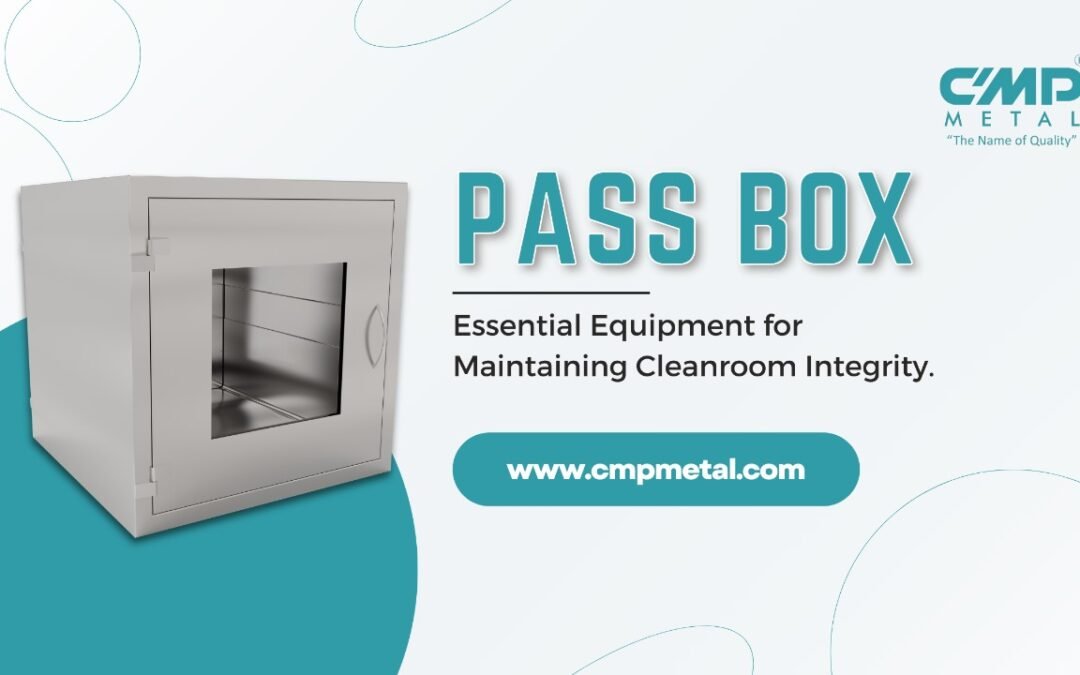
In environments where contamination control is critical, such as pharmaceutical manufacturing facilities, research laboratories, and semiconductor cleanrooms, maintaining the integrity of cleanroom environments is paramount. Pass Box play a crucial role in achieving this goal by facilitating the transfer of materials and equipment between different cleanliness zones while minimizing the risk of contamination. Let's explore why Pass Box re considered essential equipment for maintaining cleanroom integrity and how they contribute to ensuring the cleanliness and safety of controlled environments.

Barrier Control for Contamination Prevention

At the core of Pass Box functionality lies barrier control, which serves as a fundamental principle for preventing contamination in cleanroom environments. Pass Box feature a dual-door design—one door on the cleanroom side and another on the external, less controlled side—to create a physical barrier between different cleanliness zones. This design prevents direct airflow between the two zones, minimizing the transfer of airborne particles, microbes, and other contaminants. By isolating materials and equipment during transfer, Pass Box help safeguard the cleanliness and integrity of cleanroom environments, ensuring that stringent cleanliness standards are maintained at all times.

Seamless Material Transfer with Minimal Disruption

Pass boxes facilitate seamless and efficient transfer of materials and equipment between cleanroom areas, production areas, and external environments with minimal disruption to cleanroom operations. Operators can safely place items into the Pass Box through the external door, which is then securely sealed before the internal door is opened. The internal door provides access to the cleanroom side, allowing authorized personnel to retrieve the items without compromising cleanroom integrity. This controlled transfer process minimizes the ingress of contaminants and helps maintain the cleanliness of critical environments, ensuring that production processes proceed smoothly and without interruption. 

Customizable Designs for Diverse Applications

Recognizing the diverse needs of different industries and cleanroom environments, Pass Box are available in a variety of sizes, configurations, and features to suit specific application requirements. Manufacturers offer customizable designs with options for single-door or double-door configurations, material compatibility, airflow control, and additional features such as UV sterilization, HEPA filtration, and interlocking systems. Whether it's transferring small components, large equipment, or hazardous materials, Pass Box can be tailored to meet the unique needs of each cleanroom facility, ensuring optimal performance and compatibility with existing processes and workflows.

Compliance with Stringent Regulatory Standards

Pass boxes are designed and manufactured to comply with stringent regulatory standards and industry guidelines governing cleanroom operations and contamination control. Manufacturers adhere to international standards such as ISO 14644 (Cleanrooms and associated controlled environments) and GMP (Good Manufacturing Practice) guidelines to ensure that Pass Box meet the highest standards of cleanliness, safety, and reliability. Additionally, Pass Box are subject to rigorous testing, validation, and certification procedures to verify their performance and efficacy in preventing contamination. By meeting regulatory requirements, Pass Box provide cleanroom operators with confidence in their ability to maintain cleanroom integrity and compliance with regulatory standards.

Integration with Cleanroom Workflow and Operations

Pass boxes are seamlessly integrated into cleanroom workflow and operations, enhancing efficiency, productivity, and safety in controlled environments. They are strategically positioned at key transition points within cleanroom facilities, such as entry/exit points, gowning rooms, and material transfer areas, to facilitate smooth and controlled movement of materials and equipment. Pass Box can be interfaced with cleanroom HVAC systems, access control systems, and monitoring devices to ensure optimal airflow, security, and environmental conditions during material transfer. By integrating Pass Box into cleanroom infrastructure, operators can streamline processes, minimize contamination risks, and maintain the integrity of critical environments.

Conclusion: 

In conclusion, Pass Box are essential equipment for maintaining cleanroom integrity and preventing contamination in controlled environments. Through barrier control, seamless material transfer, customizable designs, regulatory compliance, and integration with cleanroom workflow, Pass Box play a crucial role in safeguarding the cleanliness, safety, and reliability of cleanroom operations. As indispensable tools in contamination control strategies, Pass Box enable cleanroom operators to uphold stringent cleanliness standards, comply with regulatory requirements, and ensure the integrity of critical environments in industries where contamination can have significant consequences. By investing in Pass Box, cleanroom facilities can enhance their contamination control measures, optimize operational efficiency, and safeguard product quality and integrity.

Understanding Static and Dynamic Pass Box

Understanding Static and Dynamic Pass Box

Understanding Static and Dynamic Pass Box

Pass Box Static and Dynamic

Maintaining controlled environments is crucial in various industries, including pharmaceuticals, electronics, and healthcare. Pass boxes are essential tools used to transfer materials between these environments while minimizing contamination risks. But with two main types – static and dynamic – choosing the right one for your needs can be confusing. This blog aims to demystify the differences between static and dynamic pass boxe, helping you understand which one best suits your specific application.

What are Pass Boxes?

Pass boxes are enclosed chambers installed between two rooms. They allow for the safe transfer of materials between these rooms without compromising the environmental conditions on either side. Both static and dynamic pass boxes utilize a double-door interlocking system, ensuring only one door can be opened at a time, preventing direct airflow between the environments.

Static Pass Boxes:

Function: Used to transfer materials between two equally clean environments. For example, transferring tools between two cleanrooms with the same ISO classification.

Operation: Relies on passive air exchange. When one door is opened, the pressure difference between the room and the pass box causes air exchange. This method is suitable for low-risk applications where minimal contamination risks exist.

  • Simpler design compared to dynamic pass boxes.
  • May not include air filtration or purification systems.
  • Often equipped with UV lights for surface disinfection.
  • Interlocking doors with LED indicators to ensure only one door is open at a time.

Dynamic Pass Boxes:

Function: Used to transfer materials between an uncontrolled environment (e.g., non-cleanroom) and a controlled environment (e.g., cleanroom). They are also suitable for transfers between environments with different cleanliness levels.

Operation: Employs an active air filtration system to maintain a positive pressure environment within the pass box. This positive pressure prevents contaminated air from entering the controlled environment when transferring items from the uncontrolled side.

  • More complex design compared to static pass boxes.
  • Outfitted with HEPA filters designed to eliminate airborne pollutants.
  • May include purging cycles to further reduce contamination risks.
  • Often equipped with pressure gauges to monitor the positive pressure within the pass box.

Choosing the Right Pass Box:

Here are some key factors to consider when choosing between a static and dynamic pass box:

  • Cleanliness Levels of Environments: If transferring materials between equally clean environments, a static pass box might suffice. However, for transfers involving uncontrolled environments or rooms with differing cleanliness levels, a dynamic pass box is essential.
  • Sensitivity of Materials: Highly sensitive materials requiring a strict contamination-controlled environment, especially during transfer, will benefit from the increased protection offered by a dynamic pass box.
  • Efficiency: Dynamic pass boxes generally involve longer transfer times due to purging cycles. If transfer speed is a critical factor, a static pass box might be preferred for low-risk applications within controlled environments.

Additional Considerations:

  • Size and capacity: Choose a pass box with appropriate dimensions to accommodate the size and quantity of materials typically transferred.
  • Material compatibility: Ensure the pass box is constructed with materials compatible with the cleaning and disinfection procedures used in your facility.
  • Regulatory compliance: Ensure the pass box meets any relevant industry standards or regulatory requirements for your application.

Conclusion:

Understanding the differences between Static and daynamic pass box is crucial for selecting the most appropriate equipment for your specific needs. By considering the factors mentioned above, you can make an informed decision that ensures the safe and efficient transfer of materials while maintaining the desired level of environmental control.