

Stainless Steel Slop Hopper Supplier UK: A Complete Hospital Buying Guide
Introduction
Maintaining hygiene is essential in hospitals, clinical facilities and healthcare environments across the United Kingdom. Choosing the right waste disposal equipment helps healthcare teams manage liquid and clinical waste safely while supporting routine cleaning procedures. A Stainless Steel Slop Hopper Supplier UK can help hospitals, distributors and healthcare project contractors source durable equipment suited to demanding clinical environments.
Stainless steel slop hoppers are designed for practical waste disposal, easy cleaning and long-term use. Understanding their construction, features and installation requirements helps procurement teams make informed purchasing decisions for new hospitals, refurbishment projects and healthcare facility upgrades.
Quick Summary: A stainless steel slop hopper is a healthcare waste disposal fixture designed to support the hygienic handling of liquid waste and suitable clinical waste. Stainless steel construction offers durability, corrosion resistance and straightforward cleaning. Hospitals should assess dimensions, drainage compatibility, installation type and maintenance requirements before purchasing.
What Is a Slop Hopper?
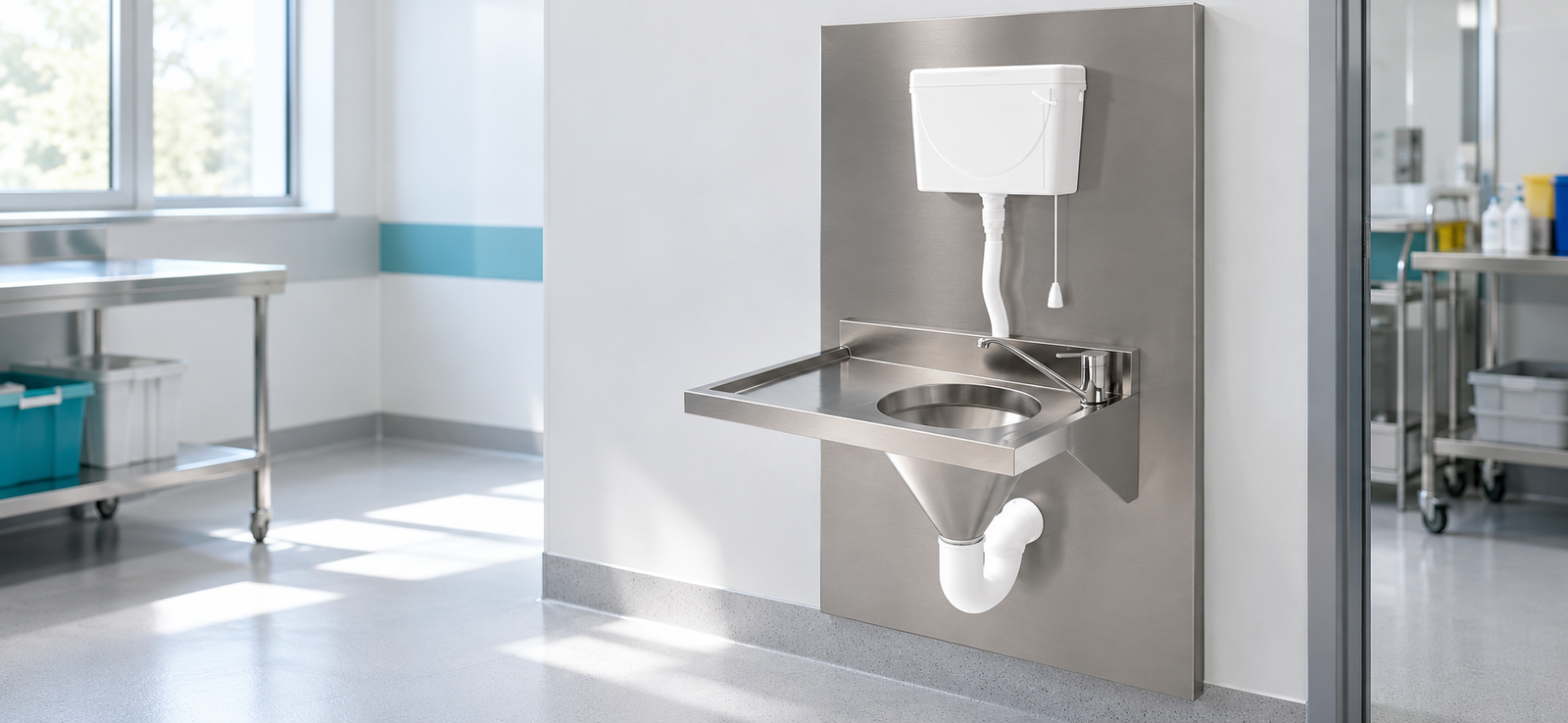
A slop hopper is a deep, purpose-designed sink used in designated hospital utility areas to dispose of appropriate liquid waste and compatible waste materials. It commonly features a deep basin, a flushing arrangement and a connection to the drainage system.
Unlike ordinary washbasins, slop hoppers are designed for specific waste disposal tasks. They may be installed in sluice rooms, dirty utility rooms and other designated clinical support areas.
A Stainless Steel Sluice Sink Manufacturer can supply models with different basin dimensions, mounting arrangements and flushing configurations to suit project requirements.
Why Is a Slop Hopper Important in Hospitals?
Healthcare facilities require practical systems for managing waste without compromising cleaning routines or staff safety. A properly selected slop hopper supports these operational needs.
Key reasons hospitals use slop hoppers include:
- Hygiene support: Smooth stainless steel surfaces are generally easier to clean than many porous materials when maintained correctly.
- Efficient waste handling: A deep basin provides a designated location for approved disposal tasks.
- Durability: Suitable stainless steel construction can withstand frequent use and routine cleaning.
- Better workflow: Dedicated utility fixtures help staff follow established waste management procedures.
- Practical maintenance: Accessible plumbing and suitable installation make inspection and upkeep easier.
The fixture should always be used according to the facility’s infection prevention procedures and waste disposal policy.
Key Features of a Stainless Steel Slop Hopper
When comparing a Stainless Steel Slop Hopper Manufacturer, evaluate the following features:
- SS 304 stainless steel: Offers good corrosion resistance for many healthcare applications when properly fabricated and maintained.
- Deep basin design: Provides space for designated disposal tasks while helping contain splashes when used correctly.
- Integrated flushing system: Helps rinse the basin after permitted disposal activities.
- Smooth finish: Supports routine cleaning and reduces difficult-to-reach surface irregularities.
- Wall-mounted or floor-mounted options: Allow selection according to room layout and installation needs.
- Custom dimensions: Help project teams coordinate the fixture with available space and plumbing connections.
Buyers should verify the actual material grade, thickness, dimensions and included accessories in the manufacturer’s specification sheet.
Benefits of Stainless Steel Slop Hoppers
A well-designed slop hopper can offer several practical advantages:
- Long service life: Quality stainless steel can provide reliable performance under regular operating conditions.
- Simplified cleaning: Smooth surfaces support established cleaning and disinfection procedures.
- Reduced maintenance needs: Corrosion-resistant construction can help minimise certain material-related maintenance issues.
- Space-efficient installation: Appropriate models can fit dedicated utility rooms and clinical support areas.
- Flexible project planning: Different sizes and configurations can accommodate new builds and refurbishment projects.
These benefits depend on product quality, installation, correct usage and regular maintenance.
Applications of Slop Hoppers
A Hospital Slop Hopper Supplier UK may serve a range of healthcare projects, including:
- NHS and private hospitals
- Hospital sluice rooms and dirty utility rooms
- Long-term care and residential healthcare facilities
- Medical colleges and teaching hospitals
- Diagnostic and clinical support facilities
- Healthcare construction and refurbishment projects
The final selection should reflect the intended use, local waste handling procedures and the facility’s plumbing design.
How to Choose the Right Stainless Steel Slop Hopper Supplier UK
Before purchasing from a Stainless Steel Slop Hopper Supplier UK, consider these six factors:
- Material quality: Confirm the stainless steel grade and request material specifications.
- Dimensions: Compare basin size and overall height with the available installation space.
- Drainage compatibility: Check waste outlet size, plumbing connections and flushing requirements.
- Mounting arrangement: Choose wall-mounted or floor-mounted installation according to the room layout.
- Documentation: Request drawings, technical data, installation instructions and applicable product documentation.
- Export and after-sales support: Confirm delivery arrangements, packaging, spare parts availability and communication with UK-based project teams.
A Hospital Waste Disposal Sink Supplier should be able to clarify product specifications before an order is finalised. Healthcare architects and procurement managers should also review relevant NHS guidance, including Health Building Note 00-09, when planning infection-conscious clinical environments.
Common Mistakes to Avoid
Avoid selecting a product based on price alone. An unsuitable basin size, incompatible drainage connection or poorly planned installation can create additional project costs.
Buyers should also avoid assuming that every stainless steel model has the same material grade or flushing configuration. Request written specifications and confirm which accessories are included.
Finally, do not assume that a product automatically complies with NHS design guidance or local requirements. Confirm suitability with the project team before installation.
Conclusion
Selecting the right slop hopper helps healthcare facilities establish practical, maintainable waste disposal areas. Material quality, basin design, drainage compatibility and installation requirements should all influence the purchasing decision.
CMP Metal manufactures stainless steel healthcare equipment and offers slop hopper models in different dimensions and configurations. Hospitals, importers, distributors and project contractors can contact CMP Metal to request product specifications, discuss custom requirements and explore supply options for UK healthcare projects.
Frequently Asked Questions
1. What is a stainless steel slop hopper?
A stainless steel slop hopper is a deep utility fixture designed for designated healthcare waste disposal tasks. It typically includes a basin, a flushing arrangement and a drainage connection. Hospitals use it in appropriate utility areas according to local waste handling and infection prevention procedures.
2. What are the benefits of stainless steel slop hoppers?
Stainless steel slop hoppers offer durability, corrosion resistance and surfaces that are generally straightforward to clean. They are suitable for demanding healthcare environments when correctly specified and maintained. Their deep basin and flushing arrangements also support designated disposal workflows and routine utility room operations.
3. Where are hospital slop hoppers used?
Hospital slop hoppers are commonly installed in sluice rooms, dirty utility rooms and designated clinical support areas. They may also be specified for care facilities and other healthcare environments. Their exact use depends on the facility’s waste management policy, plumbing arrangements and infection prevention procedures.
4. How do I choose a stainless steel slop hopper supplier in the UK?
Compare material specifications, basin dimensions, mounting options, drainage compatibility and technical documentation. For imported equipment, also check delivery lead times, packaging, spare parts and after-sales support. Ask the supplier for drawings and written specifications before approving the product for a healthcare construction or refurbishment project.
5. Can stainless steel slop hoppers be customised?
Some manufacturers offer different dimensions, mounting arrangements and flushing configurations to meet project needs. Customisation should be confirmed before ordering, particularly for drainage positions, available space and plumbing connections. Request a technical drawing and written confirmation of the proposed configuration before production begins.
6. Which stainless steel grade is suitable for hospital slop hoppers?
SS 304 stainless steel is commonly used for healthcare equipment because it provides good corrosion resistance in many applications. However, the appropriate grade depends on the operating environment, cleaning chemicals and exposure conditions. Buyers should verify the specified grade and maintenance recommendations rather than relying on the term stainless steel alone.