

Sluice Sink Manufacturers: Complete Guide for Hospitals & Healthcare Facilities
Introduction
In hospitals, laboratories, and healthcare facilities, hygiene is not just important — it is critical. One overlooked yet essential component of infection control is the sluice sink. From safe waste disposal to maintaining cleanliness standards, these sinks play a major role in medical environments.
Today, many healthcare facilities struggle to choose the right Sluice Sink Manufacturers because the market offers different materials, designs, and quality levels. Selecting the wrong product can lead to hygiene issues, corrosion problems, difficult cleaning processes, and higher maintenance costs.
This guide explains everything you need to know about choosing the right hospital sluice sink, understanding its features, comparing types, and avoiding common purchasing mistakes.
Why Sluice Sinks Matter in Healthcare Facilities
A medical sluice sink is specially designed for disposing of contaminated liquids and medical waste safely. These sinks are commonly installed in:
- Hospitals
- Clinics
- Diagnostic laboratories
- Nursing homes
- Operation theatres
- Isolation wards
- CSSD departments
Unlike regular sinks, a sluice sink stainless steel unit is built to handle heavy-duty cleaning, chemical exposure, and high hygiene requirements.
Without proper sluice sink systems, healthcare facilities may face:
- Cross-contamination risks
- Poor infection control
- Difficult waste management
- Higher cleaning effort
- Hygiene compliance issues
Common Problems Buyers Face
Many facility managers and hospital procurement teams encounter several challenges while selecting a sluice sink.
1. Poor Material Quality
Low-grade steel can rust quickly in wet and chemical-heavy environments.
2. Difficult Cleaning
Improper sink designs create corners where dirt and bacteria accumulate.
3. Drainage Issues
Incorrect slope or poor plumbing design can lead to clogging and unpleasant odors.
4. Non-Compliance with Hygiene Standards
Some products fail to meet healthcare sanitation requirements.
5. Short Product Lifespan
Cheap manufacturing often leads to dents, leakage, and corrosion within a few years.
This is why choosing experienced Sluice Sink Manufacturers becomes extremely important.
Types of Sluice Sinks Used in Hospitals
1. Hospital Sluice Sink
A standard hospital sluice sink is designed for disposing of liquid waste and cleaning medical containers safely.
Common Applications:
- Patient wards
- Emergency rooms
- Utility rooms
Key Features:
- Deep bowl design
- Splash protection
- Heavy-duty drainage
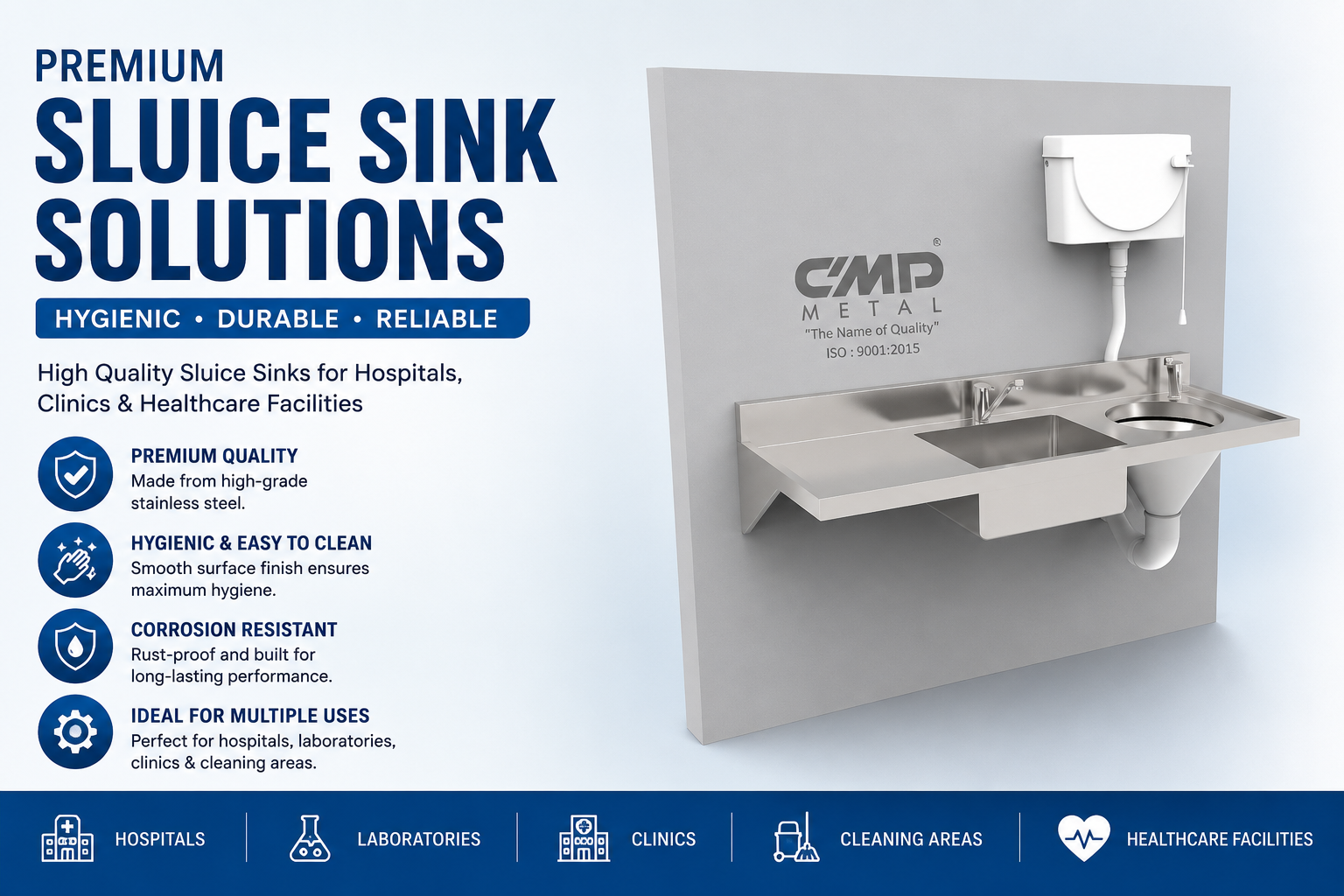
2. Sluice Sink with Slop Hopper
A sluice sink with slop hopper combines a sink with a waste disposal hopper for easy emptying of liquid and semi-solid waste.
Advantages:
- Faster cleaning process
- Better hygiene management
- Reduced splash contamination
These are commonly used in:
- Janitorial areas
- Hospital cleaning stations
- Utility sections
3. Cleaners Sluice Sink
A cleaners sluice sink is specially designed for housekeeping and sanitation staff.
Typically Used For:
- Mop cleaning
- Bucket filling
- Wastewater disposal
Why It Matters:
It improves housekeeping efficiency while maintaining infection control standards.
4. Stainless Steel Medical Sluice Sink
A sluice sink stainless steel model is the most preferred option in healthcare settings.
Benefits:
- Rust resistance
- Easy sanitization
- Long lifespan
- Smooth surface finish
Grade 304 stainless steel is widely recommended for healthcare use.
Important Features to Look For
When evaluating Sluice Sink Manufacturers, focus on product quality rather than just pricing.
Material Quality
Choose:
- SS 304 stainless steel
- Corrosion-resistant finish
- Heavy-gauge construction
Avoid low-grade steel that corrodes quickly.
Hygienic Design
Look for:
- Rounded edges
- Seamless welding
- Smooth finishing
These features reduce bacterial growth.
Proper Drainage System
Efficient drainage prevents:
- Water stagnation
- Odor buildup
- Blockages
Splash Protection
High-back splash guards improve cleanliness and worker safety.
Easy Maintenance
A good medical sluice sink should be:
- Easy to clean
- Chemical-resistant
- Low maintenance
Stainless Steel vs Traditional Sinks
| Feature | Stainless Steel Sluice Sink | Traditional Sink |
|---|---|---|
| Hygiene | Excellent | Moderate |
| Rust Resistance | High | Low |
| Lifespan | Long-lasting | Shorter |
| Cleaning | Easy | Difficult |
| Durability | Heavy-duty | Average |
| Healthcare Compliance | Suitable | Limited |
Step-by-Step Buying Guide
Step 1: Understand Your Application
Identify where the sink will be installed:
- ICU
- Ward
- Cleaning area
- Laboratory
Different departments require different sink configurations.
Step 2: Check Material Grade
Always ask for:
- Stainless steel grade
- Thickness specification
- Finish quality
Grade 304 SS is commonly recommended.
Step 3: Verify Manufacturer Experience
Reliable Sluice Sink Manufacturers usually have:
- Healthcare industry experience
- Customization capability
- Quality certifications
Step 4: Review Hygiene Features
Check for:
- Smooth welding
- Rounded corners
- Splash prevention
Step 5: Evaluate Plumbing Compatibility
Ensure the sink matches your:
- Drainage system
- Water connection
- Floor layout
Step 6: Compare Warranty & Support
Good manufacturers provide:
- Product warranty
- Installation support
- Spare part availability
Common Mistakes to Avoid
- Choosing based only on price
- Ignoring stainless steel grade
- Poor space planning
- Overlooking cleaning convenience
- Buying from inexperienced suppliers
Expert Tips for Choosing the Right Sluice Sink
- Prioritize hygiene standards
- Choose seamless construction
- Consider future maintenance
- Focus on worker safety
- Verify customization options
Benefits of High-Quality Sluice Sinks
- Improved infection control
- Better workflow efficiency
- Reduced maintenance costs
- Compliance with healthcare standards
- Long product lifespan
FAQ Section
What is a sluice sink used for in hospitals?
A sluice sink is used for safely disposing of contaminated liquids, cleaning medical containers, and maintaining hygiene in healthcare facilities.
Why is stainless steel preferred for medical sluice sinks?
Sluice sink stainless steel models are durable, rust-resistant, easy to sanitize, and suitable for high-hygiene environments.
What is the difference between a sluice sink and a regular sink?
A medical sluice sink is specifically designed for healthcare waste disposal and infection control, unlike standard household sinks.
What is a sluice sink with slop hopper?
A sluice sink with slop hopper includes a waste disposal hopper that allows quick disposal of liquid and semi-solid waste materials.
How do I choose reliable Sluice Sink Manufacturers?
Check their industry experience, material quality, customization capability, healthcare compliance, and customer support services.
Which stainless steel grade is best for hospital sluice sinks?
Grade 304 stainless steel is commonly recommended because of its corrosion resistance and hygienic properties.
Are cleaners sluice sinks important in hospitals?
Yes, a cleaners sluice sink helps housekeeping staff safely manage wastewater, mop cleaning, and sanitation processes.
Conclusion
Choosing the right Sluice Sink Manufacturers is essential for maintaining hygiene, safety, and operational efficiency in healthcare environments. Whether you need a hospital sluice sink, a sluice sink with slop hopper, or a cleaners sluice sink, focusing on quality materials, hygienic design, and durability can make a major difference.
A well-designed medical sluice sink not only improves infection control but also supports smoother cleaning operations and long-term reliability. By understanding the key features, comparing options carefully, and avoiding common buying mistakes, healthcare facilities can invest in equipment that delivers both performance and hygiene standards for years to come.