
Movable Wash Basin: Portable Sink Solutions for Hospitals, Pharma & Industrial Facilities
A movable wash basin provides a practical handwashing solution for facilities that need flexible hygiene stations without permanent plumbing at every location. Hospitals, pharmaceutical companies, laboratories, cleanroom contractors, and temporary healthcare facilities can use these units to improve access to handwashing in areas where fixed sinks are unavailable or difficult to install. A portable sink with water tank can be particularly useful during construction, renovation, equipment installation, and temporary operations. Choosing the right portable wash basin helps businesses maintain convenient handwashing access while considering hygiene, mobility, durability, and daily operational requirements.
AI Overview summary: A movable wash basin is a portable handwashing station that can be relocated as operational needs change. Depending on its design, it may include a water tank, tap, basin, wastewater collection tank, and supporting frame. It is useful for hospitals, pharmaceutical facilities, laboratories, cleanrooms, and temporary work areas where fixed plumbing is limited.
What Is a Movable Wash Basin?
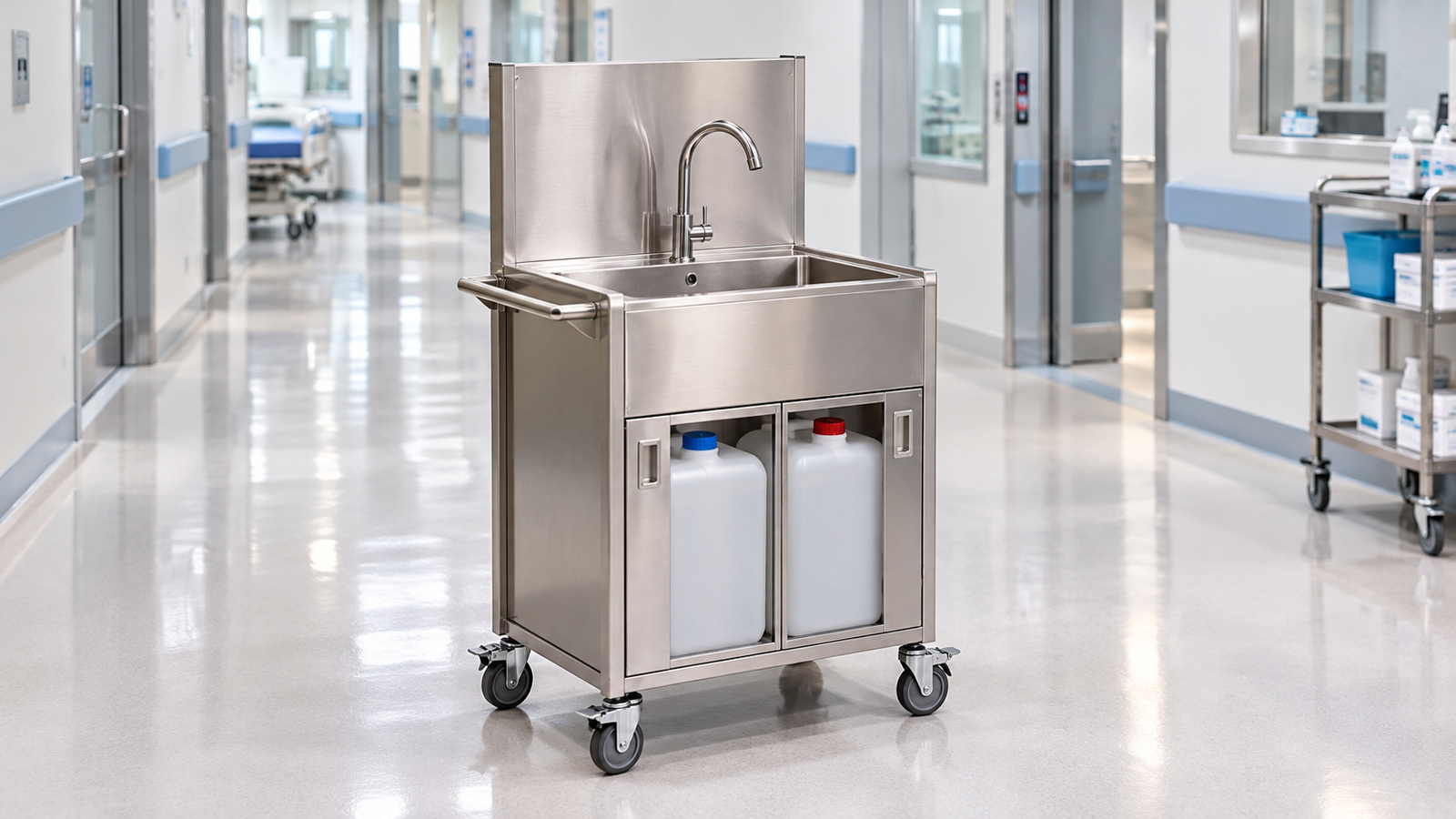
A movable wash basin is a portable handwashing unit designed to provide access to water without requiring a permanent sink installation at every location. Depending on the model, it may include a stainless steel basin, tap, fresh-water tank, wastewater tank, frame, and wheels.
A portable sink with water tank supplies water from its onboard tank and collects used water separately. Some models may use alternative water supply or drainage arrangements, depending on site requirements.
Unlike a fixed wash basin, a portable wash basin can be moved between suitable work areas when required. This makes it useful for temporary facilities, renovation projects, laboratories, and selected healthcare applications.
Why Is a Movable Wash Basin Important?
Hand hygiene is an important part of infection prevention and workplace hygiene. When a permanent sink is unavailable or inconveniently located, a movable unit can help provide a practical washing point.
For example, a hospital expanding its treatment area may need additional handwashing stations before permanent plumbing is completed. Similarly, pharmaceutical companies may require temporary washing facilities during maintenance or equipment installation.
The main consideration is choosing a unit that matches the site’s water supply, drainage, cleaning procedures, and hygiene requirements.
Key Features of a Portable Wash Basin
-
Stainless steel construction: Stainless steel can offer durability and a smooth surface that is easier to clean when properly finished and maintained.
-
Integrated water tank: A built-in fresh-water tank can support use in areas without a direct water connection.
-
Wastewater collection: A separate wastewater tank can collect used water where a fixed drain is unavailable.
-
Wheels and mobility: Suitable wheels make relocation easier across compatible floor surfaces.
-
Easy-to-clean basin: A well-designed basin helps reduce water accumulation and simplifies routine cleaning.
-
Customizable design: Dimensions, tank capacity, tap arrangement, and storage features may be selected according to project requirements.
Benefits of a Portable Sink
-
Flexible installation: Use the unit in suitable areas where permanent plumbing is not immediately available.
-
Reduced installation work: Tank-based models may avoid the need for new water and drainage connections at each temporary location.
-
Better access to handwashing: Place the basin closer to designated work areas, subject to hygiene and safety requirements.
-
Support for project timelines: Temporary washing facilities can be arranged during construction, renovation, or maintenance.
-
Easy relocation: Move the unit when operational requirements change, provided the floor and access route are suitable.
-
Practical space utilization: Compact designs can help facilities make better use of available floor space.
Applications Across Industries
A movable wash basin can support different operations when its design meets the site’s requirements.
-
Hospitals and healthcare facilities: Temporary clinical areas, renovation projects, and selected support areas.
-
Pharmaceutical and API manufacturing: Suitable non-process areas, maintenance zones, and temporary workstations.
-
Laboratories and diagnostic centres: Designated washing points where the selected unit is compatible with laboratory procedures.
-
Cleanroom projects: Temporary facilities during construction and commissioning, subject to the cleanroom’s contamination-control requirements.
-
Food and beverage facilities: Suitable non-production or temporary work areas where the equipment meets applicable hygiene standards.
-
Chemical and agrochemical industries: Designated support areas, subject to chemical compatibility and site safety requirements.
-
Government hospitals and medical colleges: Temporary healthcare facilities, training areas, and expansion projects.
A portable unit should not automatically be treated as suitable for sterile processing, hazardous chemical handling, or controlled cleanroom environments. These applications require a specific technical assessment.
How to Choose the Right Movable Wash Basin
-
Check the material: Consider SS 304 stainless steel for durability and cleaning requirements, while assessing chemical compatibility for specialized applications.
-
Select tank capacity: Estimate the number of users and expected water consumption between refills.
-
Review wastewater handling: Confirm that the collection tank is adequate and can be emptied safely and hygienically.
-
Check mobility: Assess wheel quality, braking arrangements, overall weight, and movement through doorways.
-
Confirm dimensions: Ensure the unit fits the available space without obstructing walkways or emergency exits.
-
Ask about customization: Discuss basin dimensions, tank capacity, tap type, splash control, and other project-specific needs with the manufacturer.
Common Mistakes to Avoid
-
Choosing a tank that is too small for daily use.
-
Ignoring wastewater disposal and cleaning arrangements.
-
Selecting a material without checking chemical compatibility.
-
Overlooking wheel brakes, stability, and ease of movement.
-
Assuming every portable wash basin is suitable for cleanrooms or clinical areas.
-
Purchasing without confirming dimensions, maintenance needs, and intended applications.
Conclusion
A movable wash basin offers a flexible handwashing solution for healthcare facilities, laboratories, pharmaceutical projects, and selected industrial environments. The right model depends on water requirements, tank capacity, construction material, mobility, and site hygiene procedures.
CMP METAL manufactures stainless steel hospital furniture and healthcare equipment, with solutions for hospitals, laboratories, cleanrooms, and pharmaceutical projects. Buyers in Mumbai, Thane, Navi Mumbai, Pune, Ahmedabad, Vadodara, Ankleshwar, Vapi, Hyderabad, Bengaluru, Delhi NCR, and Chennai can contact the company to discuss project requirements, specifications, and customization options.
Frequently Asked Questions
1. What is a movable wash basin?
A movable wash basin is a portable handwashing station that can be relocated according to operational needs. Depending on the design, it may include a stainless steel basin, tap, water tank, wastewater tank, and wheels. It is useful where permanent plumbing is unavailable or where temporary washing facilities are needed.
2. What are the benefits of a portable sink with water tank?
A portable sink with water tank provides access to water without requiring a direct water connection at every installation point. It can simplify temporary setup, support flexible placement, and reduce plumbing work. The actual benefits depend on tank capacity, water consumption, drainage arrangements, cleaning procedures, and the number of users.
3. Where is a portable wash basin used?
Portable wash basins are used in hospitals, laboratories, pharmaceutical facilities, temporary healthcare centres, construction projects, and selected industrial work areas. They can also support renovation and maintenance activities. Before selecting a unit, confirm that its material, water system, and cleaning requirements are suitable for the intended environment.
4. How do I choose the right portable wash basin with water tank?
Start by estimating daily water demand and the number of users. Check fresh-water and wastewater tank capacities, basin dimensions, stainless steel grade, wheel stability, and cleaning access. For hospitals or pharmaceutical projects, also review hygiene procedures and site-specific requirements before requesting a quotation from the manufacturer.
5. Can a movable wash basin be customized?
Yes, some manufacturers offer customized portable wash basins based on project requirements. Options may include basin dimensions, tank capacity, stainless steel construction, tap configuration, wheels, and additional storage. Confirm the available options, technical drawings, materials, and delivery schedule with the manufacturer before finalizing your purchase.
6. Which material is best for a portable basin sink?
SS 304 stainless steel is a common choice where durability, corrosion resistance, and routine cleaning are important. However, the best material depends on the water quality, cleaning chemicals, and operating environment. Applications involving aggressive chemicals or specialized contamination-control requirements may need a different material or a specific surface finish.
7. What is the difference between a portable wash basin and a fixed sink?
A fixed sink is generally connected to permanent water supply and drainage systems. A portable wash basin can be relocated and may operate using onboard water and wastewater tanks. Portable models are useful for temporary or flexible installations, while fixed sinks are often better suited to permanent, high-use locations.
8. Is a portable washbasin suitable for pharmaceutical cleanrooms?
A portable washbasin may be considered for selected cleanroom construction, maintenance, or support activities, but suitability is not automatic. The unit must meet the area’s cleanliness classification, material, cleaning, and contamination-control requirements. Pharmaceutical teams should obtain approval from their quality and engineering departments before bringing portable equipment into controlled areas.