

Laparoscopic Trolley: Complete Guide to OT Setup, Features and Selection
Introduction
Efficient instrument management is essential for safe and organized laparoscopic procedures. A well-designed laparoscopic trolley gives the surgical team a dedicated mobile workstation for arranging, transporting, and accessing instruments during an operation. The right trolley can reduce unnecessary movement, improve workflow, support better organization, and help maintain appropriate cleaning and infection-control practices. For hospitals, surgical centers, and OT managers, selecting a trolley that matches procedure requirements, available space, and sterilization workflows is an important part of OT planning.
A laparoscopic trolley is a mobile medical furniture unit designed to organize and keep laparoscopic instruments and accessories within convenient reach during minimally invasive surgery. Its value comes from combining mobility, organization, accessibility, and easy-to-clean construction in one workstation.
What is a Laparoscopic Trolley?
A laparoscopic trolley, also called a laparoscopic cart or laparoscopic instrument trolley, is a mobile trolley used in operating rooms to arrange and transport instruments, accessories, and other procedure-related items.
Depending on the hospital’s workflow, the trolley may include multiple shelves, drawers, trays, rails, or customized compartments. The configuration should support the surgical team’s preferred setting up of trolley with instruments without creating unnecessary clutter around the operating table.
Why is it Important?
Laparoscopic procedures often involve several specialized instruments and accessories. A properly organized trolley allows staff to keep frequently required items accessible and arranged according to the procedure.
During OT trolley preparation, organization is especially important because staff should be able to identify and access required items efficiently. A suitable operating room trolley can also support standardized workflows across different surgical teams.
Infection prevention is another important consideration. WHO guidance emphasizes infection-prevention measures throughout the pre-, intra-, and postoperative periods, making cleanable equipment and appropriate facility protocols important considerations for surgical environments.
Key Features
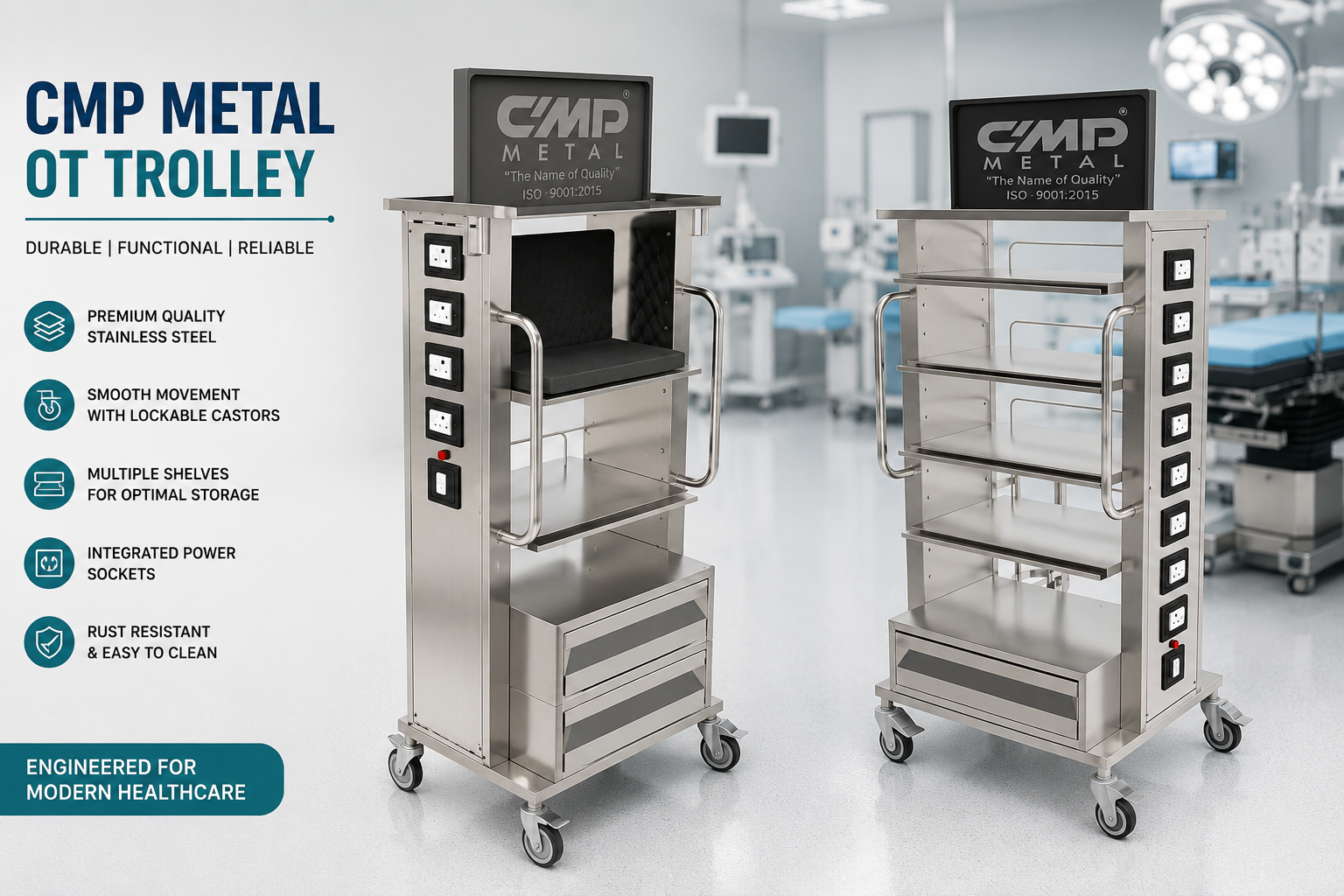
- Stainless steel construction: Provides a durable, corrosion-resistant surface suitable for healthcare environments.
- Multiple storage levels: Helps separate instruments and accessories according to their use.
- Smooth-rolling castors: Allow controlled movement between preparation and operating areas.
- Lockable wheels: Improve stability when the trolley is positioned for use.
- Easy-to-clean surfaces: Reduce dirt-collection points and simplify routine cleaning.
- Ergonomic working height: Makes frequently used items easier for staff to access.
- Customized configuration: Shelves, drawers, trays, and dimensions can be adapted to hospital requirements.
Benefits
- Improves organization during laparoscopic procedures.
- Keeps commonly required instruments within convenient reach.
- Reduces unnecessary movement around the operating area.
- Supports a more consistent surgical trolley preparation process.
- Makes transportation of instruments and accessories easier.
- Helps hospitals standardize OT workflows.
- Provides flexibility for different laparoscopic and general surgery procedures.
Applications
A laparoscopic instrument trolley can be used in multispecialty hospitals, laparoscopic surgery departments, general surgery OTs, day-care surgical centers, private hospitals, teaching hospitals, and government healthcare institutions.
It can also support surgical equipment suppliers and hospital procurement teams looking for standardized or customized OT furniture. Related applications may include OT trolley set up, procedure-specific instrument organization, and specialized labour trolley instrument arrangements where a different trolley configuration is required.
For critical-care environments, setting up of trolley with instruments in critical care should always follow the facility’s clinical protocols and the specific requirements of the procedure.
How to Choose the Right Laparoscopic Trolley
Consider these factors before purchasing:
- Material: Select a robust, healthcare-suitable material such as stainless steel when durability and cleanability are priorities.
- Size: Measure OT pathways, doors, storage areas, and available working space before finalizing dimensions.
- Storage: Choose shelves, drawers, or trays based on the number and type of instruments routinely handled.
- Mobility: Check castor quality, wheel locking, maneuverability, and overall stability.
- Customization: Ask whether dimensions, shelf layouts, drawers, handles, or accessories can be modified.
- Maintenance: Prefer designs with accessible surfaces, strong joints, and minimal difficult-to-clean areas.
Common Mistakes to Avoid
Hospitals sometimes choose a trolley based only on price or appearance. This can lead to poor storage capacity, unsuitable dimensions, difficult movement, or inconvenient access during procedures.
Another common mistake is failing to consider the complete setup of trolley with instrument workflow. Before ordering, involve OT staff and procurement teams to identify actual instrument quantities, preferred arrangement, cleaning requirements, and movement patterns.
Conclusion
A well-planned laparoscopic trolley can make instrument organization more practical and support smoother OT workflows. The best choice depends on procedure requirements, available space, storage needs, mobility, material, and cleaning practices. Hospitals and surgical centers should evaluate these factors carefully and discuss customization options with an experienced medical furniture manufacturer before placing an order.
Frequently Asked Questions
What is a laparoscopic trolley?
A laparoscopic trolley is a mobile medical furniture unit designed to organize, store, and transport laparoscopic instruments and procedure-related accessories within an operating environment. Its shelves, drawers, trays, or compartments can be configured according to the hospital’s workflow and the instruments commonly used during minimally invasive procedures.
What are the benefits of a laparoscopic trolley?
A laparoscopic trolley helps improve instrument organization, accessibility, mobility, and OT workflow. It can reduce unnecessary movement and provide dedicated storage close to the surgical team. A suitable design can also make routine cleaning and preparation easier when it uses smooth, durable, healthcare-appropriate surfaces.
Where is a laparoscopic instrument trolley used?
It is commonly used in operating theatres, laparoscopic and general surgery departments, multispecialty hospitals, day-care surgery centers, private clinics, teaching hospitals, and government healthcare facilities. The trolley can be configured differently depending on the procedure, available OT space, instrument quantity, and hospital workflow.
How do I choose the right laparoscopic trolley?
Start by checking the required dimensions, instrument capacity, material, number of shelves or drawers, castor quality, wheel locks, and ease of cleaning. Hospitals should also consider OT doorways and movement paths. Involving surgeons, OT nurses, technicians, and procurement staff can help identify the most practical configuration.
Is a laparoscopic trolley customizable?
Yes, many medical furniture manufacturers can customize a trolley according to the hospital’s requirements. Options may include overall dimensions, shelf arrangements, drawers, trays, handles, rails, castors, and other accessories. Customization is particularly useful when an OT has limited space or follows a specific instrument-organization workflow.
What material is best for a laparoscopic trolley?
Stainless steel is commonly preferred for hospital furniture because it offers durability, corrosion resistance, and relatively easy cleaning. The exact grade and finish should be selected according to the intended application, cleaning procedures, hospital specifications, and manufacturer recommendations. The design should also avoid unnecessary dirt-collecting areas.