

Instrument Cabinet: A Complete Guide to Stainless Steel Instrument Cabinets for Hospitals and Laboratories
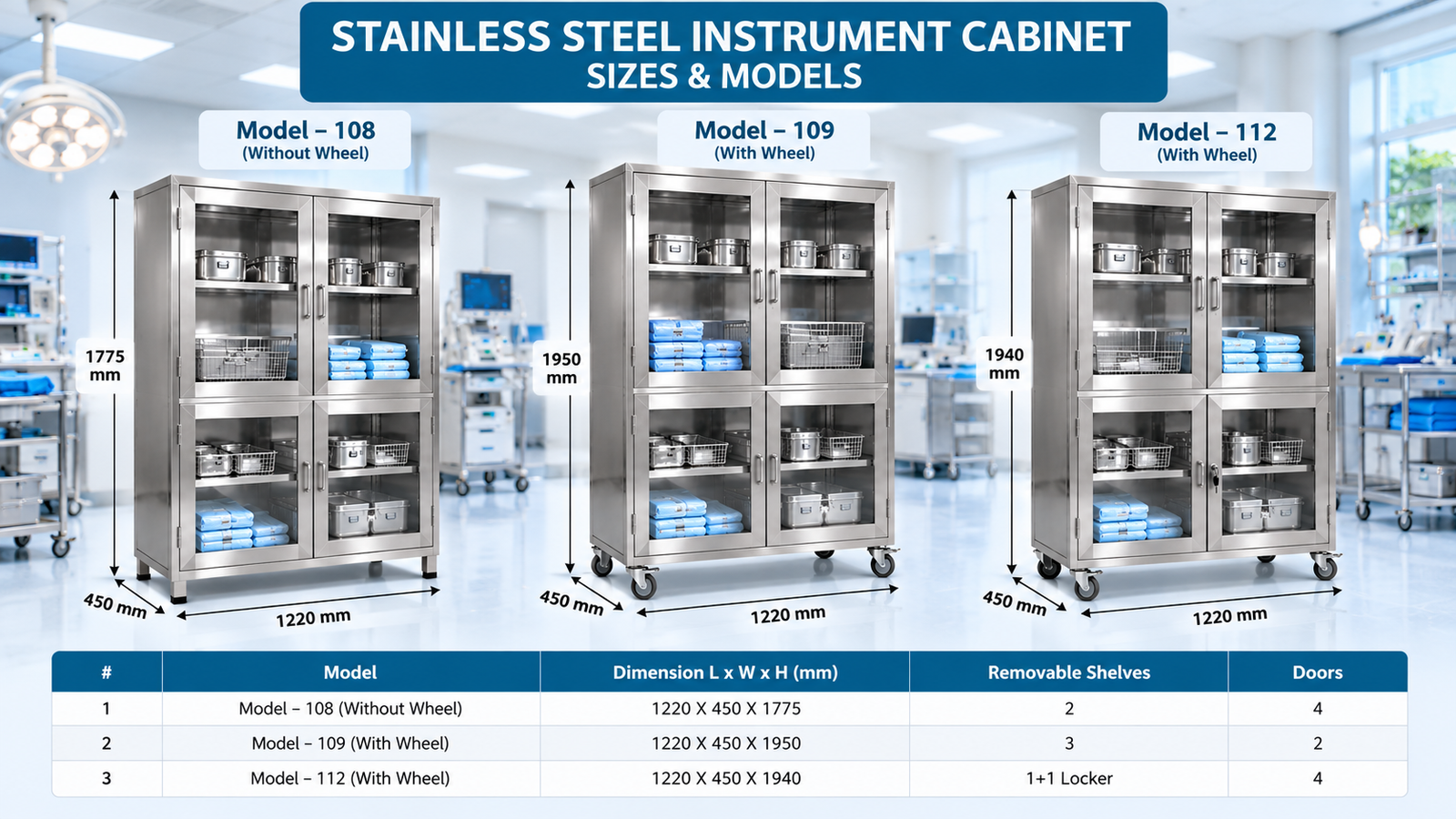
Introduction
Hospitals, laboratories, and pharmaceutical facilities need organized, hygienic, and secure storage for instruments and medical supplies. An Instrument Cabinet helps protect essential equipment from dust, reduces clutter, and makes instruments easier to access when needed. Stainless steel models are especially useful in environments where cleanliness, durability, and easy maintenance are important. Choosing the right cabinet can improve workspace organization and support efficient daily operations. This guide explains the key features, benefits, applications, and buying considerations for selecting an instrument cabinet for healthcare and industrial facilities across India.
Quick Summary
An instrument cabinet is a storage unit designed to organize and protect medical instruments, laboratory tools, and essential equipment. A stainless steel instrument cabinet offers durability, easy cleaning, and secure storage. Hospitals, CSSD departments, laboratories, and pharmaceutical facilities can select cabinets based on material, dimensions, shelf configuration, and hygiene requirements.
What Is an Instrument Cabinet?
An instrument cabinet is a storage unit used to keep instruments, medical supplies, and equipment organized in a secure and accessible location. Depending on the application, it may include multiple shelves, lockable doors, glass panels, or movable castor wheels.
A Stainless Steel Instrument Cabinet is particularly suitable for healthcare environments because stainless steel surfaces are durable, corrosion-resistant under appropriate conditions, and easy to clean. SS 304 is a common material choice for general healthcare storage applications.
Why Is an Instrument Cabinet Important?
Proper storage helps healthcare professionals locate equipment quickly and maintain a more organized working environment. It also reduces the risk of instruments being damaged through improper handling or storage.
An Instrument Cabinet Hospital setup may support operating theatres, CSSD departments, treatment rooms, and laboratories. Lockable compartments can help control access, while transparent doors allow staff to identify stored items without opening every section.
However, a storage cabinet alone does not make instruments sterile. Sterilized instruments must be handled, packaged, and stored according to the facility’s infection-control procedures.
Key Features of a Stainless Steel Instrument Cabinet
When evaluating a cabinet, consider these practical features:
- SS 304 construction: Provides durability and suitable corrosion resistance for many healthcare environments.
- Lockable glass doors: Help restrict access while allowing visibility of stored equipment.
- Multiple shelves: Support organized storage of instruments, supplies, and accessories.
- Heavy-duty castor wheels: Allow selected models to move between departments more easily.
- Smooth surfaces: Make routine cleaning easier when appropriate cleaning procedures are followed.
- Customizable dimensions: Help accommodate available floor space and specific storage requirements.
- Flexible configurations: Different shelf arrangements and door layouts support different equipment sizes.
Benefits of an Instrument Storage Cabinet
A well-designed Instrument Storage Cabinet offers several operational advantages:
- Improved organization: Dedicated shelves help separate instruments and supplies.
- Easy access: Clearly arranged storage reduces time spent searching for equipment.
- Better space utilization: Vertical storage can make more effective use of available floor space.
- Secure storage: Lockable doors help control access to valuable equipment.
- Long-term value: Durable construction can reduce the need for frequent cabinet replacement.
- Simplified maintenance: Suitable stainless steel surfaces are generally easier to clean than many porous materials.
Applications of Instrument Cabinets
Instrument cabinets are used across several healthcare and industrial settings:
- Hospitals and operation theatres: For organizing medical instruments and supporting equipment.
- CSSD departments: For designated storage of processed instruments under approved procedures.
- Medical colleges: For storing teaching instruments and laboratory supplies.
- Diagnostic laboratories: For arranging laboratory tools and related equipment.
- Pharmaceutical facilities: For storing suitable tools and accessories in designated work areas.
- Cleanrooms: For selected equipment storage where the cabinet’s design meets the room’s cleanliness requirements.
- Healthcare distribution facilities: For organizing medical supplies before dispatch or distribution.
How to Choose the Right Instrument Cabinet
Before purchasing a cabinet, evaluate these six factors:
- Material grade: Choose stainless steel based on the cleaning chemicals, moisture, and environmental conditions involved.
- Dimensions and capacity: Measure the installation area and estimate the required storage space.
- Shelf configuration: Check shelf spacing, load capacity, and whether removable shelves are needed.
- Door design: Choose glass doors for visibility or solid doors when concealed storage is preferred.
- Mobility: Select castor wheels when movement is necessary, and consider locking wheels for stability.
- Manufacturer support: Ask about drawings, customization, material specifications, warranty, and delivery timelines.
A reliable Instrument Cabinet Manufacturer should be able to explain the available configurations and help match the cabinet to the intended application.
Common Mistakes to Avoid
- Choosing a cabinet without measuring the installation space.
- Selecting a material grade without checking cleaning and chemical exposure.
- Ignoring shelf load limits and equipment dimensions.
- Assuming a stainless steel cabinet automatically provides sterile storage.
- Overlooking wheel locks, door locks, or other practical safety features.
- Comparing suppliers only on price instead of specifications, workmanship, and after-sales support.
Conclusion
An instrument cabinet is an important storage solution for hospitals, laboratories, CSSD departments, and pharmaceutical facilities. The right model can improve organization, accessibility, and routine maintenance while supporting the facility’s storage procedures.
CMP METAL offers stainless steel healthcare furniture and equipment solutions. Buyers can review available instrument cabinet configurations and discuss dimensions, shelf arrangements, and customization requirements before selecting a suitable model.
1. What is an instrument cabinet?
An instrument cabinet is a storage unit designed to organize and protect instruments, medical supplies, and related equipment. Depending on its design, it may include shelves, lockable doors, glass panels, and castor wheels. Hospitals, laboratories, and pharmaceutical facilities use these cabinets to maintain organized workspaces and improve access to essential equipment.
2. What are the benefits of a stainless steel instrument cabinet?
A stainless steel instrument cabinet offers durability, easy cleaning, and resistance to corrosion under suitable conditions. It can help organize equipment, improve storage efficiency, and support routine hygiene procedures. Its performance depends on the stainless steel grade, fabrication quality, environmental conditions, and maintenance practices.
3. Where are instrument cabinets used?
Instrument cabinets are commonly used in hospitals, operation theatres, CSSD departments, diagnostic laboratories, medical colleges, and pharmaceutical facilities. They may also be used in cleanrooms and other controlled environments when their construction meets the required cleanliness standards. The cabinet should always be selected according to the specific storage application.
4. How do I choose the right hospital instrument cabinet?
Start by measuring the available space and estimating the size and quantity of instruments to be stored. Then evaluate material grade, shelf capacity, door design, locking arrangements, and mobility requirements. Healthcare buyers should also confirm cleaning compatibility, product specifications, customization options, warranty terms, and delivery schedules.
5. Can an instrument cabinet be customized?
Yes, many manufacturers offer customization options for dimensions, shelf arrangements, door configurations, and castor wheels. Some projects may require specific material grades or design features to suit healthcare workflows. Buyers should share their space measurements, intended application, storage requirements, and relevant hygiene specifications when requesting a quotation.
6. Which stainless steel grade is suitable for an instrument cabinet?
SS 304 is widely used for general healthcare storage because it offers good corrosion resistance and durability in many indoor environments. SS 316 may be considered where exposure conditions require greater resistance to certain corrosive agents. The appropriate grade depends on cleaning chemicals, environmental conditions, and the facility’s specifications.
7. Does an instrument cabinet keep surgical instruments sterile?
No. A standard instrument cabinet does not sterilize instruments or automatically maintain sterility. Sterility depends on validated processing, suitable packaging, correct handling, and storage procedures. Healthcare facilities should follow their infection-prevention protocols and use storage systems designed for their specific sterile-processing requirements.
8. How can I get a quotation from an instrument cabinet manufacturer?
Contact the manufacturer with your required dimensions, material grade, number of shelves, door type, mobility requirements, and delivery location. If the cabinet is for a hospital project, include relevant technical specifications and drawings. These details help the manufacturer assess suitability and provide a more accurate quotation.