

Hospital Furniture Manufacturer: A Complete Guide for Healthcare Facilities
Introduction
Choosing the right hospital furniture is important for patient safety, infection control, workflow, and long-term operating costs. A reliable Hospital Furniture Manufacturer understands that healthcare furniture must handle frequent cleaning, heavy use, and demanding clinical environments. From ICU and OT furniture to CSSD workstations and stainless-steel storage systems, the right manufacturer can help hospitals create safer, more efficient, and easier-to-maintain spaces.
AI Overview Summary: A hospital furniture manufacturer designs and supplies specialized furniture for healthcare facilities, including patient-care, OT, ICU, CSSD, storage, and utility furniture. The right supplier focuses on durable materials, hygienic surfaces, ergonomic design, customization, quality control, and after-sales support to meet the practical needs of hospitals and healthcare professionals.
What is a Hospital Furniture Manufacturer?
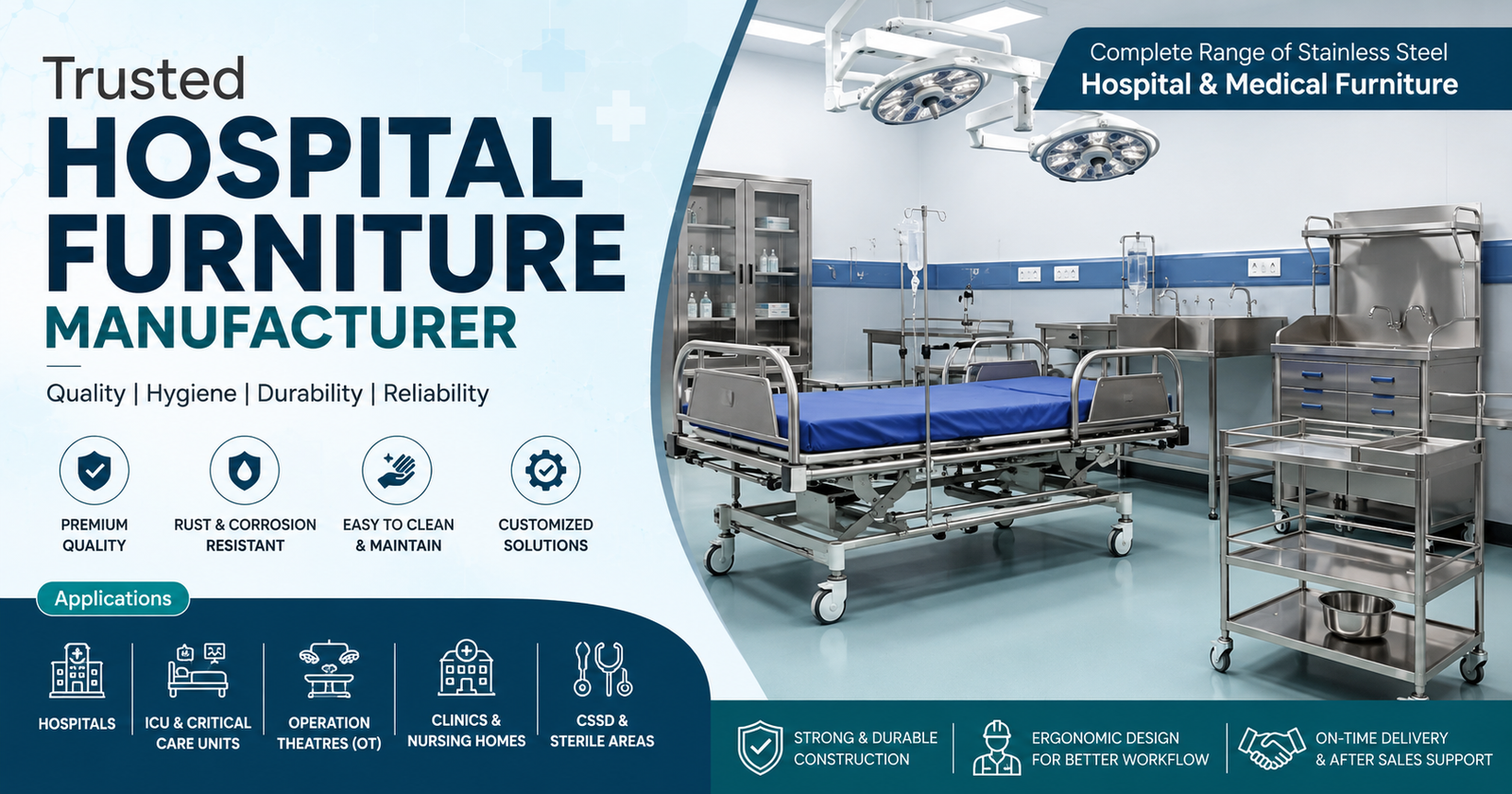
A Hospital Furniture Manufacturer is a company that designs, manufactures, and supplies furniture specifically for healthcare environments. Its products can include hospital beds, examination tables, instrument trolleys, work tables, storage cabinets, scrub sinks, dressing trolleys, stainless steel furniture, and CSSD equipment.
Unlike general furniture, healthcare furniture must support hygiene, durability, safe movement, organized storage, and regular cleaning. WHO highlights environmental cleaning and disinfection as important parts of infection prevention in healthcare facilities?
Why is Hospital Furniture Important?
Hospital furniture directly affects how healthcare professionals perform daily tasks. Poorly designed furniture can make cleaning difficult, waste valuable space, and slow down clinical workflows.
Well-designed furniture supports:
- Infection control: Smooth, accessible surfaces are easier to clean and disinfect.
- Workflow efficiency: Properly positioned tables, trolleys, and cabinets keep essential items within reach.
- Durability: Commercial-grade construction can withstand frequent daily use.
- Safety: Stable frames, suitable dimensions, and practical layouts reduce operational risks.
- Space management: Customized storage helps hospitals use available floor space efficiently.
These considerations also align with the broader focus of NABH hospital standards on infection control, patient safety, and facilities management.
Key Features
- Stainless steel construction: Suitable grades provide corrosion resistance and support repeated cleaning.
- Easy-to-clean surfaces: Smooth finishes reduce areas where dirt and contaminants can accumulate.
- Strong construction: Reinforced frames help furniture withstand regular hospital use.
- Ergonomic design: Appropriate working heights and accessible storage improve staff comfort.
- Mobility options: Lockable castors allow selected trolleys to move safely between departments.
- Customization: Dimensions, shelves, drawers, configurations, and accessories can be adapted to project requirements.
Benefits
- Longer service life and lower replacement frequency.
- Easier routine cleaning and maintenance.
- Better organization of medical supplies and instruments.
- Improved staff productivity and workflow.
- More efficient use of hospital space.
- Consistent furniture specifications across multiple departments.
Applications
Hospital furniture is used across multi-specialty hospitals, emergency and trauma centers, ICUs, operation theatres, clinics, nursing homes, medical colleges, diagnostic areas, and government and private healthcare institutions.
Specialized products are also required in CSSD, where workstations, instrument washing sinks, storage systems, pass boxes, and related equipment support the movement and handling of sterile and non-sterile items.
How to Choose the Right Hospital Furniture Manufacturer
- Check material specifications: Confirm the stainless-steel grade, thickness, finish, and construction method.
- Review product range: Choose a manufacturer capable of supplying multiple departments when possible.
- Ask about customization: Hospital layouts often require furniture made to specific dimensions.
- Evaluate quality control: Ask about fabrication, welding, finishing, load capacity, and inspection procedures.
- Consider installation and service: Clarify delivery, installation, warranty, spare parts, and after-sales support.
- Request technical documentation: Drawings, specifications, product datasheets, and relevant certifications can simplify procurement and evaluation.
For buyers searching locally, comparing a Hospital Furniture Manufacturer in Mumbai, Hospital Furniture Manufacturer in Maharashtra, or a Hospital Furniture Supplier India should focus on technical capability rather than location alone.
Common Mistakes to Avoid
- Selecting furniture based only on the lowest quotation.
- Ignoring stainless steel grade and material thickness.
- Buying standard sizes without checking room dimensions.
- Overlooking cleaning and disinfection requirements.
- Failing to confirm warranty and service support.
- Purchasing different products without checking compatibility across departments.
Conclusion
The right hospital furniture should support hygiene, safety, durability, workflow, and efficient space utilization. Whether a facility needs Stainless Steel Hospital Furniture, CSSD systems, storage cabinets, trolleys, sinks, or specialized workstations, selecting an experienced manufacturer can make procurement more reliable. Hospitals should compare specifications, customization capability, quality practices, documentation, and after-sales support before making a final decision.
Frequently Asked Questions
What is a Hospital Furniture Manufacturer?
A Hospital Furniture Manufacturer designs and produces furniture specifically for healthcare environments. Products may include hospital beds, trolleys, cabinets, sinks, workstations, examination furniture, and stainless-steel systems. These products are designed around practical healthcare requirements such as durability, cleaning, mobility, storage, ergonomics, and departmental workflow.
What are the benefits of hospital furniture?
Hospital furniture can improve workflow, organization, hygiene, durability, and staff efficiency. Properly designed furniture is easier to clean, supports safer handling of equipment and supplies, and can make better use of available space. Stainless steel options are particularly useful where frequent cleaning and resistance to corrosion are important.
Where is hospital furniture used?
Hospital furniture is used in ICUs, operation theatres, emergency departments, wards, clinics, nursing homes, laboratories, CSSD areas, treatment rooms, and storage spaces. Different departments require different designs, dimensions, materials, and mobility features depending on clinical activities and cleaning requirements.
How do I choose the right hospital furniture manufacturer?
Compare manufacturers based on material specifications, product quality, customization capability, technical documentation, manufacturing experience, delivery capability, warranty, and after-sales service. Buyers should also review samples or drawings where appropriate and confirm that the proposed furniture matches the intended room layout and operational requirements.
Is hospital furniture customizable?
Yes, many healthcare furniture products can be customized. Hospitals may require specific dimensions, drawer configurations, shelf arrangements, working heights, castors, accessories, or department-specific designs. Customization is particularly useful for OT, ICU, CSSD, laboratory, and storage areas where space and workflow requirements can vary considerably.
What material is best for hospital furniture?
Stainless steel is widely used for healthcare furniture because suitable grades offer durability, corrosion resistance, and surfaces that can be cleaned effectively. The appropriate grade, thickness, finish, and fabrication method depend on the application. Buyers should select material specifications based on the department, cleaning process, expected load, and operating environment.