

Hopper Sink Medical: Complete Guide for Hospitals and Soiled Utility Rooms
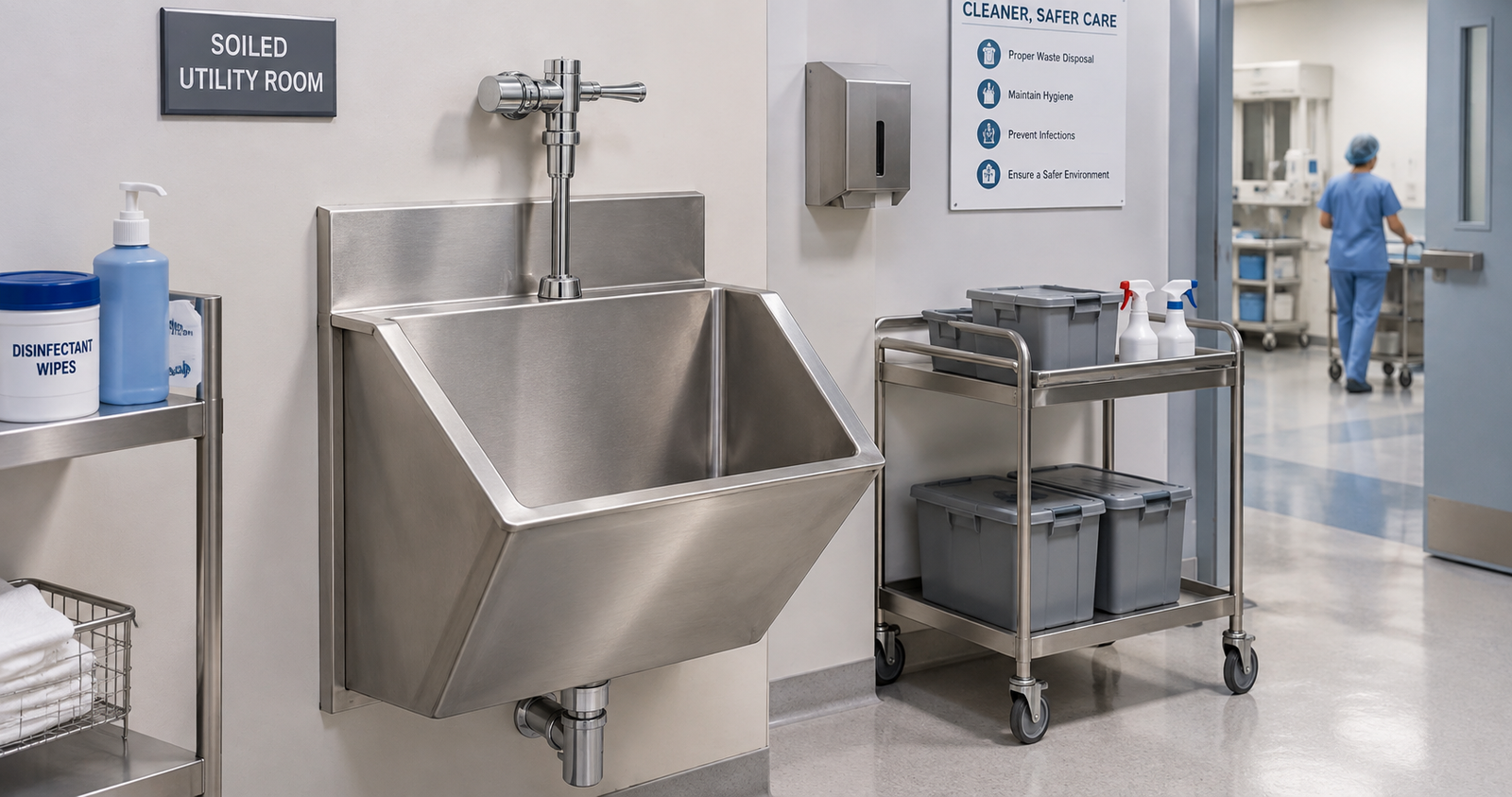
A hopper sink medical is a specialized healthcare fixture designed for hygienic disposal, cleaning, and handling of liquid or contaminated waste in hospital environments. It is commonly installed in soiled utility rooms, clinical areas, and other spaces where sanitation and infection-control practices are important. Choosing the right hopper sink helps healthcare facilities maintain efficient workflows, simplify cleaning, and support safer waste-handling procedures.
What Is a Hopper Sink Medical?
A hopper sink medical is a heavy-duty sanitary fixture designed for hospitals and healthcare facilities to handle contaminated liquids, waste, and cleaning activities.
Unlike a standard wash basin, a medical hopper is designed around the requirements of healthcare environments. Its deep bowl, smooth surfaces, waste outlet, and easy-clean construction make it suitable for areas where hygiene and controlled disposal are essential.
In many facilities, a hopper in soiled utility room provides a dedicated location for handling contaminated materials and cleaning equipment without using general-purpose sinks.
Why Is a Medical Hopper Sink Important?
A properly designed hopper sink supports the workflow of a soiled utility area by providing a dedicated fixture for waste handling and cleaning.
Hospitals may use these sinks for activities such as:
- Handling liquid waste according to facility procedures.
- Cleaning and rinsing reusable utility items.
- Supporting housekeeping and sanitation operations.
- Reducing the use of general hand-washing or clinical sinks for inappropriate tasks.
- Improving separation between clean and contaminated activities.
For hospitals, government healthcare facilities, and medical institutions, this separation can contribute to a more organized and hygienic working environment.
Key Features of Hospital Hopper Sinks
When evaluating hospital hopper sinks, procurement teams should consider the following features:
- Stainless steel construction: Provides durability, corrosion resistance, and straightforward cleaning.
- Deep hopper bowl: Provides sufficient depth for controlled handling of liquids and cleaning tasks.
- Smooth internal surfaces: Help reduce areas where dirt and contaminants can accumulate.
- Efficient drainage: Supports quick removal of wastewater and helps prevent standing water.
- Easy-to-clean design: Simplifies routine cleaning and disinfection.
- Wall or floor-mounted options: Allows selection according to room layout and installation requirements.
- Splash-control design: Helps minimize unwanted splashing during use.
- Robust fabrication: Suitable for frequent use in demanding healthcare environments.
Benefits of a Soiled Utility Hopper Sink
A properly selected soiled utility hopper sink can provide several practical advantages:
- Better workflow: Provides a dedicated location for utility and waste-handling activities.
- Improved hygiene: Separates contaminated activities from general-purpose washing areas.
- Easy maintenance: Stainless steel surfaces can be cleaned and disinfected efficiently.
- Long service life: Quality fabrication can withstand frequent institutional use.
- Space efficiency: Different configurations can accommodate various utility-room layouts.
- Operational consistency: Standardized fixtures make cleaning and maintenance procedures easier to manage.
Applications of Medical Hopper Sinks
A hopper sink can be used in a range of healthcare and institutional environments, including:
- Hospitals and government hospitals
- Clinics and nursing facilities
- Soiled utility rooms
- CSSD support areas
- Operation theatre support areas
- Healthcare housekeeping departments
- Isolation and infection-control areas
- Medical institutions
- Pharmaceutical and laboratory support areas where appropriate
The exact application should always follow the facility’s infection-control procedures, plumbing requirements, and applicable healthcare standards.
How to Choose the Right Hopper Sink Medical
Before purchasing a hopper sink medical, procurement teams should evaluate several factors:
- Material quality: Stainless steel is commonly preferred because it is durable, corrosion-resistant, and easy to clean. Select the appropriate grade based on the application and environment.
- Size and capacity: Consider the available room space, expected workload, and type of material or liquid being handled.
- Installation type: Check whether a wall-mounted, floor-mounted, or customized configuration is suitable for the room.
- Drainage arrangement: Confirm drain size, outlet position, plumbing compatibility, and the site’s existing drainage system.
- Cleaning requirements: Look for smooth, accessible surfaces with minimal dirt-trapping joints and crevices.
- Customization: For healthcare projects, dimensions, backsplash, tap arrangement, legs, supports, flushing systems, and other specifications may need to match project requirements.
Common Mistakes to Avoid
Some common purchasing mistakes can affect the performance and usability of a medical hopper.
- Selecting a sink based only on price instead of construction quality.
- Ignoring available room dimensions before ordering.
- Failing to check drainage and plumbing compatibility.
- Choosing unsuitable stainless steel or finishes for the application.
- Overlooking cleaning access around the fixture.
- Not confirming installation requirements with the hospital’s engineering team.
- Buying a standard sink when the project requires a purpose-built healthcare hopper.
Conclusion
A hopper sink medical provides a dedicated solution for waste handling, utility cleaning, and sanitation-related activities in healthcare environments. Its deep basin, durable construction, efficient drainage, and easy-clean surfaces make it particularly useful in soiled utility rooms.
Hospitals and healthcare procurement teams should select a hopper based on material quality, dimensions, installation requirements, drainage, cleaning needs, and project specifications. For customized requirements, contacting a qualified hospital equipment manufacturer can help ensure the selected configuration matches the facility’s workflow and installation conditions.
Frequently Asked Questions
What is a hopper sink medical?
A hopper sink medical is a specialized healthcare fixture designed for handling liquid waste, utility cleaning, and related sanitation activities. It is commonly installed in soiled utility rooms and other designated healthcare service areas. Its deep basin and hygienic construction distinguish it from conventional hand-washing or general-purpose sinks.
What are the benefits of a hospital hopper sink?
Hospital hopper sinks provide a dedicated area for utility and waste-handling activities. They can improve workflow, support hygiene procedures, simplify cleaning, and withstand frequent institutional use. Stainless steel construction also provides durability and makes routine cleaning and disinfection easier when the fixture is properly maintained.
Where is a hopper in a soiled utility room used?
A hopper in soiled utility room is generally used for designated utility activities involving liquid waste, cleaning, and contaminated materials. The exact use depends on the healthcare facility’s procedures. It should be installed with appropriate plumbing, drainage, cleaning access, and infection-control considerations.
How do I choose the right hopper sink medical?
Consider the available space, stainless steel grade, basin dimensions, mounting arrangement, drainage requirements, cleaning access, and expected workload. Hospitals should also review project specifications and plumbing requirements before ordering. For large healthcare projects, customized dimensions and configurations may be required.
Is a medical hopper sink customizable?
Yes, medical hopper sinks can often be manufactured or configured according to project requirements. Depending on the manufacturer, customization may include dimensions, mounting style, backsplash, supports, drainage arrangement, flushing components, tap configuration, and other installation-specific requirements.
What material is best for a hospital hopper sink?
Stainless steel is widely used for hospital hopper sinks because it offers durability, corrosion resistance, and relatively easy cleaning. The appropriate stainless steel grade should be selected according to the environment, cleaning chemicals, expected usage, and project specifications rather than choosing solely on appearance or price.