

Dynamic Pass Box Manufacturer: Complete Guide for Cleanroom & Pharma Industries
Introduction
In industries like pharmaceuticals, biotechnology, hospitals, and laboratories, maintaining contamination-free environments is critical. Even a small amount of dust, bacteria, or airborne particles can affect product quality, research accuracy, and safety standards.
This is where a reliable dynamic pass box manufacturer plays an important role.
A dynamic pass box helps transfer materials between cleanroom areas without allowing contamination to enter the controlled environment. It improves hygiene, supports compliance, and increases operational efficiency.
However, many buyers struggle to choose between a dynamic and static pass box, understand cleanroom specifications, or find a trusted cleanroom pass box manufacturer that delivers quality and long-term reliability.
This guide explains everything you need to know before selecting the right pass box system for your facility.
What Problems Do Industries Face Without a Proper Pass Box?
Many industries still face contamination-related challenges due to improper material handling systems.
Common Issues Include:
- Cross-contamination between cleanroom zones
- Airborne particle transfer
- Frequent manual handling errors
- Poor hygiene compliance
- Product rejection or quality failures
- Increased cleanroom maintenance costs
In pharmaceutical manufacturing and laboratory environments, contamination control is not optional. A certified pharma pass box supplier helps maintain sterile transfer conditions while reducing human interference.
Why Choosing the Right Dynamic Pass Box Manufacturer Matters
Not all pass boxes are designed with the same engineering standards. A professional dynamic pass box manufacturer ensures:
- Proper airflow management
- HEPA filtration efficiency
- Durable stainless steel construction
- Reliable interlocking systems
- GMP and ISO compliance
- Long operational lifespan
Choosing the wrong supplier can result in maintenance problems, airflow imbalance, and non-compliance with cleanroom standards.
What is a Dynamic Pass Box?
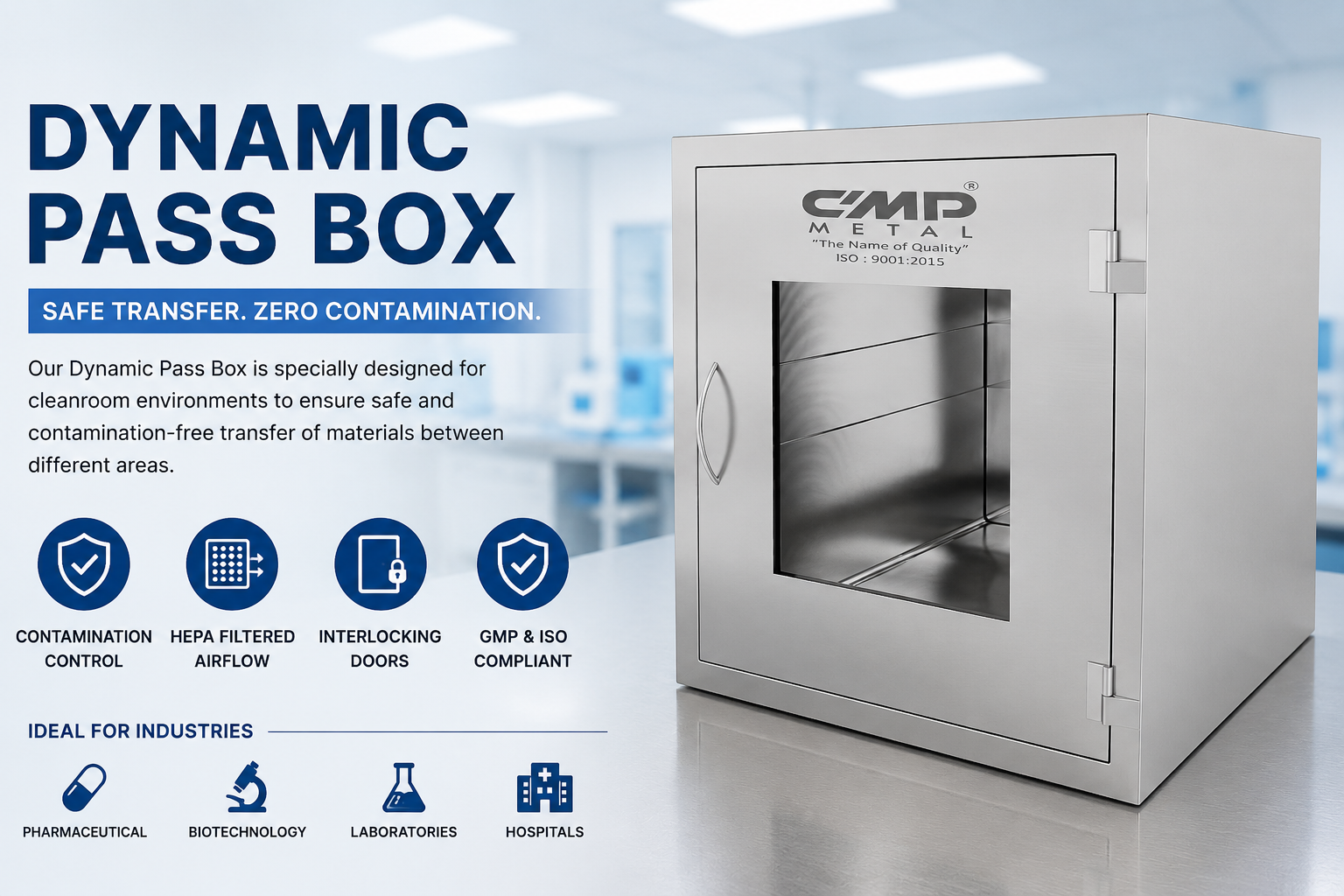
A dynamic pass box is a cleanroom equipment system used to transfer materials between classified and non-classified areas while maintaining air cleanliness.
Unlike standard transfer chambers, dynamic models use:
- HEPA filters
- Motor blowers
- Air circulation systems
- UV sterilization (optional)
These features continuously clean the internal chamber air during material transfer.
Main Components of a Dynamic Pass Box
- Stainless steel body
- HEPA filter
- Motor blower assembly
- Differential pressure gauge
- Electromagnetic interlocking doors
- UV light system
- Control panel
Types of Pass Boxes
1. Dynamic Pass Box
Used in:
- Pharmaceutical plants
- Sterile manufacturing units
- Biotechnology labs
- High-grade cleanrooms
Features active air filtration and contamination control.
2. Static Pass Box
A static pass box manufacturer provides systems designed for basic material transfer where contamination risk is lower.
Used in:
- Packaging sections
- Warehouses
- Non-critical cleanroom zones
Static pass boxes do not include airflow systems or HEPA filtration.
Dynamic Pass Box vs Static Pass Box
| Feature | Dynamic Pass Box | Static Pass Box |
|---|---|---|
| Air Filtration | HEPA Filter | No Filter |
| Airflow System | Available | Not Available |
| Contamination Control | High | Moderate |
| Suitable for | Pharma & Sterile Areas | Basic Transfer Areas |
| Maintenance | Moderate | Low |
| Cost | Higher | Lower |
A trusted static pass box manufacturer can help for basic cleanroom applications, but critical environments usually require dynamic systems.
Key Features of a High-Quality Cleanroom Pass Box
When selecting a cleanroom pass box manufacturer, look for these important features:
Stainless Steel Construction
SS 304 or SS 316 material improves durability, corrosion resistance, and hygiene.
HEPA Filtration
Removes airborne particles efficiently and maintains clean airflow.
Interlocking Door System
Prevents both doors from opening simultaneously, reducing contamination risks.
UV Sterilization
Helps eliminate microbial contamination inside the chamber.
Noise-Free Operation
High-quality blowers ensure smooth and quiet operation.
Easy Cleaning Design
Rounded corners and smooth surfaces reduce particle accumulation.
Benefits of Using Dynamic Pass Boxes
Better Contamination Control
Dynamic systems reduce airborne contamination during material transfer.
Improved Cleanroom Compliance
Supports GMP, ISO, and FDA cleanroom standards.
Reduced Human Traffic
Minimizes operator movement between controlled zones.
Increased Product Safety
Protects sensitive pharmaceutical and laboratory products.
Operational Efficiency
Improves workflow speed and material handling accuracy.
Industries That Use Dynamic Pass Boxes
A professional pass box supplier generally serves multiple industries.
Common Applications Include:
- Pharmaceutical manufacturing
- Biotechnology facilities
- Hospitals
- IVF laboratories
- Food processing units
- Electronics manufacturing
- Research laboratories
- Chemical industries
Step-by-Step Buying Guide for Dynamic Pass Boxes
Choosing the right dynamic pass box manufacturer requires careful evaluation.
Step 1: Identify Cleanroom Classification
Understand whether your facility operates under ISO Class 5, 7, or 8 standards.
Step 2: Define Material Transfer Needs
Consider:
- Product size
- Transfer frequency
- Sterility requirements
Step 3: Check Material Quality
Prefer stainless steel construction with proper surface finishing.
Step 4: Verify Filtration Efficiency
Ensure HEPA filters meet industry standards.
Step 5: Ask About Compliance
Look for:
- GMP compliance
- ISO standards
- Validation support
Step 6: Compare Customization Options
Some industries require customized chamber sizes and airflow configurations.
Step 7: Evaluate After-Sales Support
Reliable technical support and maintenance services are important for long-term performance.
Common Mistakes to Avoid While Buying a Pass Box
Ignoring Cleanroom Requirements
Buying a static system for sterile applications can create contamination risks.
Choosing Based Only on Price
Low-cost systems may compromise filtration efficiency and durability.
Not Checking Interlocking Systems
Poor-quality door interlocks can fail during operation.
Skipping Validation Support
Pharma facilities often require IQ/OQ documentation and validation assistance.
Overlooking Maintenance Access
Choose systems designed for easy cleaning and filter replacement.
Expert Tips Before Selecting a Pharma Pass Box Supplier
Industry professionals recommend focusing on performance, compliance, and long-term reliability rather than only initial cost.
Important Expert Recommendations
- Always verify HEPA filter specifications
- Prefer reputed cleanroom equipment manufacturers
- Ask for airflow testing reports
- Confirm stainless steel grade
- Ensure proper electrical safety standards
- Choose suppliers with pharma industry experience
A trusted pharma pass box supplier should also provide installation guidance and technical documentation.
How Dynamic Pass Boxes Improve Cleanroom Efficiency
Dynamic pass boxes are not just transfer chambers. They directly impact operational quality.
Efficiency Advantages
- Faster material movement
- Lower contamination incidents
- Reduced cleanroom downtime
- Better workflow management
- Lower maintenance costs over time
For pharmaceutical production lines, this can significantly improve process reliability.
Frequently Asked Questions (FAQs)
1. What is the difference between a dynamic and static pass box?
A dynamic pass box includes HEPA filtration and airflow systems for contamination control, while a static pass box is used for simple material transfer without active filtration.
2. Why is a dynamic pass box important in pharmaceutical industries?
It helps maintain sterile conditions during material transfer and reduces contamination risks in cleanroom environments.
3. What material is best for a cleanroom pass box?
Stainless steel SS 304 or SS 316 is commonly preferred due to corrosion resistance and hygiene benefits.
4. How often should HEPA filters be replaced?
It depends on usage and environment, but most facilities inspect filters regularly and replace them based on airflow performance and validation reports.
5. Can pass boxes be customized?
Yes. Many manufacturers provide customized dimensions, airflow systems, and control options based on facility requirements.
6. What industries use dynamic pass boxes?
Pharmaceuticals, biotechnology, hospitals, laboratories, food processing, and electronics manufacturing commonly use dynamic pass boxes.
7. How do I choose the right pass box supplier?
Look for industry experience, product quality, cleanroom compliance, customization capability, and after-sales support.
Conclusion
Selecting the right dynamic pass box manufacturer is essential for maintaining contamination-free operations in cleanroom environments. Whether you operate a pharmaceutical plant, laboratory, or sterile manufacturing facility, the right pass box system improves safety, compliance, and workflow efficiency.
Understanding the difference between dynamic and static systems, evaluating cleanroom requirements, and choosing an experienced cleanroom pass box manufacturer can help you make a smarter long-term investment.
A high-quality pass box is not just equipment — it is a critical part of maintaining cleanroom integrity and product quality.