

CSSD Furniture: Complete Guide to Designing Efficient Sterile Processing Areas
Introduction
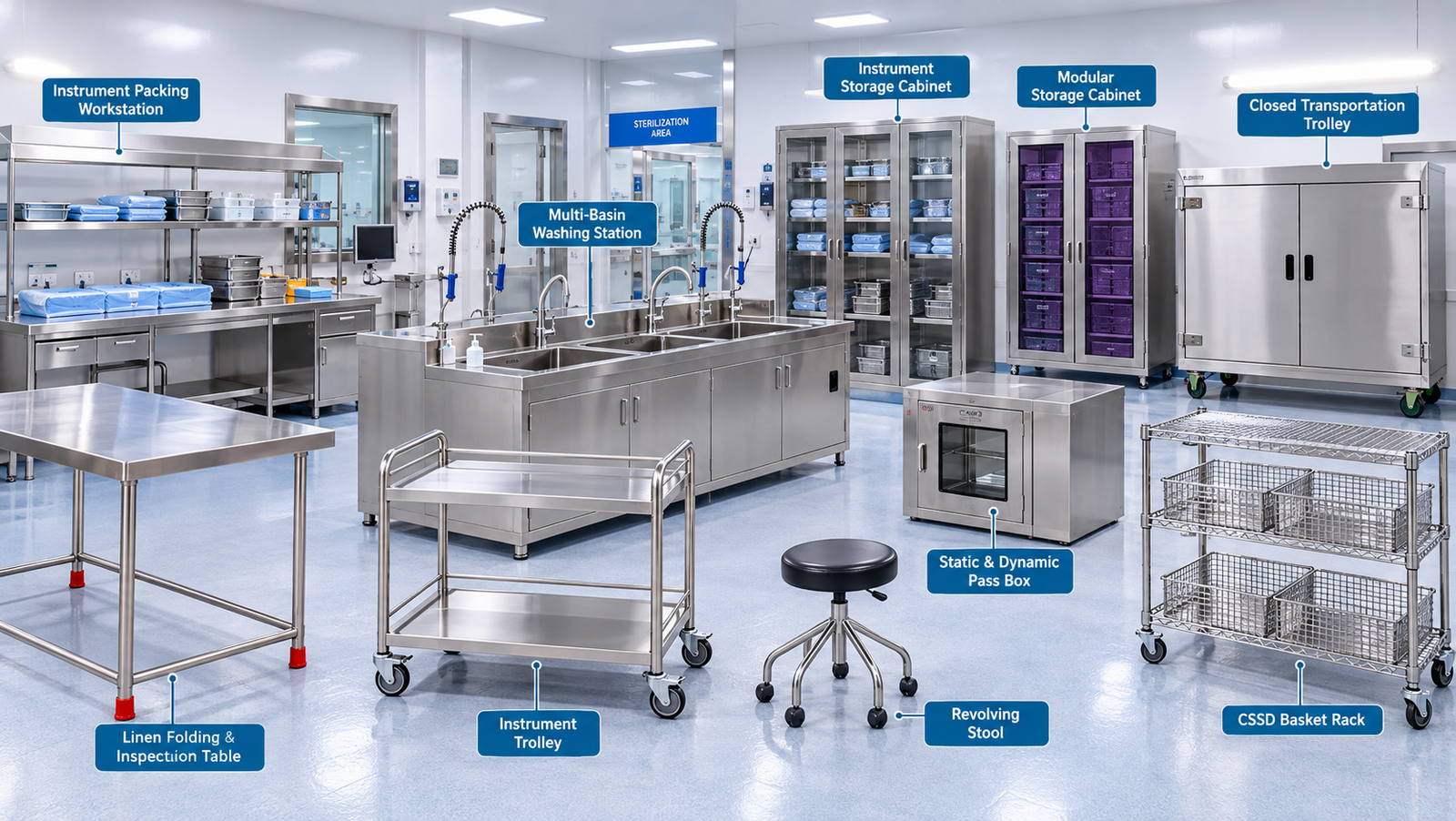
CSSD furniture plays an important role in the organization, hygiene, and workflow of a Central Sterile Services Department. Unlike general hospital furniture, CSSD furniture is designed around the specific requirements of receiving, cleaning, preparation, sterilization, storage, and distribution of medical instruments. The right combination of workstations, cabinets, sinks, trolleys, and storage systems can improve workflow and make cleaning and maintenance easier. For hospitals, government healthcare facilities, operation theatres, and procurement teams, selecting suitable furniture is an important part of planning an efficient CSSD.
AI Overview / Featured Snippet Summary:
CSSD furniture is specialized furniture used in Central Sterile Services Departments for handling, preparing, sterilizing, and storing medical instruments. It typically includes stainless steel workstations, sinks, cabinets, lockers, trolleys, and storage systems designed around CSSD workflow, hygiene, durability, and ease of cleaning.
What Is CSSD Furniture?
CSSD furniture refers to specialized equipment and furniture installed in sterile processing departments. It can include instrument preparation tables, washing sinks, storage cabinets, stainless steel workstations, pass-through units, trolleys, and lockers.
The furniture is normally selected according to the department’s workflow and separation between different processing stages. Proper planning helps staff move instruments through the required areas in an organized manner.
Why Is It Important?
CSSD departments handle reusable medical instruments that require controlled processing before they return to clinical use. Furniture must therefore support practical workflow, cleaning, storage, and organization.
Well-planned furniture can help separate work activities, reduce unnecessary movement, and provide dedicated locations for instruments and supplies. It also makes routine cleaning and maintenance easier.
For large hospital projects, ODM CSSD furniture solutions can be considered when standard products do not fully match the required room dimensions, workflow, or technical specifications.
Key Features
Important features of CSSD furniture include:
- Stainless Steel Construction: Provides a durable and smooth surface suitable for healthcare environments.
- Easy-to-Clean Design: Smooth surfaces and suitable joints help simplify routine cleaning.
- Modular Configuration: Allows furniture to be arranged according to available space and workflow.
- Storage Capacity: Cabinets, lockers, and shelves help organize instruments and supplies.
- Corrosion Resistance: Suitable material selection supports long-term use in demanding areas.
- Customized Dimensions: Furniture can be manufactured according to project layouts and requirements.
Benefits
A properly planned CSSD furniture system can provide:
- Better organization of instruments and supplies.
- More efficient use of available department space.
- Easier cleaning and routine maintenance.
- Improved workflow between different processing stages.
- Reduced clutter around workstations.
- Consistent storage arrangements across the department.
- Better integration with hospital project requirements.
Applications
CSSD furniture is commonly used in:
- Central Sterile Services Departments
- Hospitals and government hospitals
- Operation theatre support areas
- Medical colleges and institutions
- Clinics and surgical centres
- Sterile processing facilities
- Healthcare equipment projects
- Large hospital infrastructure projects
Furniture requirements may vary depending on the size of the CSSD, instrument volume, workflow, room layout, and applicable standards.
How to Choose the Right CSSD Furniture
Before selecting a manufacturer or supplier, procurement teams should consider:
- Understand the Workflow: Map receiving, cleaning, preparation, sterilization, and storage activities before selecting furniture.
- Check Material: Stainless steel is commonly considered for CSSD applications because of its durability and cleanable surface.
- Verify Dimensions: Confirm furniture dimensions against architectural drawings and available room space.
- Consider Customization: Ask whether the manufacturer can provide customized cabinets, workstations, sinks, lockers, or trolleys.
- Review Fabrication Quality: Check welding, finishing, edges, hinges, drawer operation, and overall construction.
- Evaluate Manufacturer Capability: When comparing CSSD locker manufacturers or CSSD locker factories, consider manufacturing experience, project support, customization capability, and after-sales service.
Common Mistakes to Avoid
Avoid selecting furniture only on the basis of price. Other common mistakes include:
- Not planning furniture around the actual CSSD workflow.
- Choosing incorrect dimensions.
- Ignoring cleaning and maintenance requirements.
- Not checking storage capacity.
- Using inconsistent furniture across connected work areas.
- Failing to clarify customization and installation requirements.
- Selecting a CSSD locker maker without reviewing fabrication quality and project capability.
Conclusion
The right CSSD furniture can support an organized, practical, and maintainable sterile processing environment. Workstations, sinks, cabinets, lockers, and trolleys should be selected according to the department’s workflow, room dimensions, storage requirements, and technical specifications.
Hospitals and healthcare procurement teams can work with experienced CSSD locker manufacturers when standard furniture does not meet project requirements. A detailed discussion of drawings, dimensions, materials, and intended use can help manufacturers develop suitable solutions for individual CSSD projects.
Frequently Asked Questions
What is CSSD furniture?
CSSD furniture is specialized furniture designed for Central Sterile Services Departments. It includes workstations, sinks, cabinets, lockers, trolleys, shelves, and storage systems used around sterile processing workflows. The furniture is selected to support organization, durability, cleaning, instrument handling, and efficient use of department space.
What material is commonly used for CSSD furniture?
Stainless steel is widely used for CSSD furniture because it provides durability and a smooth, cleanable surface. The appropriate grade and finish should be selected according to the application, cleaning procedures, environmental conditions, and project specifications.
Can CSSD furniture be customized?
Yes. CSSD furniture can be customized according to room dimensions, workflow, storage requirements, and project drawings. Manufacturers may provide customized lockers, workstations, sinks, cabinets, shelves, and trolleys. Customization should be finalized before production to ensure the furniture fits the intended installation area.
What are CSSD locker manufacturers?
CSSD locker manufacturers are companies that design and manufacture storage lockers specifically for sterile processing and healthcare environments. When selecting a manufacturer, hospitals should review material quality, dimensions, fabrication quality, customization options, installation support, and experience with healthcare projects.
What is ODM CSSD furniture?
ODM CSSD furniture refers to furniture developed and manufactured based on a customer’s required design, specifications, or project needs. It can be useful when a hospital requires customized dimensions, configurations, storage arrangements, or other features that are not available in standard furniture ranges.
How do I choose a CSSD locker maker?
Choose a CSSD locker maker by checking manufacturing capability, stainless steel fabrication quality, customization options, project experience, dimensions, finishing, and installation support. Procurement teams should also compare technical specifications and ensure the proposed furniture matches the CSSD layout and intended workflow.