

CSSD Furniture: Complete Guide to CSSD Furniture and Equipment
Introduction
In any hospital or healthcare facility, maintaining sterile instruments is critical for patient safety. That’s where CSSD furniture plays a major role. The Central Sterile Supply Department (CSSD) is responsible for cleaning, disinfecting, sterilizing, storing, and distributing surgical instruments and medical equipment.
Without the right cssd furniture and equipment, workflow becomes inefficient, contamination risks increase, and staff productivity suffers. Poor furniture layout can also slow down sterilization processes and affect infection control standards.
This is why choosing the right cssd furnitures is essential for modern healthcare environments. From stainless steel worktables to storage cabinets and pass boxes, every piece contributes to operational efficiency.
In this guide, we’ll cover everything you need to know about CSSD furniture, including types, benefits, buying tips, and common mistakes to avoid.
What Problems Do Healthcare Facilities Face Without Proper CSSD Furniture?
Many hospitals underestimate the importance of specialized CSSD setups. This creates several challenges:
- Poor workflow between dirty and sterile zones
- Increased contamination risk
- Limited storage for sterilized instruments
- Difficulty maintaining hygiene standards
- Reduced staff efficiency
- Higher chances of equipment damage
For example, if sterilized tools are stored in non-medical cabinets, dust or microbial contamination becomes a real risk. Similarly, poor workstation design can slow packaging and inspection processes.
This makes high-quality cssd furniture and equipment a necessity rather than a luxury.
What is CSSD Furniture?
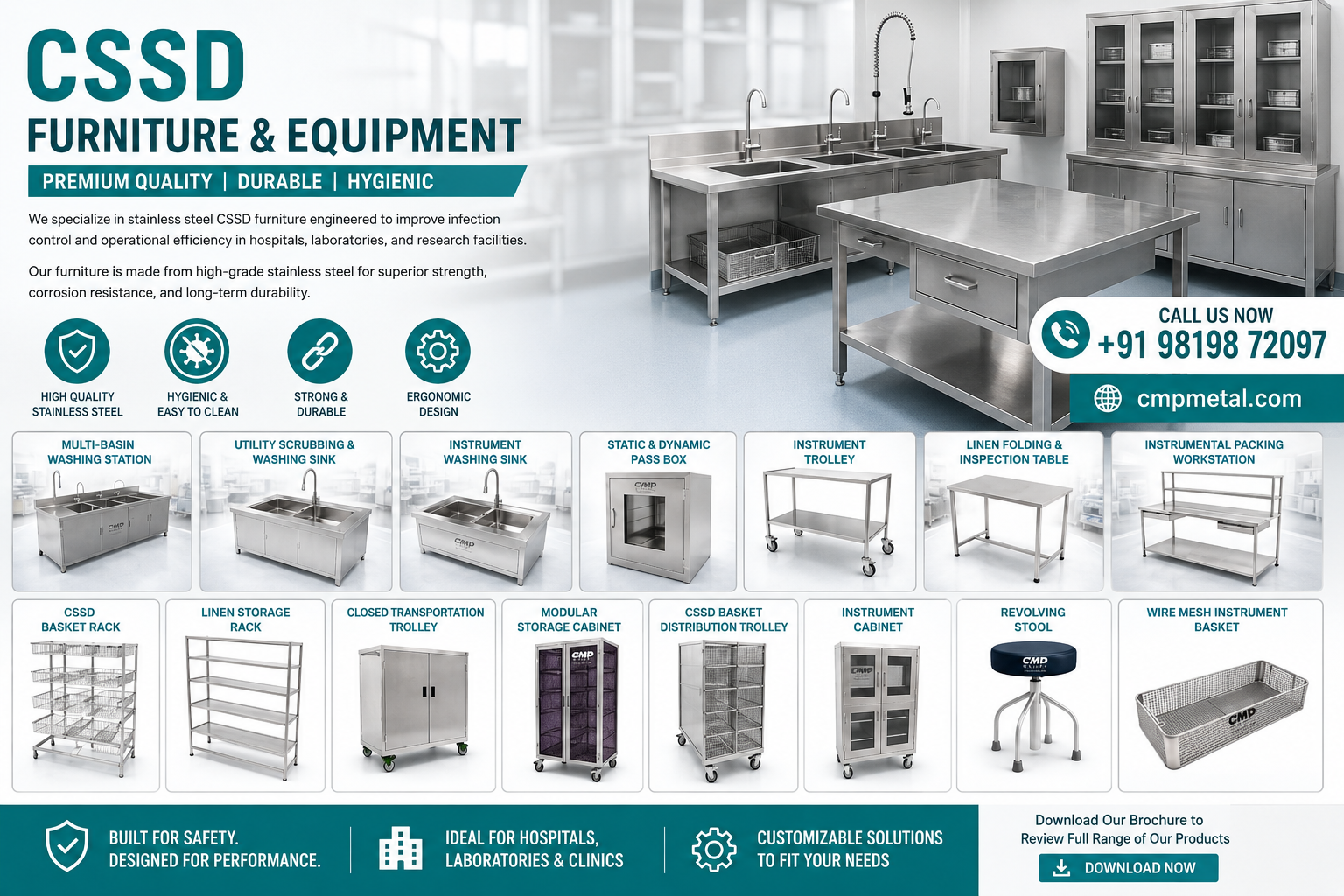
CSSD furniture refers to specialized furniture designed for sterilization departments in hospitals, clinics, laboratories, and healthcare facilities.
These furniture units are specifically engineered to support:
- Instrument cleaning
- Drying
- Inspection
- Packing
- Sterile storage
- Distribution
Most CSSD furniture is made from medical-grade stainless steel because it offers:
- Corrosion resistance
- Easy cleaning
- High durability
- Anti-bacterial surface properties
The goal is simple: maintain sterility while improving workflow.
Types of CSSD Furniture
1. Washing Area Furniture
Used in dirty zones where contaminated instruments are received and cleaned.
Examples:
- Sink units
- Washing stations
- Draining tables
- Utility counters
These help separate contaminated instruments from sterile ones.
2. Inspection and Packing Tables
After cleaning, instruments move to inspection areas.
These tables are used for:
- Instrument checking
- Assembly
- Packaging
- Labeling
Features often include:
- Smooth edges
- Under-table storage
- Ergonomic height
3. Storage Cabinets
Storage is critical after sterilization.
Cabinets help protect sterile packs from:
- Dust
- Moisture
- Contamination
Common types:
- Closed cabinets
- Open rack systems
- Instrument trays
4. Transfer Trolleys
Used for moving instruments safely between departments.
Benefits:
- Faster transport
- Reduced manual handling
- Better organization
5. Pass Box Units
Pass boxes transfer sterilized items between controlled environments.
Advantages:
- Minimize human contact
- Reduce contamination
- Improve workflow separation
Key Features of High-Quality CSSD Furniture
Not all cssd furnitures are built the same. High-quality units usually offer the following features.
Stainless Steel Construction
Preferred grades:
- SS 304
- SS 316
These provide excellent rust resistance.
Seamless Design
Seamless welding reduces dirt accumulation and improves cleaning.
Ergonomic Structure
Good design reduces staff fatigue during long shifts.
- Adjustable height tables
- Smooth drawer movement
- Rounded corners
Easy Sanitization
Furniture should withstand:
- Chemical cleaning agents
- Steam cleaning
- Frequent disinfection
High Load Capacity
Storage units should handle:
- Heavy instrument trays
- Sterilization baskets
- Medical supplies
Benefits of Using Proper CSSD Furniture and Equipment
Better Infection Control
The main benefit is reduced contamination risk.
Proper segregation between:
- Dirty area
- Clean area
- Sterile area
helps maintain hygiene.
Improved Workflow
Efficient layouts reduce unnecessary movement and save time.
Staff can process more instruments in less time.
Increased Durability
Medical furniture lasts for years under heavy use.
Regulatory Compliance
Proper cssd furniture and equipment helps meet infection control and accreditation requirements.
CSSD Furniture Comparison Table
| Feature | Standard Furniture | Specialized CSSD Furniture |
|---|---|---|
| Material | Wood / Mild Steel | Medical-grade Stainless Steel |
| Hygiene | Difficult | Easy |
| Durability | Medium | High |
| Corrosion Resistance | Low | Excellent |
| Infection Control | Poor | Excellent |
Step-by-Step Buying Guide for CSSD Furniture
- Assess workflow
- Measure available space
- Choose SS 304 or SS 316 material
- Check hygiene standards
- Evaluate load capacity
- Select trusted manufacturer
Common Mistakes to Avoid
- Choosing based only on price
- Ignoring workflow design
- Buying non-medical furniture
- Underestimating storage needs
Expert Tips for Choosing the Best CSSD Furniture
- Prioritize zoning
- Focus on ergonomics
- Think long-term
- Invest in customization
Conclusion
Choosing the right cssd furniture is essential for safety, efficiency, and infection control. High-quality cssd furnitures improve workflow, protect sterile instruments, and support hospital compliance standards.
FAQs
What is CSSD furniture?
CSSD furniture refers to specialized hospital furniture used in sterilization departments.
Why is stainless steel used in CSSD furniture?
Because it is corrosion-resistant, hygienic, and easy to sanitize.
What furniture is required in a CSSD?
Washing stations, packing tables, storage cabinets, trolleys, and pass boxes.
Why is CSSD important in hospitals?
It ensures instruments remain sterile and reduces infection risks.
How long does CSSD furniture last?
High-quality stainless steel CSSD furniture can last 10–20 years.