

Crash Cart Trolley: The Complete Guide for Hospitals & Emergency Care
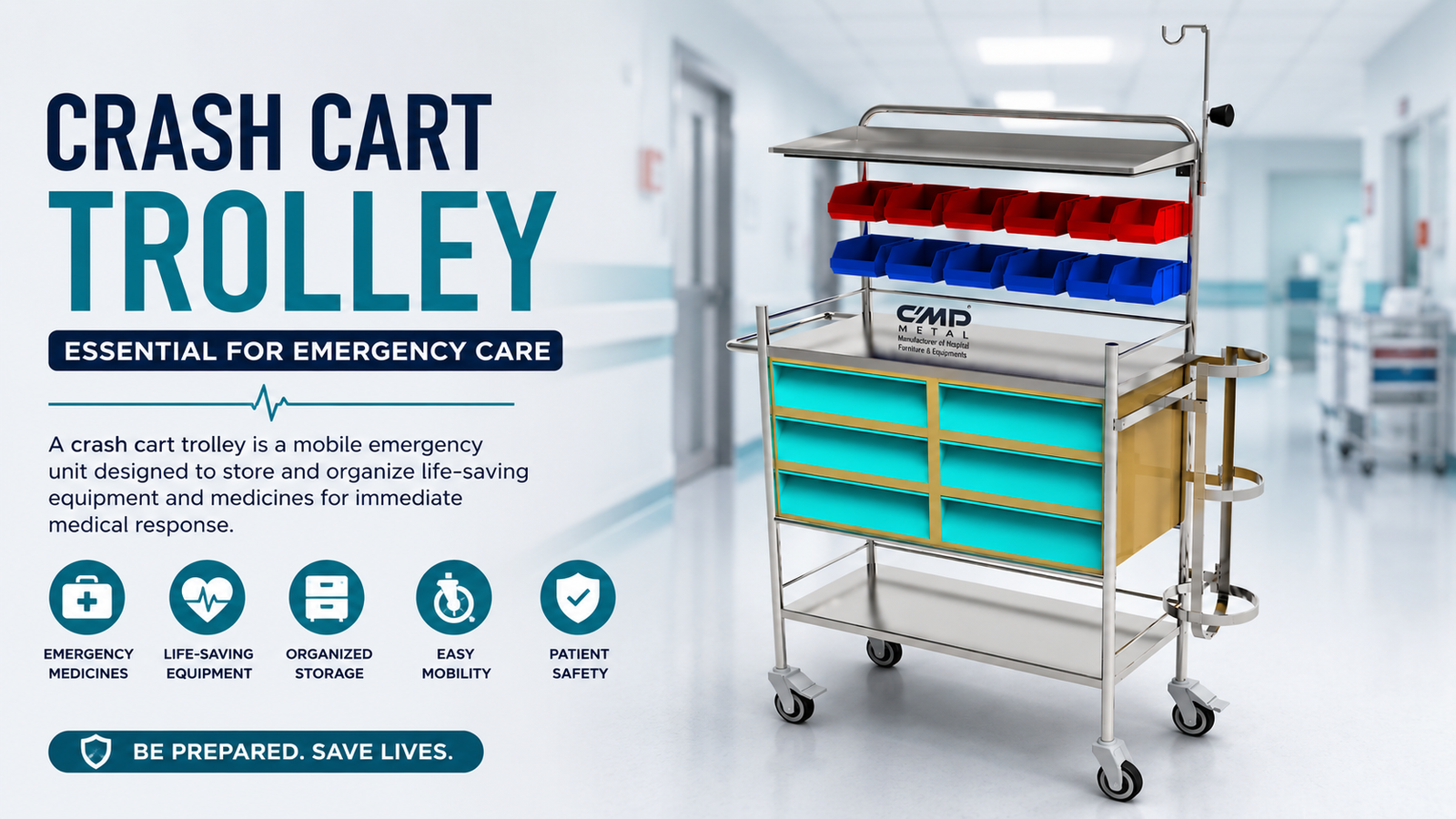
When every second counts, having immediate access to life-saving equipment can make all the difference. A crash cart trolley is one of the most essential pieces of equipment in hospitals, emergency departments, ICUs, operating theatres, and clinics. It is designed to keep emergency medicines, airway devices, and critical medical supplies organized and easily accessible during medical emergencies.
An emergency crash cart trolley helps healthcare professionals respond quickly during cardiac arrest, respiratory emergencies, trauma cases, and other life-threatening situations. This guide explains everything you need to know about hospital crash cart trolleys, including their features, types, benefits, buying guide, and maintenance tips.
Why is a Crash Cart Trolley Important?
Medical emergencies require immediate action. Searching for medicines or equipment during an emergency wastes valuable time and can affect patient outcomes. A properly organized hospital crash cart trolley ensures that all emergency supplies are available in one place, allowing doctors and nurses to provide faster treatment.
- Improves emergency response time
- Organizes critical medicines and equipment
- Enhances patient safety
- Supports efficient workflow
- Reduces treatment delays
What is a Crash Cart Trolley?
A crash cart trolley, also known as a resuscitation trolley or code blue cart, is a mobile medical cart specially designed to store emergency medications, airway devices, monitoring tools, and other life-saving supplies.
These trolleys are commonly found in:
- Emergency Departments (ED)
- Intensive Care Units (ICU)
- Operation Theatres (OT)
- Cardiac Care Units (CCU)
- Recovery Rooms
- Dialysis Centers
- Clinics
- Ambulances
Types of Crash Cart Trolleys
1. Standard Hospital Crash Cart Trolley
This is the most commonly used trolley for general emergency care. It includes multiple drawers for medicines, disposable supplies, and emergency equipment.
2. Cardiac Crash Cart Emergency Trolley
Designed specifically for cardiac emergencies, these carts include storage for defibrillators, ECG accessories, emergency cardiac drugs, and airway devices.
3. Pediatric Crash Cart
Pediatric models feature color-coded drawers and child-specific emergency equipment for quick identification during treatment.
4. Anesthesia Crash Cart
These carts store anesthesia medicines, intubation equipment, oxygen accessories, and airway management tools for surgical departments.
5. Specialty Emergency Crash Cart Trolley
Customized for departments such as trauma centers, neonatal ICUs, maternity wards, or specialty hospitals.
Essential Crash Cart Trolley Equipment
A well-equipped crash cart trolley equipment setup should contain all the essential tools required for emergency patient care.
Airway Equipment
- Laryngoscope
- Endotracheal Tubes
- Ambu Bag
- Oxygen Masks
- Suction Catheter
- Airway Devices
Crash Cart Trolley Medicine
Every crash cart trolley medicine drawer should contain commonly used emergency medications, including:
- Epinephrine
- Atropine
- Amiodarone
- Adenosine
- Lidocaine
- Sodium Bicarbonate
- Magnesium Sulfate
- Dextrose
- Normal Saline
IV Supplies
- IV Cannulas
- Syringes
- Needles
- IV Tubing
- Infusion Sets
Monitoring Equipment
- Defibrillator
- ECG Electrodes
- Pulse Oximeter
- Blood Pressure Monitor
- Thermometer
Additional Accessories
- Gloves
- Face Masks
- Sterile Dressings
- Medical Tape
- Scissors
- Waste Bin
- Tourniquet
Key Features of a Modern Crash Cart Trolley
- Medical-grade stainless steel construction
- Powder-coated corrosion-resistant frame
- Smooth medical caster wheels with brakes
- Central locking system
- Multiple storage drawers
- Defibrillator shelf
- Oxygen cylinder holder
- Adjustable IV pole
- Utility tray
- Labelled compartments
- Easy-to-clean surface
- Anti-tilt drawer system
Benefits of Using a Hospital Crash Cart Trolley
- Faster access to emergency equipment
- Improved patient safety
- Better medicine organization
- Easy transportation between departments
- Supports emergency response protocols
- Reduces treatment delays
- Improves workflow efficiency
- Easy inventory management
- Enhanced infection control
Crash Cart Trolley Comparison
| Feature | Basic Medical Cart | Advanced Crash Cart Trolley |
|---|---|---|
| Storage Capacity | Medium | High |
| Central Lock | No | Yes |
| Defibrillator Shelf | Optional | Included |
| Oxygen Cylinder Holder | Optional | Included |
| IV Pole | Optional | Included |
| Drawer Organization | Basic | Advanced |
Step-by-Step Buying Guide for a Crash Cart Trolley
- Choose the right size based on your hospital department.
- Select corrosion-resistant stainless steel construction.
- Ensure smooth locking caster wheels for mobility.
- Look for multiple organized storage drawers.
- Check for a central locking mechanism.
- Confirm compatibility with emergency equipment.
- Choose models with oxygen cylinder holders and IV poles.
- Prefer easy-to-clean surfaces for infection control.
Common Mistakes to Avoid
- Buying a trolley with insufficient storage space.
- Ignoring wheel quality.
- Choosing non-medical-grade materials.
- Skipping regular maintenance.
- Keeping expired medicines inside drawers.
- Failing to label drawers properly.
- Not checking emergency inventory daily.
Expert Tips
- Inspect emergency medications every day.
- Replace expired medicines immediately.
- Conduct routine crash cart audits.
- Train hospital staff regularly.
- Keep the trolley fully stocked after every emergency.
- Use standardized drawer layouts throughout the hospital.
Frequently Asked Questions (FAQs)
What is a crash cart trolley?
A crash cart trolley is a mobile emergency cart that stores medicines, airway equipment, and emergency medical supplies for rapid patient care.
What medicines are stored in a crash cart trolley?
Common medicines include Epinephrine, Atropine, Amiodarone, Adenosine, Lidocaine, Sodium Bicarbonate, Magnesium Sulfate, and IV fluids.
Where is a hospital crash cart trolley used?
It is widely used in ICUs, emergency rooms, operation theatres, recovery rooms, cardiac care units, and ambulances.
How often should a crash cart be checked?
Hospitals should inspect crash carts daily and perform routine inventory checks according to hospital protocols.
What material is best for a crash cart trolley?
Medical-grade stainless steel and powder-coated steel provide excellent durability, corrosion resistance, and easy cleaning.
Can crash cart trolleys be customized?
Yes. Manufacturers offer customization options including drawer layouts, locking systems, accessories, and storage configurations.
Conclusion
A crash cart trolley plays a vital role in emergency patient care by keeping life-saving medicines and equipment organized, secure, and readily accessible. Investing in a high-quality hospital crash cart trolley helps improve emergency response, enhances patient safety, and supports efficient healthcare operations. Whether you’re upgrading a hospital, clinic, or emergency department, choosing the right crash cart ensures your medical team is always prepared when every second matters.