

Introduction
In medical emergencies, every second matters. Whether it’s a cardiac arrest, respiratory failure, or a sudden patient collapse, healthcare professionals need immediate access to life-saving tools and medications. This is where a crash cart trolley becomes essential.
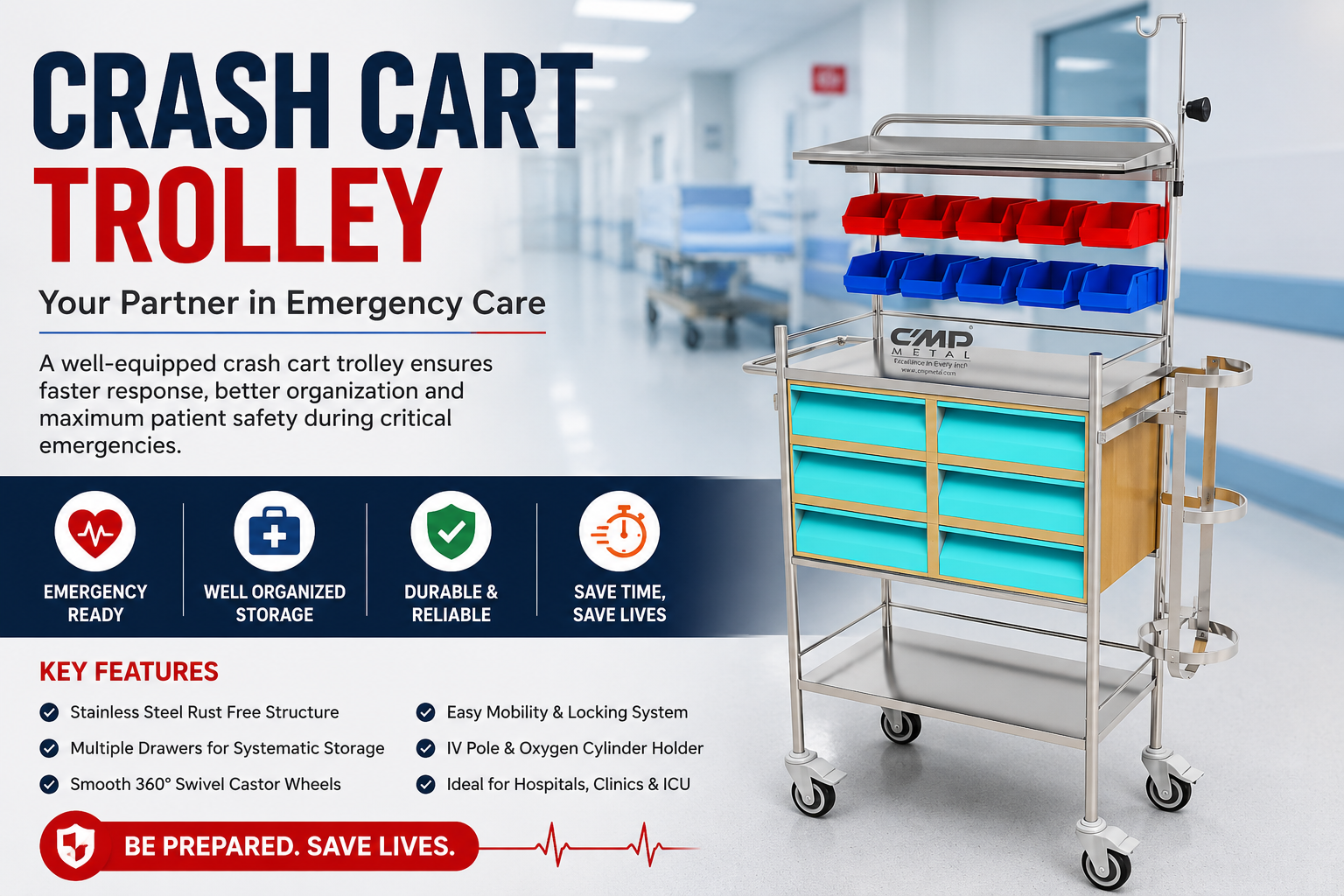
A crash cart trolley is a specially designed mobile unit that stores emergency medical equipment, medications, and supplies required for critical patient care. Hospitals, clinics, emergency rooms, ICUs, and surgical centers rely on these trolleys to ensure rapid response during emergencies.
Without proper organization and maintenance, valuable time can be lost during critical situations. Understanding the right crash cart setup can significantly improve patient outcomes and emergency preparedness.
Common Challenges in Emergency Response
Many healthcare facilities face challenges when managing emergency carts, including:
- Missing emergency medications
- Disorganized drawers and compartments
- Expired supplies
- Lack of routine inspections
- Difficulty locating equipment during emergencies
- Inconsistent crash cart trolley arrangements
These issues can delay treatment and increase risks during life-threatening situations. A properly maintained emergency crash cart trolley helps eliminate these problems and ensures readiness at all times.
What Is a Crash Cart Trolley?
A crash cart trolley is a mobile medical cart equipped with emergency supplies used during resuscitation and critical care situations.
It serves as a centralized station containing:
- Emergency medications
- Airway management tools
- Defibrillation equipment
- IV supplies
- Monitoring devices
- Personal protective equipment (PPE)
The goal is simple: provide immediate access to life-saving resources when every second counts.
Crash Cart Trolley Arrangements and Organization
Proper crash cart trolley arrangements ensure healthcare staff can quickly locate equipment during emergencies.
| Drawer Level | Contents |
|---|---|
| Top Surface | Defibrillator, suction device, oxygen equipment |
| First Drawer | Emergency medications |
| Second Drawer | Airway management supplies |
| Third Drawer | IV and vascular access equipment |
| Fourth Drawer | Miscellaneous emergency supplies |
| Side Compartments | Oxygen cylinder, CPR board, sharps container |
Standardized layouts reduce confusion and improve response times during critical situations.
Crash Cart Trolley List
A complete crash cart trolley list generally includes the following items:
Airway Equipment
- Bag-valve mask (BVM)
- Endotracheal tubes
- Laryngoscope handles and blades
- Oral and nasal airways
- Suction catheters
- Oxygen masks
Breathing Equipment
- Oxygen cylinder
- Nebulizer kits
- Ventilation accessories
- Portable suction unit
Circulation Supplies
- IV cannulas
- IV fluids
- Syringes
- Blood pressure cuff
- Tourniquets
Monitoring Equipment
- Defibrillator
- ECG monitor
- Pulse oximeter
- Cardiac monitoring leads
Essential Emergency Crash Cart Trolley Equipment
The effectiveness of an emergency crash cart trolley depends largely on the quality and availability of equipment.
- Automated External Defibrillator (AED) or manual defibrillator
- Cardiac monitor
- Oxygen delivery system
- Suction apparatus
- Airway devices
- Emergency lighting
- IV infusion supplies
- Emergency communication tools
Regular inspections ensure all equipment remains functional and ready for immediate use.
Crash Cart Trolley Medication Requirements
Emergency drugs are among the most important components stored in a crash cart.
Common crash cart trolley medication may include:
- Epinephrine
- Atropine
- Amiodarone
- Adenosine
- Dopamine
- Magnesium Sulfate
- Nitroglycerin
- Dextrose
- Naloxone
- Calcium Gluconate
Medications should be clearly labeled, regularly checked for expiration dates, and replenished immediately after use.
Types of Crash Cart Trolleys
1. Standard Hospital Crash Cart
Used in emergency departments, ICUs, and patient wards.
2. Pediatric Crash Cart
Contains child-specific medications and emergency equipment.
3. Cardiac Crash Cart
Designed specifically for cardiac emergencies and advanced life support procedures.
4. Anesthesia Crash Cart
Used in operating rooms and surgical centers.
5. Specialty Emergency Cart
Customized for trauma, neonatal, or specialty care units.
Features and Benefits of a Crash Cart Trolley
Key Features
- Multiple lockable drawers
- Smooth mobility with caster wheels
- Ergonomic design
- Durable stainless steel or polymer construction
- Color-coded compartments
- Medication storage trays
- Oxygen cylinder holder
Benefits
- Faster emergency response
- Improved patient safety
- Better organization of supplies
- Enhanced compliance with healthcare standards
- Efficient inventory management
Crash Cart Trolley Specifications
| Specification | Typical Range |
|---|---|
| Material | Stainless Steel or ABS Plastic |
| Number of Drawers | 4–7 Drawers |
| Wheel Size | 4–5 Inches |
| Load Capacity | 80–150 kg |
| Locking System | Centralized Lock |
| Surface Type | Easy-to-Clean Antimicrobial Finish |
| Accessories | IV Pole, Oxygen Holder, CPR Board |
Selecting the right specifications depends on the facility’s emergency response requirements and patient volume.
Crash Cart Trolley Comparison
| Feature | Basic Model | Advanced Model |
|---|---|---|
| Drawers | 4 | 6–7 |
| Locking System | Standard | Electronic |
| Defibrillator Mount | Optional | Included |
| Medication Tray | Basic | Advanced Modular |
| Mobility | Standard Wheels | Heavy-Duty Casters |
| Inventory Tracking | Manual | Digital |
Step-by-Step Buying Guide
- Assess Clinical Requirements – Determine whether the cart will be used in the ICU, emergency room, operating theater, or outpatient clinic.
- Review Equipment Needs – Identify the emergency devices and supplies your facility requires.
- Check Storage Capacity – Ensure sufficient drawer space for medications and equipment.
- Evaluate Mobility – Choose smooth-rolling wheels with locking mechanisms.
- Verify Safety Features – Look for centralized locks and secure medication compartments.
- Consider Future Expansion – Select a modular design that supports additional accessories.
Crash Cart Trolley Checklist
A daily crash cart trolley checklist helps maintain readiness and patient safety.
- Defibrillator operational
- Oxygen cylinder full
- Suction equipment functioning
- Emergency medications available
- No expired drugs
- Airway equipment stocked
- IV supplies replenished
- Cart locks working
- CPR board present
- Documentation completed
Common Mistakes to Avoid
- Ignoring expiration dates
- Overloading drawers
- Inconsistent organization
- Failing to train staff
- Skipping routine inspections
- Using non-standard layouts
- Not documenting inventory checks
Expert Tips
- Standardize cart layouts across departments.
- Conduct monthly mock emergency drills.
- Use color-coded drawer labels.
- Implement digital inventory tracking systems.
- Assign responsibility for daily inspections.
- Follow ACLS guidelines for medication organization.
Conclusion
A crash cart trolley is one of the most critical emergency response tools in any healthcare facility. Proper crash cart trolley arrangements, organized equipment storage, routine medication checks, and a comprehensive crash cart trolley checklist help healthcare teams respond quickly and effectively during emergencies.
By choosing a high-quality crash cart trolley and maintaining a standardized setup, hospitals and clinics can improve patient safety, streamline emergency care, and ensure complete preparedness for critical situations.
Frequently Asked Questions (FAQs)
What is a crash cart trolley used for?
A crash cart trolley stores emergency medical equipment, medications, and supplies needed during life-threatening situations such as cardiac arrest and respiratory emergencies.
What equipment should be included in a crash cart trolley?
Essential equipment includes a defibrillator, oxygen supply, airway devices, suction apparatus, IV supplies, emergency medications, and monitoring equipment.
How often should a crash cart trolley be checked?
Most healthcare facilities perform daily inspections and monthly audits to ensure readiness and compliance.
What medications are commonly stored in a crash cart trolley?
Common medications include epinephrine, atropine, amiodarone, adenosine, naloxone, dextrose, and other emergency drugs based on hospital protocols.
Why are crash cart trolley arrangements important?
Standardized arrangements help healthcare professionals locate supplies quickly during emergencies, reducing treatment delays and improving patient outcomes.
What are the key crash cart trolley specifications to consider?
Important specifications include drawer capacity, material quality, locking systems, mobility, load capacity, and accessory compatibility.
What is included in a crash cart trolley checklist?
A checklist typically covers equipment functionality, medication availability, oxygen supply status, expiration date verification, inventory levels, and cart security checks.