

Crucial Features, Equipment List, and Purchase Guide for Crash Cart Trolleys
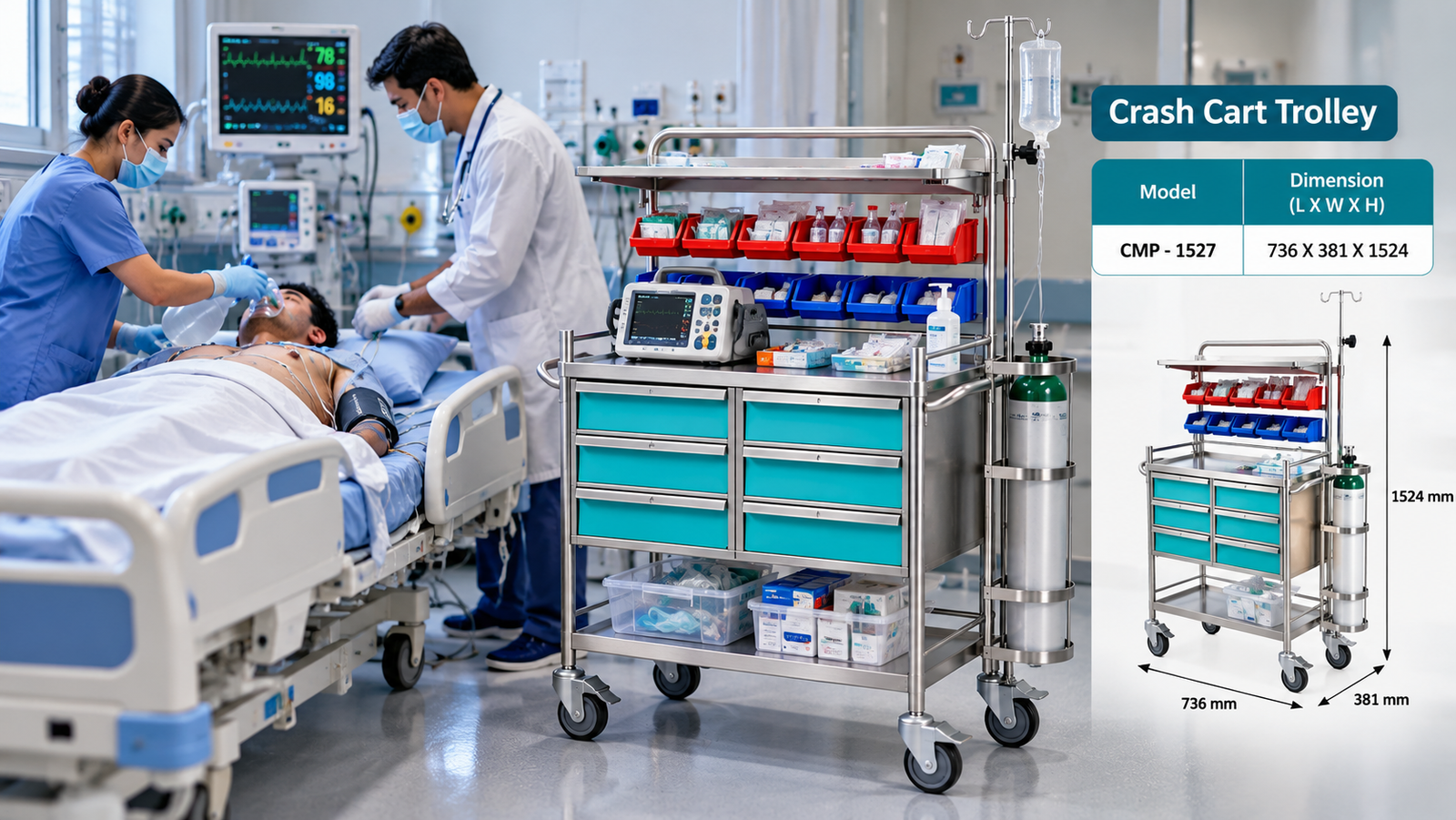
In hospitals, emergency care often depends on how quickly medical teams can access essential equipment and medicines. During cardiac arrest, respiratory emergencies, trauma, and other life-threatening circumstances, a crash cart trolley is intended to keep vital emergency supplies mobile, organized, and easily accessible. Choosing the appropriate emergency trolley can enhance productivity, shorten search times, and facilitate a more coordinated emergency response for hospitals, clinics, diagnostic facilities, and surgical departments.
AI Overview Summary
A crash cart trolley is a mobile emergency medical trolley that is used to swiftly store and move vital medications, resuscitation supplies, airway equipment, and monitoring accessories. It helps healthcare teams keep emergency equipment organized, accessible, and ready for immediate use during critical situations.
What Is an Emergency Trolley List?
A standardized list of medications, medical equipment, supplies, and accessories kept in an emergency or crash trolley is called an emergency trolley list.
The exact contents vary according to hospital policy, clinical department, patient population, and local regulations. A typical crash trolley equipment setup may include:
- Defibrillator and ECG accessories
- Ambu bag and oxygen-related accessories
- Airway management equipment
- Syringes and needles
- IV cannulas and administration sets
- Emergency medicines
- Gloves and other PPE
- Gauze, dressings, and essential consumables
- Suction-related accessories
A documented checklist helps staff verify that essential items are present, within expiry dates, and ready for use.
Why Is a Crash Cart Trolley Important?
During a medical emergency, staff may have only a few minutes to respond. A well-organized crash cart reduces unnecessary movement and helps clinical teams locate commonly required supplies quickly.
The trolley can be positioned close to emergency treatment areas such as intensive care units, emergency departments, operating theatres, recovery rooms, wards, and diagnostic areas.
For hospitals managing multiple departments, standardized trolley layouts can also make emergency procedures more consistent between locations.
Key Features of a Crash Cart Trolley
Important features to consider include:
- Multiple drawers: Provides organized storage for medicines, consumables, and emergency accessories.
- Locking system: Helps control access to medicines and sensitive supplies.
- Smooth-rolling casters: Allows rapid movement between patient-care areas.
- Central locking option: Can secure multiple drawers through one locking mechanism.
- Defibrillator platform: Provides a stable surface for mounting or positioning a defibrillator.
- IV pole: Supports infusion bags during emergency treatment.
- Oxygen cylinder provision: Allows oxygen equipment to remain accessible when required.
- Side accessories: Hooks, holders, or rails can keep frequently used items within reach.
- Durable construction: Stainless steel or other healthcare-grade materials can support frequent cleaning and intensive use.
Benefits of a Crash Cart Trolley
A properly designed emergency trolley can provide several practical benefits:
- Faster access: Supplies can be organized by category for quick retrieval.
- Better organization: Dedicated drawers reduce clutter during emergencies.
- Improved mobility: Staff can move emergency supplies directly to the patient.
- Simpler stock checks: Standardized layouts make routine inspections easier.
- Better infection-control workflow: Smooth, cleanable surfaces support regular disinfection.
- Reduced preparation time: Essential equipment remains together rather than being stored across multiple locations.
Applications
A crash cart trolley can be used across many healthcare environments, including:
- Emergency departments and trauma units
- Intensive care and critical care units
- Operating theatres and recovery rooms
- General hospital wards
- Cardiology departments
- Diagnostic and radiology centers
- Medical colleges and teaching hospitals
- Specialty clinics
- Day-care surgical centers
- Long-term healthcare facilities
Healthcare architects, contractors, procurement teams, and medical equipment distributors should consider the trolley’s intended location and clinical workflow before specifying a model.
How to Choose the Right Crash Cart Trolley
Before purchasing an emergency trolley, consider these factors:
- Assess the intended use: Determine whether the trolley is for ICU, OT, emergency, ward, diagnostic, or specialty use.
- Check drawer configuration: Select a layout that provides enough space for the hospital’s emergency trolley equipment list.
- Review mobility: Choose robust medical-grade casters with smooth movement and reliable braking.
- Consider material: Stainless steel can be suitable for healthcare environments where durability and regular cleaning are important.
- Check accessories: Confirm requirements for an IV pole, oxygen cylinder holder, defibrillator shelf, monitor platform, and other accessories.
- Consider customization: Hospitals with specific emergency protocols may benefit from customized drawer layouts, dimensions, locking systems, and accessories.
Common Mistakes to Avoid
One common mistake is selecting a trolley based only on price without evaluating its clinical workflow.
Other issues include insufficient drawer space, poor-quality casters, difficult-to-clean surfaces, weak locking systems, and inadequate accessory compatibility.
Hospitals should also avoid creating an emergency trolley list without assigning responsibility for regular inspection. Medicines and consumables should be checked according to the facility’s established clinical and regulatory procedures.
Conclusion
There is more to a crash cart trolley than just storage. It is an important part of emergency preparedness, helping healthcare professionals keep critical equipment, medicines, and consumables organized and accessible.
The ideal configuration depends on the department, emergency protocols, available space, material requirements, and equipment to be stored. Hospitals and healthcare procurement teams should evaluate these factors before selecting a model.
For customized requirements, healthcare facilities can contact CMP METAL to discuss suitable crash cart trolley configurations, materials, dimensions, storage layouts, and accessories.
Frequently Asked Questions
What is a crash cart trolley?
A crash cart trolley is a mobile medical trolley used to organize and transport emergency equipment, medicines, and consumables. It is commonly positioned in areas where rapid medical intervention may be required, such as emergency departments, ICUs, operating theatres, recovery rooms, and hospital wards.
What tools are stored in a crash cart trolley?
A typical emergency trolley may contain airway-management equipment, a defibrillator, IV supplies, syringes, needles, emergency medicines, oxygen accessories, suction-related supplies, PPE, and other consumables. The exact crash trolley equipment list should follow the healthcare facility’s clinical protocols and applicable regulations.
Which medications are stored on a crash cart trolley?
A crash cart trolley medicine list varies according to the hospital, department, patient population, and emergency protocols. Common emergency medicines may include drugs used during cardiac arrest and other acute situations. Hospitals should maintain their medicine list according to approved clinical guidelines and regularly check expiry dates.
Where are crash cart trolleys used?
Crash carts are used in emergency departments, ICUs, operating theatres, recovery areas, hospital wards, cardiology units, diagnostic centers, clinics, and other healthcare facilities. They are particularly useful wherever immediate access to emergency equipment and medicines is important.
How do I choose the right crash cart trolley?
Consider the trolley’s dimensions, drawer configuration, construction material, caster quality, locking system, defibrillator platform, IV pole, oxygen cylinder provision, and other accessories. The best model should match the facility’s emergency workflow, available space, equipment requirements, and cleaning procedures.
Is a crash cart trolley customizable?
Yes. Depending on the manufacturer, crash carts can be configured with different drawer arrangements, dimensions, locking mechanisms, accessory holders, IV poles, defibrillator platforms, and oxygen-cylinder provisions. Customization can help hospitals create a trolley that matches their specific equipment and workflow requirements.
What material is best for a crash cart trolley?
Stainless steel is commonly considered for healthcare applications because it offers durability and can be cleaned and disinfected regularly. However, the appropriate material depends on the intended environment, cleaning protocol, budget, trolley design, and facility requirements.