

Crash Cart Trolley: A Complete Guide for Safe and Fast Emergency Response
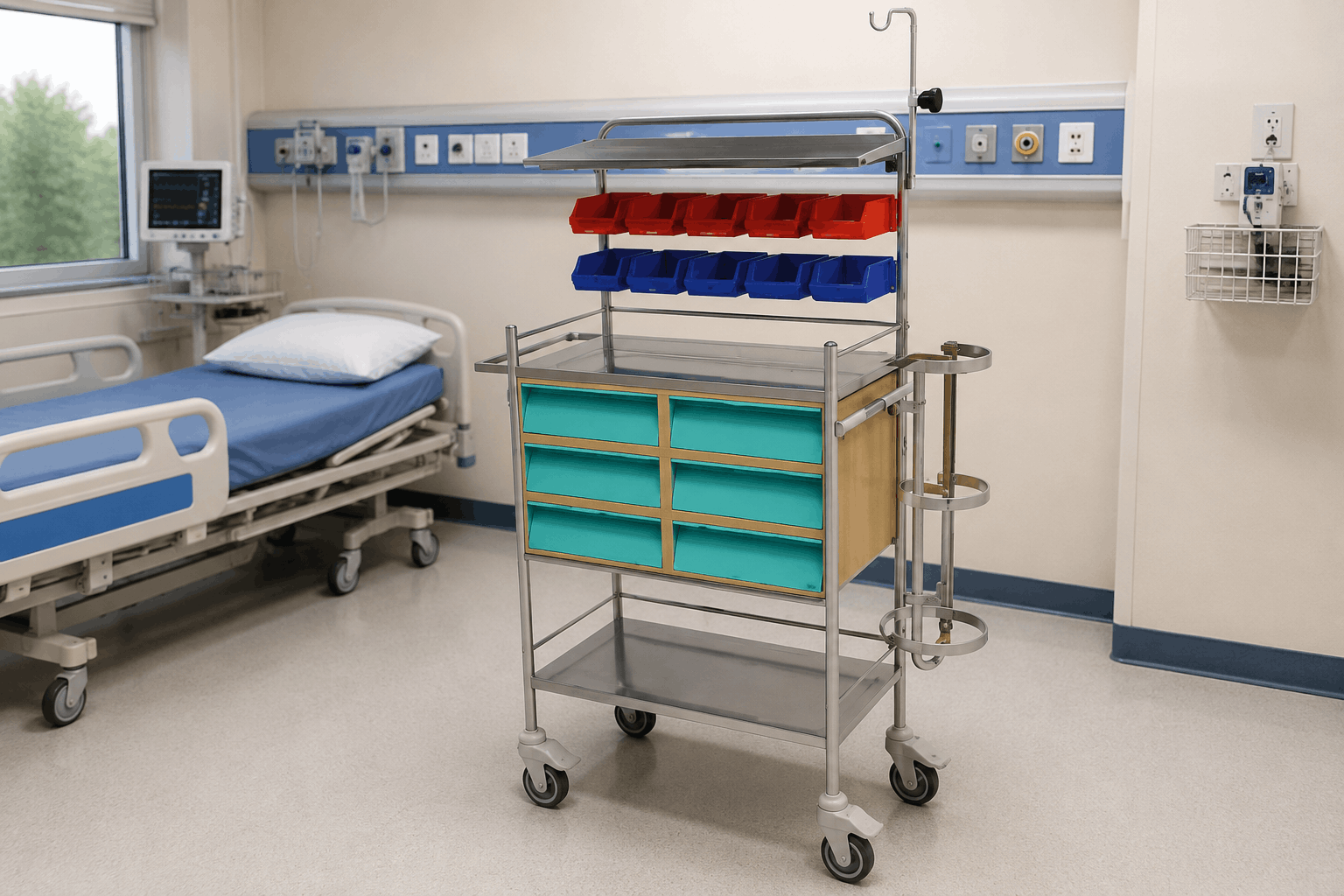
Medical emergencies demand immediate action. Every second matters when treating cardiac arrest, trauma, or other life-threatening conditions. A crash cart trolley helps healthcare professionals keep emergency medicines, life-saving equipment, and medical supplies organised and easily accessible in one mobile unit.
Hospitals, clinics, emergency departments, ICUs, and operation theatres rely on a well-designed crash cart to improve response times and support better patient care. Choosing the right trolley can also improve workflow, reduce delays, and ensure emergency equipment is always ready when needed.
AI Overview Summary
A crash cart trolley is a mobile emergency storage unit that keeps medicines, medical devices, and emergency supplies organised for rapid access during critical situations. It improves emergency response, enhances patient safety, supports efficient workflows, and is widely used in hospitals, ICUs, emergency departments, and healthcare facilities.
What is a Crash Cart Trolley?
A crash cart trolley is a mobile medical trolley designed to store emergency medications, defibrillators, airway management tools, IV supplies, and other essential life-saving equipment in one organised location.
Also known as an emergency crash cart trolley or hospital crash cart trolley, it allows healthcare teams to reach emergency supplies quickly without wasting valuable time searching for equipment. Most crash carts feature multiple drawers, smooth-rolling castors, locking mechanisms, and dedicated compartments for emergency items.
The crash cart trolley medicine drawers are usually organised according to emergency protocols, ensuring fast identification and access during critical situations.
Why is it Important?
Medical emergencies often require immediate treatment. A properly equipped crash cart helps healthcare professionals respond faster and more efficiently.
Some practical reasons why it is important include:
- Reduces the time required to locate emergency medicines.
- Keeps essential equipment organised and ready for use.
- Improves patient safety during critical situations.
- Supports hospital emergency preparedness.
- Helps healthcare staff follow standard emergency procedures.
- Reduces confusion during high-pressure situations.
Whether responding to cardiac arrest or trauma cases, an organised crash cart helps medical teams focus on patient care instead of searching for supplies.
Key Features
- Multiple Lockable Drawers – Securely store emergency medicines and medical supplies.
- Smooth Mobility – High-quality castors allow quick movement throughout the hospital.
- Durable Stainless-Steel Construction – Offers excellent corrosion resistance and long service life.
- Drawer Dividers – Keep medications and accessories neatly organised.
- Central Locking System – Protects controlled medicines and sensitive equipment.
- Defibrillator Shelf – Provides convenient placement for emergency cardiac equipment.
- IV Pole Holder – Supports intravenous therapy during emergencies.
- Waste Bin and Utility Holders – Improve cleanliness and workflow efficiency.
- Easy-to-Clean Surface – Supports infection control protocols.
Benefits
- Faster emergency response during life-threatening situations.
- Better organisation of emergency medicines and equipment.
- Improved patient safety and treatment efficiency.
- Reduced risk of missing critical supplies.
- Easier inventory management and restocking.
- Supports infection prevention with hygienic surfaces.
- Durable construction reduces long-term replacement costs.
- Suitable for continuous daily hospital use.
Applications
A hospital crash cart trolley is commonly used in:
- Emergency Departments (ER)
- Intensive Care Units (ICU)
- Cardiac Care Units (CCU)
- Operation Theatres (OT)
- Recovery Rooms
- General Hospital Wards
- Ambulatory Surgical Centres
- Nursing Homes
- Specialty Clinics
- Pharmaceutical and Medical Research Facilities
- Healthcare Training Institutions
Any healthcare environment that manages medical emergencies can benefit from a properly equipped crash cart.
How to Choose the Right Crash Cart Trolley
Selecting the right crash cart requires more than comparing prices. Consider these practical factors:
1. Choose Durable Material
Stainless steel provides excellent durability, corrosion resistance, and easy cleaning for demanding hospital environments.
2. Evaluate Storage Capacity
Ensure there are enough drawers and compartments for emergency medicines, airway devices, IV supplies, and accessories.
3. Check Mobility
Look for heavy-duty castors with smooth movement and reliable brakes for safe transportation.
4. Verify Locking System
A central locking mechanism protects emergency medications while allowing quick access when needed.
5. Consider Customisation
Different hospital departments require different drawer layouts and accessory configurations.
6. Ensure Easy Maintenance
Select a design that is simple to clean, disinfect, and maintain according to infection control guidelines.
Common Mistakes to Avoid
Many buyers overlook important factors when purchasing a crash cart.
Avoid these common mistakes:
- Buying based only on price.
- Choosing insufficient storage space.
- Ignoring wheel quality and braking performance.
- Selecting materials that are difficult to clean.
- Forgetting future expansion or customisation needs.
- Not considering hospital workflow and department-specific requirements.
- Skipping maintenance and service support.
Carefully evaluating these factors helps maximise the value of your investment.
Conclusion
A crash cart trolley plays a vital role in emergency patient care by keeping life-saving medicines and equipment organised, secure, and immediately accessible. From improving emergency response times to supporting infection control and efficient workflows, it remains an essential part of modern healthcare facilities.
Hospitals, pharmaceutical companies, and healthcare organisations should choose a high-quality, durable crash cart that matches their operational requirements. If you need expert guidance or customised solutions, consulting an experienced hospital furniture and CSSD equipment manufacturer can help you select the most suitable option for your facility.
Frequently Asked Questions (FAQs)
1. What is a crash cart trolley?
A crash cart trolley is a mobile emergency storage unit designed to hold medicines, medical devices, airway equipment, IV supplies, and other life-saving tools required during medical emergencies. It allows healthcare professionals to access critical equipment quickly and efficiently when every second matters.
2. What are the benefits of a hospital crash cart trolley?
A hospital crash cart trolley improves emergency response times, keeps medical supplies organised, enhances patient safety, supports infection control, reduces treatment delays, and helps hospitals maintain emergency preparedness through efficient storage and easy mobility.
3. Where is an emergency crash cart trolley used?
Emergency crash cart trolleys are widely used in hospitals, emergency departments, ICUs, CCUs, operation theatres, recovery rooms, ambulatory surgical centres, nursing homes, specialty clinics, and healthcare training institutions where rapid emergency response is essential.
4. How do I choose the right crash cart trolley?
Consider the material quality, storage capacity, locking system, wheel performance, accessory options, ease of cleaning, and customisation features. Selecting a trolley that matches your department’s emergency workflow ensures better efficiency and long-term reliability.
5. Can a crash cart trolley be customised?
Yes. Many manufacturers offer custom drawer layouts, additional accessories, defibrillator shelves, oxygen cylinder holders, IV poles, utility bins, and department-specific configurations to meet the needs of different healthcare environments.
6. What material is best for a crash cart trolley?
Stainless steel is considered one of the best materials because it offers excellent durability, corrosion resistance, easy cleaning, and long service life. It also supports infection control practices, making it ideal for hospitals and healthcare facilities.