

Crash Cart Trolley: Complete Guide to Emergency Trolley Equipment and Arrangement
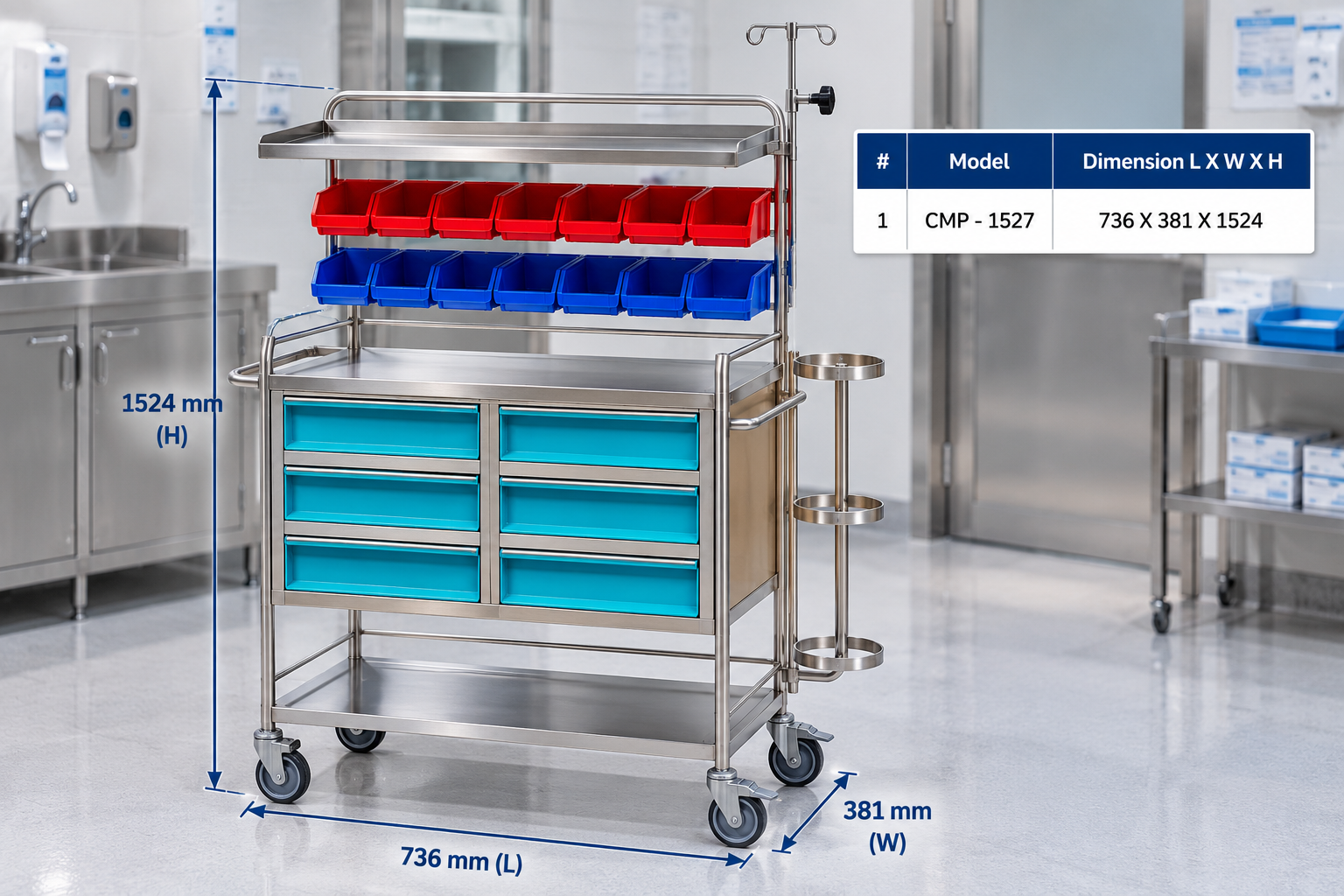
Introduction
A crash cart trolley is a mobile emergency unit designed to keep critical resuscitation equipment, medical supplies, and essential items organized and quickly accessible. In hospitals, emergencies can develop without warning, so staff need equipment in a predictable location and arrangement. A properly planned trolley supports faster access, better inventory control, and consistent emergency preparedness. For hospitals, clinics, government healthcare facilities, ICUs, operation theatres, and procurement teams, selecting the right emergency trolley involves more than choosing a mobile cabinet—it requires attention to layout, mobility, security, cleaning, and facility-specific clinical requirements.
AI Overview / Featured Snippet Summary:
A crash cart trolley is a mobile, organized storage unit used to keep emergency medical equipment and supplies readily accessible during resuscitation and critical-care situations. Its drawers, compartments, wheels, and accessories help healthcare teams maintain an organized emergency trolley and quickly locate required items.
What Is a Crash Cart Trolley?
A crash cart trolley is a wheeled medical trolley used to store and transport emergency equipment and supplies within a healthcare facility.
It is commonly positioned in areas such as emergency departments, ICUs, wards, recovery rooms, and other locations where rapid response may be required.
The exact contents depend on the facility, patient population, clinical protocols, and applicable regulations. WHO’s generic emergency equipment checklist includes items such as resuscitation bags and masks, oxygen sources, suction equipment, blood-pressure equipment, airway equipment, gloves, IV supplies, and sharps containers.
Why Is It Important?
During an emergency, staff should not have to search through multiple cabinets for essential supplies. A standardized crash cart trolley list and consistent drawer arrangement can make equipment easier to locate.
WHO guidance for emergency pediatric care specifically recommends logically organizing emergency trolley contents, clearly labelling supplies, checking equipment functionality, and using checklists to reduce the risk of missing items.
The American Heart Association also provides emergency crash-cart reference materials based on its current resuscitation guidance.
Key Features
When evaluating a crash cart trolley, consider these features:
- Multiple Drawers: Provides separate storage areas for different categories of emergency supplies.
- Smooth-Running Casters: Allows staff to move the trolley quickly between designated areas.
- Central Locking System: Helps control access to stored supplies where required.
- Defibrillator Platform: Provides a stable surface for compatible emergency monitoring equipment.
- IV Pole: Supports infusion-related requirements during emergency care.
- Oxygen Cylinder Holder: Provides a secure location for an oxygen cylinder when required.
- Push Handle: Makes the trolley easier to maneuver.
- Resuscitation Board: Provides a firm surface for CPR when included in the facility’s setup.
- Easy-Clean Surfaces: Support routine cleaning and maintenance.
Benefits
A properly designed emergency trolley can provide several operational benefits:
- Faster Equipment Identification: Standardized storage makes frequently required items easier to locate.
- Better Organization: Categorized drawers reduce unnecessary searching.
- Improved Readiness: Regular inspection helps identify missing or expired supplies.
- Mobility: Wheels allow the trolley to be positioned where emergency response is needed.
- Inventory Control: Checklists make replenishment and shift-to-shift verification easier.
- Workflow Consistency: Similar arrangements across departments can help staff become familiar with trolley layouts.
Applications
A crash cart trolley can be used in various healthcare environments, including:
- Emergency departments
- Intensive care units
- General hospital wards
- Operation theatres
- Recovery rooms
- Clinics and medical institutions
- Government hospitals
- Private healthcare facilities
- Cardiac and critical-care areas
- Ambulance or emergency response support areas
The trolley’s contents should be determined by qualified clinical teams according to the intended patient population and emergency protocols.
How to Choose the Right Crash Cart Trolley
Before purchasing an emergency trolley, procurement teams should consider the following:
- Define the Clinical Application
Determine whether the trolley will serve an adult, pediatric, general emergency, ICU, OT, or other specialized environment. - Plan the Crash Cart Trolley Arrangement
Decide which supplies will be stored in each drawer and use clear labels for quick identification. - Check Dimensions and Mobility
Ensure the trolley can move comfortably through corridors, doorways, lifts, and treatment areas. - Evaluate Construction Material
Select a durable, cleanable material suitable for the healthcare environment and cleaning procedures. - Review Accessories
Consider features such as IV poles, oxygen-cylinder holders, defibrillator shelves, side rails, hooks, and waste containers based on actual requirements. - Consider Maintenance and Inspection
The design should make routine cleaning, equipment checks, inventory verification, and replenishment straightforward.
Common Mistakes to Avoid
Hospitals can face avoidable problems when purchasing or configuring an emergency trolley.
Common mistakes include:
- Selecting a trolley without considering the intended clinical area.
- Using inconsistent drawer arrangements across similar departments.
- Failing to label drawers and compartments.
- Ignoring wheel quality and maneuverability.
- Choosing dimensions that restrict movement through doors or corridors.
- Not establishing a routine inspection and replenishment process.
- Treating the manufacturer’s standard configuration as a substitute for the hospital’s clinical protocol.
A crash cart trolley list should always be developed and maintained by the responsible clinical team rather than copied blindly from another facility.
Conclusion
A crash cart trolley is an important part of emergency preparedness because it brings essential equipment and supplies together in one organized, mobile unit. The right trolley should match the facility’s clinical requirements, workflow, storage needs, mobility requirements, and maintenance procedures.
For hospitals and healthcare equipment procurement teams, working with an experienced medical furniture manufacturer can help when standard or customized configurations are required. Before finalizing a purchase, review the trolley’s dimensions, drawer arrangement, accessories, material, mobility, and compatibility with your facility’s emergency procedures.
Frequently Asked Questions
What is a crash cart trolley?
A crash cart trolley is a mobile medical storage unit designed to keep emergency equipment and supplies organized and accessible. It is commonly used in emergency departments, ICUs, wards, operation theatres, and other clinical areas. The exact equipment stored inside depends on the hospital’s protocols, patient population, and applicable clinical requirements.
What is included in a crash cart trolley?
Contents vary by hospital and clinical area. Common categories may include airway and breathing equipment, oxygen-related supplies, suction equipment, monitoring equipment, IV supplies, protective equipment, emergency medications, and consumables. WHO’s emergency equipment checklist provides examples, but each facility should establish its own approved crash cart trolley list.
What is the correct crash cart trolley arrangement?
There is no single universal drawer arrangement suitable for every healthcare facility. Hospitals should organize drawers according to clinical protocols, frequency of use, patient population, and staff workflow. Clear labels, standardized locations, checklists, and regular verification can help staff identify required supplies efficiently during emergencies.
Where is an emergency trolley used?
An emergency trolley may be used in emergency departments, ICUs, wards, operation theatres, recovery areas, clinics, and other locations requiring rapid access to resuscitation equipment. The number and type of trolleys required depend on the facility’s size, services, patient population, emergency response plan, and clinical risk assessment.
Is a crash cart trolley customizable?
Yes. Healthcare facilities may require different trolley dimensions, drawer configurations, locking systems, accessories, work surfaces, IV poles, oxygen-cylinder holders, or other features. Customization should be based on the clinical application and hospital workflow. Procurement teams should document technical requirements before requesting a customized quotation from a manufacturer.
What material is best for a crash cart trolley?
The appropriate material depends on the trolley’s design, environment, cleaning requirements, durability expectations, and budget. Stainless steel is commonly used for medical furniture because of its durable and cleanable surface, while other healthcare trolley designs may use coated metal or engineered materials. The selected construction should meet the facility’s technical requirements.
How often should a crash cart be checked?
The checking schedule should follow the hospital’s emergency preparedness and clinical policies. WHO guidance recommends functionality checks and replenishment as part of emergency trolley management, with responsibility assigned to the appropriate clinical or shift-in-charge staff.