Introduction
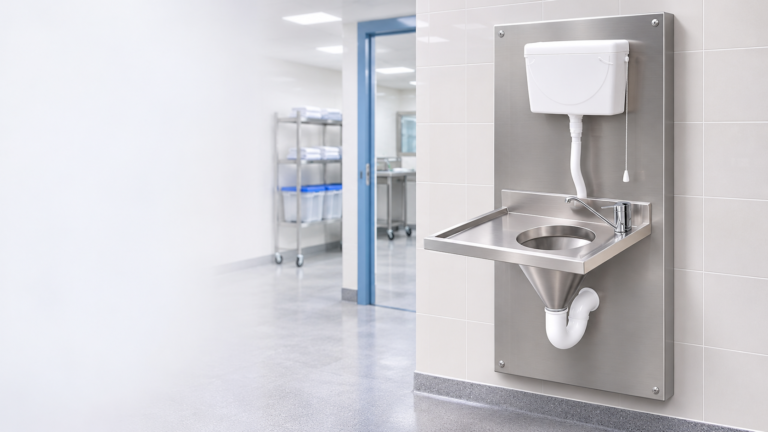
Maintaining hygiene in hospitals requires dedicated equipment for handling bedpans, urinals, and other reusable sanitary items. A Stainless Steel Sluice Sink provides a designated area for the safe disposal of human waste and the cleaning of suitable reusable equipment. It is commonly installed in hospital sluice rooms, patient care areas, and healthcare utility departments. Choosing the right sink helps improve staff workflow, supports cleaning procedures, and makes daily waste-handling tasks more organised.
Quick Summary: A Stainless Steel Sluice Sink is specialised hospital equipment used for handling human waste and cleaning suitable reusable sanitary items. Its durable construction, deep bowl, easy-to-clean surfaces, and optional flushing or spray arrangements support hygiene and efficient workflows in hospital sluice rooms.
What is a Stainless Steel Sluice Sink?
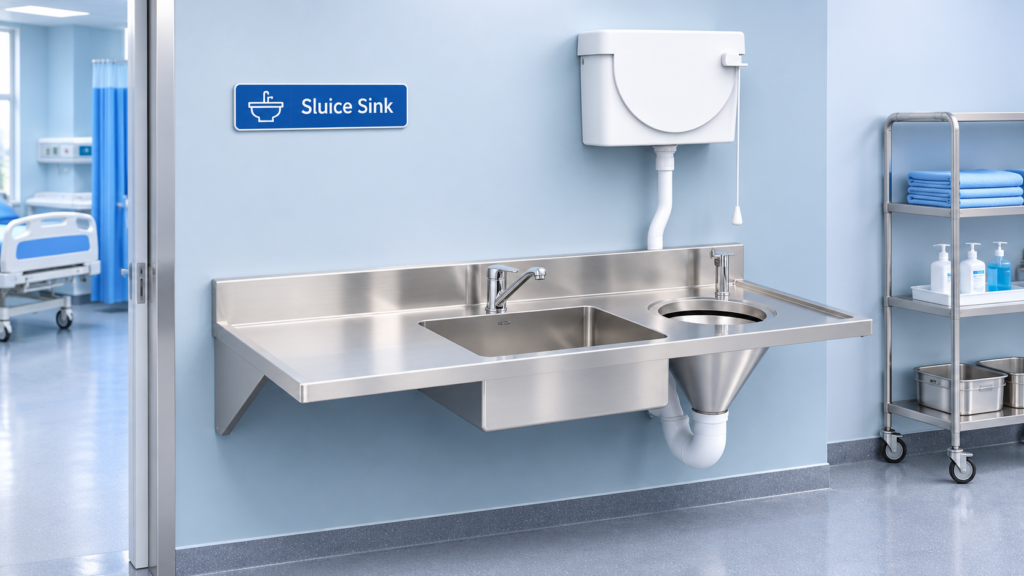
A Stainless Steel Sluice Sink is a purpose-designed sink used in hospitals and healthcare facilities to dispose of human waste and clean reusable items such as bedpans and urinals, according to the facility’s infection-control procedures.
Unlike a standard washbasin, a Hospital Sluice Sink generally has a deep bowl and a design suited to controlled waste handling. Some models include flushing arrangements, spray hoses, splashbacks, and hands-free controls.
Why is it Important?
Hospitals handle waste and contaminated reusable items every day. Without a dedicated cleaning and disposal area, staff may face unnecessary handling difficulties and increased contamination risks.
A properly designed Sluice Sink for Hospitals helps:
- Create a designated area for sanitary waste handling.
- Support established cleaning and disinfection procedures.
- Reduce unnecessary movement of contaminated items.
- Improve staff convenience during routine tasks.
- Keep hospital utility rooms organised.
It should always be used alongside appropriate PPE, cleaning protocols, and local biomedical waste and plumbing requirements.
Key Features of a Medical Sluice Sink
The design and specifications may vary by hospital requirements. Important features include:
- Stainless Steel Construction: Provides a durable surface suitable for regular cleaning.
- Deep Sink Bowl: Helps accommodate bedpans and other compatible sanitary items.
- Smooth Internal Finish: Makes routine cleaning easier when properly maintained.
- Splashback: Helps protect the surrounding wall from splashes.
- Flushing Arrangement: Supports controlled rinsing where included in the design.
- Spray Hose Option: Helps staff rinse suitable reusable items more conveniently.
- Wall or Floor-Mounted Design: Allows selection according to room layout and installation needs.
- Customised Dimensions: Helps match the sink to available space and workflow requirements.
Benefits of a Stainless Steel Sluice Sink
- Durability: Stainless steel construction can withstand regular use in demanding healthcare environments.
- Easy Maintenance: Smooth surfaces are easier to clean when the correct procedures are followed.
- Better Workflow: A dedicated cleaning station helps staff complete routine tasks in one designated area.
- Space Organisation: A suitable design helps keep utility rooms organised.
- Long-Term Value: Strong construction can reduce the need for frequent replacement.
- Flexible Installation: Different sizes and configurations can suit different hospital layouts.
Applications
A Hospital Sluice Sink is commonly used in:
- Hospital Sluice Rooms: For designated waste-handling and cleaning activities.
- Patient Wards: To support routine handling of bedpans and urinals.
- Nursing Homes: For suitable sanitary equipment cleaning.
- ICU and Critical Care Areas: Where dedicated utility facilities are provided.
- Long-Term Care Facilities: For regular patient-care support.
- Healthcare Clinics: Where the facility’s requirements justify a dedicated sluice area.
The exact installation location should follow the hospital’s workflow, plumbing design, and infection-control policy.
How to Choose the Right Stainless Steel Sluice Sink
Before purchasing, hospital buyers and project consultants should consider these points:
- Check the Application: Identify whether the sink will be used for bedpans, urinals, or other compatible items.
- Select the Stainless Steel Grade: SS 304 is commonly considered for general indoor applications; SS 316 may be suitable where greater corrosion resistance is required.
- Confirm Dimensions: Check bowl size, overall dimensions, working height, and available installation space.
- Review Accessories: Decide whether flushing arrangements, spray hoses, taps, or hands-free controls are needed.
- Check Plumbing Requirements: Confirm water supply, drainage connections, flushing arrangements, and installation compatibility.
- Evaluate the Manufacturer: Review product drawings, material specifications, fabrication quality, customisation options, and after-sales support.
Common Mistakes to Avoid
- Selecting a sink based only on its purchase price.
- Ignoring bowl depth and overall dimensions.
- Choosing a stainless steel grade without considering the environment.
- Overlooking drainage and plumbing compatibility.
- Not checking the availability of required accessories.
- Ignoring cleaning access and maintenance requirements.
A clear technical specification before ordering can help prevent installation delays and unnecessary modifications.
Conclusion
A Stainless Steel Sluice Sink is an important part of a hospital’s utility and sanitary infrastructure. The right design supports organised waste handling, routine cleaning procedures, and practical staff workflows.
Hospitals, contractors, and procurement teams should compare material grade, dimensions, accessories, plumbing requirements, and fabrication quality before making a decision. CMP METAL provides hospital furniture and stainless steel healthcare equipment solutions for different project requirements. Contact the team to discuss product specifications and customised requirements.
Frequently Asked Questions
1. What is a Stainless Steel Sluice Sink?
A Stainless Steel Sluice Sink is specialised hospital equipment used for handling human waste and cleaning suitable reusable sanitary items, such as bedpans and urinals. It is generally installed in a dedicated sluice room or hospital utility area and is designed to support controlled cleaning and disposal procedures.
2. What is the main purpose of a Hospital Sluice Sink?
The main purpose is to provide a designated location for waste handling and cleaning compatible reusable sanitary equipment. It helps healthcare staff follow organised procedures, reduces unnecessary movement of contaminated items, and supports the hospital’s cleaning and infection-control workflow.
3. Where is a Sluice Sink used?
A Sluice Sink is commonly installed in hospital sluice rooms, patient wards, nursing homes, long-term care facilities, and selected healthcare clinics. The installation location depends on the facility’s layout, patient-care requirements, plumbing arrangements, and infection-control procedures.
4. Which stainless steel grade is suitable for a medical sluice sink?
SS 304 is commonly used for general hospital equipment because of its durability and corrosion resistance. SS 316 may be considered for environments requiring greater resistance to corrosion. The final selection should depend on water quality, cleaning chemicals, operating conditions, and project specifications.
5. Can a Stainless Steel Sluice Sink be customised?
Yes. Depending on the manufacturer’s capabilities, a sluice sink can be customised by dimensions, bowl configuration, mounting style, splashback, and selected accessories. Buyers should share their room layout, plumbing details, and technical requirements before confirming the final design.
6. What should hospitals check before purchasing a Sluice Sink?
Hospitals should check the stainless steel grade, bowl dimensions, fabrication finish, drainage arrangement, water connections, and required accessories. They should also review technical drawings, installation requirements, cleaning access, warranty terms, and the manufacturer’s ability to meet project specifications.