

Surgical Scrub Area: Complete Guide to Scrub Basins for Operation Theatres
 .
.
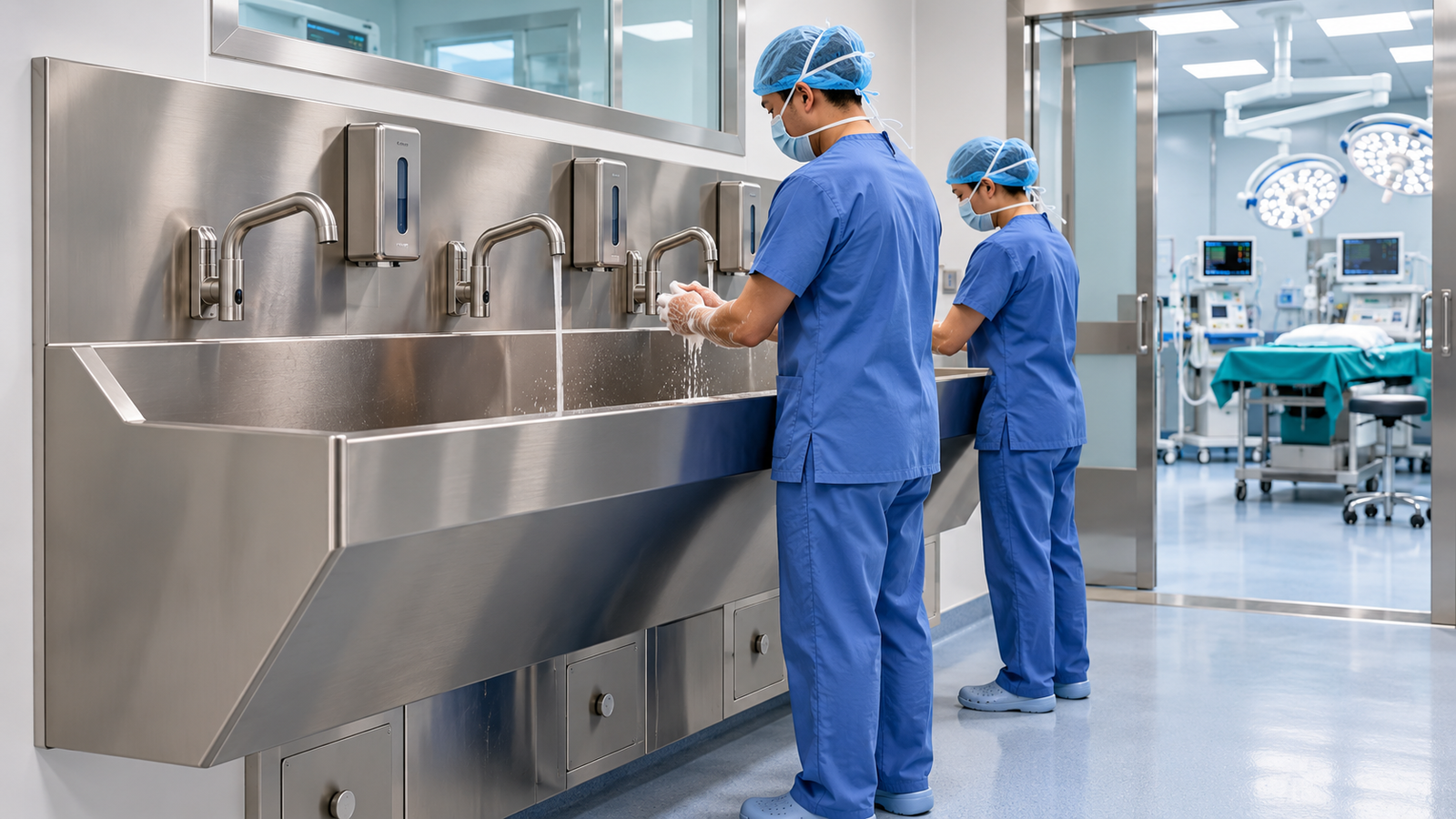
A surgical scrub area is a dedicated hand-washing space located near an operation theatre where surgeons, nurses, and other clinical staff perform surgical hand and arm preparation before procedures. A well-designed scrub area supports infection-control practices, efficient workflow, and hygienic operation theatre management. The right surgical wash basin, layout, material, drainage, and water controls can make routine surgical preparation safer and easier for healthcare teams.
AI Overview Summary:
A surgical scrub area is a specialized hand-washing zone used by surgical staff before procedures. It typically includes a hygienic scrub basin, controlled water supply, hands-free operation, proper drainage, and easy-to-clean surfaces. Its design supports infection-control practices and efficient workflow around operation theatres.
What is a Surgical Scrub Area?
A surgical scrub area is a designated washing station for surgical personnel to clean and prepare their hands and forearms before entering or working in an operating environment.
It commonly includes a surgical wash basin, water supply system, splash-resistant surfaces, drainage, and hands-free or low-contact controls. Depending on the facility, it may be installed as a single, double, or multiple-user station.
The basin should allow comfortable hand and arm washing without unnecessary contact with surrounding surfaces.
Why is a Surgical Scrub Area Important?
Surgical preparation requires a controlled and hygienic environment. A properly planned scrub area helps healthcare workers follow established hand hygiene procedures before surgical activities.
It also improves workflow by placing the washing station close to the operation theatre while keeping water, drainage, and cleaning requirements properly managed.
A suitable operation theatre wash basin can be particularly useful in:
- Operation theatres and surgical suites
- Emergency surgical areas
- Day-surgery facilities
- Government and private hospitals
- Specialized medical institutions
- Areas connected with sterile processing workflows
Key Features of a Surgical Scrub Basin
When specifying a scrub basin, healthcare procurement teams should consider features that support hygiene, durability, and ease of maintenance.
- Stainless steel construction: Provides a durable and corrosion-resistant surface suitable for healthcare environments.
- Hands-free controls: Foot, knee, elbow, or sensor-operated controls can reduce unnecessary hand contact.
- Deep basin design: Helps control splashing during hand and forearm washing.
- Rounded corners: Make cleaning easier and reduce areas where residue can accumulate.
- Efficient drainage: Supports quick removal of wastewater and helps prevent standing water.
- Smooth surfaces: Simplify routine cleaning and disinfection.
- Multiple-user configuration: Double or triple stations can support simultaneous use where required.
- Wall-mounted or floor-supported design: Allows the installation to match the available space and infrastructure.
Benefits of a Surgical Wash Basin
A properly designed surgical wash basin provides several practical benefits for hospitals and medical facilities.
- Supports hand hygiene: Provides a dedicated location for surgical hand preparation.
- Improves workflow: Keeps pre-operative washing close to the operating area.
- Easy maintenance: Smooth stainless steel surfaces can simplify routine cleaning.
- Better space utilization: Configurations can be selected according to room size and user volume.
- Long service life: Quality stainless steel construction can withstand frequent cleaning and daily healthcare use.
- Reduced unnecessary contact: Hands-free operation can help limit contact with taps and controls.
- Professional installation: Proper drainage and water connections help maintain an organized clinical environment.
Applications of OT Wash Basins
An OT wash basin is primarily used in operation theatre environments, but similar surgical scrub stations can also be suitable for other controlled healthcare areas.
Typical applications include:
- General operation theatres
- Orthopedic and trauma surgical units
- Gynecology and obstetric theatres
- Cardiac and specialized surgical areas
- Day-care surgery centres
- Emergency operation rooms
- Medical colleges and teaching hospitals
- Government healthcare facilities
- Hospital renovation and expansion projects
The required configuration depends on the number of users, available space, plumbing infrastructure, and facility workflow.
How to Choose the Right Surgical Scrub Area
Selecting the right system requires more than choosing a basin based on appearance. Procurement teams should evaluate the complete installation.
1. Select the Right Material
Stainless steel is widely used because it offers durability, corrosion resistance, and a smooth surface suitable for regular cleaning.
2. Check Basin Dimensions
Consider basin depth, width, height, and available wall or floor space. The design should provide enough working space without obstructing movement.
3. Evaluate Water Controls
Choose a suitable hands-free control system based on hospital requirements, user convenience, maintenance capability, and available utilities.
4. Review Drainage
Confirm that the drainage arrangement can handle regular water flow and connects correctly with the facility’s plumbing system.
5. Consider the Number of Users
Single, double, and multi-user scrub basin configurations can be selected according to theatre capacity and expected workflow.
6. Ask About Customization
Hospitals may require customized dimensions, mounting arrangements, tap positions, backsplash configurations, or multiple-user designs to suit their project.
Common Mistakes to Avoid
Healthcare procurement teams should avoid selecting a surgical scrub area only on price or appearance.
Common mistakes include:
- Choosing unsuitable basin dimensions for the available space.
- Ignoring drainage and plumbing requirements.
- Selecting difficult-to-clean surfaces or complicated designs.
- Not considering the number of simultaneous users.
- Installing controls that require unnecessary hand contact.
- Failing to confirm installation and maintenance requirements.
- Purchasing equipment without checking material grade and fabrication quality.
- Not considering future expansion of the operation theatre.
Conclusion
A well-planned surgical scrub area supports hygienic preparation, efficient workflow, and practical operation theatre management. The right combination of surgical wash basin, stainless steel construction, hands-free controls, suitable dimensions, and effective drainage can make the station easier to maintain and use.
Hospitals, healthcare facilities, and procurement teams should evaluate their space, workflow, user requirements, and technical specifications before finalizing a scrub station. For project-specific dimensions, configurations, or customized hospital furniture requirements, you can contact a qualified medical furniture manufacturer for further technical information.
FAQs
What is a surgical scrub area?
A surgical scrub area is a dedicated hand and forearm washing station used by surgeons, nurses, and other healthcare personnel before surgical procedures. It generally includes a specialized basin, water supply, drainage, and low-contact or hands-free controls. The area is normally positioned near an operation theatre to support efficient surgical workflow.
What are the benefits of a surgical wash basin?
A surgical wash basin provides a dedicated location for surgical hand preparation while supporting an organized operation theatre workflow. Stainless steel construction can provide durability and easy cleaning, while hands-free controls can reduce unnecessary contact. Proper basin depth and drainage can also improve usability and routine maintenance.
Where is an operation theatre wash basin used?
An operation theatre wash basin is primarily used near surgical theatres and controlled clinical areas where surgical staff need to perform hand and forearm preparation. It can be found in general hospitals, government hospitals, private healthcare facilities, medical colleges, emergency surgical units, and specialized surgical centres.
How do I choose the right scrub basin?
Choose a scrub basin based on available space, number of users, basin dimensions, material, water-control mechanism, drainage, installation method, and maintenance requirements. Stainless steel is commonly considered for healthcare environments because it provides a durable, smooth, and cleanable surface. Project-specific customization may also be required.
Is a surgical scrub basin customizable?
Yes. Depending on the manufacturer and project requirements, a surgical scrub basin can be customized in dimensions, number of stations, mounting configuration, tap arrangement, water controls, backsplash, and drainage connection. Customization is particularly useful for hospital projects where room dimensions or existing plumbing require a specific configuration.
What material is best for an OT wash basin?
Stainless steel is commonly used for OT wash basins because it offers durability, corrosion resistance, and a smooth surface that can be cleaned regularly. The appropriate stainless steel grade and fabrication quality should be selected according to the healthcare facility’s cleaning procedures, environmental conditions, and project specifications.