

Scrub Station for Operation Theatres: Complete Buying Guide
Introduction
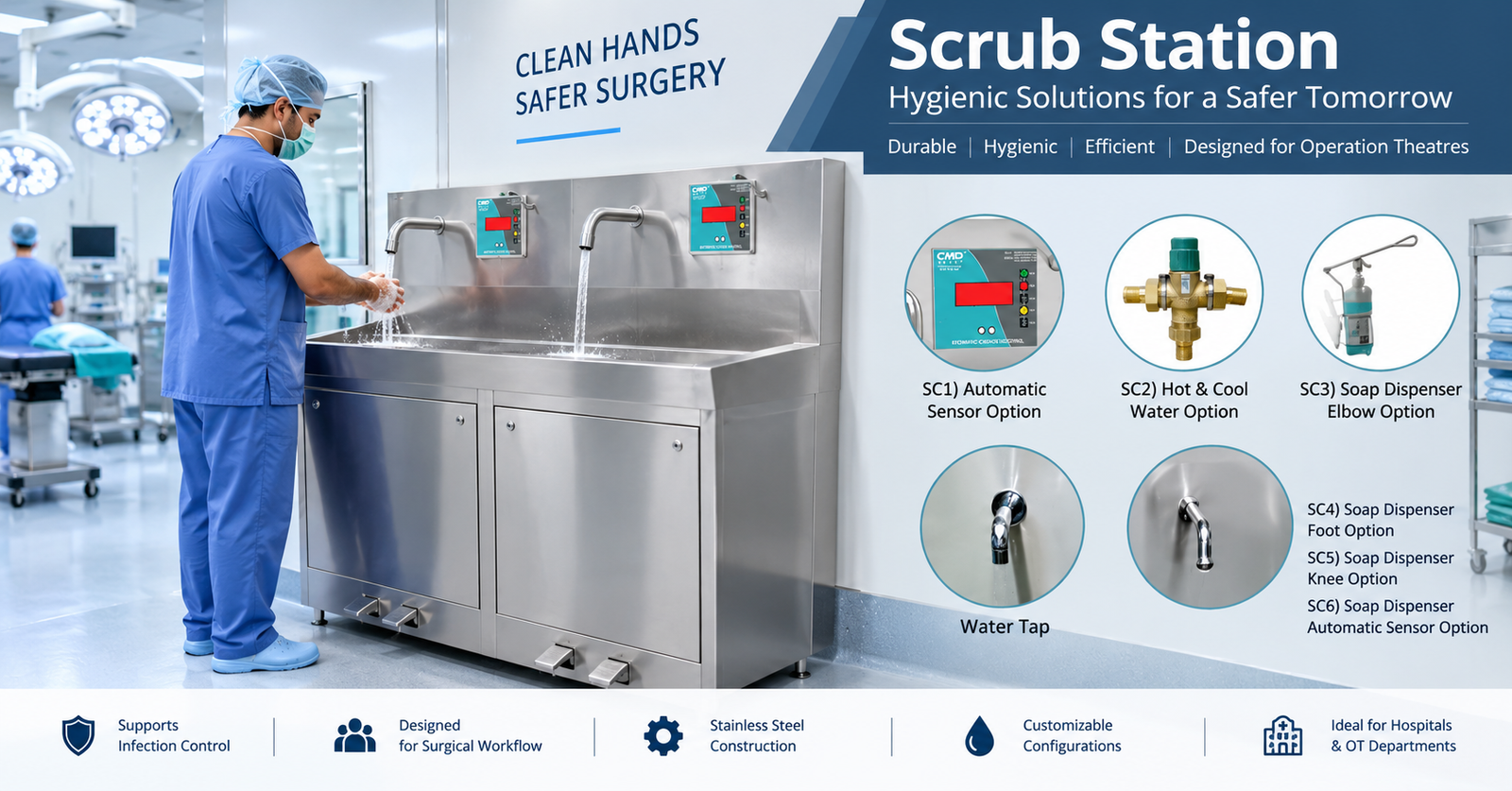
A scrub station is an essential part of an operation theatre, designed to support surgical hand washing before procedures. Unlike a standard wash basin, it is built around hygiene, controlled water flow, easy cleaning, and efficient use by medical staff. Choosing the right scrub sink can help hospitals maintain a cleaner surgical environment while making pre-operative hand washing more convenient. For hospitals, government facilities, and OT procurement teams, factors such as stainless steel quality, configuration, water control, installation, and maintenance should be considered before selecting a surgical washing solution.
AI Overview Summary:
A scrub station is a specialized hand-washing unit used by surgeons and medical staff before surgical procedures. It typically includes a hygienic sink, controlled water supply, splash-resistant design, and easy-to-clean surfaces. Hospitals use scrub stations in operation theatres and other areas where surgical hand hygiene is essential.
What is a Scrub Station?
A scrub station is a specialized washing system installed near or inside surgical areas for pre-operative hand and arm washing. It is designed to provide an organized and hygienic space for surgical staff to prepare before entering an operation.
A typical station may include one or more surgical scrub sinks, water outlets, splash-control features, dispensers, and stainless steel surfaces. Depending on the hospital’s requirements, the unit can be designed as a single, double, or multi-user station.
A scrub station for OT is different from a conventional OT wash basin because its design focuses specifically on surgical workflow and hygiene requirements.
Why is a Scrub Station Important?
Hand hygiene is an important part of infection prevention in healthcare environments. A properly designed surgical washing area gives medical staff a dedicated space to perform hand and arm washing before procedures.
A suitable hospital scrub sink should be easy to clean and should minimize unnecessary contact with surfaces. This can help staff follow established hygiene procedures without disrupting the OT workflow.
The design also matters in busy hospitals where several surgeons or surgical staff may need to use the washing area at the same time.
Key Features of a Quality Scrub Station
When evaluating a scrub station, procurement teams should look for:
- Stainless steel construction: Provides a durable and cleanable surface for demanding healthcare environments.
- Deep washing basin: Helps control water and reduces unnecessary splashing around the washing area.
- Hands-free operation: Sensor or other suitable controls can reduce contact with taps during hand washing.
- Smooth surfaces: Minimize areas where dirt or contaminants can accumulate.
- Rounded corners: Make routine cleaning easier and reduce difficult-to-reach areas.
- Multiple-user configuration: Useful for OTs where several surgical professionals need simultaneous access.
- Reliable drainage: Proper drainage helps prevent standing water and supports easier cleaning.
- Wall-mounted or floor-supported design: Allows the configuration to be selected according to available OT space.
Benefits of a Scrub Station
A well-designed surgical washing unit can provide practical advantages for healthcare facilities:
- Supports surgical hygiene: Provides a dedicated location for pre-operative hand washing.
- Improves workflow: Keeps the washing area organized and close to the surgical environment.
- Simplifies cleaning: Stainless steel and smooth surfaces can make routine sanitation easier.
- Uses space efficiently: Custom dimensions can help fit the station into available OT areas.
- Supports multiple users: Larger configurations can accommodate simultaneous surgical staff.
- Improves durability: Quality SS scrub construction can withstand frequent use and cleaning.
- Reduces unnecessary contact: Appropriate sensor-operated systems can help minimize touchpoints.
Applications of Scrub Stations
Scrub stations are primarily used in operation theatres, surgical suites, and other controlled healthcare environments.
They can also be considered for specialty surgical departments, hospitals performing high volumes of procedures, medical institutions, and facilities developing new or upgraded operating rooms.
For procurement teams, the requirement may vary from a compact single-user surgical wash basin to a larger multi-user installation. The correct configuration depends on OT layout, staff volume, available plumbing, and project specifications.
How to Choose the Right Scrub Station
Before purchasing a scrub station, hospitals should evaluate these factors:
- Check stainless steel specifications: Confirm the stainless steel grade, sheet thickness, welding quality, surface finish, and overall construction.
- Select the right configuration: Decide between single, double, or multiple-user designs according to expected OT usage.
- Evaluate water controls: Sensor-operated or suitable hands-free controls may help reduce unnecessary touchpoints.
- Check dimensions: Ensure the basin fits the available wall, floor, plumbing, and staff movement space.
- Consider drainage: Confirm that the drainage arrangement is suitable for regular washing and cleaning.
- Compare total cost: When checking the surgical scrub sink price, consider material quality, configuration, accessories, installation, and long-term maintenance rather than comparing only the initial purchase price.
Common Mistakes to Avoid
One common mistake is selecting a scrub sink based only on appearance or price. A cheaper unit may not provide the required material quality, dimensions, drainage, or durability.
Another mistake is choosing a standard wash basin instead of a purpose-built surgical unit. Hospitals should also avoid ignoring plumbing requirements, available OT space, cleaning access, and the number of users.
Before finalizing an order, procurement teams should request complete technical specifications and confirm customization, installation, delivery, and service requirements.
Conclusion
A properly designed scrub station provides a dedicated and practical solution for surgical hand washing in operation theatres. Material quality, hygiene-focused design, water control, drainage, dimensions, and user capacity all influence how effectively the station performs in a healthcare environment.
Hospitals and procurement departments should compare technical specifications carefully and select a configuration that matches their OT workflow. For customized requirements, contacting an experienced healthcare furniture manufacturer such as CMP METAL can help procurement teams understand suitable surgical scrub sink, OT hand wash basin, and related solutions.
Frequently Asked Questions
What is a scrub station?
A scrub station is a specialized washing unit used by surgeons and healthcare professionals for pre-operative hand and arm washing. It is generally installed near operation theatres and is designed with hygienic, easy-to-clean surfaces. Depending on the project, it may include stainless steel basins, water controls, dispensers, drainage systems, and single or multiple-user configurations.
What are the benefits of a surgical scrub sink?
A surgical scrub sink provides a dedicated washing area designed around surgical workflows. Its hygienic construction, easy-clean surfaces, suitable drainage, and controlled water supply can make pre-operative hand washing more practical. Multi-user models can also support several surgical staff members when preparing for procedures in busy operation theatres.
Where is a scrub station used?
A scrub station is mainly used in operation theatres and surgical suites. It may also be installed in hospitals, medical institutions, and specialized healthcare facilities where controlled pre-operative hand washing is required. The size and configuration depend on the available space, number of users, plumbing arrangement, and specific requirements of the healthcare project.
How do I choose the right scrub station?
Consider the stainless steel grade, sheet thickness, dimensions, basin depth, water-control system, drainage, installation requirements, and number of users. Hospitals should also check whether the manufacturer offers customization. When comparing the surgical scrub sink price, evaluate the complete specification and long-term value instead of selecting a unit based only on its initial cost.
Is a scrub station customizable?
Yes, scrub stations can often be customized to suit the layout and operational requirements of an operation theatre. Customization may include basin size, number of users, dimensions, tap or sensor arrangement, splash protection, drainage configuration, and mounting style. Hospitals should provide accurate site measurements and project requirements before finalizing a customized unit.
What material is best for a hospital scrub sink?
Stainless steel is commonly selected for hospital scrub sinks because it offers durability, corrosion resistance, and a smooth surface that can be cleaned regularly. The appropriate specification depends on the application and project requirements. Procurement teams should verify the stainless steel grade, thickness, finish, welding, and construction quality before purchasing.