Introduction
Hospital furniture is more than tables, cabinets, trolleys, and storage units. In healthcare environments, every piece must support hygiene, workflow, durability, safety, and efficient use of space. Choosing the right hospital furniture manufacturer can therefore have a direct impact on daily hospital operations. From patient-care areas and operation theatres to CSSD departments, hospitals need furniture designed around real clinical requirements. The right manufacturing partner can help procurement teams select suitable materials, configurations, and customized solutions while maintaining practical cleaning and maintenance requirements.
AI Overview Summary
A hospital furniture manufacturer designs and supplies specialized furniture for hospitals, clinics, operation theatres, CSSD departments, and other healthcare facilities. Good hospital furniture combines durable materials, hygienic surfaces, functional design, easy cleaning, and customization to support safe and efficient healthcare workflows.
What is a Hospital Furniture Manufacturer?
A hospital furniture manufacturer is a company that designs, fabricates, and supplies furniture specifically for healthcare environments. Unlike conventional commercial furniture, hospital furniture is developed for frequent cleaning, intensive use, controlled workflows, and demanding operating conditions.
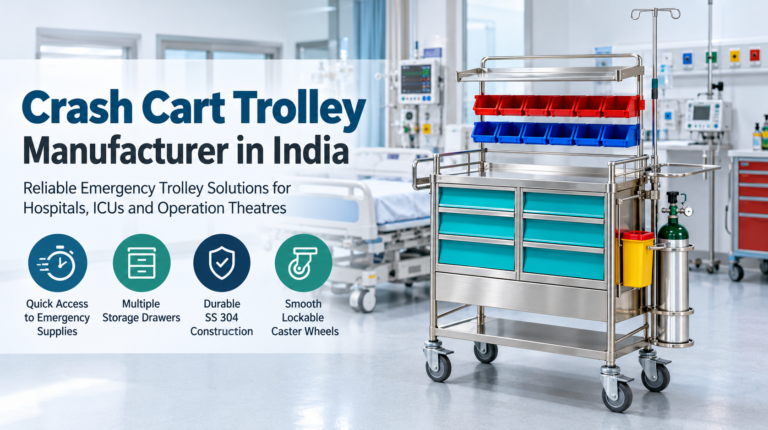
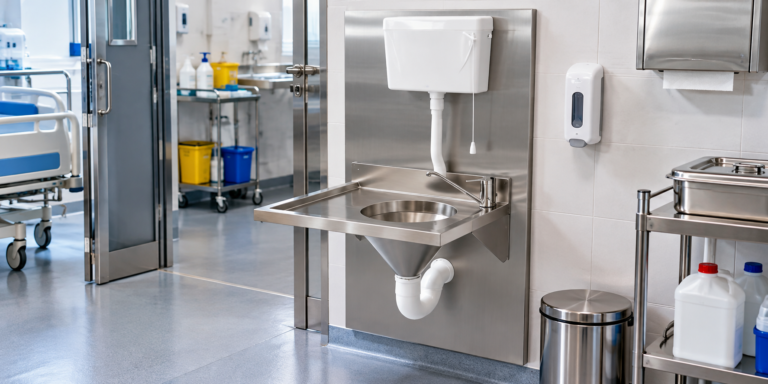
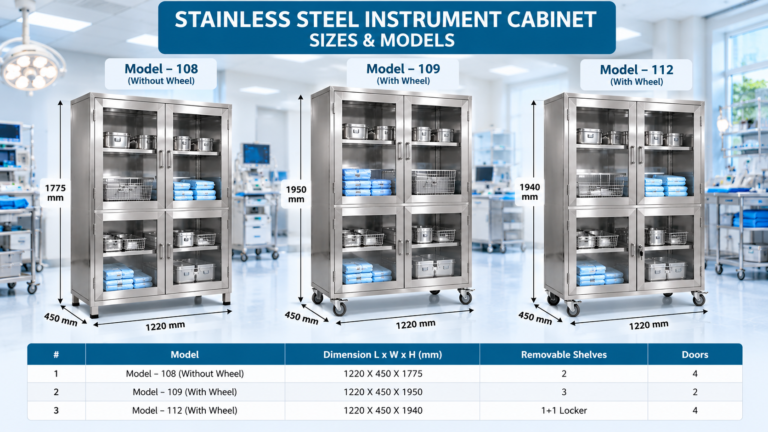
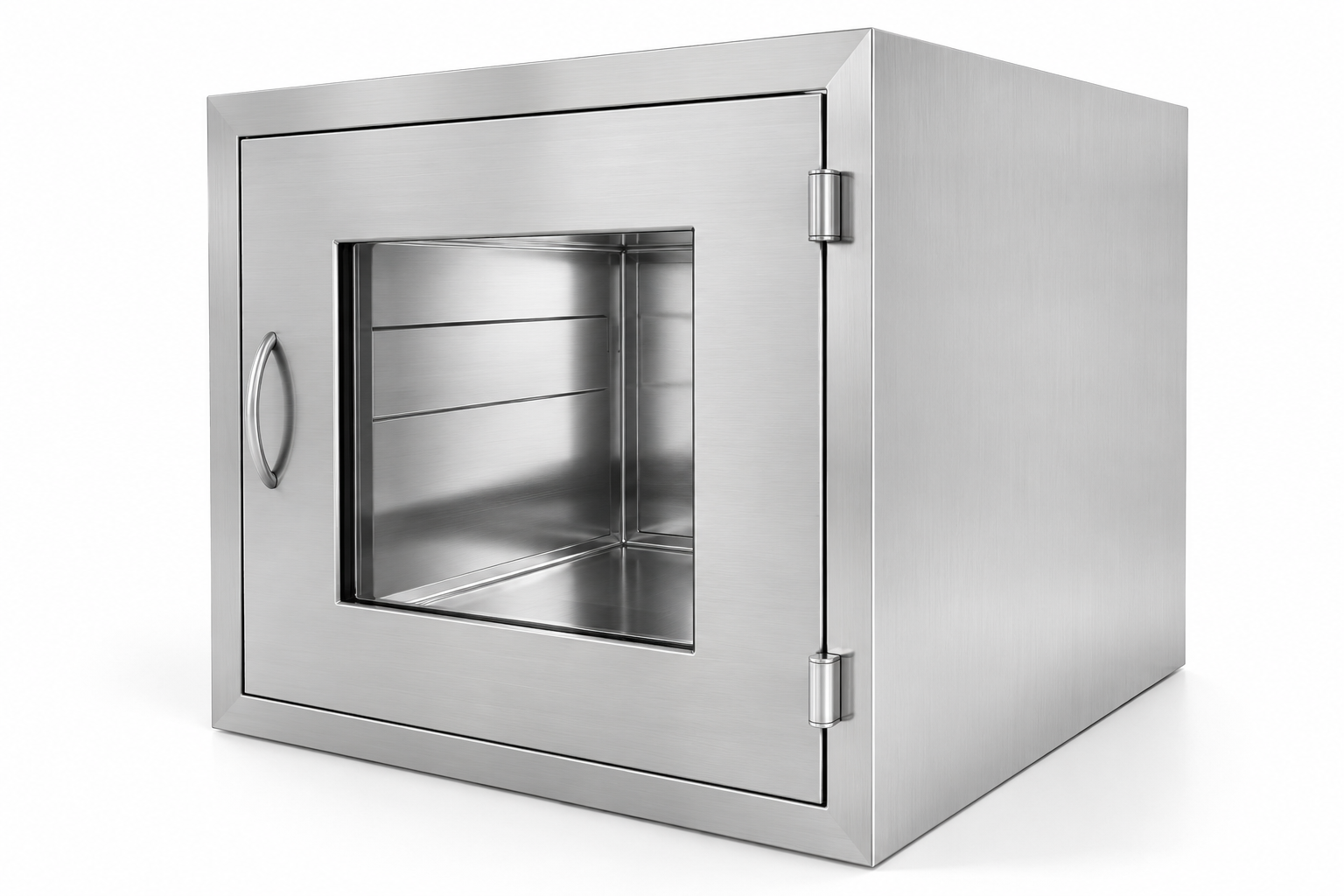
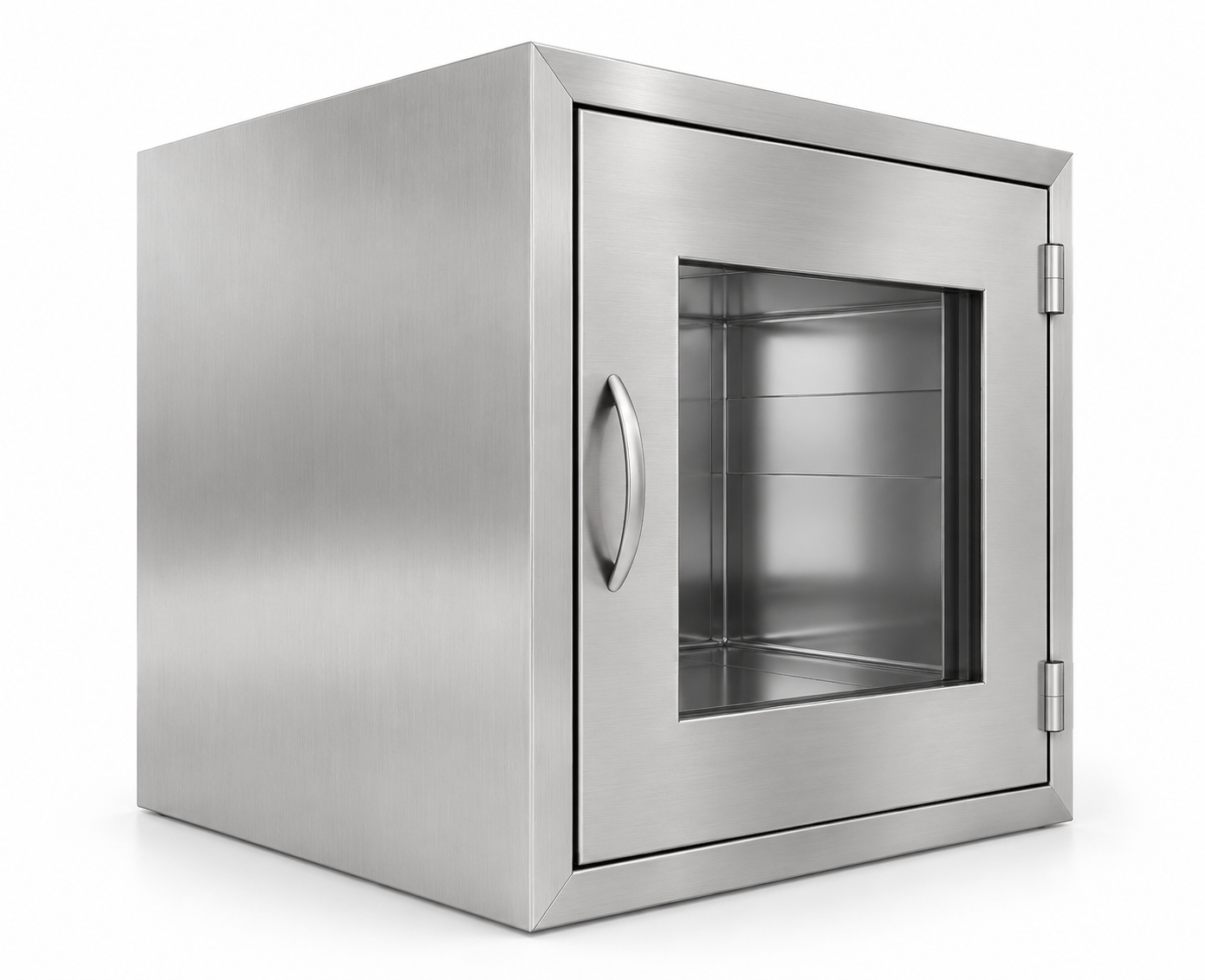
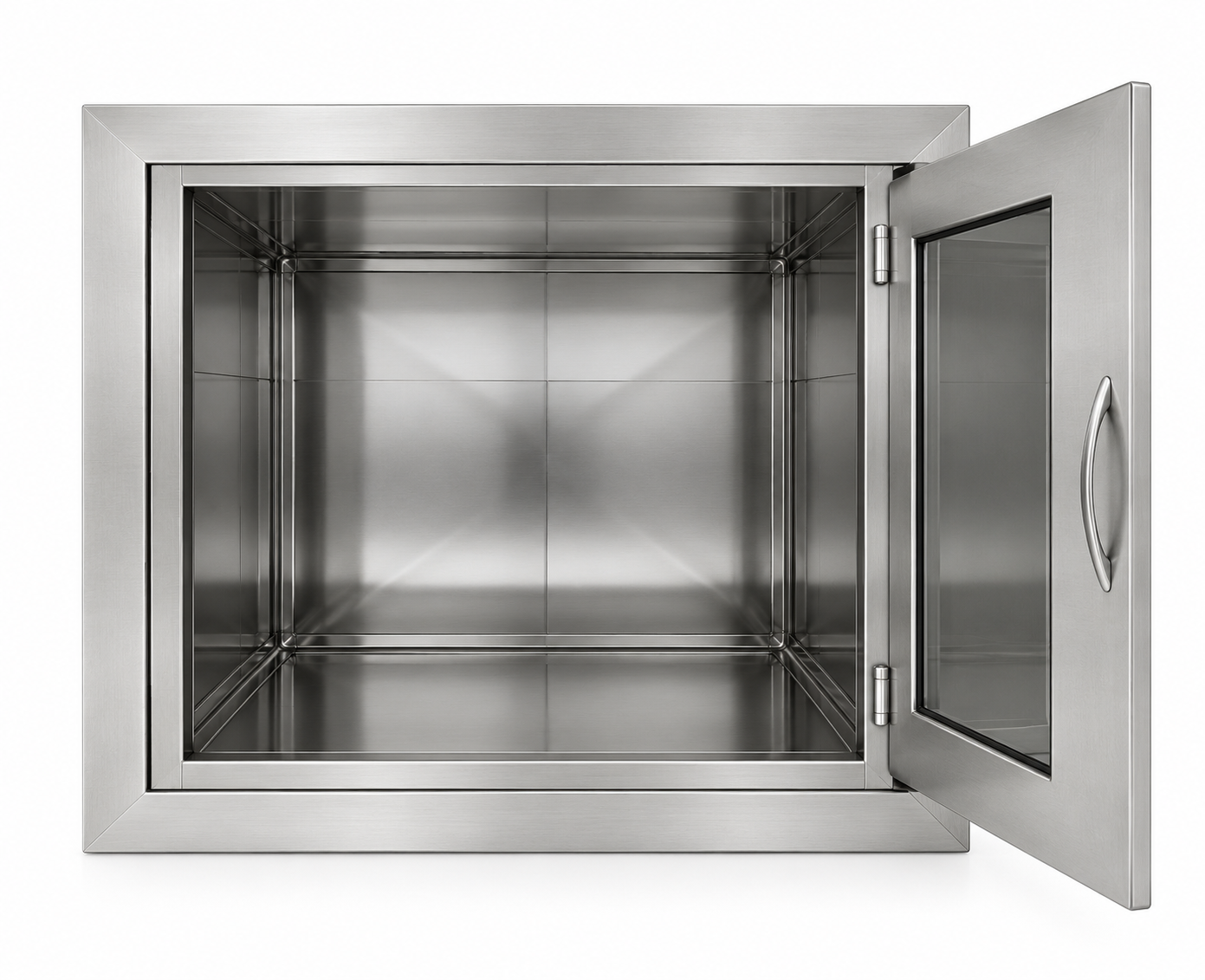
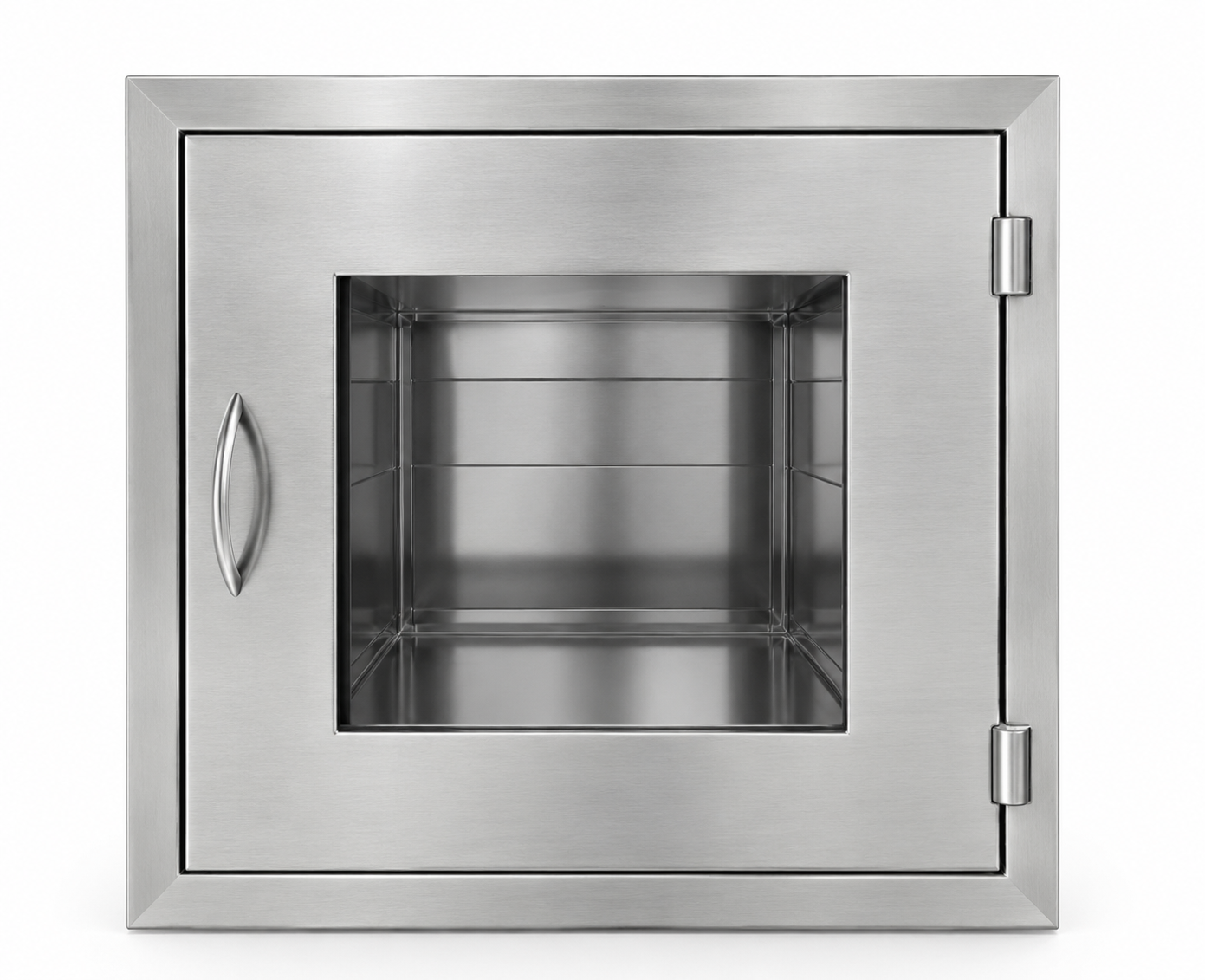
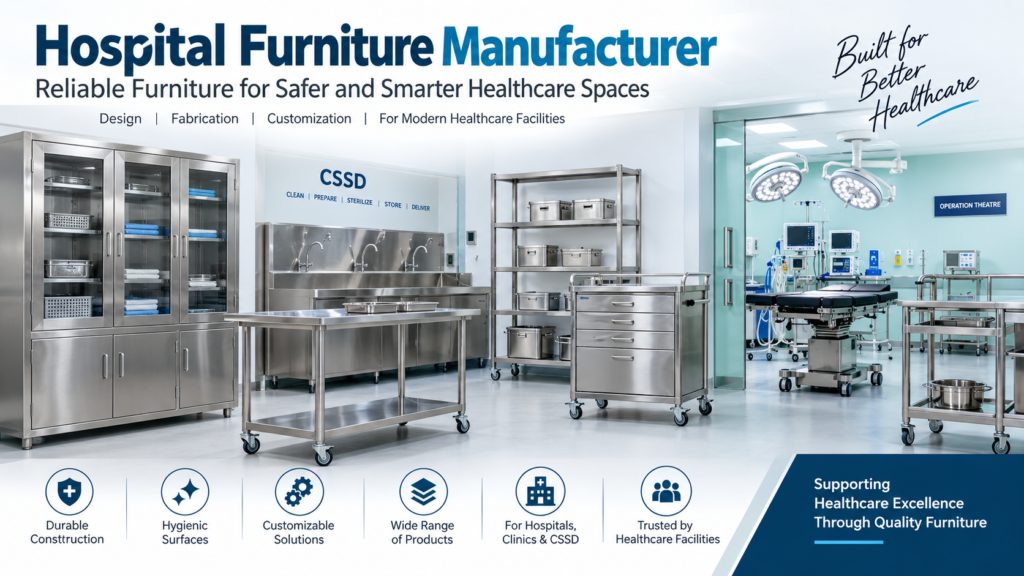
Products may include stainless steel cabinets, instrument tables, storage units, trolleys, sinks, workstations, racks, and other hospital furniture and devices used across clinical and support departments.
A specialized manufacturer can also provide customized dimensions, configurations, materials, and finishes according to a hospital’s layout and operational requirements.
Why is Hospital Furniture Important?
Hospital furniture directly supports the movement of people, instruments, supplies, and waste within healthcare facilities. Poorly designed furniture can create unnecessary workflow problems, difficult-to-clean surfaces, limited storage, and inefficient use of available space.
This is particularly important in infection-sensitive environments. WHO guidance highlights environmental cleaning and appropriate infrastructure as important parts of infection prevention and control.
For CSSD departments, furniture must also support the logical movement of instruments through receiving, cleaning, preparation, sterilization, storage, and distribution areas. WHO notes that medical-device reprocessing requires specific infrastructure and sequential processes.
Key Features
When evaluating a hospital furniture manufacturer in India, look for:
- Hygienic surfaces: Smooth, non-porous surfaces are easier to clean and maintain.
- Durable construction: Strong fabrication helps furniture withstand frequent daily use.
- Corrosion resistance: Suitable stainless steel grades can improve service life in demanding areas.
- Easy maintenance: Simple designs reduce cleaning and maintenance effort.
- Functional storage: Proper cabinets, racks, and drawers help organize instruments and supplies.
- Customized fabrication: Dimensions and configurations can be adapted to specific room layouts.
- Workflow-focused design: Furniture should support the movement of staff, instruments, and materials.
Benefits
Working with experienced hospital furniture manufacturers in India can provide several practical advantages:
- Better organization of medical instruments and supplies.
- Easier cleaning and routine surface disinfection.
- Improved utilization of available hospital space.
- Reduced disruption caused by unsuitable furniture layouts.
- Longer service life when appropriate materials are selected.
- Better coordination between furniture design and departmental workflow.
- Customized solutions for specialized areas such as CSSD and operation theatres.
Applications
Hospital furniture is used across many healthcare environments, including:
- General hospitals and specialty hospitals
- Government and private healthcare facilities
- Clinics and nursing homes
- Operation theatres
- CSSD departments
- Laboratories and diagnostic centres
- Medical colleges and institutions
- Intensive care and patient-care areas
- Sterile storage and instrument preparation areas
In CSSD environments, CSSD furniture manufacturing may include instrument tables, storage cabinets, workstations, racks, sinks, and other equipment designed around sterile-service workflows. Proper CSSD furniture fabrication should consider cleaning, material handling, ergonomics, and available space.
How to Choose the Right Hospital Furniture Manufacturer
Before selecting a supplier or manufacturing partner, consider these factors:
- Check healthcare experience: Choose a company familiar with hospital environments rather than general commercial furniture.
- Review material specifications: Ask about stainless steel grades, sheet thickness, fabrication quality, finishes, and hardware.
- Evaluate customization: Confirm whether dimensions, layouts, drawers, shelves, sinks, and configurations can be modified.
- Consider hygiene requirements: Select designs with accessible surfaces and minimal areas where dirt or moisture can accumulate.
- Assess manufacturing capability: Look for evidence of fabrication, quality control, installation, and project-support capabilities.
- Compare complete value: Consider durability, maintenance, customization, delivery, installation, and after-sales support instead of comparing only the initial price.
Common Mistakes to Avoid
Hospitals often make avoidable procurement mistakes when furniture is selected only on appearance or price. Common issues include:
- Choosing general-purpose furniture for specialized clinical areas.
- Focusing on low initial cost instead of lifecycle value.
- Ignoring the required stainless steel grade or material specifications.
- Ordering standard sizes without checking room dimensions.
- Overlooking cleaning and maintenance requirements.
- Failing to coordinate furniture with department workflow.
- Not confirming installation and customization capabilities.
- Selecting a CSSD furniture supplier without understanding the department’s process flow.
Conclusion
The right hospital furniture can make healthcare spaces more organized, hygienic, durable, and efficient. A capable hospital furniture manufacturer should understand not only fabrication but also the practical requirements of hospitals, CSSD departments, operation theatres, and other healthcare environments.
For procurement teams, the best approach is to define workflow, material, dimensions, hygiene, customization, and maintenance requirements before placing an order. Hospitals looking for reliable furniture solutions can discuss their project requirements with an experienced manufacturer to identify suitable configurations and specifications.
FAQ
What is a hospital furniture manufacturer?
A hospital furniture manufacturer designs, fabricates, and supplies furniture specifically for healthcare environments. Its products may include cabinets, tables, trolleys, sinks, workstations, racks, and storage systems. Unlike conventional furniture, hospital furniture is designed with healthcare workflows, frequent cleaning, durability, hygiene, and practical maintenance requirements in mind.
What are the benefits of hospital furniture?
Hospital furniture helps organize equipment and supplies, supports efficient workflows, improves space utilization, and simplifies routine cleaning. Durable materials can also reduce replacement requirements over time. In specialized areas such as CSSD and operation theatres, purpose-designed furniture can help staff work more efficiently while supporting departmental processes.
Where is hospital furniture used?
Hospital furniture is used in hospitals, clinics, government healthcare facilities, medical colleges, laboratories, operation theatres, CSSD departments, intensive-care areas, sterile storage rooms, and other healthcare environments. The type of furniture required depends on the department’s workflow, available space, hygiene requirements, and equipment-storage needs.
How do I choose the right hospital furniture manufacturer?
Compare manufacturers based on healthcare experience, material quality, fabrication capabilities, customization options, hygiene-focused designs, installation support, and after-sales service. Ask for detailed specifications and confirm that the furniture can accommodate the intended room layout and workflow. Price should be evaluated together with durability and long-term maintenance requirements.
Is hospital furniture customizable?
Yes. Many hospital furniture solutions can be customized according to room dimensions, workflow, storage requirements, equipment sizes, and departmental needs. Manufacturers may modify cabinet layouts, shelf arrangements, dimensions, work surfaces, sinks, drawers, and other features. Custom fabrication can be especially useful for CSSD departments and operation theatres with specific space constraints.
What material is best for hospital furniture?
Stainless steel is widely used for many healthcare applications because appropriate grades offer durability, corrosion resistance, and surfaces that can be cleaned effectively. However, the best material depends on the application, exposure conditions, cleaning procedures, and required service life. Buyers should always confirm the material grade and construction specifications before procurement.