

Solid Surface Sink for Hospitals: Benefits, Features and Buying Guide
Introduction
Choosing the right sink for a hospital is more than a design decision. Healthcare sinks must support frequent cleaning, withstand daily use, and fit the workflow of areas such as CSSD departments, operation theatres, laboratories, clinics, and utility rooms. A solid surface sink offers a practical combination of a smooth appearance, easy maintenance, and flexible installation options. When correctly specified, it can help healthcare facilities maintain cleaner work areas while providing a durable solution for demanding environments where hygiene and usability are important.
AI Overview Summary
A solid surface sink is a seamless or low-joint sink made from a durable, non-porous solid-surface material. It is used in hospitals, clinics, laboratories, and healthcare work areas because it is easy to clean, customizable, and suitable for integrated countertop and vanity applications.
What Is a Solid Surface Sink?
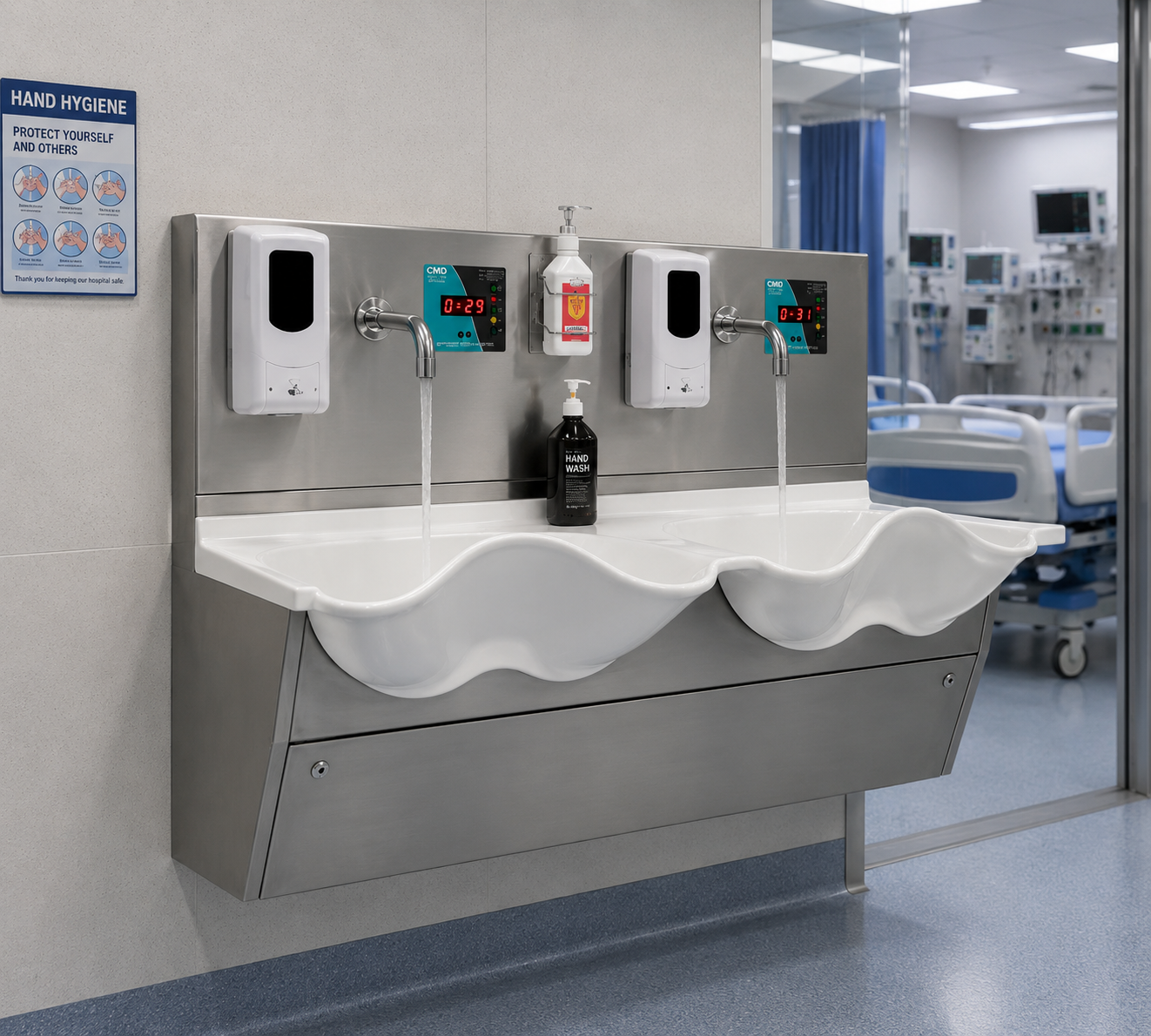
A solid surface sink is a sink manufactured from a solid, homogeneous surface material that can be fabricated into different shapes, sizes, and configurations. Unlike conventional sinks that may have visible joints between the bowl and countertop, a solid surface with integral sink can be fabricated with a smooth transition between the worktop and basin.
This design reduces areas where dirt and moisture can collect. It also allows manufacturers to create customized configurations for specific hospital layouts.
Solid surface is commonly selected for applications where appearance, cleanability, and design flexibility are important. Options can include solid surface vanity sinks, workstation sinks, utility sinks, and custom healthcare basins.
Why Is It Important?
Healthcare environments require surfaces that can be routinely cleaned and maintained. The CDC recommends regular cleaning and disinfection of healthcare environmental surfaces and emphasizes following manufacturer instructions for cleaning medical equipment and surfaces.
A well-designed sink can therefore support:
- Easier routine cleaning
- Better workflow around handwashing and utility areas
- Reduced dirt accumulation around joints
- Customized installation for restricted spaces
- Consistent appearance across hospital interiors
For CSSD and other high-use areas, material selection should always be considered alongside the facility’s cleaning chemicals, procedures, and operating requirements.
Key Features
- Seamless fabrication: Integral designs can minimize visible joints between the sink and surrounding surface.
- Non-porous surface: A properly manufactured solid surface provides a smooth surface that is easy to wipe and maintain.
- Custom dimensions: Sinks can be produced to suit specific countertops, cabinets, or room layouts.
- Smooth edges: Rounded or radiused corners can make routine cleaning easier.
- Multiple configurations: Options include top mount solid surface sink, under-mount, and integrated designs.
- Design flexibility: White and other finishes can be fabricated to match healthcare interiors.
Benefits
- Easy maintenance: Smooth surfaces simplify routine wiping and cleaning.
- Better hygiene support: Fewer exposed joints can make cleaning around the basin easier.
- Long service life: Quality solid-surface construction is designed for regular daily use.
- Customization: Dimensions, bowl depth, drainage position, and countertop configuration can be specified.
- Professional appearance: Clean, consistent surfaces suit modern hospitals and medical institutions.
- Repairability: Depending on the material and damage, some solid-surface products can be repaired or refinished rather than completely replaced.
Applications
Solid surface sinks can be used in hospitals, clinics, diagnostic centres, laboratories, nursing facilities, CSSD departments, operation theatres, examination areas, and healthcare utility rooms.
They can also be specified for custom medical furniture and vanity installations. An Italian solid surface sink style may be considered where a premium architectural appearance is required, while a metal sink with solid surface countertop can be suitable where the project requires a combination of materials.
Healthcare procurement teams should also consider the complete furniture workflow around the sink, including storage units, workstations, emergency trolley equipment and their uses, and compatible crash cart accessories where these products are part of the same project.
How to Choose the Right Solid Surface Sink
- Check the application: Identify whether the sink is intended for a handwashing area, utility room, CSSD, laboratory, or another healthcare environment.
- Confirm dimensions: Measure the available countertop, cabinet, wall clearance, plumbing position, and required basin depth before ordering.
- Review material quality: Ask the manufacturer for material specifications, fabrication details, and information about resistance to routine cleaning products.
- Consider the installation: Decide between an integrated, top-mount, under-mount, or customized configuration according to the project design.
- Check drainage and plumbing: Confirm drain size, waste connection, overflow requirements, faucet location, and slope toward the drain.
- Ask for maintenance guidance: The manufacturer should provide clear cleaning and care instructions. This is especially important because healthcare facilities may use different approved disinfectants.
Common Mistakes to Avoid
- Choosing a sink without checking actual site dimensions.
- Focusing only on appearance instead of cleaning and maintenance requirements.
- Ignoring compatibility with facility-approved cleaning products.
- Selecting a basin that is too shallow for the intended workflow.
- Failing to confirm plumbing and drainage positions before fabrication.
- Buying from a supplier without checking fabrication quality, warranty, and after-sales support.
- Assuming every solid-surface material has identical chemical and performance properties.
The term “solide surface sink” is also sometimes used as a search variation, but buyers should focus on the actual material specification and manufacturer documentation rather than the wording used in a product listing.
Conclusion
A solid surface sink can be a practical choice for healthcare facilities that need a clean-looking, customizable, and easy-to-maintain sink solution. Its value depends on proper material selection, fabrication, installation, and maintenance rather than appearance alone.
Hospitals, clinics, CSSD departments, and medical furniture procurement teams should compare dimensions, material specifications, installation options, cleaning requirements, and customization capabilities before placing an order. For project-specific requirements, contacting a qualified manufacturer can help determine the most suitable configuration.
Frequently Asked Questions
What is a solid surface sink?
A solid surface sink is a sink made from a homogeneous solid-surface material that can be fabricated into different shapes and sizes. It may be installed separately or integrated into a countertop. Its smooth construction makes it suitable for healthcare, laboratory, commercial, and vanity applications where easy maintenance and design flexibility are important.
What are the benefits of a solid surface sink?
Key benefits include easy cleaning, flexible customization, smooth surfaces, and the ability to create integrated countertop-and-sink designs. Depending on the material specification, solid surface can also offer good resistance to everyday wear and allow certain minor surface damage to be repaired or refinished.
Where is a solid surface sink used?
Solid surface sinks can be used in hospitals, clinics, laboratories, CSSD departments, operation theatres, diagnostic facilities, nursing areas, and healthcare utility rooms. They are also used in commercial and institutional vanity applications where a clean appearance and customized dimensions are required.
How do I choose the right solid surface sink?
Start by identifying the application and measuring the available installation area. Then check basin dimensions, depth, drainage, mounting method, material quality, cleaning requirements, and customization options. Healthcare buyers should also confirm that the sink and its surface are compatible with the facility’s approved cleaning and disinfection procedures.
Is a solid surface sink customizable?
Yes. Many solid surface products can be fabricated according to project requirements. Buyers may be able to specify overall dimensions, basin size, countertop configuration, edge profile, drainage position, and installation style. Customization depends on the material, fabrication process, manufacturer, and project quantity.
What material is best for a hospital sink?
There is no single best material for every hospital application. The right choice depends on the intended use, cleaning process, chemical exposure, durability requirements, budget, and installation design. Solid surface can be useful where seamless fabrication and customization are priorities, while stainless steel may be preferred for certain heavy-duty utility applications.