

Introduction
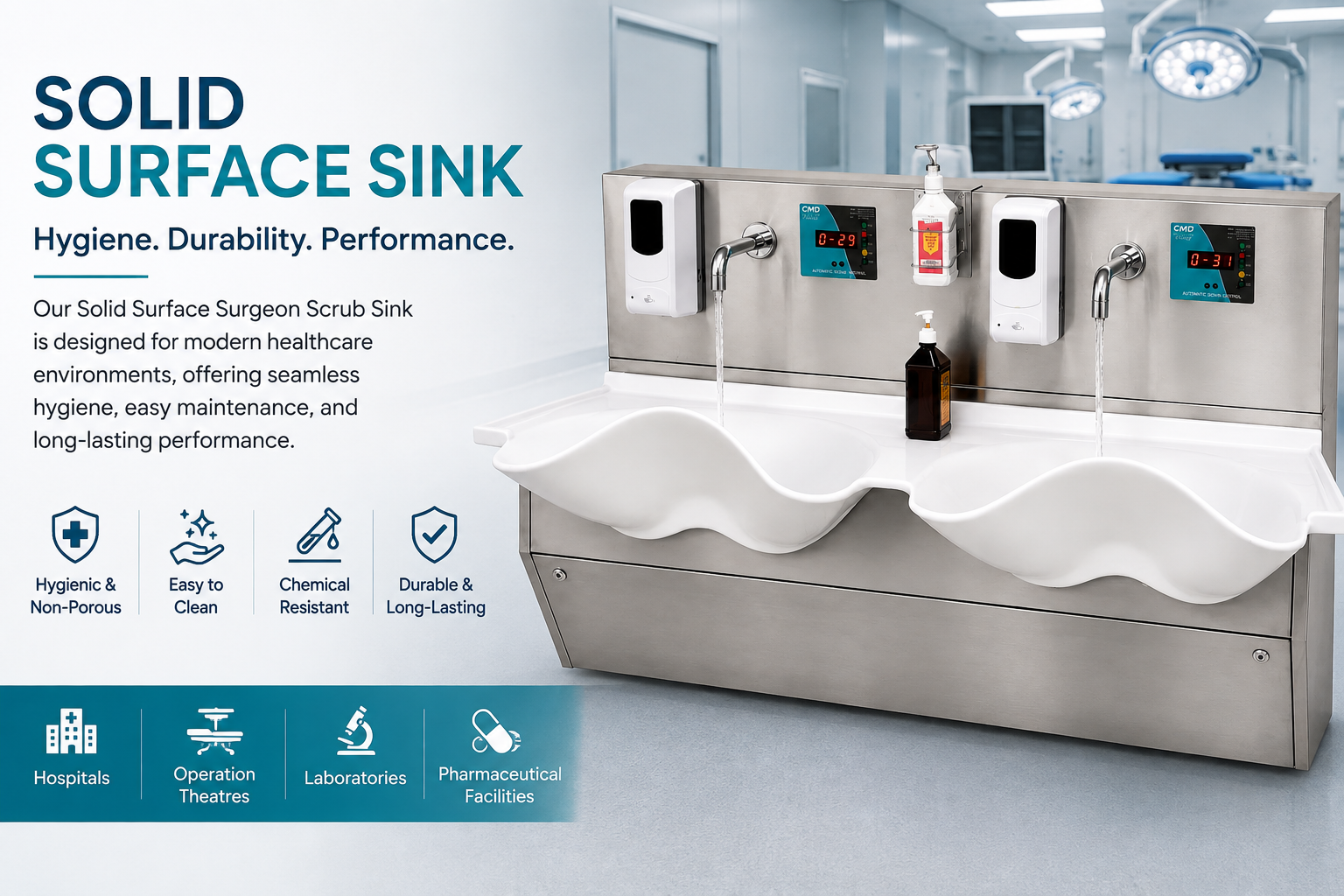
A Solid Surface Sink is an essential fixture in modern hospitals, operation theatres, and healthcare facilities where hygiene and infection control are top priorities. Unlike traditional stainless steel or ceramic sinks, solid surface sinks feature a seamless, non-porous design that minimizes bacterial growth and simplifies cleaning. Whether installed as a Medical Solid Surface Scrub Sink or a Solid Surface Surgeon Scrub Sink, these sinks help healthcare professionals maintain strict hygiene standards while improving durability and aesthetics. Choosing the right sink contributes to safer patient care, easier maintenance, and long-term operational efficiency.
What is Solid Surface Sink?
A Solid Surface Sink is a hygienic sink manufactured from a high-performance solid surface material that creates a smooth, seamless, and non-porous finish. Unlike conventional sinks with welded joints or grout lines, it has no visible seams where dirt, moisture, or bacteria can accumulate.
In healthcare settings, it is commonly used as a Medical Solid Surface Scrub Sink, Solid Surface Surgeon Washing Sink, or Seamless OT Scrub Sink to support proper hand hygiene before surgical procedures. The material resists stains, chemicals, moisture, and microbial growth, making it ideal for environments requiring strict infection control.
Why is it Important?
Healthcare facilities cannot compromise on cleanliness. Every surface in an operating theatre plays a role in preventing healthcare-associated infections (HAIs), and sinks are among the most frequently used fixtures.
A Solid Surface Surgeon surgical scrub sink helps create a safer environment by providing a smooth surface that is easy to disinfect after every use. Since there are no joints or crevices, harmful microorganisms have fewer places to hide.
These sinks also improve workflow by allowing surgeons and healthcare staff to perform surgical hand scrubbing comfortably while reducing maintenance requirements over time.
Key Features
- Seamless Construction – Eliminates joints where bacteria and dirt typically collect.
- Non-Porous Surface – Prevents moisture absorption, stains, and microbial growth.
- Chemical Resistant – Withstands regular exposure to hospital-grade disinfectants.
- Durable Material – Resists cracks, chips, and impact during daily use.
- Easy to Clean – Requires minimal effort to maintain high hygiene standards.
- Customizable Design – Available in multiple sizes, basin configurations, and mounting options.
- Modern Appearance – Creates a clean and professional look for medical environments.
Benefits
- Improves infection prevention by reducing bacterial hiding places.
- Supports healthcare compliance with strict hygiene protocols.
- Reduces long-term maintenance and repair costs.
- Offers excellent resistance to moisture and harsh cleaning chemicals.
- Enhances workflow for surgeons and medical staff.
- Provides a longer service life compared to many traditional sink materials.
- Maintains its appearance even after years of continuous use.
Applications
A Solid Surface Surgeon Sink is widely used across industries where cleanliness is essential.
Common applications include:
- Hospital operating theatres (OT)
- Surgical scrub areas
- CSSD (Central Sterile Services Department)
- Emergency departments
- Intensive Care Units (ICU)
- Medical laboratories
- Pharmaceutical manufacturing facilities
- Biotechnology laboratories
- Research institutes
- Healthcare training centres
How to Choose the Right Solid Surface Sink
When selecting a Solid Surface Sink, consider the following factors:
- Choose the correct sink size based on available installation space.
- Ensure the material is non-porous and resistant to hospital disinfectants.
- Select the appropriate number of washing stations for staff requirements.
- Look for ergonomic designs that improve user comfort during surgical scrubbing.
- Verify compatibility with sensor taps, soap dispensers, and other accessories.
- Purchase from an experienced manufacturer that offers quality assurance and customization options.
Common Mistakes to Avoid
Many buyers focus only on price and overlook important performance factors.
Avoid these common mistakes:
- Choosing sinks made from low-quality materials.
- Ignoring seamless construction.
- Buying the wrong size for the available space.
- Overlooking compatibility with hospital plumbing systems.
- Not checking resistance to chemicals and disinfectants.
- Selecting suppliers without healthcare manufacturing experience.
Conclusion
A Solid Surface Sink is much more than a washing station. It is an important component of infection control and healthcare safety. Its seamless construction, non-porous surface, durability, and easy maintenance make it an excellent investment for hospitals, laboratories, pharmaceutical facilities, and other hygiene-critical environments.
When selecting a Medical Solid Surface Scrub Sink or Solid Surface Surgeon Scrub Sink, focus on quality, durability, and functionality rather than price alone. Working with an experienced manufacturer can help you choose a solution that meets your facility’s operational needs while supporting long-term hygiene and efficiency.
Frequently Asked Questions (FAQs)
1. What is a Solid Surface Sink?
A Solid Surface Sink is a seamless, non-porous sink made from durable solid surface material. It is designed for environments where hygiene is critical, making it ideal for hospitals, laboratories, and pharmaceutical facilities. Its smooth construction helps reduce bacterial growth and simplifies cleaning.
2. What are the benefits of a Solid Surface Sink?
The main benefits include improved hygiene, seamless construction, chemical resistance, durability, easy maintenance, and a longer lifespan. These features help healthcare facilities maintain strict infection control standards while reducing maintenance costs.
3. Where is a Solid Surface Sink commonly used?
Solid surface sinks are commonly installed in operating theatres, surgical scrub rooms, CSSD departments, hospitals, laboratories, pharmaceutical manufacturing plants, research facilities, and other healthcare environments that require high hygiene standards.
4. How do I choose the right Solid Surface Sink?
Consider the sink size, installation area, material quality, number of users, compatibility with medical accessories, and the manufacturer’s experience. Selecting a non-porous, seamless design ensures better hygiene and long-term performance.
5. Can a Solid Surface Sink be customized?
Yes. Most manufacturers offer customization options, including basin size, number of stations, splashback design, integrated accessories, sensor-operated taps, and mounting styles to meet the specific needs of healthcare facilities.
6. Why is a seamless OT scrub sink better than a traditional sink?
A Seamless OT Scrub Sink has no joints or crevices where bacteria and dirt can accumulate. This makes cleaning faster, improves infection control, and provides a more hygienic solution compared to traditional welded or tiled sinks.