

Laparoscopic Trolley: Complete Guide for Modern Surgical Setup
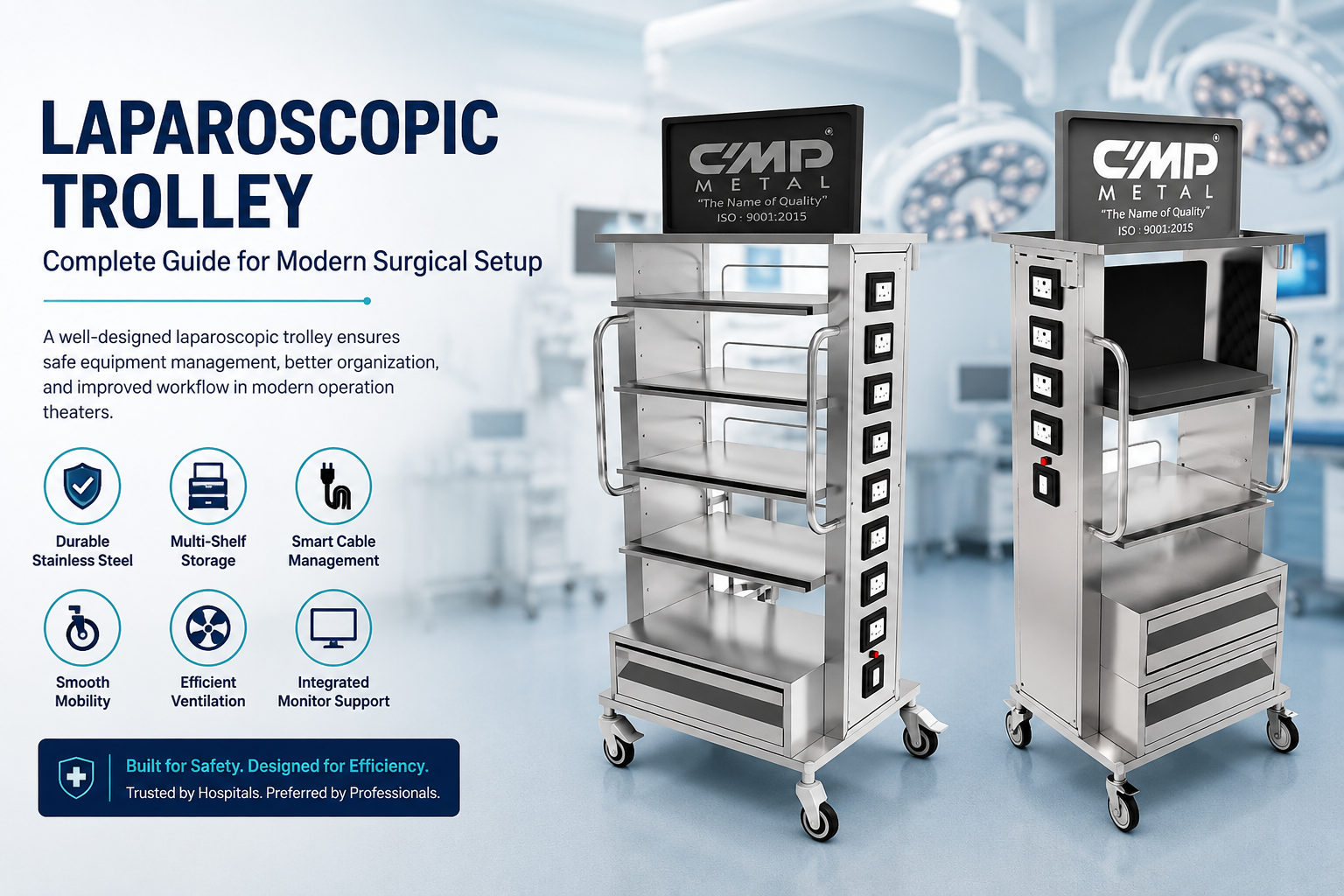
Introduction
Modern operation theaters depend heavily on organized and efficient equipment management. A high-quality laparoscopic trolley helps hospitals safely manage surgical systems while improving workflow during minimally invasive procedures.
From monitor placement to cable organization and equipment mobility, these trolleys play a major role in modern healthcare facilities. Without proper equipment support systems, operation theaters often face clutter, delayed setup time, and equipment handling issues.
As laparoscopic surgeries continue growing across hospitals and surgical centers, choosing the right trolley system has become essential for efficiency, hygiene, and patient safety.
Why Hospitals Need a Laparoscopic Trolley
Many hospitals invest in advanced surgical devices but overlook the importance of equipment organization. A poorly managed OT setup can directly impact surgical efficiency and staff workflow.
Common Challenges in Operation Theaters
- Messy cable management
- Difficulty moving heavy equipment
- Limited storage for accessories
- Unsafe monitor placement
- Equipment overheating issues
- Long setup times before surgeries
- Risk of accidental equipment damage
A properly designed trolley system helps solve these problems while creating a cleaner and more organized surgical environment.
What Is a Laparoscopic Trolley?
A laparoscopic trolley is a specialized medical equipment cart designed to hold and transport laparoscopic systems used in minimally invasive surgeries.
These trolleys are commonly used for storing and managing:
- Camera systems
- Light source units
- CO2 insufflators
- Energy devices
- Surgical monitors
- Recording systems
- Accessories and cables
Modern hospitals also use integrated setups with advanced laparoscopic towers for better workflow management.
Main Components Stored on a Laparoscopic Instrument Trolley
| Equipment | Purpose |
|---|---|
| Monitor | Displays internal surgical view |
| Camera Control Unit | Processes surgical images |
| Light Source | Provides illumination during procedures |
| CO2 Insufflator | Maintains abdominal pressure |
| Electrosurgical Unit | Supports cutting and coagulation |
| Storage Shelves | Holds accessories and surgical instruments |
Types of Laparoscopic Trolleys
1. Standard Laparoscopic Instrument Trolley
These are commonly used in hospitals and surgery centers with multiple shelves and monitor support systems.
Best suited for:
- General surgery departments
- Small hospitals
- Daycare surgical centers
2. Modular Trolley Systems
Modular designs allow customization with drawers, adjustable shelves, and equipment holders.
- Useful for multi-specialty hospitals
- Supports future equipment upgrades
- Improves operational flexibility
3. Integrated Laparoscopic Towers
These advanced systems combine trolley functionality with digital integration, power management, and organized cable routing.
4. Compact Mobile Trolleys
Compact trolley systems are lightweight and easy to move between operation rooms.
Important Features to Look For
Stainless Steel Construction
Medical-grade stainless steel provides:
- Corrosion resistance
- Easy cleaning
- Long-term durability
- Better infection control
Smooth Mobility
Look for trolley systems with:
- Lockable caster wheels
- Anti-vibration movement
- Heavy-load support
Ventilation Support
Electronic surgical systems generate heat during long procedures. Ventilated shelves improve airflow and protect equipment performance.
Cable Management
A clean cable management system:
- Reduces clutter
- Improves OT safety
- Makes maintenance easier
Hospitals looking for durable and professional OT solutions often prefer a laparoscopic instrument trolley
designed with medical-grade construction and optimized storage features.
Benefits of Using a Laparoscopic Trolley
Improved Surgical Workflow
An organized trolley setup reduces preparation time and improves overall surgical efficiency.
Better Equipment Protection
Sensitive devices remain secure during transportation and operation.
Enhanced Infection Control
Smooth stainless-steel surfaces support proper cleaning and sanitization.
Optimized OT Space
Compact and modular designs help maximize operation theater space utilization.
Easy Equipment Accessibility
Doctors and OT staff can quickly access required devices during procedures.
Laparoscopic Trolley vs Traditional Equipment Cart
| Feature | Laparoscopic Trolley | Traditional Cart |
|---|---|---|
| Designed for Surgical Systems | Yes | Limited |
| Cable Management | Advanced | Basic |
| Monitor Support | Included | Often Missing |
| Medical-Grade Build | Yes | Not Always |
| Ventilation | Optimized | Minimal |
Step-by-Step Buying Guide
Step 1: Identify Surgical Requirements
Understand:
- Surgery types
- Number of devices
- Equipment weight
- OT size
Step 2: Check Equipment Compatibility
Ensure compatibility with:
- Camera systems
- Monitors
- Energy devices
- Laparoscopic towers
Step 3: Evaluate Material Quality
Choose medical-grade stainless steel for durability and hygiene.
Step 4: Review Mobility Features
- Wheel quality
- Brake locking system
- Maneuverability
Step 5: Consider Future Expansion
Choose modular trolley systems if future equipment upgrades are expected.
Common Mistakes to Avoid
Ignoring Weight Capacity
Overloading shelves may damage both the trolley and sensitive surgical systems.
Choosing Only Based on Price
Low-cost trolley systems may compromise durability, safety, and long-term performance.
Poor Cable Planning
Improper wiring creates clutter and increases safety risks inside operation theaters.
Ignoring Ventilation
Insufficient airflow can reduce equipment lifespan due to overheating.
Expert Tips for Hospitals
- Choose modular trolley systems for flexibility
- Prefer stainless steel construction over painted metal
- Ensure smooth wheel movement for emergency situations
- Use dedicated compartments for delicate accessories
- Inspect wheels and monitor mounts regularly
Healthcare facilities performing advanced surgeries should also consider integrated laparoscopic towers for improved workflow management and better digital integration.
Understanding Related Surgical Equipment
Laparoscopic Trocars
Laparoscopic trocars are specialized instruments used to create access ports during minimally invasive surgeries. Proper storage on a trolley helps prevent contamination and accidental damage.
Laparoscopic Towers
These systems include:
- Video processor
- Light source
- Insufflator
- Monitor system
Modern trolley systems are designed to support these integrated surgical setups efficiently.
Frequently Asked Questions
What is the purpose of a laparoscopic trolley?
A laparoscopic trolley helps organize, store, and transport surgical equipment used during minimally invasive procedures.
What materials are best for laparoscopic instrument trolleys?
Medical-grade stainless steel is considered the best option because it is durable, corrosion-resistant, and easy to sanitize.
Are laparoscopic towers and trolleys the same?
No. A trolley is the supporting structure, while laparoscopic towers include integrated surgical systems and electronic components.
Why is cable management important?
Proper cable management improves safety, reduces clutter, and helps maintain an organized OT environment.
Can laparoscopic trolleys support heavy equipment?
Yes. High-quality trolley systems are designed to support monitors, surgical devices, and other heavy OT equipment safely.
Conclusion
A high-quality laparoscopic trolley is an essential part of modern operation theaters. It improves workflow efficiency, enhances equipment safety, supports infection control, and helps create a more organized surgical environment.
Whether for a small surgical center or a large multi-specialty hospital, choosing the right trolley system can significantly improve daily OT operations and long-term equipment management.