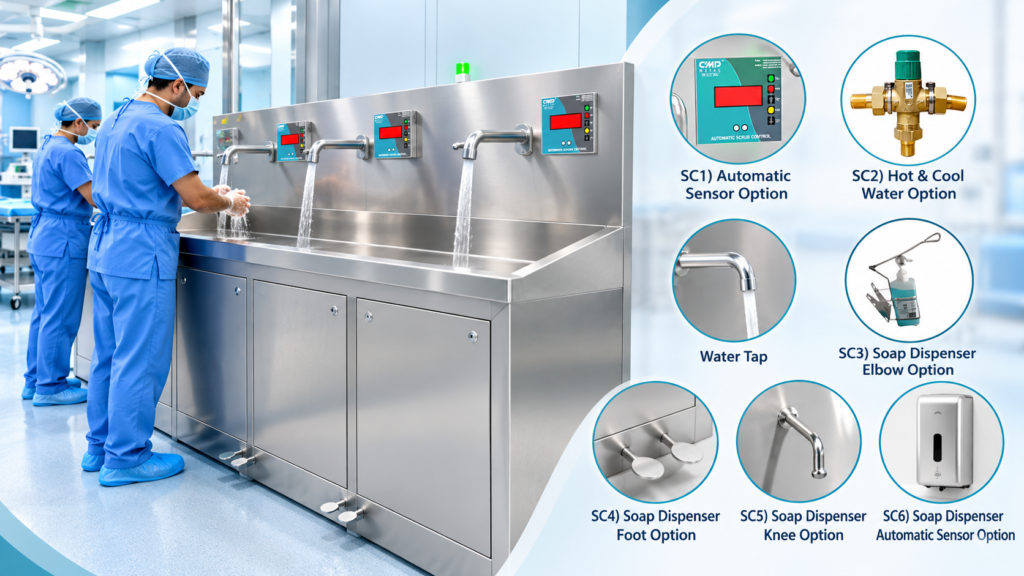
Introduction
Hand hygiene is a critical part of infection prevention in hospitals and operating rooms. A properly designed Scrub Sink helps surgeons and medical staff clean their hands and forearms before surgical procedures. Choosing the right sink supports hygiene protocols, improves workflow, and makes daily cleaning easier for hospital teams.
For hospitals planning a new operation theatre or upgrading an existing facility, selecting suitable equipment is an important decision. Factors such as material, water controls, number of users, and installation space can affect performance. This guide explains the features, benefits, applications, and buying considerations for surgical scrub sinks in India.
Scrub Sink: Quick Overview
A scrub sink is a specialised handwashing station designed for surgical staff to perform preoperative hand and forearm antisepsis before entering the sterile operating area. It typically features a hygienic basin, hands-free or sensor-operated water controls, and a design that supports easy cleaning.
What Is a Scrub Sink?
A Scrub Sink is a dedicated washing station used by surgeons, nurses, and other operating theatre personnel before surgical procedures. Unlike a standard washbasin, a surgical scrub sink is designed around the hygiene needs of clinical environments.
A Surgical Scrub Sink may include sensor-operated taps, knee-operated controls, splash-reducing basin designs, and single-user or multi-user configurations. Depending on the hospital’s requirements, it can be manufactured from stainless steel or other suitable, easy-to-clean materials.
A well-designed Hospital Scrub Sink helps staff follow established surgical hand preparation procedures while keeping the operating theatre workflow organised.
Why Is a Scrub Sink Important?
Operating theatres require strict infection prevention practices. Surgical hand preparation is one part of a broader infection control process that includes appropriate antiseptic products, sterile techniques, environmental cleaning, and staff training.
An appropriately selected OT scrub sink supports these practices by providing a dedicated, convenient space for surgical staff to prepare before procedures.
It is especially useful when hospitals need to:
- Establish or upgrade operating theatre facilities.
- Improve handwashing workflow before surgical procedures.
- Support hospital hygiene and infection prevention protocols.
- Reduce unnecessary contact with tap handles when hands-free controls are installed.
- Maintain an organised surgical preparation area.
The sink supports hygiene practices but does not replace approved surgical hand preparation protocols.
Key Features of a Surgical Scrub Sink
When evaluating a Stainless Steel Scrub Sink, consider these important features:
- Hygienic construction: Smooth, easy-to-clean surfaces help simplify routine cleaning and maintenance.
- Hands-free controls: Sensor-operated or other hands-free taps can reduce contact with operating controls.
- Suitable basin design: A well-designed basin helps manage splashing and water drainage.
- Single or multiple stations: Different configurations accommodate available space and expected staff requirements.
- Durable material: Appropriate stainless steel grades offer corrosion resistance and long-term service when correctly fabricated and maintained.
- Practical installation: Proper plumbing access, drainage, and mounting arrangements support reliable daily use.
- Hot and cold water options: Suitable water controls can be selected according to the facility’s approved design and requirements.
Benefits of a Medical Scrub Sink
A properly selected Medical Scrub Sink provides practical advantages for healthcare facilities.
- Supports infection prevention: Provides a dedicated location for surgical hand preparation.
- Improves workflow: Places the washing station near the appropriate operating theatre preparation area.
- Simplifies cleaning: Suitable materials and accessible surfaces make routine maintenance easier.
- Supports hands-free operation: Sensor or other hands-free controls can reduce contact with tap handles.
- Offers flexible configurations: Single-user and multi-user options can suit different theatre layouts.
- Helps with long-term planning: Durable construction and accessible service components can reduce avoidable maintenance issues.
Actual performance depends on the design, installation quality, maintenance, and hospital protocols.
Applications of Scrub Sinks
A Scrub Sink for Hospitals is commonly used in:
- Hospital operating theatres and surgical suites.
- Multispecialty and super-specialty hospitals.
- Day surgery and ambulatory surgical centres.
- Medical colleges and teaching hospitals.
- Specialty surgical centres.
- Healthcare projects involving new OT construction or renovation.
Hospital architects, procurement managers, contractors, and medical equipment distributors may also specify scrub sinks during project planning and equipment procurement.
How to Choose the Right Scrub Sink
Before purchasing a scrub sink hospital installation, review these six factors:
- Assess user capacity: Determine whether the facility needs a single-user or multi-user station based on staff flow and available space.
- Select the material: Compare stainless steel grade, thickness, finish, fabrication quality, and cleaning requirements.
- Choose the tap mechanism: Evaluate sensor-operated, knee-operated, or other suitable controls based on hygiene protocols and maintenance support.
- Check dimensions: Confirm basin size, height, plumbing points, drainage, and available installation space.
- Review customisation: Ask whether dimensions, number of stations, tap positions, and other project-specific details can be customised.
- Verify specifications and service: Review technical drawings, warranty terms, spare-part availability, installation requirements, and applicable tender specifications before ordering.
For government and institutional procurement, compare the offered product against every relevant technical requirement rather than relying on the product name alone.
Common Mistakes to Avoid
Hospital buyers should avoid these common purchasing mistakes:
- Choosing a sink based only on the lowest quotation.
- Ignoring stainless steel grade and fabrication quality.
- Selecting dimensions without checking the actual installation area.
- Overlooking drainage, plumbing, and electrical requirements for sensor controls.
- Failing to confirm spare parts and after-sales support.
- Assuming that every scrub sink meets the same clinical or tender requirements.
- Treating the sink as a replacement for proper surgical hand preparation procedures.
A clear technical specification helps reduce installation problems and procurement delays.
Conclusion
A well-designed scrub sink is an important part of an operating theatre’s hand preparation area. The right choice depends on user capacity, material quality, tap controls, installation space, cleaning requirements, and project specifications.
Hospitals, healthcare contractors, and procurement teams should compare these factors before finalising their purchase. For project-specific dimensions, configurations, or technical details, contact CMP METAL to discuss suitable scrub sink options for your healthcare facility.
Frequently Asked Questions
1. What is a scrub sink used for?
A scrub sink is used by surgeons, nurses, and other surgical staff to perform preoperative hand and forearm antisepsis before procedures. It provides a dedicated washing station near the operating theatre preparation area. Its design supports hygiene workflows, while staff must continue following the hospital’s approved surgical hand preparation protocol.
2. What is the difference between a surgical scrub sink and a normal washbasin?
A surgical scrub sink is designed specifically for operating theatre hand preparation. It may feature hands-free taps, a basin designed to manage splashing, and easy-to-clean construction. A normal washbasin may not provide the same configuration. The correct choice depends on the facility’s clinical requirements and applicable standards.
3. Which material is best for a hospital scrub sink?
Stainless steel is a common choice because suitable grades offer corrosion resistance, durability, and easy cleaning. However, performance depends on the steel grade, surface finish, fabrication quality, and maintenance. Buyers should confirm the specified material and construction details instead of selecting a product based only on its stainless steel appearance.
4. Can a scrub sink be customised for an operating theatre?
Yes, many manufacturers can offer project-specific configurations, depending on their capabilities. Options may include the number of washing stations, basin dimensions, sensor-operated taps, and installation arrangements. Hospitals should share their available space, plumbing layout, technical specifications, and required drawings before placing an order.
5. How do I choose the right scrub sink for hospitals?
Start by assessing the number of users, available installation space, material requirements, and preferred tap controls. Then review drainage, plumbing, cleaning access, maintenance support, and technical drawings. For institutional or government procurement, verify all tender specifications and request supporting technical documents before finalising the supplier.
6. Are sensor-operated scrub sinks suitable for hospitals?
Sensor-operated scrub sinks can reduce the need to touch tap handles and may support a hands-free workflow. Buyers should check sensor reliability, power requirements, water-control settings, cleaning access, and maintenance arrangements. The sink should be compatible with the hospital’s hygiene procedures and installed according to the manufacturer’s instructions.
7. Where should an OT scrub sink be installed?
An OT scrub sink is generally positioned in the designated surgical hand preparation area near the operating theatre, according to the facility’s layout and infection prevention plan. The final location should account for staff movement, drainage, plumbing, splash management, accessibility, and separation from areas where sterile supplies are handled.
8. What should hospitals check before ordering a scrub sink?
Hospitals should verify dimensions, material grade, basin configuration, tap mechanism, water supply, drainage, installation requirements, warranty, and service availability. Buyers should also review technical drawings and confirm that the offered product meets the project’s clinical, engineering, and tender requirements. These checks help prevent costly changes after delivery.