

Mechanical Pass Box Manufacturer: Complete Guide for Cleanroom & Hospital Use
Introduction
In industries where hygiene, contamination control, and safety are critical, even the smallest material transfer process matters. Whether it’s a pharmaceutical facility, hospital, laboratory, or cleanroom environment, uncontrolled transfer of materials can increase contamination risks and affect operational efficiency.
This is where a Mechanical Pass Box Manufacturer plays an important role.
A mechanical pass box helps transfer materials between two controlled environments without allowing direct human movement between areas. It reduces airborne contamination, maintains cleanroom integrity, and supports safe operations in sensitive environments.
Today, industries are not just looking for a basic transfer chamber. They want durable construction, smooth operation, proper interlocking systems, and compliance with cleanroom standards. Choosing the right manufacturer becomes essential for long-term performance and reliability.
In this guide, you’ll learn everything about mechanical pass boxes, their benefits, types, applications, and how to choose the right solution for your facility.
Why Mechanical Pass Boxes Are Important
Many industries struggle with contamination control during material movement. Opening doors frequently between sterile and non-sterile areas can compromise cleanroom conditions.
Common Problems Faced by Industries
- Cross-contamination between rooms
- Difficulty maintaining pressure differentials
- Increased risk of airborne particles
- Manual handling errors
- Non-compliance with hygiene standards
- Product quality issues in pharma and healthcare sectors
A well-designed pass box solves these problems by creating a controlled transfer point between rooms.
This is why demand for reliable Cleanroom Pass Box Supplier solutions is increasing across pharmaceutical, biotech, food processing, and hospital sectors.
What Is a Mechanical Pass Box?
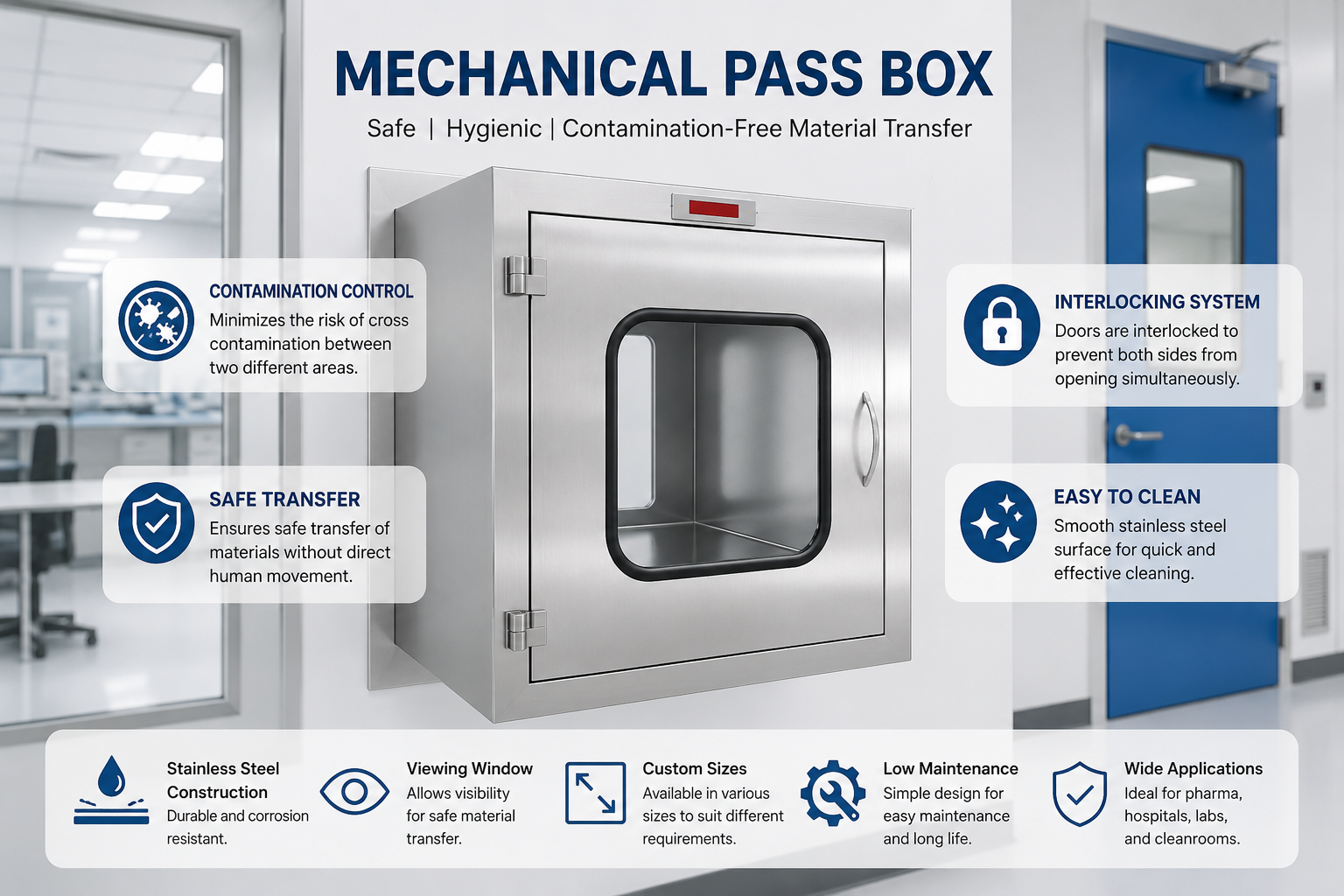
A mechanical pass box is a stainless-steel transfer chamber installed between two rooms. It allows materials to move safely from one area to another while minimizing contamination.
The system usually includes:
- Stainless steel body
- Transparent viewing window
- Mechanical door interlocking
- Smooth surface finish
- Easy-clean design
Unlike dynamic pass boxes, mechanical pass boxes do not use HEPA filters or airflow systems. They mainly rely on proper sealing and interlocking mechanisms to prevent both doors from opening at the same time.
Many industries prefer a Pass Box with Interlocking System because it improves safety and contamination control.
Types of Pass Boxes
1. Mechanical Pass Box
This is the most commonly used type for controlled environments with moderate contamination control requirements.
Best For:
- Hospitals
- Pharmaceutical units
- Laboratories
- Packaging areas
Key Features:
- Manual operation
- Mechanical interlocking
- Cost-effective
- Low maintenance
2. Dynamic Pass Box
Dynamic pass boxes use HEPA-filtered airflow to remove contaminants during transfer.
Best For:
- High-grade cleanrooms
- Sterile manufacturing
- Advanced pharmaceutical applications
Features:
- HEPA filtration
- UV light system
- Motor blower unit
- Higher contamination control
3. Electromagnetic Pass Box
An Electromagnetic Pass Box Manufacturer provides advanced systems where electronic interlocking prevents simultaneous door opening.
Advantages:
- Better operational safety
- Automatic locking mechanism
- Improved reliability
- Suitable for modern cleanrooms
Key Features of a High-Quality Mechanical Pass Box
Choosing the right manufacturer means understanding the important product features.
Stainless Steel Construction
Most high-quality pass boxes use SS 304 or SS 316 stainless steel for durability and corrosion resistance.
Mechanical Interlocking System
A proper interlocking system ensures only one door opens at a time, reducing contamination risks.
Smooth Internal Finish
A smooth finish prevents dust accumulation and makes cleaning easier.
Toughened Glass Windows
Viewing windows allow operators to monitor material transfer safely.
Easy Maintenance
Simple designs reduce maintenance requirements and operational downtime.
Custom Sizes
Many manufacturers offer customized dimensions depending on cleanroom layout and workflow.
Applications of Mechanical Pass Boxes
| Industry | Application |
|---|---|
| Pharmaceutical | Material transfer between clean zones |
| Hospitals | Sterile item transfer |
| Laboratories | Sample movement |
| Food Processing | Contamination-controlled transfer |
| Biotechnology | Controlled product handling |
| Electronics | Dust-sensitive component transfer |
A reliable Hospital Pass Box Supplier helps healthcare facilities maintain hygiene standards during equipment and medicine transfer.
Mechanical vs Electromagnetic Pass Box
| Feature | Mechanical Pass Box | Electromagnetic Pass Box |
|---|---|---|
| Locking System | Manual mechanical lock | Electronic lock |
| Power Requirement | No | Yes |
| Maintenance | Low | Moderate |
| Cost | Affordable | Higher |
| Operation | Simple | Advanced |
| Suitable For | Standard cleanrooms | High-end cleanrooms |
How to Choose the Right Mechanical Pass Box Manufacturer
1. Check Industry Experience
Choose manufacturers with experience in cleanroom equipment and contamination control systems.
2. Material Quality Matters
Ensure the pass box uses high-grade stainless steel with proper finishing.
3. Verify Interlocking System
A reliable Pass Box with Interlocking System improves operational safety.
4. Customization Availability
Every facility has different dimensions and workflow requirements.
5. Compliance & Standards
Look for products designed according to GMP and cleanroom standards.
6. After-Sales Support
Good technical support helps reduce downtime and maintenance issues.
A trusted Pass Box Supplier in India should provide installation guidance, customization support, and long-term service assistance.
Step-by-Step Buying Guide
Step 1: Identify Application Area
Determine whether the pass box is for hospitals, pharma, labs, or cleanrooms.
Step 2: Define Cleanroom Requirements
Check contamination control levels and pressure conditions.
Step 3: Select Pass Box Type
Choose between mechanical, dynamic, or electromagnetic models.
Step 4: Choose Material Grade
SS 304 and SS 316 are commonly preferred.
Step 5: Decide Size & Configuration
Select dimensions according to transfer material size.
Step 6: Evaluate Manufacturer Reputation
Check reviews, certifications, and project experience.
Common Mistakes to Avoid
Ignoring Material Quality
Low-quality steel may corrode quickly in controlled environments.
Choosing Incorrect Size
Improper dimensions affect workflow efficiency.
Overlooking Interlocking Safety
Poor locking systems can compromise contamination control.
Not Checking Cleanroom Compatibility
Always ensure the product matches cleanroom standards.
Ignoring Service Support
Lack of maintenance support can increase downtime later.
Expert Tips for Better Performance
Clean Regularly
Routine cleaning helps maintain hygiene and operational efficiency.
Train Operators
Proper handling reduces contamination risks and operational mistakes.
Perform Periodic Inspections
Check door alignment, seals, and locking systems regularly.
Choose Trusted Manufacturers
Experienced manufacturers understand industry-specific contamination control requirements better.
Match the Pass Box to Application
Not every facility needs advanced dynamic systems. Choose according to operational needs.
Frequently Asked Questions (FAQs)
1. What is the purpose of a mechanical pass box?
A mechanical pass box helps transfer materials between controlled environments while minimizing contamination risks and maintaining cleanroom integrity.
2. What is the difference between static and dynamic pass boxes?
Static pass boxes use simple transfer chambers without airflow systems, while dynamic pass boxes use HEPA-filtered air circulation for enhanced contamination control.
3. Which industries use pass boxes the most?
Pharmaceutical, healthcare, biotechnology, laboratories, food processing, and electronics industries commonly use pass boxes.
4. Why is an interlocking system important in a pass box?
A Pass Box with Interlocking System prevents both doors from opening simultaneously, reducing contamination between rooms.
5. Which material is best for pass boxes?
SS 304 and SS 316 stainless steel are widely preferred because they offer corrosion resistance, durability, and easy cleaning.
6. How do I choose the right pass box supplier?
Look for experience, customization options, material quality, cleanroom compliance, and after-sales support when selecting a Cleanroom Pass Box Supplier.
7. Are electromagnetic pass boxes better than mechanical pass boxes?
Electromagnetic pass boxes offer advanced electronic locking systems, while mechanical pass boxes are simpler, cost-effective, and easier to maintain.
Conclusion
A mechanical pass box is a critical component in maintaining hygiene, contamination control, and operational safety in controlled environments. From pharmaceutical cleanrooms to hospitals and laboratories, these systems improve material transfer efficiency while protecting sensitive environments.
Choosing the right Mechanical Pass Box Manufacturer ensures better durability, reliable interlocking systems, and long-term operational performance. Whether you need a basic transfer chamber or advanced cleanroom-compatible solutions, understanding your application requirements is the key to making the right investment.
By focusing on quality materials, proper interlocking systems, industry standards, and experienced suppliers, businesses can maintain safer and more efficient cleanroom operations for years to come.