

Hospital Furniture Manufacturer: How to Choose the Right Stainless-Steel Solutions for Modern Healthcare Facilities
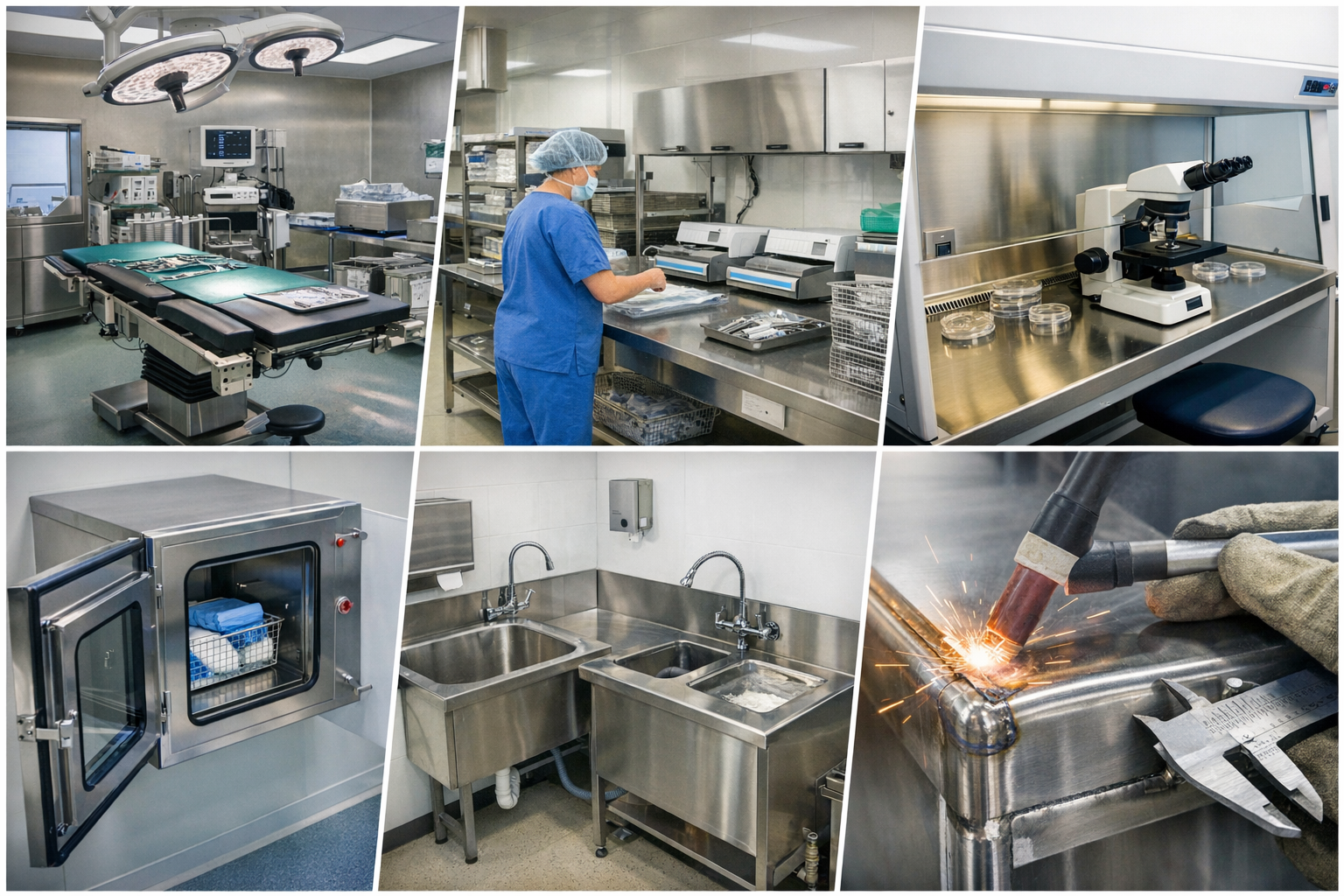
Healthcare infrastructure is evolving rapidly. Hospitals today are no longer just treatment centers; they are highly controlled environments where hygiene, efficiency, and workflow management directly impact patient outcomes.
Selecting the right hospital furniture manufacturer plays a crucial role in maintaining infection control standards, operational efficiency, and long-term durability.
From operation theaters and CSSD departments to IVF labs and cleanrooms, stainless steel furniture and equipment form the backbone of modern medical facilities. But how should decision-makers evaluate suppliers? What factors truly matter beyond pricing?
This article explores the practical considerations hospital administrators and project planners must evaluate before finalizing a manufacturer.
Why Stainless-Steel Furniture Is Critical in Healthcare Environments
Unlike conventional materials, stainless steel offers specific advantages essential in medical spaces:
- Non-porous surface prevents microbial growth
- Resistant to corrosion and chemical disinfectants
- Long service life with minimal maintenance
- Compatible with repeated sterilization processes
- Structurally stable under heavy loads
In critical zones such as operation theaters and sterile departments, furniture must withstand constant cleaning using aggressive disinfectants. Inferior materials deteriorate quickly, leading to contamination risks and replacement costs.
High-grade stainless steel (such as SS 304 or SS 316) ensures structural reliability and hygiene compliance.
What Defines a Reliable Hospital Furniture Manufacturer?
Choosing a manufacturer should involve more than reviewing catalogs. Healthcare planners should assess:
- Industry Experience
A manufacturer serving hospitals, pharma units, and cleanrooms understands regulatory standards and workflow requirements.
- Customization Capability
Every hospital layout is different. Equipment dimensions, sink configurations, trolley designs, and cabinet sizes must align with architectural drawings.
- Manufacturing Infrastructure
Advanced fabrication technology ensures smooth weld joints, rounded edges, and seamless surfaces that reduce bacterial accumulation.
- Compliance Awareness
Familiarity with NABH, infection control guidelines, and sterile processing standards is essential.
CSSD Infrastructure: The Backbone of Infection Control
Central Sterile Supply Departments (CSSD) demand highly specialized furniture systems. A professional CSSD furniture manufacturer provides:
- Washing and decontamination stations
- Instrument packing workstations
- Storage racks and basket systems
- Closed transport trolleys
- Stainless steel cabinets
Workflow separation between dirty, clean, and sterile zones must be maintained through ergonomic layout planning.
Well-designed CSSD furniture improves turnaround time for surgical instruments and minimizes cross-contamination risks.
Operation Theater Equipment: Precision and Hygiene
Operation theaters require specialized stainless steel solutions:
- Surgical scrub sinks with elbow, knee, or sensor operation
- Mayo trolleys and instrument trolleys
- Crash carts for emergency response
- OT cabinets and storage systems
- Laparoscopic instrument trolleys
Furniture in OT environments must be easy to sanitize, mobile when required, and resistant to harsh sterilization chemicals.
A dependable OT furniture manufacturer understands sterile zoning and ensures smooth finishes without exposed edges.
Washing and Disinfection Systems: Why They Matter
Hospital washing systems are often overlooked during procurement, but they directly influence infection control.
Critical equipment includes:
- Endoscope washing sinks
- Dialyzer washing sinks
- Dirty utility sinks
- Bed pan washing sinks
- Catheter cleaning stations
Design must allow proper drainage, splash control, and easy cleaning access.
Hospitals with inadequate washing infrastructure often struggle with hygiene audits and sterilization efficiency.
Cleanroom and Pass Box Systems for Pharma & Labs
Pharmaceutical and laboratory environments demand controlled material transfer systems.
Key equipment includes:
- Mechanical pass boxes
- Electromagnetic pass boxes
- UV sterilization pass boxes
- Stainless steel cleanroom furniture
Pass boxes help maintain air pressure integrity between controlled environments. Proper interlocking systems prevent cross-contamination.
Manufacturers supplying cleanroom equipment must understand airflow design, contamination control, and surface finish standards.
IVF Lab Furniture: Specialized Requirements
Fertility clinics require precision-focused furniture and workstations.
Important considerations include:
- Vibration-resistant work tables
- Hygienic stainless-steel surfaces
- Controlled storage cabinets
- Instrument washing stations
- Mobile trolleys
IVF labs demand stability and contamination control. Furniture design must support sensitive procedures and equipment placement.
Long-Term Cost vs Initial Cost: A Strategic View
Hospital procurement teams often focus heavily on upfront cost. However, stainless steel medical furniture should be evaluated based on:
- Lifespan
- Maintenance cost
- Repair frequency
- Structural stability
- Compliance durability
Low-cost alternatives frequently require replacement within a few years, increasing long-term operational expense.
Investing in durable, corrosion-resistant infrastructure reduces lifecycle cost.
Role of Engineering & Fabrication Quality
Precision fabrication determines product longevity.
Important technical aspects include:
- TIG welding quality
- Smooth grinding and finishing
- Edge rounding for safety
- Load-bearing capacity validation
- Drain slope accuracy in sinks
Poor fabrication results in micro gaps that trap contaminants. High-quality finishing reduces bacterial retention and simplifies cleaning.
How Decision-Makers Should Evaluate Suppliers
Hospital directors and biomedical engineers should:
- Review completed project portfolio
- Inspect manufacturing facility if possible
- Request material grade certification
- Evaluate customization process
- Compare delivery timelines
- Understand after-sales support structure
Professional manufacturers focus on long-term partnerships rather than one-time transactions.
Sustainable and Future-Ready Infrastructure
Modern healthcare infrastructure must also consider sustainability.
Stainless steel is:
- Recyclable
- Durable
- Environmentally safer compared to coated alternatives
- Suitable for long-term healthcare expansion
Hospitals planning capacity growth benefit from modular stainless-steel systems that can be reconfigured.
Conclusion
Selecting the right hospital furniture manufacturer is not merely a purchasing decision — it is an infrastructure strategy.
From CSSD departments and operation theaters to IVF labs and cleanrooms, stainless steel equipment forms the operational foundation of healthcare facilities.
Decision-makers must prioritize hygiene compliance, fabrication quality, customization capability, and long-term durability over short-term savings.
A structured approach to evaluating manufacturers ensures safer environments for patients, improved workflow efficiency for medical staff, and sustainable infrastructure for healthcare institutions.