

Endoscopy Sink: Complete Guide to Cleaning, Reprocessing, and Selection
Introduction
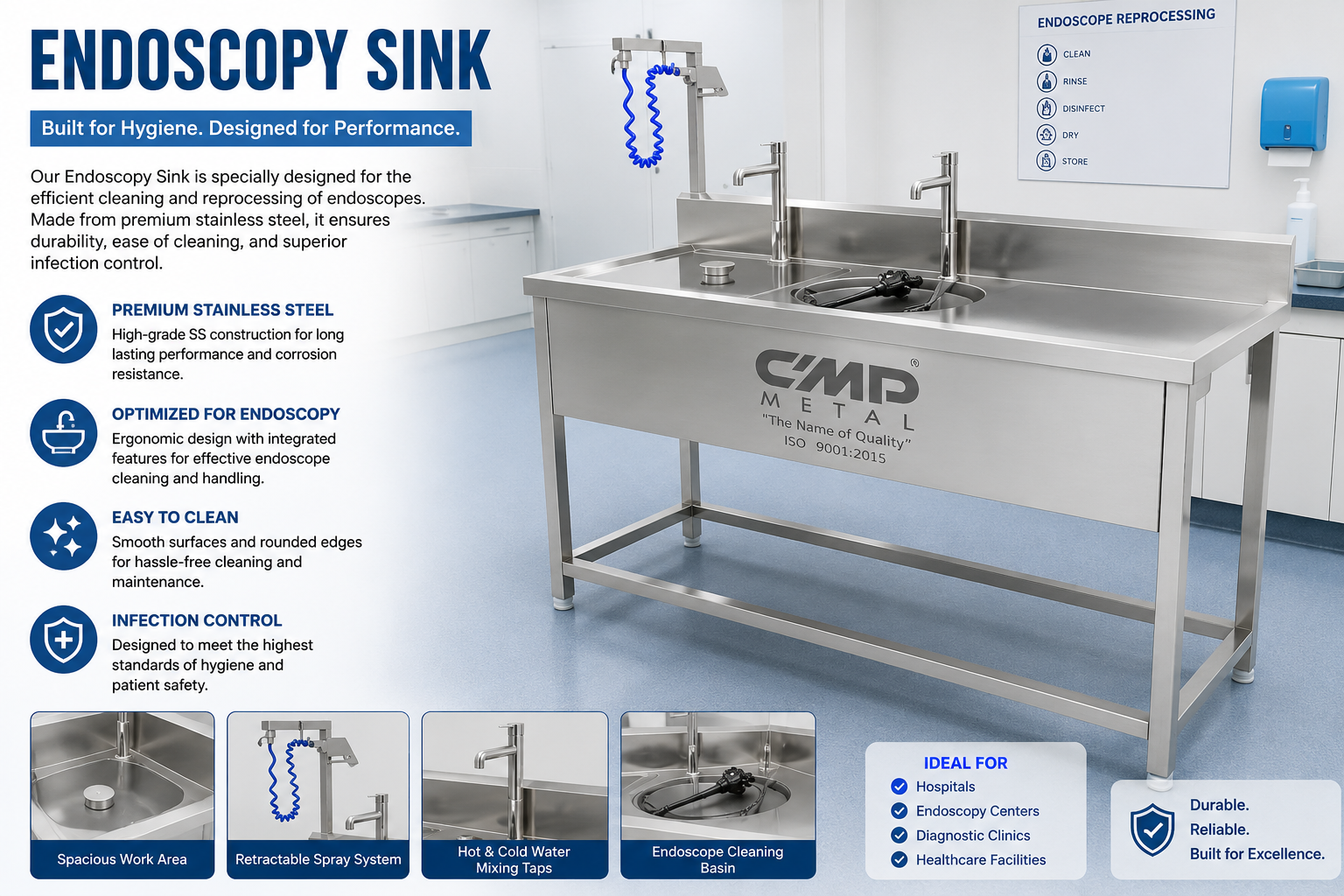
In healthcare environments, maintaining strict hygiene standards is essential, especially when dealing with delicate medical equipment such as endoscopes. An endoscopy sink plays a critical role in the cleaning, washing, and reprocessing of endoscopes before they are sterilized and prepared for the next procedure.
Improper cleaning can lead to contamination risks, equipment damage, and non-compliance with healthcare regulations. This is why healthcare facilities are increasingly investing in specialized endoscopy cleaning sinks designed to improve workflow, safety, and infection control.
In this guide, we’ll explore everything you need to know about endoscopy sinks, including their types, features, benefits, and how to choose the right solution for your facility.
Common Problems Healthcare Facilities Face
Healthcare professionals often encounter several challenges during endoscope cleaning and reprocessing:
- Inadequate sink dimensions for long endoscopes
- Risk of cross-contamination during manual cleaning
- Staff fatigue due to poor ergonomic design
- Difficulty maintaining proper workflow
- Compliance issues with infection control standards
- Damage to expensive endoscopes from improper handling
These challenges highlight the importance of using purpose-built endoscopy cleaning sinks instead of standard utility sinks.
Why an Endoscopy Sink Is Important
An endoscopy sink is specifically designed to support the cleaning and reprocessing workflow of flexible and rigid endoscopes.
Unlike conventional sinks, these systems provide:
- Dedicated washing compartments
- Ergonomic working height
- Chemical-resistant construction
- Improved infection control
- Enhanced workflow efficiency
A properly designed endoscopy reprocessing sink helps healthcare facilities meet regulatory standards while protecting both staff and patients.
Types of Endoscopy Sinks
1. Single Basin Endoscopy Sink
Suitable for:
- Small clinics
- Outpatient centers
- Low-volume procedures
Benefits:
- Compact footprint
- Cost-effective
- Easy installation
2. Double Basin Endoscopy Cleaning Sink
Suitable for:
- Medium-sized hospitals
- Gastroenterology departments
Benefits:
- Separate washing and rinsing areas
- Improved workflow
- Reduced contamination risk
3. Triple Basin Endoscopy Reprocessing Sink
Suitable for:
- High-volume endoscopy units
- Large healthcare facilities
Benefits:
- Cleaning compartment
- Rinsing compartment
- Final disinfection compartment
This configuration supports a complete endoscope reprocessing cycle.
4. Height Adjustable Endoscopy Sinks
Modern facilities increasingly prefer height adjustable endoscopy sinks because they improve staff comfort and productivity.
Advantages include:
- Reduced back strain
- Better ergonomics
- Suitable for multiple users
- Improved workplace safety
5. Wide Sinks Endoscopy Systems
Some facilities use large-diameter or extra-long endoscopes that require additional workspace.
Wide sinks endoscopy solutions provide:
- Larger basin dimensions
- Easier instrument handling
- Reduced equipment damage risk
- Better cleaning accessibility
Key Features to Look For
Stainless Steel Construction
- Corrosion resistance
- Easy cleaning
- Long service life
- Hygienic surfaces
Deep and Spacious Basins
Deep basins help prevent:
- Water splashing
- Chemical exposure
- Instrument damage
Integrated Spray Systems
- Faster cleaning
- Better debris removal
- Improved efficiency
Endoscope Holders
- Protect instruments
- Maintain organization
- Improve workflow
Seamless Design
- Minimizes bacterial growth
- Prevents dirt accumulation
- Simplifies cleaning
Features and Benefits of Endoscopy Cleaning Sinks
Enhanced Infection Control
Proper sink design reduces contamination risks and supports healthcare compliance.
Better Workflow Efficiency
Dedicated compartments allow staff to perform cleaning tasks more effectively.
Improved Staff Ergonomics
Especially with height adjustable endoscopy sinks, users experience less physical strain.
Longer Equipment Lifespan
Proper handling and support reduce accidental damage to expensive endoscopes.
Regulatory Compliance
Specialized sink systems help facilities align with healthcare guidelines and best practices.
Comparison: Standard Sink vs Endoscopy Sink
| Feature | Standard Utility Sink | Endoscopy Sink |
|---|---|---|
| Designed for Endoscopes | No | Yes |
| Multiple Cleaning Stages | Limited | Yes |
| Ergonomic Design | Basic | Advanced |
| Infection Control | Moderate | High |
| Instrument Protection | Low | High |
| Healthcare Compliance | Limited | Excellent |
| Workflow Optimization | Minimal | Significant |
Step-by-Step Buying Guide
Step 1: Assess Procedure Volume
Determine how many endoscopes are processed daily.
- Low volume: Single basin
- Medium volume: Double basin
- High volume: Triple basin
Step 2: Evaluate Available Space
Measure installation space and workflow pathways.
Step 3: Consider Ergonomics
If multiple technicians use the station, invest in height adjustable endoscopy sinks.
Step 4: Verify Material Quality
Choose medical-grade stainless steel construction for durability and hygiene.
Step 5: Check Basin Size
Ensure the sink can accommodate your longest endoscope.
Step 6: Review Compliance Requirements
Confirm the sink meets local healthcare and infection-control standards.
Step 7: Plan Future Growth
Select a system that can accommodate increasing procedure volumes.
Common Mistakes to Avoid
- Choosing a standard utility sink instead of an endoscopy sink
- Ignoring ergonomic requirements
- Selecting insufficient basin size
- Overlooking workflow design
- Focusing only on initial cost
Expert Tips
- Use dedicated endoscopy cleaning sinks for reprocessing.
- Separate dirty and clean workflow areas.
- Inspect sink surfaces and drainage systems regularly.
- Train staff on proper cleaning procedures.
- Invest in ergonomic workstations.
- Schedule preventive maintenance.
- Follow manufacturer cleaning guidelines.
Conclusion
An endoscopy sink is a critical component of infection prevention and endoscope reprocessing. Whether you require an endoscopy cleaning sink, an endoscopy reprocessing sink, or advanced height adjustable endoscopy sinks, choosing the right system improves efficiency, compliance, staff comfort, and patient safety.
Understanding basin configurations, material quality, ergonomic features, and workflow requirements helps healthcare facilities make informed long-term investments.
Frequently Asked Questions (FAQs)
What is an endoscopy sink?
An endoscopy sink is a specialized cleaning station designed for washing, rinsing, and reprocessing medical endoscopes.
Why are endoscopy cleaning sinks different from regular sinks?
They offer larger basins, ergonomic features, and dedicated compartments designed specifically for endoscope cleaning.
What is an endoscopy reprocessing sink?
It supports multiple stages of cleaning and rinsing before high-level disinfection or sterilization.
Are height adjustable endoscopy sinks worth it?
Yes. They improve ergonomics, reduce staff fatigue, and support safer working conditions.
What material is best for an endoscopy washing sink?
Medical-grade stainless steel is preferred due to its durability, corrosion resistance, and hygienic properties.
How many basins should an endoscopy sink have?
The required number depends on workflow needs, with high-volume facilities often preferring double or triple basin systems.
What are wide sinks endoscopy systems used for?
They provide additional workspace for larger or longer endoscopes, reducing handling risks and improving cleaning efficiency.