

Slop Hopper: Features, Benefits and Buying Guide for Hospitals
Introduction
Maintaining hygiene and managing liquid medical waste are important parts of hospital operations. A slop hopper provides a dedicated fixture for disposing of suitable liquid waste and cleaning reusable receptacles according to a healthcare facility’s procedures. Hospitals, clinics, and CSSD departments need equipment that supports efficient cleaning, reliable drainage, and routine sanitation. Choosing the right model can improve workflow and simplify maintenance. For healthcare buyers in Ahmedabad, Mumbai, Pune, Delhi NCR, Bengaluru, and other Indian cities, understanding the material, design, installation, and cleaning requirements helps ensure a suitable purchase.
Quick Summary for Google AI Overview
A slop hopper is a plumbing fixture used in healthcare facilities to dispose of suitable liquid waste and rinse compatible receptacles. Stainless steel models offer durability, corrosion resistance, and easy cleaning. Hospitals should evaluate material grade, flushing arrangements, drainage, installation space, and maintenance requirements before purchasing a hospital slop hopper.
What Is a Slop Hopper?
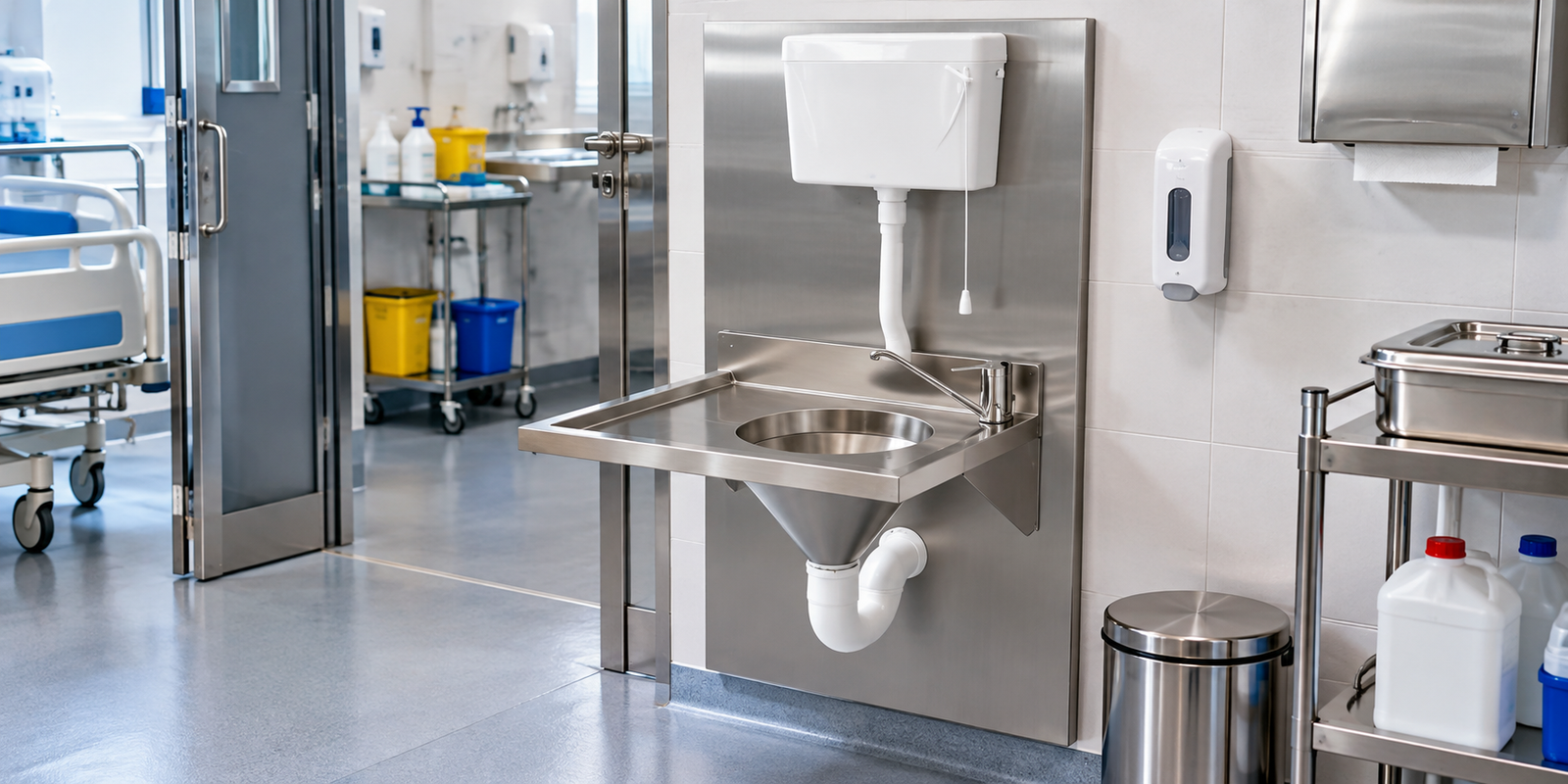
A slop hopper is a specialized sanitary fixture designed for the disposal of suitable liquid waste, such as waste from compatible bedpans and other receptacles, according to hospital protocols. It usually consists of a deep basin, flushing arrangement, and connected drainage system.
A Stainless Steel Slop Hopper is commonly considered for hospitals because stainless steel can withstand regular cleaning when the correct grade, finish, and maintenance practices are used. Models may feature wall-mounted or floor-mounted installation, depending on the room layout and plumbing requirements.
Why Is a Slop Hopper Important?
Healthcare facilities need designated areas for handling contaminated receptacles and liquid waste. A properly selected Hospital Slop Hopper supports organized disposal and cleaning workflows.
It can help staff manage waste in designated utility rooms rather than using general-purpose sinks. This separation supports hygiene procedures and reduces the risk of inappropriate use of handwashing or equipment-cleaning stations.
The Centers for Disease Control and Prevention recommends appropriate environmental cleaning and disinfection practices in healthcare settings. A slop hopper supports facility workflow, but it does not replace staff training, personal protective equipment, or established infection-control procedures.
Key Features of a Medical Slop Hopper
When evaluating a Medical Slop Hopper, consider these practical features:
- Stainless steel construction: Select a suitable grade, such as SS 304 where appropriate, based on cleaning chemicals and operating conditions.
- Deep basin design: Provides space for handling compatible receptacles and helps contain splashes when used correctly.
- Integrated flushing system: Supports rinsing and waste movement when connected to a suitable water supply.
- Reliable drainage: Proper outlet sizing and plumbing connections help reduce blockages and drainage problems.
- Smooth, accessible surfaces: Reduce cleaning effort and make routine inspection easier.
- Wall or floor mounting: Allows the fixture to suit the available space and installation design.
- Custom configurations: Selected manufacturers can offer dimensions and connection arrangements suited to project requirements.
Actual features vary by model, so buyers should verify the technical drawing and product specification before ordering.
Benefits of a Hospital Slop Hopper
A suitable hopper sink offers several operational advantages:
- Improved workflow: Gives staff a designated location for handling appropriate liquid waste and receptacles.
- Simpler maintenance: Accessible surfaces and suitable materials support routine cleaning.
- Long-term durability: Correctly selected stainless steel can resist corrosion under appropriate operating conditions.
- Better space planning: Wall-mounted and floor-mounted options help accommodate different utility-room layouts.
- Consistent hygiene procedures: Dedicated fixtures help staff follow defined waste-handling and cleaning protocols.
- Project flexibility: Custom dimensions and plumbing arrangements can support new installations and renovation projects.
These benefits depend on proper installation, routine maintenance, and correct use.
Applications of Slop Hoppers
Slop hoppers are commonly considered for:
- Hospital dirty utility rooms and designated disposal areas
- Nursing homes and long-term care facilities
- Multispecialty hospitals and medical colleges
- Selected clinical support areas
- Healthcare infrastructure and turnkey hospital projects
- Facilities where compatible receptacle disposal is included in the waste-management workflow
CSSD departments should assess their specific reprocessing workflow before selecting a slop hopper. It is not a substitute for dedicated instrument-washing or sterilization equipment.
How to Choose the Right Slop Hopper
Hospital purchase managers, biomedical engineers, and project consultants should assess the following factors before placing an order.
- Check the material grade: Confirm whether SS 304 or another grade is appropriate for the intended environment and cleaning chemicals.
- Measure the installation area: Review room dimensions, user access, mounting height, and service clearance.
- Verify plumbing requirements: Confirm water supply, flushing arrangement, drainage outlet, and compatibility with existing connections.
- Review cleaning requirements: Choose a design with accessible surfaces and follow the manufacturer’s maintenance instructions.
- Compare technical specifications: Check dimensions, basin depth, finish, mounting method, included accessories, and installation scope.
- Evaluate supplier support: Request technical drawings, quotations, delivery details, warranty terms, and customization options.
For projects across Ahmedabad, Vadodara, Surat, Rajkot, Mumbai, Pune, Delhi NCR, Hyderabad, Chennai, and other Indian cities, comparing complete specifications is more useful than comparing prices alone.
Common Mistakes to Avoid
Avoid selecting a model based only on its purchase price or appearance. Incorrect dimensions, incompatible drainage, and unsuitable material grades can create installation and maintenance problems.
Buyers should also avoid assuming that every slop hopper includes a flushing tank, tap, or other accessories. Confirm the scope of supply in writing. Finally, do not overlook cleaning access, plumbing coordination, delivery schedules, or the facility’s infection-control requirements.
Conclusion
A well-selected slop hopper can support organized waste handling, practical cleaning, and reliable utility-room operations. Hospitals should consider material quality, basin design, plumbing compatibility, maintenance, and supplier support before making a purchase.
CMP METAL manufactures stainless steel hospital furniture and healthcare equipment. Hospital procurement teams, contractors, and distributors can contact CMP METAL to discuss slop hopper dimensions, available configurations, technical specifications, and quotations for their projects.
Frequently Asked Questions
1. What is a slop hopper used for?
A slop hopper is a dedicated sanitary fixture used in healthcare facilities to dispose of suitable liquid waste and rinse compatible receptacles according to established procedures. It is commonly installed in designated dirty utility areas. The correct model depends on the facility’s waste-handling workflow, plumbing arrangement, cleaning procedures, and installation requirements.
2. What are the benefits of a stainless steel slop hopper?
A stainless steel slop hopper can offer durability, corrosion resistance, and surfaces that are practical to clean when the correct material grade and finish are selected. It can support daily utility-room operations and routine maintenance. Its actual service life depends on fabrication quality, exposure to chemicals, installation, and adherence to the manufacturer’s cleaning instructions.
3. Where is a hospital slop hopper installed?
Hospital slop hoppers are generally installed in designated dirty utility rooms or other approved clinical waste-handling areas. They may also be specified for nursing homes, medical colleges, and selected healthcare facilities. The location should provide appropriate staff access, water supply, drainage, and cleaning arrangements while following the facility’s infection-control and waste-management procedures.
4. How do I choose the right medical slop hopper?
Start by assessing the available space, intended use, material grade, basin dimensions, flushing arrangement, and drainage connections. Check whether the unit is wall-mounted or floor-mounted and whether accessories are included. Request technical drawings, installation requirements, warranty details, and a written quotation so your procurement team can compare suitable models accurately.
5. Can a slop hopper be customized?
Customization may be available depending on the manufacturer and model. Options can include overall dimensions, mounting arrangements, basin configuration, and plumbing connections. Buyers should provide the installation drawing and required specifications before production. Confirm which changes are technically feasible, whether accessories are included, and how customization affects cost and delivery time.
6. Which material is best for a hospital slop hopper?
SS 304 stainless steel is a common option for healthcare fixtures because it provides useful corrosion resistance and cleanability under suitable conditions. However, the best material depends on exposure to cleaning chemicals, water quality, operating conditions, and maintenance practices. Ask the manufacturer to confirm the material grade and suitability for the intended application.
7. What is the difference between a slop hopper and a regular sink?
A regular sink is generally designed for handwashing, general washing, or a specific cleaning task. A slop hopper is intended for designated liquid-waste disposal and handling compatible receptacles. Their basin shapes, flushing arrangements, and plumbing requirements can differ. Healthcare facilities should keep these functions appropriately separated according to their hygiene and waste-handling procedures.
8. What information should I provide when requesting a quotation?
Provide the required quantity, installation location, preferred material grade, approximate dimensions, mounting type, flushing requirements, and drainage details. Include drawings or photographs of the installation area when available. Also request the delivery schedule, warranty terms, technical specifications, and a clear list of included accessories to help avoid procurement and installation delays.