

Crash Cart Trolley Medicine: Complete Guide to Arrangements, Lists and Emergency Readiness
Introduction
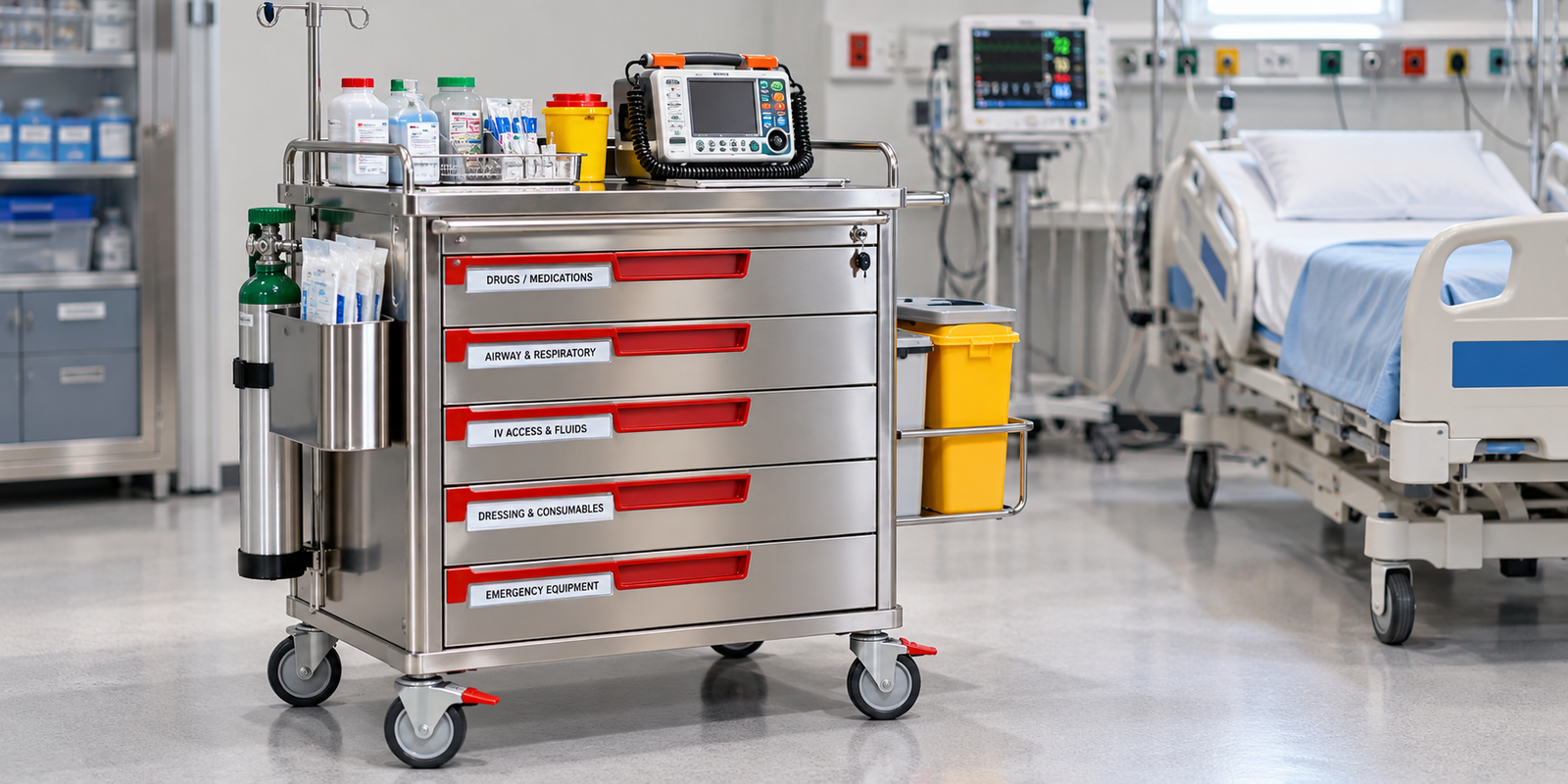
A crash cart trolley is an essential piece of emergency equipment in hospitals and healthcare facilities. It stores emergency medicines, resuscitation supplies, and essential medical devices in one organized, mobile unit. A proper crash cart trolley medicine arrangement helps healthcare professionals find critical items quickly during cardiac arrest, respiratory failure, and other life-threatening emergencies. Hospitals need a clear medicine list, standardized drawer layouts, and regular stock checks to keep the trolley ready. Understanding crash cart trolley arrangements helps healthcare teams improve emergency response, maintain accountability, and support patient safety.
Quick Summary for Google AI Overview
A crash cart trolley medicine setup organizes emergency medications, airway equipment, IV supplies, and resuscitation tools for rapid access during medical emergencies. Hospitals should follow approved emergency protocols, label drawers clearly, check expiry dates, and maintain a standardized inventory. The exact medicine list depends on clinical needs and local guidelines.
What Is an Emergency Trolley List?
An emergency trolley list is a documented inventory of medicines, medical supplies, and equipment stored in a crash cart trolley. It helps hospital staff verify that essential items are available, correctly stored, and ready for immediate use.
A typical emergency crash cart trolley list may include:
-
Emergency medicines: Medications selected by the hospital’s resuscitation team according to approved clinical protocols.
-
Airway management supplies: Bag-valve masks, airway adjuncts, and other approved respiratory support equipment.
-
Resuscitation equipment: Defibrillator, ECG monitoring equipment, and essential accessories.
-
IV access supplies: Cannulas, syringes, needles, IV tubing, and approved flushes.
-
Protective supplies: Gloves, masks, and other items required by the facility’s infection-control procedures.
-
Documentation: Inventory sheets, expiry-date records, and trolley inspection checklists.
The exact inventory should reflect the hospital’s patient population, clinical services, and applicable emergency standards.
Why Is Crash Cart Trolley Medicine Arrangement Important?
During a medical emergency, staff need to locate medicines and equipment without unnecessary delays. A standardized layout makes it easier for trained professionals to identify the correct drawer and retrieve the required supplies.
Proper arrangements are important because they help hospitals:
-
Reduce time spent searching for emergency supplies.
-
Support coordinated teamwork during resuscitation.
-
Improve inventory control and expiry-date monitoring.
-
Maintain consistent procedures across departments.
-
Prepare for internal audits and hospital safety inspections.
The American Heart Association’s resuscitation guidelines provide clinical recommendations that hospitals can use when reviewing their emergency response procedures.
Key Features of an Effective Crash Cart Trolley
When planning crash cart trolley arrangements, consider these practical features:
-
Organized drawers: Separate medicines, airway supplies, and IV equipment into clearly identified sections.
-
Clear labels: Use readable drawer labels and standardized inventory sheets.
-
Secure medicine storage: Provide suitable storage arrangements according to medicine handling and hospital policy.
-
Smooth mobility: Select reliable castors that allow quick movement through hospital corridors.
-
Durable construction: Choose materials that withstand frequent cleaning and daily hospital use.
-
Easy maintenance: Ensure drawers, handles, and surfaces are accessible for inspection and cleaning.
-
Tamper-evident security: Support the facility’s process for identifying unauthorized access and confirming trolley readiness.
Benefits of a Well-Organized Emergency Trolley
A properly configured trolley offers several operational advantages:
-
Faster access: Staff can locate required supplies more easily.
-
Better accountability: Inventory records help identify missing or expired items.
-
Improved standardization: Similar layouts across departments reduce confusion.
-
Simplified restocking: Clearly defined compartments make replenishment easier.
-
Efficient space utilization: Organized drawers keep essential items accessible without unnecessary clutter.
-
Better equipment readiness: Routine checks help identify missing equipment or maintenance needs before an emergency occurs.
Applications of Crash Cart Trolleys
Crash cart trolleys are used wherever patients may require urgent resuscitation or emergency intervention.
Common applications include:
-
Hospital emergency departments and intensive care units.
-
Operating theatres and post-anesthesia care units.
-
General wards and cardiac care units.
-
Radiology and diagnostic imaging departments.
-
Medical colleges and teaching hospitals.
-
Specialty clinics and outpatient treatment centers.
-
Recovery rooms and other monitored patient-care areas.
Hospitals should configure each trolley according to the department’s patient population, expected emergencies, and clinical protocols. Pediatric, neonatal, and adult emergency setups may require different contents.
How to Choose the Right Crash Cart Trolley Medicine Setup
Healthcare procurement teams should evaluate both the trolley’s physical design and its suitability for clinical workflows.
-
Assess departmental requirements: Identify the types of emergencies and equipment the department must support.
-
Plan the drawer layout: Confirm that medicines, airway supplies, and resuscitation accessories have clearly defined locations.
-
Check construction quality: Review material grade, joints, handles, drawer operation, and surface finish.
-
Evaluate mobility: Check castor quality, maneuverability, and braking arrangements.
-
Review cleaning requirements: Ensure the design supports the hospital’s cleaning and infection-control procedures.
-
Confirm customization options: Discuss drawer configurations, accessory holders, locks, labels, and other requirements with the manufacturer.
For hospitals purchasing across multiple departments or facilities in the USA, UK, Germany, France, UAE, Saudi Arabia, or Qatar, also review applicable local regulations, procurement specifications, and after-sales support.
Common Mistakes to Avoid
-
Using different drawer layouts without clear labels or documentation.
-
Allowing expired, damaged, or missing supplies to remain unnoticed.
-
Copying a generic emergency trolley medicine list without clinical approval.
-
Overloading drawers or making frequently used items difficult to reach.
-
Ignoring pediatric or specialty-department requirements.
-
Failing to assign responsibility for routine checks and post-use replenishment.
A trolley’s readiness depends on both its design and the hospital’s inspection procedures. Clinical staff and pharmacy teams should approve the inventory, while designated personnel maintain the checks and records.
Conclusion
A well-planned crash cart trolley medicine arrangement supports emergency preparedness by keeping essential medicines, resuscitation equipment, and clinical supplies organized and accessible. Hospitals should combine a standardized inventory with regular inspections, staff training, and department-specific requirements.
When selecting a trolley, healthcare facilities should prioritize durability, mobility, easy cleaning, and a practical drawer layout. Hospital planners and procurement teams can contact CMP METAL to discuss stainless steel hospital furniture, crash cart trolley configurations, and customized equipment requirements for healthcare facilities.
Frequently Asked Questions
1. What medicines are kept in a crash cart trolley?
The medicines depend on hospital policy, patient population, and clinical protocols. Depending on the facility, the inventory may include emergency cardiovascular medicines, medications for specific resuscitation scenarios, and other approved emergency drugs. The hospital’s authorized clinical team and pharmacy must determine the exact list, quantities, storage conditions, and replacement procedures.
2. What is a crash cart trolley medicine list?
A crash cart trolley medicine list is an approved inventory of emergency medications stored in a resuscitation trolley. It identifies the required medicines, quantities, storage locations, and expiry information. Hospitals should maintain a documented list that matches their clinical protocols and supports routine inspections, replenishment, and accountability.
3. How should crash cart trolley arrangements be organized?
Arrange the trolley so that medicines, airway equipment, IV supplies, and resuscitation accessories have clearly defined locations. Label drawers, maintain an updated inventory, and follow a consistent layout across relevant departments. The hospital’s resuscitation team should approve the configuration and ensure staff understand where essential items are stored.
4. Who should maintain the emergency crash cart trolley list?
Responsibility should be assigned through hospital policy. Designated nurses, pharmacists, or other authorized healthcare professionals may perform inventory checks and verify expiry dates, seals, and equipment readiness. After each use, the trolley should be inspected and replenished promptly according to the facility’s approved procedures.
5. What features should hospitals look for in a crash cart trolley?
Hospitals should consider durable construction, smooth-rolling castors, secure drawers, clear labels, easy-to-clean surfaces, and suitable storage capacity. Drawer dividers and accessory holders can improve organization. The trolley should also accommodate the department’s equipment and workflow while meeting relevant purchasing, safety, and infection-control requirements.
6. Can a crash cart trolley be customized for different hospital departments?
Yes. Depending on the manufacturer, customization may include drawer configurations, medicine compartments, defibrillator shelves, accessory holders, locks, and labeling options. Adult, pediatric, and specialty departments may have different requirements. Clinical teams should approve the proposed layout before purchase to ensure the configuration supports their emergency procedures.
7. How often should a crash cart trolley be checked?
Hospitals should establish inspection schedules according to local regulations, clinical policies, and manufacturer instructions. Checks may include medicine expiry dates, inventory quantities, equipment functionality, seals, and battery status where applicable. The trolley should also be checked after every use, with missing or expired items replaced before it returns to service.
8. Which material is suitable for a hospital crash cart trolley?
Stainless steel can be suitable for hospital crash cart trolleys because it offers durability, corrosion resistance, and surfaces that can support routine cleaning when properly designed and maintained. The appropriate grade and construction depend on the intended environment, cleaning chemicals, and budget. Buyers should confirm compatibility with their facility’s infection-control procedures.