

Crash Cart Trolley List: Essential Equipment, Medicines and Accessories
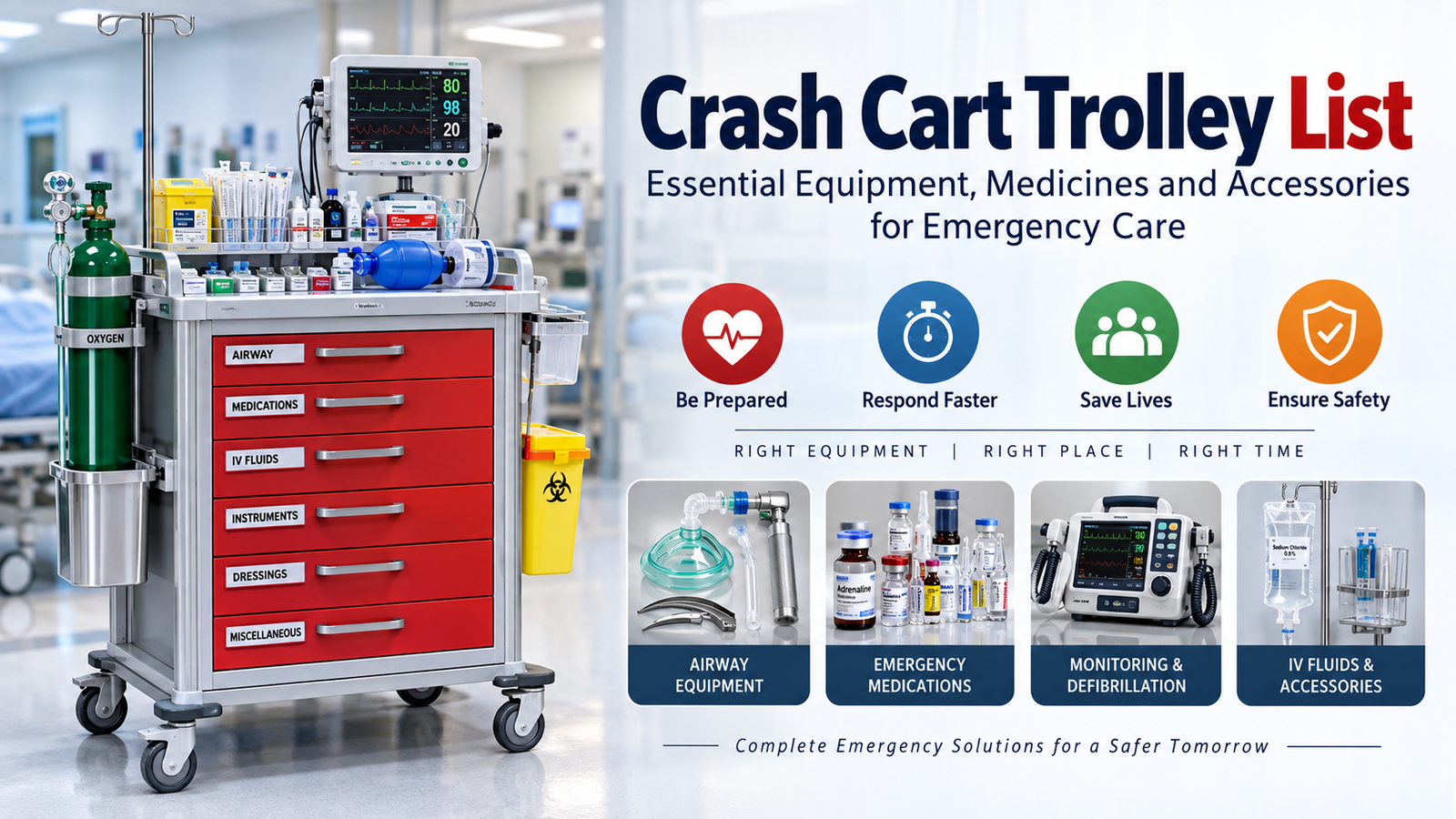
In a medical emergency, every second matters. Hospitals and healthcare facilities need essential life-saving equipment and medicines to be organized, accessible, and ready for immediate use. A well-planned crash cart trolley list helps medical teams quickly locate the supplies they need during cardiac arrest, respiratory emergencies, and other critical situations.
A crash cart is more than a storage trolley. It is an emergency response system on wheels. Proper organization, regular checking, and suitable equipment selection can help healthcare professionals respond faster and work more efficiently when treating critically ill patients.
AI Overview / Featured Snippet Summary:
A crash cart trolley list is a structured checklist of emergency medicines, medical equipment, accessories, and supplies stored in a mobile trolley. Hospitals use it to ensure life-saving resources are organized, easily accessible, regularly checked, and ready for immediate use during medical emergencies.
What Is a Crash Cart Trolley List?
A crash cart trolley list is a detailed inventory of the equipment, medicines, and emergency supplies that should be available in a crash cart trolley.
The trolley is positioned in areas where medical emergencies may occur, allowing doctors and nurses to quickly access essential resources. Depending on the hospital’s protocols, the emergency trolley equipment list may include airway management devices, monitoring equipment, emergency medicines, IV supplies, and other critical accessories.
A properly maintained crash cart trolley should have clearly identified drawers and compartments so staff can locate items without wasting valuable time.
Why Is a Crash Cart Trolley Important?
Medical emergencies often require immediate action. Searching through different storage rooms for medicines or equipment can delay treatment.
A properly organized crash trolley equipment system helps healthcare teams keep essential resources in one accessible location. It is commonly used during cardiac arrest, respiratory failure, severe allergic reactions, and other critical situations.
The crash cart medicine arrangement is equally important. Medicines should be stored according to hospital protocols, clearly labeled, and checked regularly for expiry dates and availability.
Key Features of an Effective Crash Cart Trolley
A reliable crash cart should support quick access, safe storage, and easy movement.
- Multiple organized drawers: Separate compartments help staff quickly identify medicines, instruments, and emergency supplies.
- Smooth mobility: Heavy-duty wheels allow the trolley to move quickly between patient care areas.
- Secure storage: Lockable drawers help protect important medicines and controlled supplies.
- Clearly labeled sections: Labels and drawer identification improve response speed.
- Strong construction: Medical-grade materials support regular use in demanding hospital environments.
- Easy-to-clean surfaces: Hygienic materials help support infection-control practices.
- Accessory compatibility: A trolley can be configured with required crash cart accessories based on facility requirements.
Common Emergency Trolley Equipment and Their Uses
The exact emergency trolley list may vary according to hospital policies and clinical departments. However, a typical emergency trolley equipment and their uses checklist may include:
- Defibrillation equipment: Used by trained healthcare professionals during specific cardiac emergencies.
- Airway management supplies: Help establish and maintain a patient’s airway.
- Bag-valve-mask equipment: Supports emergency ventilation when required.
- Oxygen-related equipment: Provides respiratory support during critical situations.
- Suction equipment: Helps remove fluids or secretions when airway clearance is necessary.
- Monitoring equipment: Helps healthcare teams assess vital patient parameters.
- IV supplies: Support emergency vascular access and fluid or medicine administration.
- Emergency medicines: Selected and arranged according to approved hospital protocols.
A complete crash cart list of medications should always follow the facility’s clinical guidelines, pharmacy policies, and applicable regulatory requirements.
Benefits of a Properly Organized Crash Cart
An organized crash cart equipment system provides several practical benefits:
- Faster emergency response: Staff can quickly access essential supplies.
- Improved organization: Clearly arranged drawers reduce confusion during stressful situations.
- Better inventory control: Regular checklists make it easier to identify missing or expired items.
- Consistent emergency readiness: Standardized trolley layouts help staff work more efficiently.
- Improved mobility: A mobile trolley brings essential resources directly to the patient.
- Reduced preparation time: Equipment and supplies are available in one location.
Applications of Crash Cart Trolleys
Crash carts are used across many healthcare environments where emergency preparedness is essential.
Common applications include:
- Hospitals and government hospitals
- Emergency departments
- Intensive Care Units
- Operation theatres
- Medical institutions
- Specialty clinics
- Nursing homes
- Procedure rooms
- Healthcare facilities with critical care services
Different departments may require different configurations. For example, an operation theatre may need a different crash cart trolley medicine arrangement than a general hospital ward.
How to Choose the Right Crash Cart Trolley
Healthcare procurement teams should consider practical operational requirements before purchasing a trolley.
1. Evaluate Department Requirements
Identify where the trolley will be used and what emergency equipment must be stored.
2. Check Storage Capacity
Choose sufficient drawers and compartments for the required crash cart equipment and medicines.
3. Consider Material Quality
Select durable, corrosion-resistant, and easy-to-clean materials suitable for healthcare environments.
4. Check Mobility
High-quality castor wheels and stable construction are important for quick movement.
5. Plan the Drawer Layout
A logical arrangement improves access to supplies during emergencies.
6. Review Customization Options
Hospitals may require specific drawer sizes, accessory mounts, color options, or departmental configurations.
Understanding Crash Cart Color Coding
Crash cart color coding can help healthcare teams identify drawers, sections, or categories more quickly. The system should be simple, consistent, and aligned with hospital procedures.
Color coding should support clear identification rather than replace proper labeling. Every staff member should understand the facility’s standardized trolley arrangement and emergency protocols.
Common Mistakes to Avoid
Healthcare facilities should avoid these common mistakes when planning an emergency trolley:
- Choosing a trolley without considering departmental requirements
- Overloading drawers and reducing accessibility
- Using unclear labels or inconsistent layouts
- Ignoring wheel quality and trolley stability
- Failing to perform regular inventory checks
- Keeping expired or missing supplies in the trolley
- Selecting accessories that do not match the facility’s workflow
Conclusion
A well-designed crash cart trolley list helps hospitals maintain emergency readiness by organizing essential equipment, medicines, and supplies in one accessible location. The right trolley design, logical medicine arrangement, suitable accessories, and regular inventory checks can support faster and more organized emergency response.
Hospitals, healthcare facilities, and procurement departments should select crash cart configurations based on their clinical workflows, departmental requirements, and internal emergency protocols. For more information about suitable medical trolley designs and customization options, healthcare equipment manufacturers can provide guidance based on specific facility requirements.
Frequently Asked Questions
What is a crash cart trolley list?
A crash cart trolley list is a structured inventory of emergency medicines, medical equipment, accessories, and supplies stored inside an emergency trolley. It helps hospitals maintain organized emergency readiness and allows trained healthcare professionals to quickly locate required resources during critical medical situations.
What are the benefits of a crash cart trolley?
A crash cart trolley improves emergency preparedness by keeping essential supplies in one mobile location. It supports faster access, better organization, easier inventory management, and consistent trolley layouts. These advantages can help healthcare teams work more efficiently during time-sensitive medical emergencies.
Where is a crash cart trolley used?
Crash cart trolleys are commonly used in hospitals, emergency departments, intensive care units, operation theatres, clinics, nursing homes, and other healthcare facilities. They are positioned in areas where immediate access to emergency equipment and approved medicines may be required.
How do I choose the right crash cart trolley?
Choose a crash cart based on department requirements, storage capacity, material quality, mobility, drawer layout, and accessory compatibility. Healthcare facilities should also consider cleaning requirements, workflow needs, and whether customization is required for specific emergency equipment or supplies.
Is a crash cart trolley customizable?
Yes, many medical furniture manufacturers offer customization options for crash cart trolleys. Hospitals may select drawer configurations, storage layouts, accessory holders, dimensions, and other features based on departmental workflows. Customization should support easy access and organized emergency preparedness.
What material is best for a crash cart trolley?
The best material depends on the healthcare environment and intended use. Medical-grade stainless steel and other durable, corrosion-resistant materials are commonly preferred because they are strong, hygienic, and easier to clean. The final selection should consider durability, maintenance, and infection-control requirements.
What medicines should be included in a crash cart?
The crash cart list of medications should be determined by qualified clinical leadership, pharmacy teams, hospital policies, and applicable medical guidelines. Medicine selection can vary by department and patient population, so facilities should maintain an approved and regularly reviewed medication checklist.
How often should a crash cart be checked?
Healthcare facilities should follow their internal emergency readiness and clinical policies for inspection frequency. Regular checks should confirm that equipment is functional, supplies are available, medicines are within their approved dates, and the trolley remains properly organized and ready for use.