

Scrub Sink: Complete Guide for Hospitals and Operation Theatres
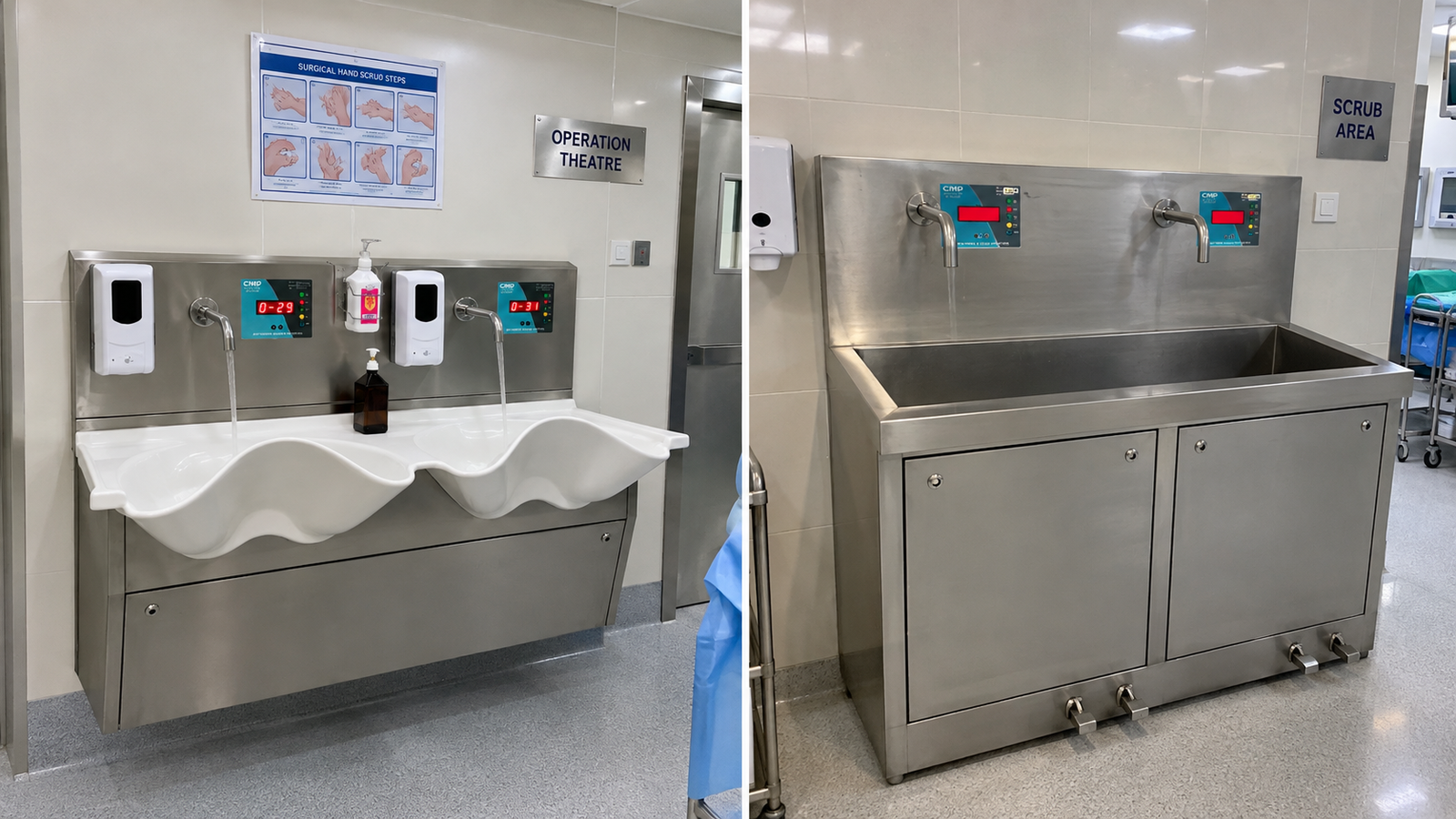
Maintaining proper hand hygiene before surgical procedures is a critical part of healthcare practice. A scrub sink provides a dedicated washing station where surgeons and clinical staff can perform surgical hand preparation before entering sterile areas. Unlike a standard wash basin, it is designed to support the workflow and hygiene requirements of operation theatres and other controlled clinical environments.
For hospitals and healthcare facilities, choosing the right surgical washing solution involves considering design, material, capacity, accessibility, and installation requirements. A well-planned scrub area in OT can help create a more organized and efficient workflow for surgical teams.
AI Overview / Featured Snippet Summary:
A scrub sink is a specialized hand-washing station used in hospitals and operation theatres for surgical hand preparation before sterile procedures. It provides a dedicated scrub-up area, supports hygienic workflows, and helps healthcare facilities create an organized washing space for surgical teams.
What Is a Scrub Sink?
A scrub sink, also known as a surgical sink or surgical scrub sink, is a specially designed washing station installed in healthcare facilities.
It is primarily used by surgeons, nurses, and other authorized clinical staff for surgical hand and arm preparation before procedures. The sink is usually located in or near the scrub room in hospital environments, particularly around operation theatres.
A typical scrub sink in hospital settings may include one or more washing stations, depending on the number of healthcare professionals who need to use the facility at the same time.
Why Is a Scrub Sink Important?
Before entering a sterile surgical environment, healthcare professionals need access to an appropriate area for hand preparation according to the facility’s established clinical protocols.
A dedicated scrub area in operation theatre helps separate surgical preparation activities from general washing activities. This supports better workflow planning and easier movement between preparation and sterile zones.
In real-world hospital environments, a scrub sink is important because it can:
- Provide a dedicated location for surgical hand preparation
- Support organized movement of surgical teams
- Reduce dependence on general-purpose wash basins
- Help create a structured scrub-up workflow
- Support healthcare facility hygiene and infection-control practices
The exact procedures followed at the scrub up area in hospital should always comply with the facility’s approved policies and applicable healthcare standards.
Key Features of a Scrub Sink
A well-designed scrub sink for hospital use should meet practical healthcare requirements.
- Stainless steel construction: Provides durability and supports regular cleaning in demanding clinical environments.
- Deep washing bowls: Offer sufficient space for comfortable hand and arm washing.
- Multiple stations: Allow more than one healthcare professional to prepare at the same time.
- Hands-free operation options: Help support touch-minimized workflows where required.
- Smooth, hygienic surfaces: Make routine cleaning and maintenance easier.
- Splash-conscious design: Helps manage water within the designated washing area.
- Wall-mounted or floor-supported options: Allow the sink design to match available installation space.
These features make the operation theatre wash basin different from an ordinary commercial or residential sink.
Benefits of Using a Surgical Scrub Sink
Installing a dedicated surgical scrub sink provides several practical benefits for hospitals and healthcare facilities.
- Supports organized workflows: Surgical teams have a dedicated preparation area before procedures.
- Improves operational efficiency: Multiple washing stations can reduce waiting time for staff.
- Provides durable infrastructure: Healthcare-grade construction supports frequent institutional use.
- Makes cleaning easier: Smooth surfaces and practical designs simplify routine maintenance.
- Supports facility planning: Dedicated scrub areas help organize movement around operation theatres.
- Offers flexible configurations: Different sizes and station layouts can suit various hospital requirements.
For large healthcare projects, standardized scrub sinks can also help maintain consistency across multiple operation theatres.
Applications of Scrub Sinks
A scrub sink is commonly used in healthcare environments where surgical or controlled clinical procedures take place.
Typical applications include:
- Hospital operation theatres
- Surgical departments
- Specialty hospitals
- Government hospitals
- Ambulatory surgical facilities
- Procedure rooms
- Medical institutions
- Specialized healthcare centres
The design and number of stations required depend on the facility layout and the number of healthcare professionals using the scrub area in hospital.
How to Choose the Right Scrub Sink
Healthcare procurement teams should consider several practical factors before selecting a scrub sink.
1. Evaluate the Number of Users
Determine whether a single, two-station, or multi-station sink is needed based on the operation theatre workflow.
2. Check Material Quality
Choose durable, corrosion-resistant materials that can withstand frequent cleaning and institutional use. Stainless steel is commonly selected for medical environments.
3. Consider the Available Space
Measure the scrub room in hospital carefully to ensure the sink fits without affecting staff movement.
4. Select the Right Operating System
Consider manual, knee-operated, foot-operated, sensor-based, or other suitable control systems according to facility requirements.
5. Review Bowl and Splash Design
The bowl size and overall design should support comfortable use while helping manage water around the washing area.
6. Ask About Customization
Hospitals may require specific dimensions, numbers of stations, plumbing arrangements, or accessories to match project requirements.
Common Mistakes to Avoid
One common mistake is selecting a standard wash basin instead of a purpose-designed surgical sink. Hospital requirements are often different from commercial applications.
Another mistake is choosing the wrong number of stations. A small sink may create delays when several staff members need to prepare simultaneously.
Procurement teams should also avoid ignoring plumbing and installation requirements. Proper site planning is essential before finalizing the equipment.
Finally, do not focus only on the initial purchase cost. Material durability, cleaning requirements, workflow suitability, and long-term maintenance are equally important.
Conclusion
A scrub sink is an important part of operation theatre and surgical department infrastructure. It provides a dedicated area for surgical hand preparation and supports organized clinical workflows before sterile procedures.
Hospitals, government healthcare facilities, and medical institutions should evaluate their available space, user requirements, material preferences, and operating systems before selecting a suitable model. Working with an experienced healthcare equipment manufacturer can help procurement teams choose a configuration that fits their specific project and operational requirements.
Frequently Asked Questions
What is a scrub sink?
A scrub sink is a specialized washing station used in hospitals and surgical areas for hand and arm preparation before sterile procedures. It is usually installed in or near an operation theatre scrub area and is designed to support the practical workflow requirements of surgical teams.
What are the benefits of a scrub sink?
A scrub sink provides a dedicated area for surgical hand preparation, supports organized staff movement, improves operational efficiency, and offers durable infrastructure for frequent healthcare use. Multi-station models can also allow several professionals to prepare at the same time, depending on the facility’s workflow.
Where is a scrub sink used?
Scrub sinks are mainly used in hospital operation theatres, surgical departments, specialty hospitals, procedure rooms, and other healthcare environments where surgical hand preparation is required. They are generally installed in designated scrub-up areas located close to controlled clinical or surgical spaces.
How do I choose the right scrub sink?
Consider the number of users, available installation space, material quality, number of washing stations, operating method, plumbing requirements, and cleaning needs. Healthcare procurement teams should also review the operation theatre workflow before selecting a model to ensure it meets practical requirements.
Is a scrub sink customizable?
Yes, many healthcare equipment manufacturers offer customization based on project requirements. Options may include the number of stations, dimensions, operating systems, splash design, plumbing arrangements, and additional accessories. Customization can help the sink fit the available space and operational needs of a healthcare facility.
What material is best for a surgical scrub sink?
Stainless steel is commonly preferred because it is durable, corrosion-resistant, and easy to clean. The exact material grade and construction should be selected according to the healthcare environment, expected usage, cleaning procedures, and project specifications.
What is the difference between a scrub sink and a normal wash basin?
A scrub sink is designed specifically for surgical or clinical hand preparation, while a normal wash basin is generally intended for routine hand washing. Scrub sinks often provide larger washing areas, healthcare-focused construction, and configurations that support the workflow of operation theatre personnel.