

Surgical Scrub Sink: Complete Guide for Hospitals and Operation Theatres
Introduction
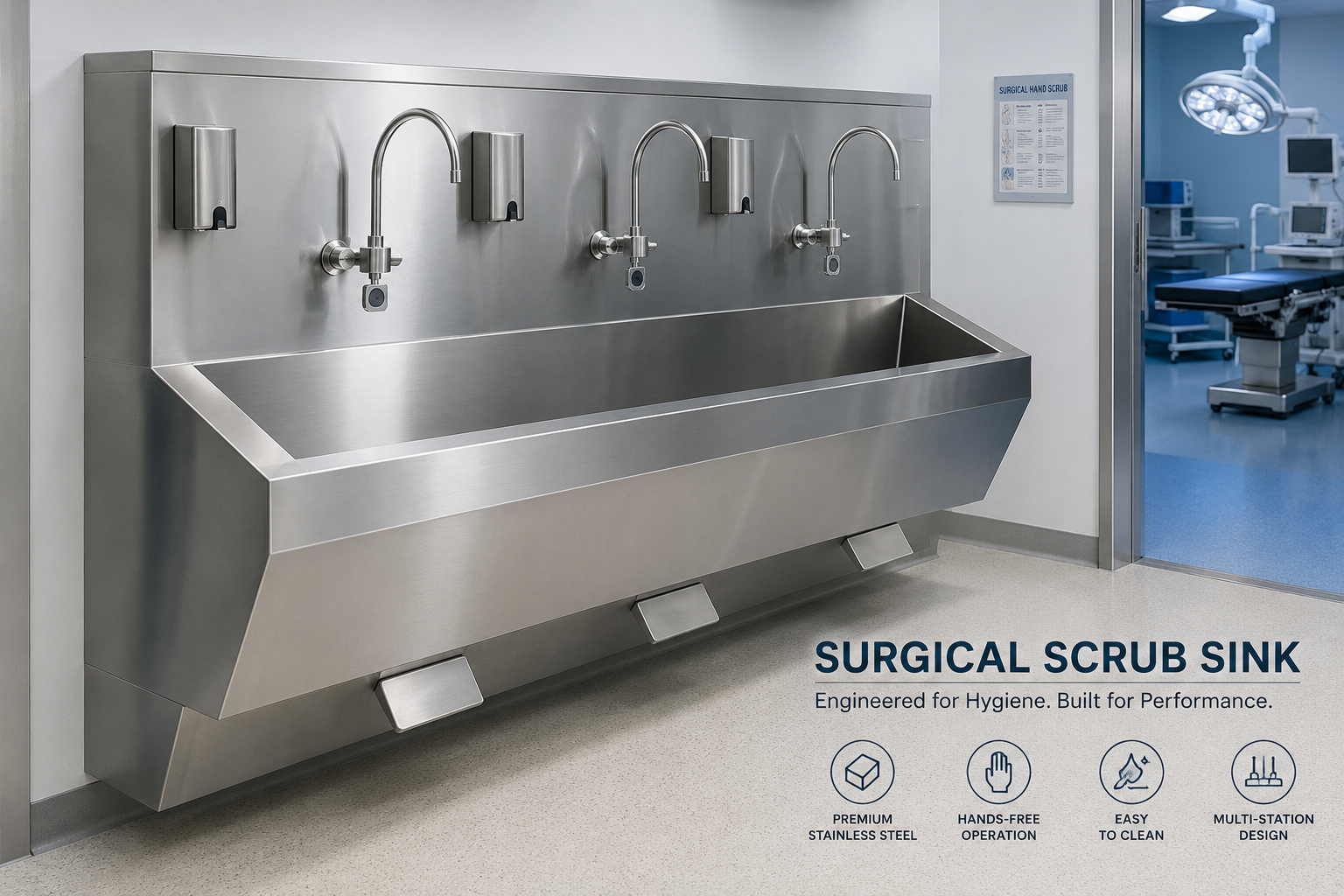
A surgical scrub sink is an essential fixture in hospitals and operation theatres where surgical teams must perform thorough hand and arm washing before procedures. Unlike ordinary wash basins, these sinks are designed around infection-control practices, easy cleaning, and hands-free operation. Choosing the right scrub station can improve hygiene, workflow, and staff convenience. For hospitals, government healthcare facilities, CSSD departments, and procurement teams, factors such as material, configuration, surgical scrub sink dimensions, mounting style, and maintenance should be evaluated before purchase.
A surgical scrub sink provides a dedicated, hygienic area for surgical hand and arm washing before procedures. Its design supports infection-control practices through easy-to-clean surfaces, suitable fixtures, adequate space, and hands-free operation.
What is a Surgical Scrub Sink?
A surgical scrub sink is a specially designed medical sink used by surgeons, nurses, and operating-room staff for preoperative hand and arm washing. It is commonly installed near operating theatres and other controlled healthcare areas.
A typical scrub sink may include deep or shaped basins, splash-control features, hands-free or elbow-operated controls, and smooth stainless-steel construction. Unlike a standard clinical basin, its design focuses on reducing contamination risks while allowing staff to wash comfortably.
The term OT scrub sink is commonly used for models installed specifically in or near operation theatres.
Why is it Important?
Hand hygiene is a fundamental part of infection prevention in healthcare. A dedicated scrub station gives surgical staff an appropriate location for hand and arm preparation before entering a procedure.
It also helps maintain an organized workflow. A properly positioned sink can reduce unnecessary movement and provide sufficient space for multiple users when the department requires simultaneous preparation.
In hospitals with high procedure volumes, durable construction and easy cleaning can also reduce maintenance interruptions.
Key Features
- Stainless-steel construction: Provides a durable, corrosion-resistant surface suitable for demanding healthcare environments.
- Smooth welded surfaces: Minimize areas where dirt and contaminants can accumulate and make routine cleaning easier.
- Hands-free controls: Foot, knee, elbow, or sensor-operated controls can reduce contact with tap handles.
- Deep basin design: Helps control splashing during surgical hand washing.
- Rounded corners: Make cleaning easier and reduce difficult-to-reach areas.
- Wall-mounted configuration: Saves floor space and can simplify cleaning beneath the sink.
- Multiple-user options: Larger configurations can support more than one healthcare worker at a time.
- Suitable drainage: Proper drainage helps prevent standing water and supports hygienic operation.
Benefits
- Supports consistent surgical hand-washing procedures.
- Helps healthcare teams maintain better hygiene practices.
- Reduces unnecessary touch points when hands-free fixtures are used.
- Stainless steel offers durability for frequent daily use.
- Smooth surfaces make cleaning and routine disinfection easier.
- Appropriate sizing improves staff comfort and workflow.
- Wall-mounted models can make floor cleaning more convenient.
- Custom configurations can help match specific operation-theatre layouts.
Applications
Surgical scrub sinks are primarily used in operation theatres, surgical departments, hospitals, government hospitals, medical institutions, clinics, and specialized healthcare facilities.
They can also be useful in areas where controlled hand-washing is required before clinical procedures. CSSD departments and hospital equipment procurement teams may evaluate scrub stations as part of broader infection-control and medical infrastructure projects.
A Dscrub sink may also be used as a product or model naming variation for dedicated surgical scrub applications, depending on the manufacturer or project specification.
How to Choose the Right Surgical Scrub Sink
Before purchasing, hospitals and procurement teams should consider these factors:
- Check the installation area: Measure available wall and floor space before selecting the sink configuration.
- Review surgical scrub sink dimensions: Confirm basin width, depth, height, number of stations, and clearance requirements against the project layout.
- Choose suitable material: Stainless steel is generally preferred for its durability, cleanability, and resistance to corrosion.
- Consider the control system: Select sensor, knee, elbow, or foot-operated controls according to infection-control requirements and user preference.
- Evaluate drainage and plumbing: Make sure the drain arrangement and water connections match the existing infrastructure.
- Compare total cost: When reviewing the surgical scrub sink price, consider material grade, fixtures, installation, customization, and long-term maintenance rather than comparing purchase price alone.
Common Mistakes to Avoid
One common mistake is choosing a sink based only on price. A lower surgical scrub sink price may not represent the best long-term value if the construction, fixtures, or finish are unsuitable for heavy healthcare use.
Another mistake is ignoring installation measurements. Incorrect dimensions can create workflow problems or require costly modifications.
Buyers should also avoid specifying ordinary residential or commercial sinks for surgical applications without checking whether their design supports the intended healthcare environment. Finally, procurement teams should confirm material specifications, drainage requirements, operating controls, warranty terms, and customization options before placing an order.
Conclusion
A well-designed surgical scrub sink provides healthcare professionals with a dedicated area for surgical hand and arm washing while supporting hygiene, workflow, durability, and easy maintenance. Hospitals should assess the sink’s construction, controls, dimensions, installation method, drainage, and expected workload before purchasing.
For projects with specific space or workflow requirements, healthcare facilities can contact the manufacturer to discuss suitable configurations, technical specifications, customization, and installation requirements.
Frequently Asked Questions
What is a surgical scrub sink?
A surgical scrub sink is a healthcare-grade sink designed for surgical staff to wash their hands and arms before procedures. It is commonly installed near operation theatres and other controlled clinical areas. Features such as stainless-steel construction, smooth surfaces, suitable basin depth, and hands-free controls support hygienic and practical use.
What are the benefits of a surgical scrub sink?
A surgical scrub sink provides a dedicated location for preoperative hand washing and can support infection-control workflows. Hands-free controls reduce unnecessary contact with fixtures, while stainless-steel surfaces are durable and relatively easy to clean. Proper sizing and configuration can also improve staff comfort and efficiency.
Where is an OT scrub sink used?
An OT scrub sink is primarily used in or near operation theatres where surgical teams prepare before procedures. It may also be installed in surgical departments and other healthcare areas requiring dedicated clinical hand-washing facilities. The exact location should be planned according to the hospital’s workflow and infrastructure.
How do I choose the right surgical scrub sink?
Start by measuring the installation area and determining how many users need to wash simultaneously. Then review surgical scrub sink dimensions, stainless-steel specifications, basin design, controls, drainage, mounting type, and maintenance requirements. Procurement teams should also compare complete project costs instead of evaluating the product price alone.
Is a surgical scrub sink customizable?
Yes, many surgical scrub sinks can be configured according to project requirements. Depending on the manufacturer, customization may include dimensions, number of basins or stations, mounting arrangement, tap configuration, operating controls, drainage, and other fabrication details. Hospitals should provide their layout and technical requirements before finalizing a customized model.
What material is best for a surgical scrub sink?
Stainless steel is widely preferred for surgical scrub sinks because it provides durability, corrosion resistance, and a smooth surface that can be cleaned efficiently. The appropriate stainless-steel grade, thickness, finish, welding quality, and fabrication should be selected according to the healthcare facility’s operating environment and specification requirements.