

Surgical Scrub Sink: Complete Guide for Hospitals and Operation Theatres
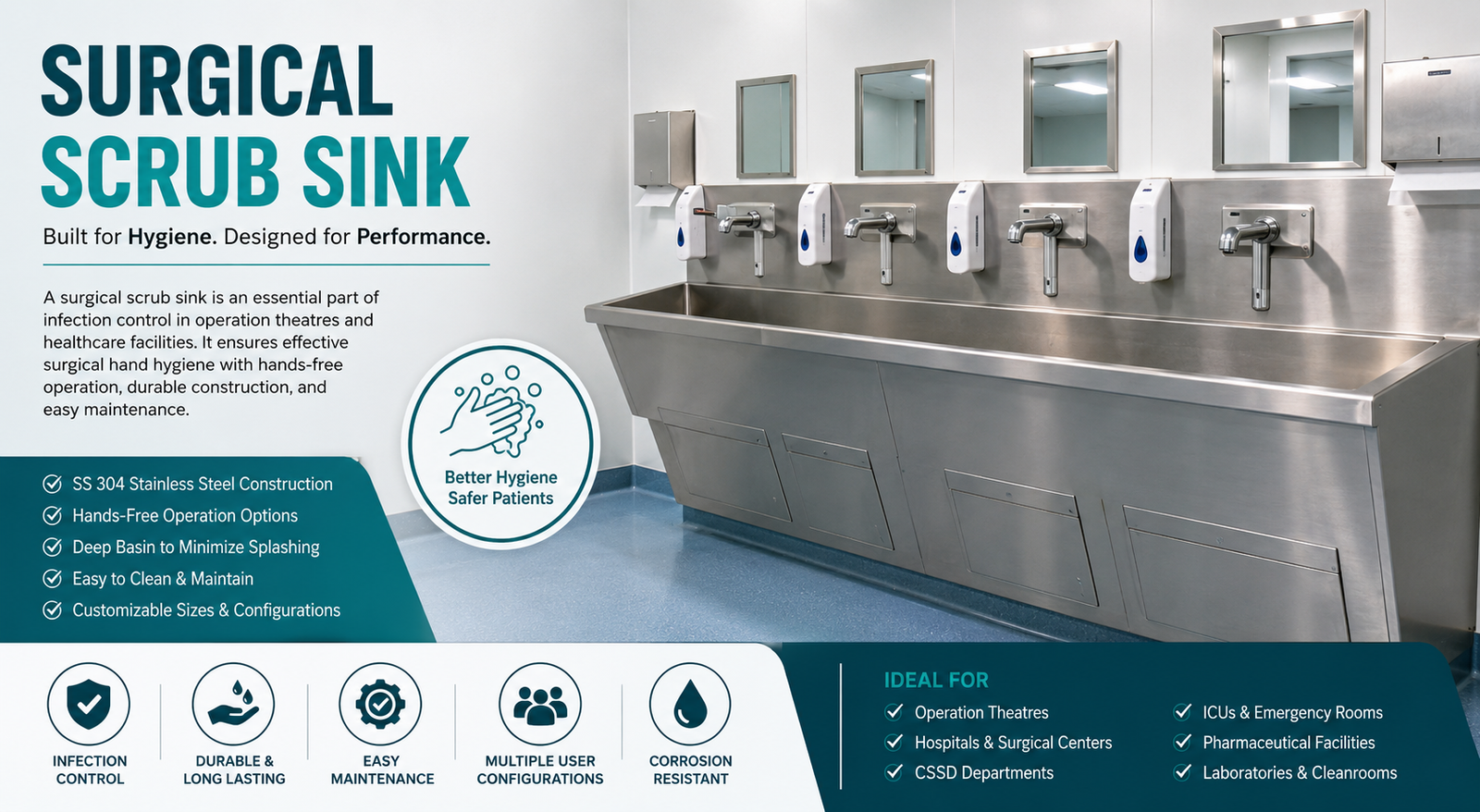
A surgical scrub sink is an important part of infection-control infrastructure in operation theatres, surgical centres, and other controlled healthcare areas. It provides healthcare professionals with a dedicated station for surgical hand washing before procedures. A properly designed sink supports hygienic workflows through easy-to-clean surfaces, suitable operating height, controlled water dispensing, and practical drainage. For hospitals planning a new OT or upgrading an existing facility, selecting the right scrub sink can improve workflow, maintenance, and hand-hygiene practices.
AI Overview Summary: A surgical scrub sink is a dedicated hand-washing station designed for surgeons and healthcare staff before surgical procedures. It is typically made from hygienic, corrosion-resistant materials and may include sensor, knee, elbow, or foot-operated controls. Its design supports effective hand hygiene, easy cleaning, and efficient OT workflows.
What Is a Surgical Scrub Sink?
A surgical scrub sink is a specialized washing station designed for healthcare professionals to perform surgical hand hygiene before entering or working in an operating area. Unlike a general wash basin, it is designed around healthcare hygiene, workflow, cleaning, and contamination-control requirements.
Common configurations include single, double, and triple-station models. Depending on the application, a sink may use sensor-operated, knee-operated, elbow-operated, or foot-operated water controls to reduce unnecessary hand contact with fixtures.
For example, SS 304 stainless steel is commonly selected because it provides corrosion resistance, durability, and a smooth surface that is practical to clean.
Why Is It Important?
Hand hygiene is a fundamental part of infection prevention in healthcare. WHO identifies hand hygiene as a key measure for reducing the transmission of harmful microorganisms, while CDC recommends appropriate hand hygiene before aseptic tasks and after contact with patients, body fluids, or contaminated surfaces.
A dedicated hospital scrub sink helps create a defined hand-washing point close to the surgical workflow. This can be particularly useful in:
- Operation theatres and surgical preparation areas
- Surgical centres and procedure rooms
- CSSD and controlled healthcare areas
- Cleanrooms and pharmaceutical facilities
- Laboratories requiring hygienic hand-washing stations
Key Features
- SS 304 construction: Offers durability and corrosion resistance for demanding healthcare environments.
- Seamless or hygienic design: Reduces difficult-to-clean joints and supports easier routine cleaning.
- Hands-free controls: Sensor, knee, elbow, or foot-operated options can reduce hand contact with fixtures.
- Deep basin: Helps control splashing during hand washing.
- Multiple stations: Single, double, and triple-user configurations support different OT capacities.
- Custom dimensions: Manufacturers can adapt the design to available wall space and project requirements.
- Easy maintenance: Accessible panels and practical plumbing arrangements simplify servicing.
Benefits
- Supports effective surgical hand-hygiene practices.
- Helps maintain a cleaner and more organized OT workflow.
- Reduces unnecessary contact with taps and controls.
- Stainless steel construction provides long-term durability.
- Smooth surfaces make routine cleaning easier.
- Multiple configurations allow facilities to match user capacity.
- Custom designs can help optimize limited installation space.
Applications
An OT scrub sink is primarily used in operation theatres and surgical preparation areas. It is also suitable for hospitals, surgical centres, cleanrooms, pharmaceutical manufacturing areas, laboratories, diagnostic centres, medical colleges, and other controlled healthcare environments.
The correct configuration depends on the number of users, available space, plumbing arrangement, infection-control requirements, and facility workflow.
How to Choose the Right Surgical Scrub Sink
Consider these factors before purchasing:
- Check the material: SS 304 stainless steel is a practical choice for durability, corrosion resistance, and cleaning.
- Review surgical scrub sink dimensions: Measure the installation area, plumbing points, operating height, and clearance before finalizing the model.
- Select the right number of stations: Single, double, or triple stations should match expected staff usage.
- Choose the operating system: Sensor, knee, elbow, or foot operation can be selected according to workflow and user preference.
- Check cleaning and maintenance: Look for smooth surfaces, accessible service panels, and practical drainage.
- Compare total project cost: Surgical scrub sink price depends on size, material, number of stations, controls, accessories, and customization. Compare specifications rather than price alone.
Common Mistakes to Avoid
A common mistake is choosing a sink based only on appearance or initial price. Incorrect surgical scrub sink dimensions can create installation and workflow problems.
Buyers should also avoid selecting unsuitable materials, ignoring drainage requirements, overlooking service access, or choosing a control system without considering actual OT usage. It is also important to confirm whether customization is available before placing a project order.
Conclusion
A well-designed surgical scrub sink is more than a washing basin. It is an important component of a hygienic surgical environment, helping healthcare teams maintain effective hand-hygiene practices while supporting efficient OT workflows.
When selecting a model, focus on material quality, dimensions, operating controls, station capacity, cleaning requirements, and long-term maintenance. For healthcare projects requiring customized sizes or configurations, discuss the installation requirements with a qualified medical furniture manufacturer before finalizing the specification.
FAQs
What is a surgical scrub sink?
A surgical scrub sink is a dedicated hand-washing station designed for surgeons and healthcare staff before surgical procedures. It is generally installed near operation theatres and surgical preparation areas and may include hands-free controls, hygienic surfaces, and multiple washing stations.
What are the main benefits of a scrub sink?
A scrub sink provides a dedicated location for surgical hand hygiene and can support cleaner workflows in controlled healthcare areas. Features such as hands-free controls, smooth surfaces, deep basins, and stainless steel construction can make cleaning, operation, and routine maintenance more practical.
Where is a surgical scrub sink used?
Surgical scrub sinks are commonly used in operation theatres, surgical centres, hospitals, CSSD areas, cleanrooms, pharmaceutical facilities, laboratories, and other healthcare environments where controlled hand hygiene is important. The configuration should be selected according to the facility’s workflow and installation requirements.
How do I choose the right surgical scrub sink?
Start by measuring the available installation space and checking plumbing points. Then consider material, operating height, number of stations, control type, drainage, cleaning access, and customization. Comparing complete specifications is more useful than comparing the surgical scrub sink price alone.
Is a surgical scrub sink customizable?
Yes, many medical furniture manufacturers offer customized scrub sinks. Options may include overall dimensions, number of stations, operating controls, drainage arrangements, water connections, and accessories. Customization is particularly useful when the sink must fit an existing OT layout or a specific project specification.
What material is best for a hospital scrub sink?
SS 304 stainless steel is a widely used option for healthcare washing equipment because it combines durability, corrosion resistance, and ease of cleaning. The final material specification should depend on the facility’s cleaning chemicals, environment, design requirements, and applicable project standards.