

Laparoscopic Instrument Trolley: Safe and Efficient Surgical Instrument Storage
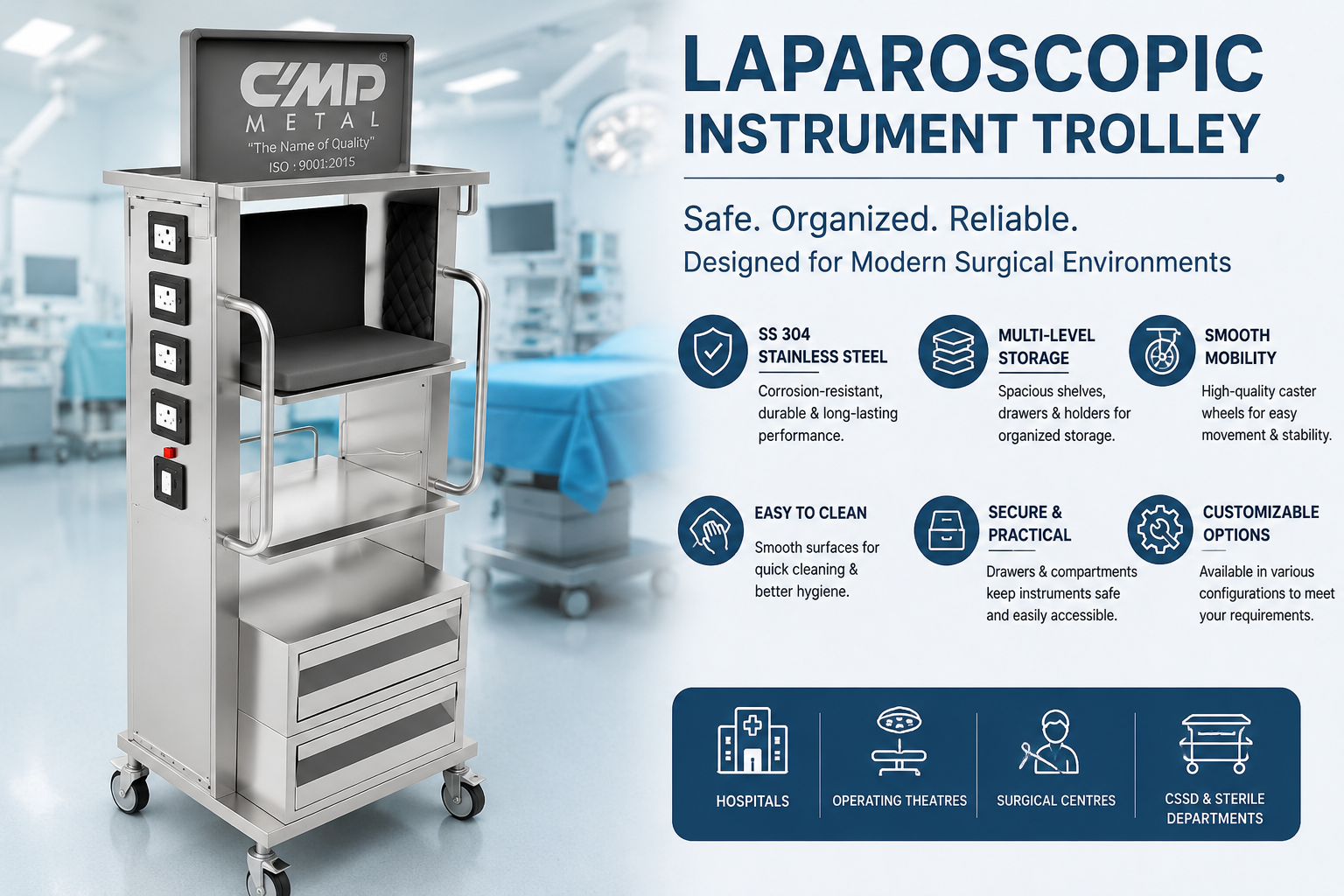
Laparoscopic procedures require precise instruments, careful handling, and efficient organization inside the operating theatre. A Laparoscopic Instrument Trolley provides a dedicated mobile solution for arranging, transporting, and accessing laparoscopic instruments during surgical procedures. Designed with hygiene, durability, and workflow efficiency in mind, these trolleys can help surgical teams keep instruments organized while reducing unnecessary movement. For hospitals and healthcare facilities, selecting the right trolley is important because material quality, construction, mobility, cleaning, and storage capacity can directly affect day-to-day operating efficiency.
What is a Laparoscopic Instrument Trolley?
A Laparoscopic Instrument Trolley is a mobile medical trolley designed to store, organize, and transport laparoscopic surgical instruments and related accessories within healthcare facilities.
It typically includes multiple shelves, trays, drawers, or dedicated holders to keep instruments arranged and accessible. Depending on the design, the trolley may be used in operating theatres, preparation areas, sterile zones, or instrument-processing workflows.
A well-designed Laparoscopic Trolley supports organized instrument handling while allowing healthcare staff to move required equipment efficiently between designated areas.
Why is it Important?
Laparoscopic instruments can include delicate graspers, scissors, dissectors, needle holders, and other specialized equipment. Poor organization can make instrument identification slower and increase the risk of unnecessary handling.
A dedicated trolley gives surgical staff a defined location for instruments and accessories. It can also support smoother movement between preparation, operating, and instrument-handling areas.
Because reusable surgical instruments require appropriate cleaning and reprocessing, trolley design should also support hygienic handling and easy cleaning. The FDA notes that reusable medical devices require appropriate cleaning followed by disinfection or sterilization according to their intended use and instructions.
Key Features
- SS 304 stainless steel: Provides a durable, corrosion-resistant surface suitable for demanding healthcare environments.
- Multiple storage levels: Shelves or trays provide organized space for different laparoscopic instruments and accessories.
- Smooth-rolling casters: Medical-grade wheels allow controlled movement around operating and preparation areas.
- Easy-clean surfaces: Smooth construction helps staff clean and maintain the trolley efficiently.
- Rounded edges: Properly finished edges can improve handling safety and reduce difficult-to-clean corners.
- Strong frame: A rigid structure supports regular hospital use and repeated loading.
- Optional drawers or trays: These can provide additional organization for smaller instruments and accessories.
Benefits
- Improves organization of laparoscopic instruments.
- Reduces time spent searching for required equipment.
- Makes instrument transportation more convenient.
- Supports a cleaner and more structured operating-room workflow.
- Stainless-steel construction can provide long-term durability.
- Easy-to-clean surfaces simplify routine maintenance.
- Custom configurations can accommodate different surgical requirements.
- Mobile construction allows the trolley to be positioned where it is needed.
Applications
A laparoscopic instruments trolley can be used in several healthcare environments, including:
- Operating theatres and surgical rooms
- General surgery departments
- Laparoscopic and minimally invasive surgery centres
- Day-care and ambulatory surgery centres
- Hospitals and specialty surgical facilities
- Central Sterile Supply Departments (CSSD)
- Instrument preparation and storage areas
- Medical training and procedure facilities
Proper instrument handling and reprocessing are important parts of infection-prevention practices. WHO guidance highlights the importance of appropriate decontamination and reprocessing of medical devices, including cleaning, disinfection and sterilization processes.
How to Choose the Right Laparoscopic Instrument Trolley
Before purchasing a trolley, hospitals and procurement teams should evaluate the following factors:
- Material quality: Choose a suitable stainless-steel grade, such as SS 304, when corrosion resistance, durability, and hygiene are priorities.
- Storage configuration: Check whether the trolley has enough shelves, trays, drawers, or holders for the instruments used by your surgical team.
- Dimensions: Ensure the trolley can move comfortably through operating-room doors, corridors, elevators, and designated workspaces.
- Mobility: Look for strong, smooth-rolling casters with appropriate stability and braking arrangements.
- Cleaning requirements: Select a design with smooth, accessible surfaces that can be cleaned according to the facility’s established procedures.
- Customization: For specialized departments, consider customized dimensions, shelf arrangements, drawers, trays, or instrument holders.
Common Mistakes to Avoid
- Choosing a trolley based only on price.
- Ignoring the actual size and weight of instruments.
- Selecting insufficient storage space.
- Overlooking caster quality and braking.
- Buying a design with difficult-to-clean areas.
- Failing to check whether dimensions suit the operating environment.
- Assuming every stainless-steel trolley has the same construction quality.
- Not discussing customization requirements before placing a bulk order.
Conclusion
A Laparoscopic Instrument Trolley is a practical part of an organized surgical environment. The right design can improve instrument accessibility, simplify transportation, support cleaning routines, and make everyday operating-room workflows more efficient.
Hospitals, surgical centres, and healthcare procurement teams should evaluate material, construction, mobility, storage capacity, cleaning requirements, and customization options before purchasing. For specific dimensions, configurations, or bulk requirements, contacting a medical equipment manufacturer can help determine the most suitable trolley for the facility.
Frequently Asked Questions
What is a Laparoscopic Instrument Trolley?
A Laparoscopic Instrument Trolley is a mobile trolley designed to organize, store, and transport laparoscopic surgical instruments and accessories. It is commonly used in operating theatres, surgical departments, and instrument preparation areas. Depending on the application, it can include shelves, trays, drawers, holders, and locking casters.
What are the benefits of a Laparoscopic Trolley?
A Laparoscopic Trolley helps surgical teams organize instruments and move them efficiently within the healthcare facility. It can reduce unnecessary searching and handling while providing a dedicated storage location. Features such as stainless-steel construction, smooth casters, shelves, and easy-clean surfaces can support practical hospital workflows.
Where is a Laparoscopic Instrument Trolley used?
These trolleys are mainly used in operating theatres, laparoscopic surgery departments, hospitals, ambulatory surgery centres, specialty surgical facilities, and instrument preparation areas. Some configurations may also be suitable for CSSD-related workflows, depending on the facility’s procedures and the intended use of the trolley.
How do I choose the right Laparoscopic Instrument Trolley?
Consider the trolley’s material, dimensions, storage capacity, caster quality, weight-bearing capability, cleaning requirements, and overall construction. Hospitals should also evaluate the instruments that will be stored and the available workspace. For specialized applications, customized shelves, drawers, trays, or holders may provide a better fit.
Is a Laparoscopic Instrument Trolley customizable?
Yes, many medical equipment manufacturers can provide customized trolley configurations depending on the intended application. Hospitals may request different dimensions, shelf arrangements, drawers, trays, caster types, or instrument holders. Customization should be based on the instruments, workflow, available space, and applicable facility requirements.
What material is best for a Laparoscopic Instrument Trolley?
SS 304 stainless steel is a commonly considered material for healthcare equipment because it offers good corrosion resistance, durability, and cleanability. However, the most suitable material and finish depend on the trolley’s intended environment, cleaning procedures, construction requirements, and facility specifications.
How should laparoscopic instruments be handled after use?
Reusable laparoscopic instruments should be handled and reprocessed according to the manufacturer’s instructions and the healthcare facility’s validated procedures. Reprocessing generally involves appropriate cleaning followed by disinfection or sterilization as required. The FDA emphasizes that reusable medical devices require specific reprocessing procedures to protect patient safety.