

Introduction
In every modern hospital, cleanliness isn’t just important—it’s critical. Every surgical instrument must be cleaned, disinfected, inspected, packed, sterilized, and stored correctly before reaching the operating room. That’s where CSSD furniture plays an essential role.
A well-designed Central Sterile Supply Department (CSSD) depends on specialized furniture that supports hygiene, improves workflow, and reduces contamination risks. Poor layouts, unsuitable workstations, or low-quality storage solutions can slow down sterilization processes and affect overall patient safety.
Whether you’re planning a new hospital, upgrading an existing sterilization department, or simply researching cssd furniture and equipment, this guide will help you understand everything you need to know before making an informed decision.
Common Challenges Hospitals Face with CSSD Furniture
Many healthcare facilities experience similar problems due to outdated or poorly designed CSSD setups.
Some of the biggest challenges include:
- Inefficient workflow between dirty and sterile areas
- Difficulty maintaining infection control standards
- Lack of organized storage for sterilized instruments
- Limited workspace for inspection and packing
- Rust-prone or low-quality materials
- Poor ergonomic design causing staff fatigue
- Compliance issues with hospital sterilization guidelines
These issues don’t just reduce productivity—they can also increase operational costs and compromise patient safety.
Why Quality CSSD Furniture Matters
Modern cssd furniture is designed to support every stage of the sterilization process while maintaining strict hygiene standards.
Quality furniture helps hospitals:
- Improve workflow efficiency
- Reduce cross-contamination
- Increase staff productivity
- Extend equipment lifespan
- Simplify cleaning and maintenance
- Meet healthcare safety regulations
- Enhance overall sterilization quality
Because CSSD operates continuously in many hospitals, furniture must withstand heavy daily use while remaining easy to sanitize.
What is CSSD Furniture?
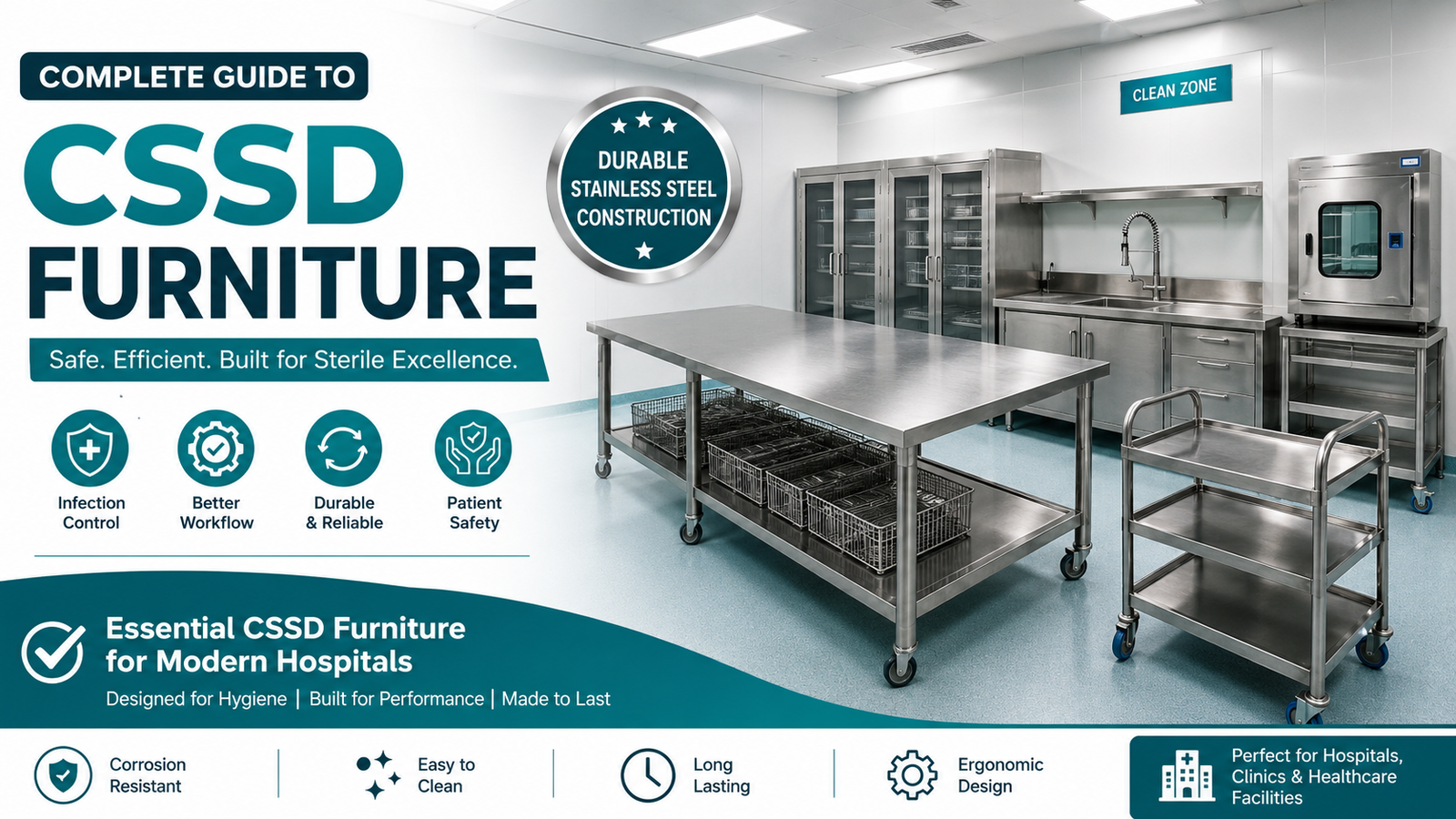
CSSD furniture refers to specially designed stainless steel furniture used inside the Central Sterile Supply Department for cleaning, inspection, packing, sterilization support, storage, and transportation of surgical instruments.
Unlike regular hospital furniture, cssd furniture and equipment are built specifically for sterile environments using corrosion-resistant materials such as SS304 or SS316 stainless steel.
These products are designed to:
- Prevent bacterial growth
- Resist chemicals
- Support infection control
- Improve workflow organization
- Maintain long-term durability
Types of CSSD Furniture
Every sterilization department requires different furniture depending on its size and workflow.
1. Instrument Inspection Tables
Used for examining cleaned instruments before sterilization.
Features:
- Smooth stainless steel surface
- Ergonomic working height
- Easy cleaning
- Durable construction
2. Packing Tables
These workstations help staff prepare instrument sets before sterilization.
Usually include:
- Large work surface
- Storage shelves
- Drawers
- Lighting options
3. Stainless Steel Storage Cabinets
Designed for sterile instrument storage.
Benefits include:
- Dust protection
- Organized storage
- Hygienic construction
- Long service life
4. Transfer Trolleys
Used to transport sterile and non-sterile instruments safely throughout the hospital.
Advantages:
- Smooth mobility
- Strong wheels
- High load capacity
- Easy maneuverability
5. Workstations
Dedicated areas for sorting, inspection, and documentation.
Often include:
- Adjustable shelves
- Utility drawers
- Instrument holders
- Organized workspace
6. Wash Area Furniture
Supports instrument cleaning before sterilization.
Examples include:
- Sink units
- Utility tables
- Drying racks
- Washing stations
Essential CSSD Furniture and Equipment
A complete sterilization department generally includes:
- Stainless steel work tables
- Inspection tables
- Packing stations
- Instrument storage cabinets
- Sterilization trolleys
- Transfer carts
- Sink units
- Drying racks
- Shelving systems
- Utility cabinets
- Pass-through storage units
These cssd furniture and equipment create an organized workflow from contaminated instruments to sterile storage.
Features to Look for in CSSD Furniture
Before purchasing, ensure the furniture offers:
High-Quality Stainless Steel
SS304 or SS316 provides:
- Corrosion resistance
- Chemical resistance
- Long lifespan
Seamless Construction
Smooth welded joints reduce dirt accumulation and simplify cleaning.
Easy Maintenance
Furniture should be easy to disinfect multiple times every day.
Ergonomic Design
Comfortable working heights reduce staff fatigue during long shifts.
Heavy-Duty Structure
Hospital furniture should withstand constant movement and heavy instrument loads.
Modular Design
Flexible layouts allow future department expansion.
Benefits of Modern CSSD Furniture
Hospitals investing in quality cssd furnitures often experience several operational improvements.
Benefits include:
- Faster instrument processing
- Better infection prevention
- Improved staff efficiency
- Organized workflow
- Reduced maintenance costs
- Better space utilization
- Higher compliance with hospital standards
- Longer furniture lifespan
CSSD Furniture vs Standard Stainless Steel Furniture
| Feature | CSSD Furniture | Standard Stainless Furniture |
|---|---|---|
| Designed for Sterile Areas | ✅ | ❌ |
| Infection Control | Excellent | Limited |
| Hospital Workflow | Optimized | General Purpose |
| Easy Disinfection | Yes | Basic |
| Medical Compliance | Yes | Usually No |
| Ergonomic Design | Yes | Limited |
| Long-Term Hospital Use | Excellent | Moderate |
Step-by-Step Buying Guide
Choosing the right CSSD furniture requires careful planning.
Step 1
Assess your department size.
Step 2
Understand instrument processing volume.
Step 3
Map the workflow from dirty to sterile zones.
Step 4
Choose medical-grade stainless steel.
Step 5
Select modular furniture for future expansion.
Step 6
Verify cleaning and maintenance requirements.
Step 7
Ensure compatibility with sterilization equipment.
Step 8
Buy from experienced hospital furniture manufacturers.
Common Mistakes to Avoid
Avoid these common purchasing errors:
- Choosing furniture based only on price
- Ignoring workflow planning
- Buying non-medical stainless steel
- Poor storage planning
- Insufficient workspace
- Ignoring staff ergonomics
- Overlooking maintenance requirements
- Not planning future expansion
Making the right investment today prevents expensive modifications later.
Expert Tips
Healthcare experts recommend several best practices for maximizing CSSD efficiency.
✔ Separate clean and dirty workflows.
✔ Use only hospital-grade stainless steel.
✔ Maintain proper storage organization.
✔ Inspect furniture regularly for damage.
✔ Train staff on proper equipment handling.
✔ Schedule routine cleaning and preventive maintenance.
✔ Plan layouts that reduce unnecessary movement.
A well-designed CSSD isn’t just about furniture—it’s about creating a safer environment for patients and healthcare professionals alike.
Conclusion
A high-performing Central Sterile Supply Department depends on more than sterilization machines. Carefully selected cssd furniture creates an efficient, organized, and hygienic workspace that supports every stage of instrument processing.
From inspection tables and packing stations to storage cabinets and transport trolleys, every component contributes to infection prevention and operational efficiency. By investing in durable cssd furniture and equipment, hospitals can improve workflow, enhance staff productivity, and maintain the highest standards of patient safety for years to come.
Frequently Asked Questions (FAQs)
1. What is CSSD furniture?
CSSD furniture includes specialized stainless steel furniture used in hospital sterilization departments for cleaning, inspecting, packing, storing, and transporting surgical instruments.
2. Why is stainless steel preferred for CSSD furniture?
Stainless steel resists corrosion, is easy to disinfect, lasts for years, and supports strict infection control standards.
3. What furniture is required in a CSSD?
Common items include inspection tables, packing tables, storage cabinets, transfer trolleys, sink units, workstations, drying racks, and shelving systems.
4. How does CSSD furniture improve hospital efficiency?
Proper furniture improves workflow, reduces contamination risks, organizes instruments efficiently, and helps staff complete sterilization tasks faster.
5. What is the difference between CSSD furniture and regular hospital furniture?
CSSD furniture is specifically designed for sterile processing environments with hygienic construction, ergonomic features, and medical-grade stainless steel materials.
6. How often should CSSD furniture be maintained?
Routine cleaning should be performed daily, while inspections and preventive maintenance should be scheduled regularly to ensure long-term performance.
7. Can modular CSSD furniture be expanded later?
Yes. Modern modular systems allow hospitals to expand storage, workstations, and workflow layouts as operational needs grow without replacing the entire setup.