

Introduction
In hospitals, clinics, and laboratories, cleanliness is not optional—it directly impacts safety, infection control, and operational efficiency. One essential piece of equipment often overlooked is the instrument washing sink.
Whether you manage a surgical center, sterilization room, or medical lab, choosing the right sink can significantly improve cleaning workflows and reduce contamination risks.
A poorly designed sink can lead to water splashing, improper cleaning, and even damage to delicate instruments. That’s why understanding the right features, types, and buying factors matters before investing.
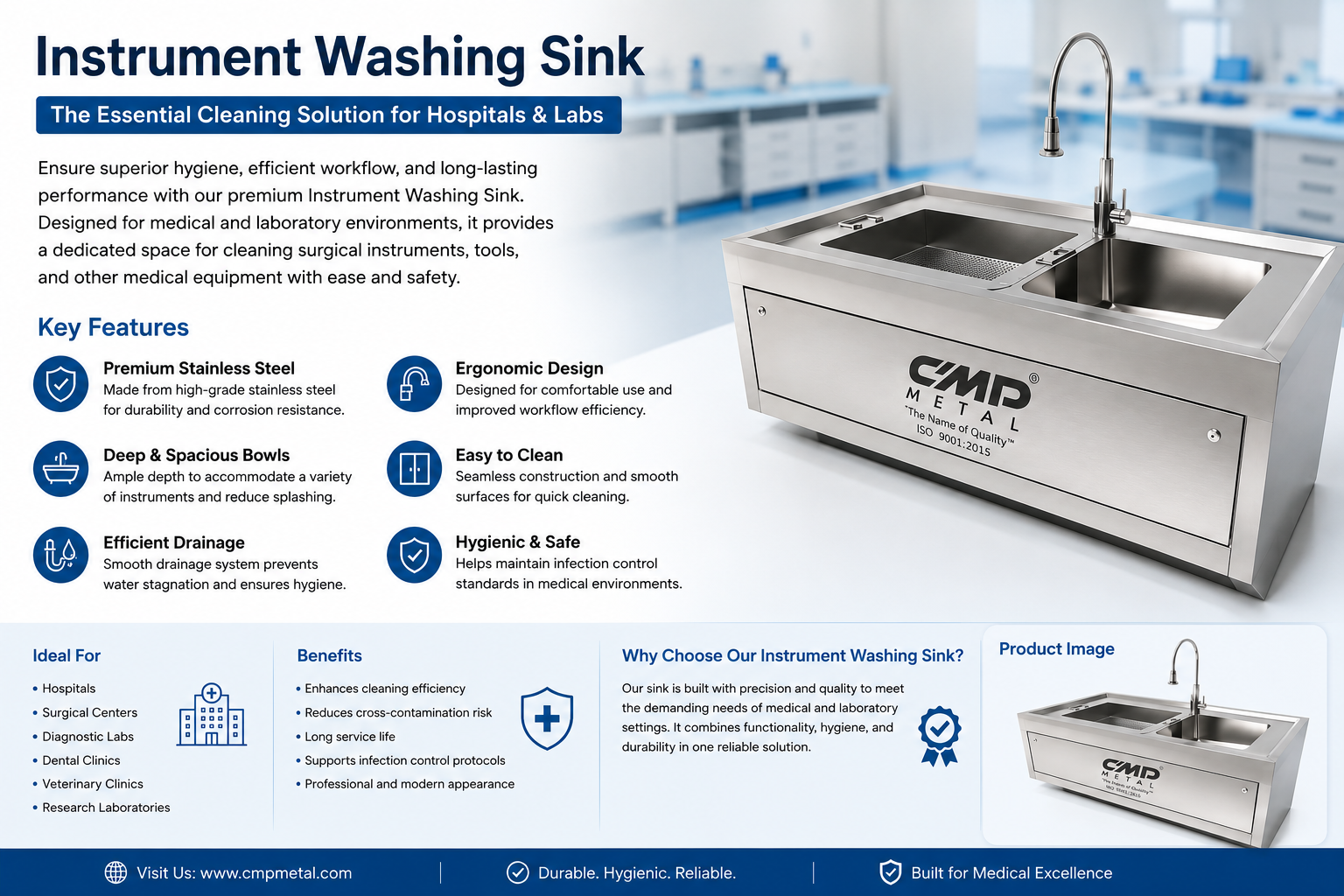
In this guide, we’ll cover everything you need to know about instrument washing sinks, including options like surgical instrument washing sink models and instrument washing sink with cabinet designs.
Problem / Pain Points
Many healthcare facilities struggle with inefficient instrument cleaning due to outdated or poorly designed sinks.
Common problems include:
- Limited washing space for larger instruments
- Water splashing onto surrounding surfaces
- Poor drainage causing contamination risks
- Difficult cleaning due to poor sink design
- Lack of storage for detergents and cleaning tools
These issues may seem minor, but over time they can slow sterilization processes and increase infection-control challenges.
Why an Instrument Washing Sink Matters
An instrument washing sink is specially designed for cleaning medical, dental, laboratory, and surgical tools before sterilization.
Unlike regular sinks, these are built for:
- Infection prevention
- Better ergonomics
- Easy sanitation
- Chemical resistance
- Heavy-duty daily usage
These sinks support the critical first step of reprocessing instruments: thorough cleaning before sterilization.
Main Guide: What Makes a Good Instrument Washing Sink?
1. Material Quality
Most high-quality sinks use:
- Stainless steel 304
- Stainless steel 316
- Corrosion-resistant metal alloys
Stainless steel is preferred because it offers rust resistance, easy cleaning, long lifespan, and chemical resistance.
2. Sink Depth
A deeper basin helps reduce splashing, accommodate large trays, and improve ergonomic washing.
Recommended depth typically ranges from 250 mm to 450 mm.
3. Drainage System
Look for fast drainage, anti-clog systems, and easy-to-clean drain traps.
4. Splash Protection
High-quality designs include rear splash guards, side protection walls, and curved basin edges.
5. Storage Options
An instrument washing sink with cabinet provides extra storage for cleaning tools, detergents, PPE, and accessories.
Types of Instrument Washing Sinks
Single Bowl Instrument Washing Sink
Best for small clinics, dental offices, and labs.
- Compact
- Cost-effective
- Easy installation
Double Bowl Instrument Washing Sink
Useful for separating wash and rinse stages, reducing cross-contamination.
Triple Bowl Sink
Common in larger hospitals for:
- Pre-soak
- Wash
- Final rinse
Surgical Instrument Washing Sink
A surgical instrument washing sink is specifically designed for operating theatres and sterile departments.
- Deep bowls
- Hands-free operation
- Foot pedal controls
- Temperature control
- Chemical-resistant surfaces
Wall-Mounted Sink
Best for small sterilization rooms and space-saving layouts.
Instrument Washing Sink with Cabinet
This design combines washing and storage, improving organization and workflow.
Features & Benefits
Improved Infection Control
Dedicated cleaning stations help reduce bacterial spread and contamination.
Faster Cleaning Process
Purpose-built sinks improve workflow efficiency and save time.
Better Ergonomics
Proper sink height reduces back strain, shoulder fatigue, and repetitive stress injuries.
Long-Term Cost Savings
A quality sink lasts years with minimal maintenance and lower repair costs.
Comparison Table
| Feature | Standard Sink | Instrument Washing Sink |
|---|---|---|
| Medical-grade material | No | Yes |
| Deep basin | Limited | Yes |
| Splash protection | No | Yes |
| Chemical resistance | Limited | High |
Step-by-Step Buying Guide
Step 1: Evaluate Usage Volume
Determine how many instruments are cleaned daily and their size.
Step 2: Measure Available Space
Check width, height, and plumbing layout.
Step 3: Choose Number of Bowls
Select from 1, 2, or 3 bowls depending on workflow.
Step 4: Consider Storage Needs
If organization matters, choose an instrument washing sink with cabinet.
Step 5: Check Compliance
Ensure the sink meets hospital hygiene and infection control standards.
Common Mistakes to Avoid
- Choosing based only on price
- Ignoring workflow needs
- Buying the wrong size
- Overlooking maintenance requirements
Expert Tips
- Choose seamless welded construction
- Prefer rounded corners
- Add hands-free controls
- Plan for future growth
FAQ
What is an instrument washing sink?
A specialized sink used in hospitals and labs to clean instruments before sterilization.
Why not use a regular sink?
Regular sinks lack depth, splash control, and medical-grade materials.
What material is best?
Stainless steel 304 or 316 is ideal for durability and hygiene.
What is a surgical instrument washing sink?
A sink designed specifically for cleaning surgical tools with enhanced hygiene features.
Should I buy one with a cabinet?
Yes, if you need better storage and workflow organization.
Conclusion
An instrument washing sink plays a critical role in infection control, instrument safety, and workflow efficiency.
Whether you need a compact clinic sink, a surgical instrument washing sink, or an instrument washing sink with cabinet, choosing the right model improves hygiene and long-term operational performance.