

Scrub Sink: Complete Guide for Hospitals and Operation Theatres
Introduction
In healthcare environments, maintaining strict hygiene standards is essential. One of the most important pieces of equipment supporting infection control is the scrub sink. Healthcare professionals use scrub sinks before entering sterile areas such as operation theatres to perform thorough hand and arm washing procedures.
A properly designed surgical scrub sink helps reduce the risk of contamination, improves compliance with hygiene protocols, and supports patient safety. Whether you’re building a new healthcare facility or upgrading an existing one, understanding scrub sinks can help you make the right investment.
This guide covers everything you need to know about hospital scrub sinks, including types, features, benefits, buying considerations, and expert recommendations.
Why Is a Scrub Sink Important?
In surgical environments, even minor contamination can lead to serious infections. Traditional handwashing stations are not designed to meet the rigorous standards required in healthcare facilities.
A hospital scrub sink provides:
- Hands-free operation
- Easy cleaning and maintenance
- Controlled water flow
- Hygienic washing environment
- Compliance with healthcare regulations
These features make scrub sinks a critical component of infection prevention programs.
Common Challenges Healthcare Facilities Face
Many hospitals and clinics experience hygiene-related challenges due to inadequate handwashing infrastructure.
Common Issues Include:
- Cross-contamination from manual taps
- Poor sink design causing water splashing
- Difficult-to-clean surfaces
- Inadequate space for multiple users
- Corrosion in low-quality materials
Installing a high-quality stainless steel scrub sink helps eliminate many of these problems while improving operational efficiency.
What Is a Scrub Sink?
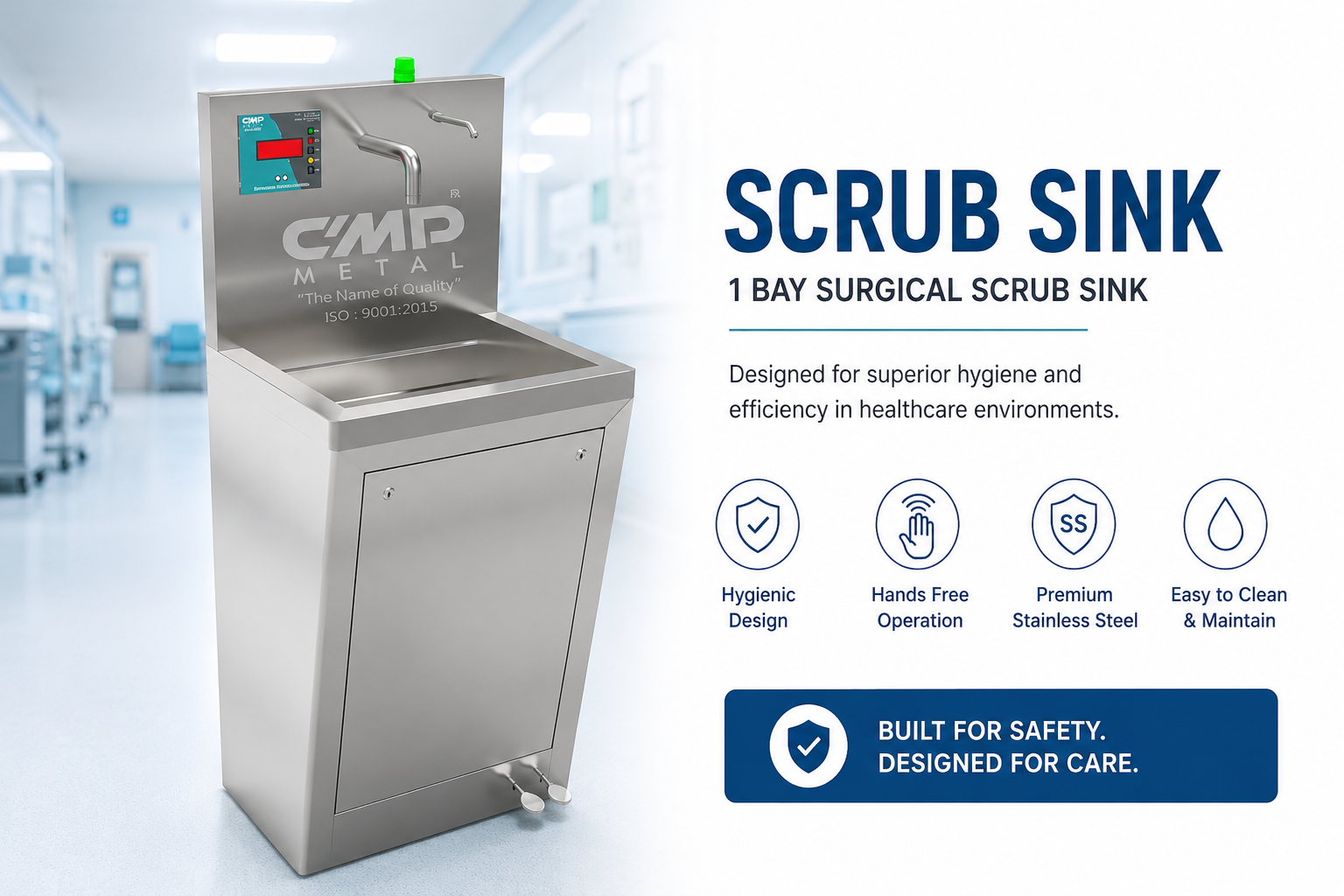
A scrub sink is a specially designed handwashing station used by surgeons, nurses, and healthcare professionals before entering sterile environments.
Unlike standard sinks, a surgical scrub sink is engineered for extended hand and forearm washing procedures and often includes:
- Sensor-operated faucets
- Knee-operated controls
- Foot-operated controls
- Deep basins
- Splash protection panels
- Integrated soap dispensers
These features support proper surgical hand preparation.
Types of Scrub Sinks
1. Single-Station Scrub Sink
Ideal for:
- Small clinics
- Dental centers
- Daycare surgery facilities
Benefits:
- Space-saving design
- Cost-effective installation
- Easy maintenance
2. Double-Station Scrub Sink
Suitable for:
- Medium-sized hospitals
- Specialty healthcare centers
Benefits:
- Supports multiple users
- Reduces waiting time
- Improves workflow efficiency
3. Triple-Station Scrub Sink
Recommended for:
- High-volume operation theatres
- Multi-specialty hospitals
Benefits:
- Accommodates multiple surgeons
- Optimizes pre-surgery preparation
- Improves operational productivity
4. Sensor-Based Operation Theatre Scrub Sink
An advanced operation theatre scrub sink equipped with touch-free technology.
Benefits:
- Enhanced hygiene
- Reduced contamination risk
- Water conservation
Key Features of a Quality Scrub Sink
Premium Stainless Steel Construction
A durable stainless steel scrub sink offers:
- Corrosion resistance
- Long service life
- Easy cleaning
- Professional appearance
Seamless Design
Smooth welded surfaces help prevent bacterial growth and simplify sanitation.
Touch-Free Operation
Sensor-based systems reduce contact points and improve infection control.
Deep Bowl Design
Deep basins minimize water splashing and keep surrounding areas dry.
Integrated Accessories
Many modern scrub sinks include:
- Soap dispensers
- Hand sanitizer dispensers
- Brush holders
- Mirror units
- LED indicators
Benefits of Installing a Scrub Sink
- Improved Infection Control: Proper handwashing significantly reduces the spread of harmful microorganisms.
- Better Compliance: Supports healthcare standards and hospital hygiene protocols.
- Increased Durability: High-quality stainless steel units withstand continuous use in demanding environments.
- Enhanced Workflow: Multi-user configurations reduce delays before surgical procedures.
- Lower Maintenance Costs: Corrosion-resistant materials require less frequent repairs and replacements.
Scrub Sink vs Traditional Handwashing Sink
| Feature | Scrub Sink | Traditional Sink |
|---|---|---|
| Designed for Surgical Use | Yes | No |
| Touch-Free Operation | Yes | Limited |
| Infection Control | High | Moderate |
| Stainless Steel Construction | Common | Varies |
| Multi-User Capability | Available | Rare |
| Healthcare Compliance | High | Limited |
Step-by-Step Buying Guide
Step 1: Assess Facility Requirements
- Number of operation theatres
- Daily surgical volume
- Number of healthcare staff
Step 2: Select Capacity
- Single station
- Double station
- Triple station
Step 3: Evaluate Material Quality
Always prioritize medical-grade stainless steel construction.
Step 4: Consider Automation
Sensor-operated models provide superior hygiene and convenience.
Step 5: Verify Manufacturer Credentials
Choose an experienced surgical scrub sink manufacturer with healthcare industry expertise.
Step 6: Check After-Sales Support
Reliable installation and maintenance services ensure long-term performance.
Common Mistakes to Avoid
- Choosing low-grade materials
- Ignoring user capacity requirements
- Purchasing without hygiene certifications
- Selecting sinks with difficult-to-clean designs
- Overlooking future expansion needs
- Not evaluating supplier experience
Working with an established OT scrub sink manufacturer can help prevent these issues.
Expert Tips for Selecting the Best Scrub Sink
- Choose SS304 or SS316 stainless steel grades.
- Prioritize touch-free technology.
- Focus on ergonomic design.
- Plan for future hospital expansion.
- Select a trusted SS scrub sink manufacturer India.
Frequently Asked Questions (FAQs)
What is a scrub sink used for?
A scrub sink is used by surgeons and healthcare professionals for thorough hand and forearm washing before entering sterile surgical environments.
Why are scrub sinks made from stainless steel?
Stainless steel is durable, corrosion-resistant, hygienic, and easy to maintain in healthcare settings.
What is the difference between a scrub sink and a regular sink?
A scrub sink includes touch-free controls, deep bowls, and infection-control features designed specifically for surgical use.
Which material is best for a hospital scrub sink?
SS304 and SS316 stainless steel are considered the best options due to their durability and resistance to corrosion.
Are sensor-operated scrub sinks better?
Yes. Sensor-operated systems reduce physical contact and help minimize cross-contamination.
How many users can a scrub sink accommodate?
Scrub sinks are available in single, double, and triple-station configurations.
How do I choose the right surgical scrub sink manufacturer?
Look for healthcare experience, quality certifications, customization options, and dependable after-sales support.
Conclusion
A scrub sink is an essential component of modern healthcare facilities. Whether you require a hospital scrub sink, surgical scrub sink, or advanced operation theatre scrub sink, selecting the right model helps improve hygiene, support infection control, and enhance operational efficiency.
By understanding the various types, features, benefits, and buying considerations discussed in this guide, hospitals and healthcare facilities can make informed decisions that contribute to safer patient care and long-term reliability.