

Sluice Sink: Complete Guide for Healthcare and Utility Applications
Introduction
Maintaining hygiene and preventing contamination are among the biggest challenges in hospitals, nursing homes, healthcare centers, and medical facilities. Every day, healthcare staff handle liquid waste, contaminated materials, and cleaning processes that require specialized equipment designed for safe disposal.
This is where a Sluice Sink becomes an essential part of healthcare infrastructure. Designed specifically for dirty utility rooms and waste disposal areas, these sinks help maintain cleanliness while supporting infection control protocols.
Whether you are planning a new healthcare facility or upgrading an existing utility room, understanding the functionality of a sluice sink can help you make an informed decision. Modern hospital sluice sink systems are designed to improve efficiency, hygiene, and durability while complying with healthcare standards.
Facilities looking for high-quality dirty utility solutions often prefer a professionally designed Sluice Sink that offers reliable performance and long-term durability in demanding healthcare environments.
Common Problems Healthcare Facilities Face
Healthcare environments generate significant amounts of liquid and biological waste every day. Without proper disposal systems, facilities can experience several challenges:
- Cross-contamination risks
- Difficult waste management processes
- Unpleasant odors in utility rooms
- Frequent maintenance issues
- Reduced staff efficiency
- Non-compliance with hygiene regulations
- Damage caused by harsh cleaning chemicals
Traditional sinks often fail to meet the demanding requirements of healthcare environments. As a result, many facilities invest in specialized medical sluice sink systems designed specifically for contaminated waste handling.
What is a Sluice Sink?
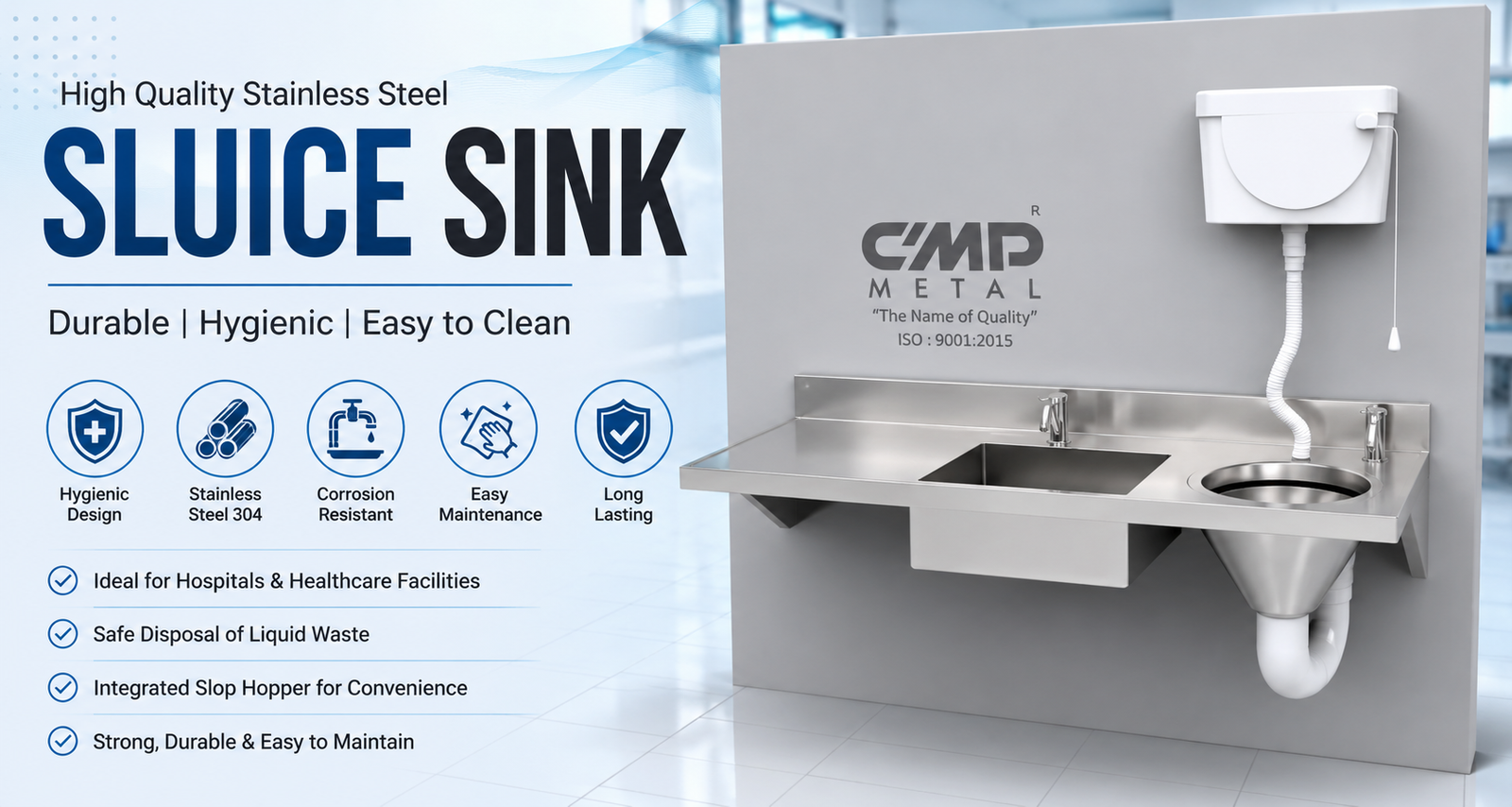
A Sluice Sink is a specialized utility sink primarily installed in hospitals, nursing homes, clinics, and healthcare facilities for the safe disposal of liquid waste and cleaning of medical containers.
Unlike conventional sinks, sluice sinks are engineered to handle contaminated fluids, bedpan cleaning processes, and waste disposal activities. They are commonly installed in dirty utility rooms, making them a critical component of infection prevention systems.
Many modern models combine a sink basin with a hopper design, often referred to as a sluice hopper sink, allowing staff to dispose of waste safely and efficiently.
Types of Sluice Sinks
1. Standard Hospital Sluice Sink
A standard hospital sluice sink is commonly used in healthcare facilities for disposing of contaminated liquids and washing utility equipment.
2. Sluice Sink with Slop Hopper
A sluice sink with slop hopper combines a sink and hopper unit in a single system. It allows easier disposal of waste liquids and improves workflow efficiency.
3. Stainless Steel Sluice Sink
A stainless steel sluice sink offers superior corrosion resistance, durability, and ease of cleaning. Stainless steel construction is preferred because it withstands harsh disinfectants and frequent cleaning cycles.
4. Wall-Mounted Sluice Sink
These models save floor space while maintaining easy access for healthcare staff.
5. Floor-Mounted Utility Sluice Sink
Designed for heavy-duty usage, floor-mounted systems provide excellent stability and accommodate larger waste volumes.
Key Features of a Quality Sluice Sink
- Heavy-duty stainless steel construction
- Corrosion-resistant finish
- Easy-to-clean surfaces
- Integrated waste disposal system
- Splash protection design
- High-capacity drainage system
- Durable welded construction
- Compliance with healthcare hygiene standards
- Long operational lifespan
Benefits of Using a Sluice Sink
Improved Infection Control
Dedicated waste disposal equipment minimizes contamination risks and supports hospital hygiene protocols.
Enhanced Operational Efficiency
Healthcare staff can dispose of waste quickly without disrupting patient care activities.
Easy Maintenance
Smooth stainless steel surfaces make cleaning faster and more effective.
Long-Term Durability
Quality systems can withstand years of intensive daily use.
Regulatory Compliance
Healthcare facilities can better meet infection control and sanitation requirements.
Sluice Sink vs Traditional Utility Sink
| Feature | Sluice Sink | Traditional Utility Sink |
|---|---|---|
| Healthcare Waste Disposal | Yes | Limited |
| Infection Control Support | High | Low |
| Heavy-Duty Usage | Excellent | Moderate |
| Medical Applications | Designed For It | Not Specialized |
| Cleaning Efficiency | High | Standard |
How to Choose the Right Sluice Sink
- Evaluate waste disposal requirements.
- Measure available installation space.
- Choose stainless steel construction.
- Consider hopper integration needs.
- Check drainage capacity.
- Review maintenance requirements.
- Select trusted Sluice Sink Manufacturers with healthcare experience.
Common Mistakes to Avoid
- Choosing undersized units
- Ignoring drainage requirements
- Selecting non-medical-grade materials
- Overlooking maintenance accessibility
- Purchasing solely based on price
- Ignoring future expansion requirements
Expert Tips
- Always prioritize stainless steel construction.
- Choose seamless welded designs for easier cleaning.
- Inspect drainage performance before purchase.
- Ensure compatibility with existing plumbing systems.
- Invest in equipment designed specifically for healthcare environments.
FAQ Section
What is a sluice sink used for?
A sluice sink is used for safe disposal of contaminated liquids, cleaning utility equipment, and maintaining hygiene in healthcare facilities.
Why are stainless steel sluice sinks preferred?
Stainless steel offers excellent durability, corrosion resistance, and easy cleaning, making it ideal for healthcare environments.
What is the difference between a sluice sink and a utility sink?
Sluice sinks are specifically designed for healthcare waste management, while utility sinks are general-purpose cleaning fixtures.
Where are sluice room sinks commonly installed?
Sluice room sinks are typically installed in hospitals, clinics, nursing homes, and healthcare facilities.
What is a sluice hopper sink?
A sluice hopper sink combines a sink basin with a hopper unit for efficient disposal of liquid and contaminated waste.
How long does a quality sluice sink last?
A high-quality stainless steel model can provide reliable performance for many years with proper maintenance.
Conclusion
A Sluice Sink plays a vital role in maintaining hygiene, improving infection control, and supporting efficient waste disposal in healthcare environments. From standard hospital installations to advanced sluice sink with slop hopper systems, choosing the right solution can significantly improve operational efficiency and cleanliness. By understanding the available options, key features, and buying considerations, healthcare facilities can invest in equipment that delivers long-term reliability and compliance with modern sanitation standards.