

Scrub Sink: Complete Guide for Hospitals, Operation Theatres, and Healthcare Facilities
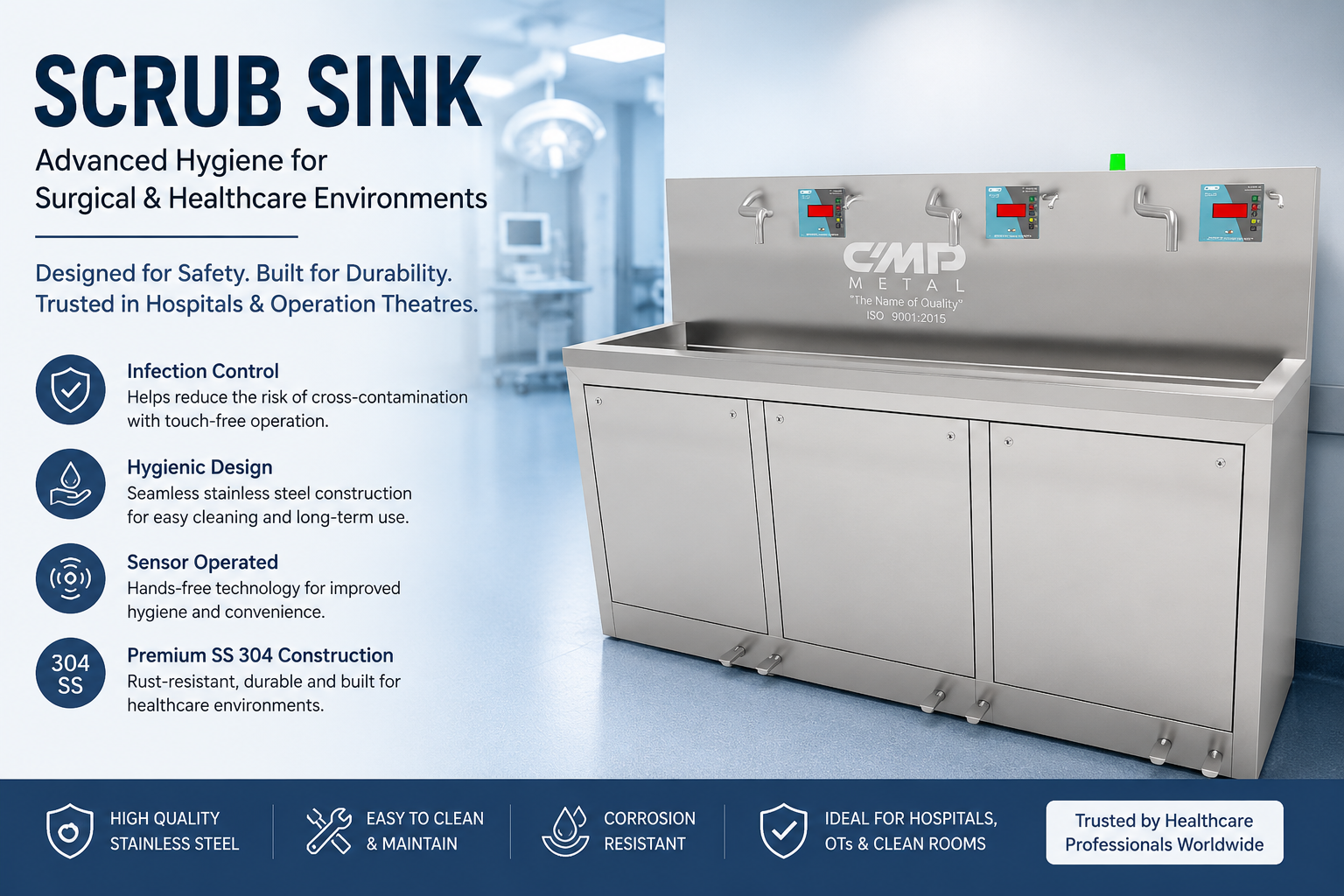
Maintaining hygiene in healthcare environments is critical for patient safety and infection control. In hospitals, surgical centers, and operation theatres, proper handwashing procedures help prevent contamination and reduce the spread of harmful microorganisms. This is where a scrub sink becomes an essential part of the healthcare infrastructure.
Designed specifically for surgeons, doctors, and healthcare professionals, scrub sinks provide a dedicated handwashing station that supports thorough surgical scrubbing before entering sterile environments. Whether you are planning a new healthcare facility or upgrading existing equipment, understanding the importance of a scrub sink can help you make the right decision.
Why a Scrub Sink is Important in Healthcare Facilities
Healthcare-associated infections remain a major concern worldwide. Proper hand hygiene is one of the most effective methods of reducing infection risks and ensuring patient safety.
A surgical scrub sink is specially designed to facilitate proper hand and arm washing before medical procedures. Unlike standard sinks, these units are engineered to minimize contamination, improve hygiene compliance, and support infection control protocols.
- Reduces the risk of cross-contamination
- Supports infection prevention measures
- Enhances surgical preparation procedures
- Improves workflow efficiency in hospitals
- Helps maintain healthcare compliance standards
- Provides a dedicated handwashing area for medical staff
Common Challenges Without a Proper Hospital Scrub Sink
Many healthcare facilities face challenges when adequate handwashing infrastructure is not available.
- Increased contamination risks
- Water splashing that spreads bacteria
- Difficulty maintaining sterile conditions
- Poor hand hygiene compliance
- Higher maintenance costs
- Reduced operational efficiency
Installing a well-designed hospital scrub sink helps overcome these challenges and creates a safer environment for both patients and healthcare professionals.
What is a Surgical Scrub Sink?
A surgical scrub sink is a specialized handwashing station designed for use in hospitals, operation theatres, cleanrooms, laboratories, and healthcare facilities. It allows surgeons and medical staff to perform thorough hand and arm scrubbing before entering sterile zones.
Modern scrub sinks often include hands-free operation systems, sensor-controlled faucets, splash-resistant designs, and ergonomic construction to maximize hygiene and convenience.
For facilities looking for high-quality healthcare-grade solutions, selecting a durable and professionally manufactured stainless steel scrub sink can significantly improve long-term performance and infection control practices.
Types of Scrub Sinks
Single User Scrub Sink
Designed for one healthcare professional at a time, making it suitable for clinics and smaller healthcare facilities.
Double User Scrub Sink
Allows two users to perform surgical scrubbing simultaneously, improving efficiency in medium-sized hospitals.
Triple User Scrub Sink
Ideal for large hospitals and busy operation theatre complexes where multiple surgeons may need access at the same time.
Sensor Operated Scrub Sink
Uses touch-free technology to reduce physical contact and improve hygiene standards.
Foot Operated Scrub Sink
Provides hands-free water control through foot pedals, reducing contamination risks.
Features of a Stainless Steel Scrub Sink
A stainless steel scrub sink remains the preferred choice in healthcare facilities due to its durability, hygiene, and corrosion resistance.
- SS 304 or SS 316 stainless steel construction
- Seamless welded design
- Corrosion and rust resistance
- Easy cleaning and maintenance
- Splash-resistant basin design
- Sensor-operated faucets
- Long service life
- Hygienic and non-porous surface
- Durable plumbing system
- Healthcare-grade construction standards
Applications of Operation Theatre Scrub Sinks
An operation theatre scrub sink is commonly installed in:
- Hospitals
- Operation theatres
- Surgical centers
- IVF laboratories
- Pharmaceutical manufacturing units
- Biotechnology facilities
- Research laboratories
- Dental hospitals
- Cleanrooms
- Healthcare institutions
Scrub Sink vs Standard Sink
| Feature | Standard Sink | Scrub Sink |
|---|---|---|
| Infection Control | Basic | Advanced |
| Hands-Free Operation | Limited | Available |
| Splash Prevention | Low | High |
| Medical Compliance | No | Yes |
| Stainless Steel Construction | Optional | Standard |
| Multi-User Options | No | Yes |
How to Choose the Right Scrub Sink
Selecting the right scrub sink requires careful consideration of your facility’s requirements.
- Determine the number of users who will access the sink simultaneously.
- Choose high-quality stainless steel construction.
- Select touch-free or sensor-operated models when possible.
- Evaluate available installation space.
- Consider maintenance and cleaning requirements.
- Verify compliance with healthcare standards.
- Work with an experienced surgical scrub sink manufacturer.
Common Mistakes to Avoid
- Choosing low-grade stainless steel materials
- Ignoring user capacity requirements
- Selecting unreliable sensor systems
- Overlooking splash protection features
- Focusing only on initial purchase cost
- Ignoring maintenance accessibility
- Purchasing from inexperienced suppliers
Expert Tips for Better Performance
- Always choose SS 304 or higher-grade stainless steel.
- Use sensor-operated faucets for better hygiene.
- Conduct regular maintenance inspections.
- Train healthcare staff on proper hand hygiene procedures.
- Ensure proper drainage and plumbing systems.
- Use approved healthcare disinfectants for cleaning.
- Partner with a trusted ot scrub sink manufacturer for long-term reliability.
Many healthcare facilities prefer working with an experienced ss scrub sink manufacturer india that can provide customized designs and healthcare-compliant solutions.
Benefits of Choosing a Professional Manufacturer
- Customized sizes and configurations
- Premium quality stainless steel construction
- Healthcare-grade manufacturing standards
- Quality assurance and testing
- Technical support and installation guidance
- Long-term durability
- Easy maintenance and servicing
Frequently Asked Questions
What is a scrub sink used for?
A scrub sink is used by surgeons and medical professionals to wash and disinfect their hands and arms before entering sterile environments.
Why is a surgical scrub sink different from a regular sink?
Surgical scrub sinks are specifically designed for infection control and often include splash-resistant and hands-free features.
Which material is best for a scrub sink?
SS 304 and SS 316 stainless steel are considered the best materials due to their durability, corrosion resistance, and hygienic properties.
Where is a hospital scrub sink installed?
They are commonly installed near operation theatres, surgical suites, cleanrooms, and healthcare treatment areas.
Are sensor-operated scrub sinks better?
Yes, sensor-operated systems reduce physical contact and help maintain higher hygiene standards.
How many users can use a scrub sink simultaneously?
Scrub sinks are available in single, double, and triple-user configurations depending on facility requirements.
How do I choose a reliable scrub sink manufacturer?
Look for healthcare industry experience, quality certifications, customization capabilities, and strong after-sales support.
Conclusion
A scrub sink plays a vital role in maintaining hygiene and infection control within healthcare facilities. Whether you require a hospital scrub sink, surgical scrub sink, or operation theatre scrub sink, choosing the right design and manufacturer can significantly impact safety, efficiency, and compliance.
By investing in a high-quality stainless steel scrub sink and working with an experienced surgical scrub sink manufacturer, healthcare organizations can create safer environments while supporting the highest standards of patient care.