

Pass Box Interlocking System: A Complete Guide for Cleanrooms and Controlled Environments
Introduction
Maintaining cleanliness and preventing cross-contamination are critical requirements in pharmaceutical facilities, hospitals, laboratories, and cleanrooms. Even a simple material transfer between two controlled areas can introduce contaminants if proper procedures are not followed.
This is where a pass box interlocking system becomes essential. It helps transfer materials safely between different zones while ensuring that both doors cannot be opened at the same time. This simple yet effective mechanism significantly reduces contamination risks and improves operational efficiency.
Whether you are evaluating a mechanical pass box or an electromagnetic pass box, understanding how these systems work can help you make the right decision for your facility.
Common Problems Without an Interlocking Pass Box
Many facilities face contamination-related challenges during material transfer processes. Common issues include:
- Airborne particles entering controlled environments
- Cross-contamination between clean and non-clean areas
- Human errors during material movement
- Failure to maintain cleanroom compliance standards
- Reduced product quality and safety
Installing an interlocking pass box helps eliminate these risks by controlling door access during material transfer.
What Is a Pass Box Interlocking System?
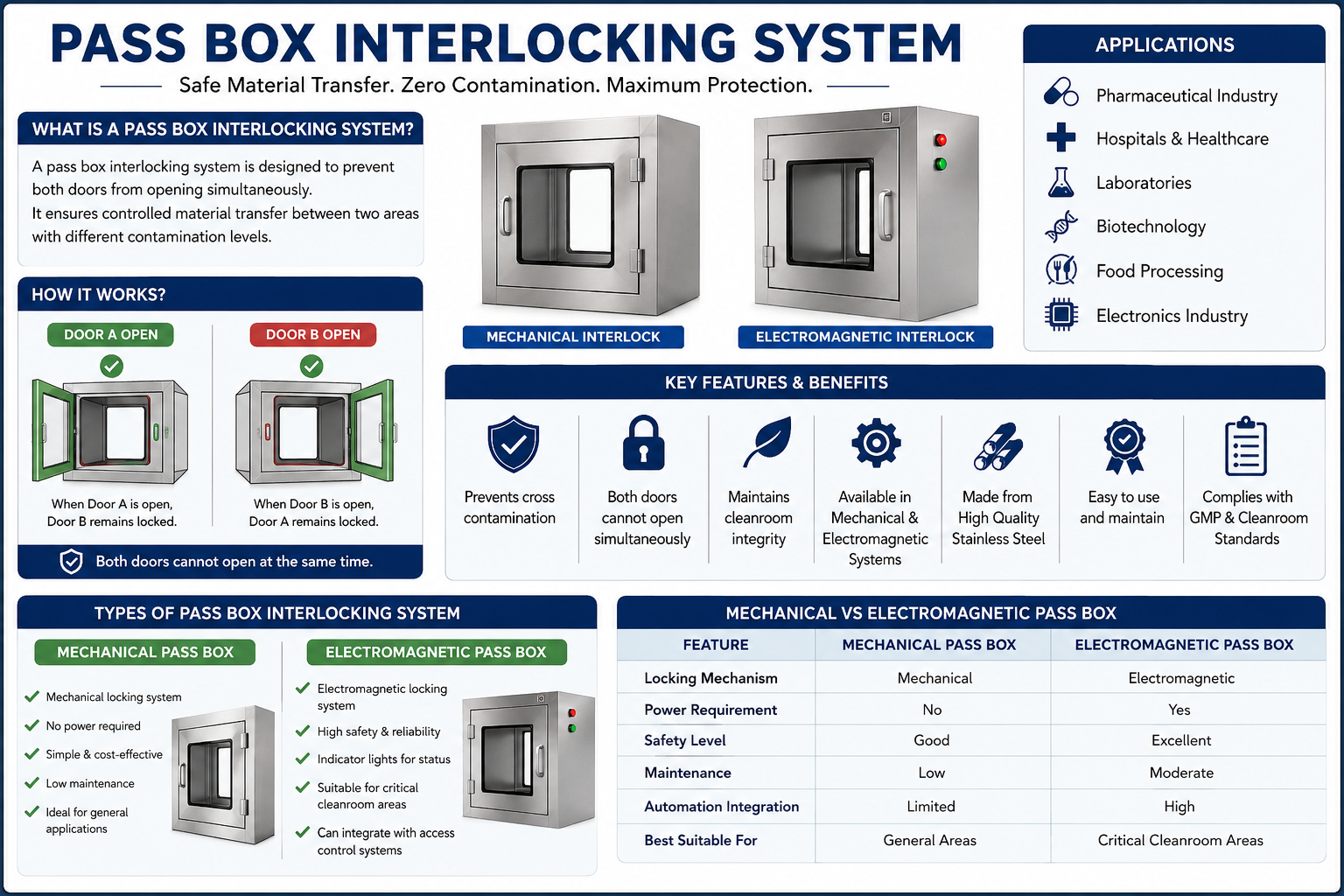
A pass box interlocking system is a safety mechanism designed to prevent both doors of a pass box from opening simultaneously. This ensures that contaminants cannot directly pass from one area to another.
The system is commonly used in:
- Pharmaceutical manufacturing plants
- Hospitals and healthcare facilities
- Research laboratories
- Biotechnology facilities
- Food processing units
- Electronics manufacturing environments
Modern facilities often prefer advanced electromagnetic interlock pass box systems for improved control and operational safety.
Types of Pass Box Interlocking Systems
1. Mechanical Pass Box
A mechanical pass box uses a physical locking arrangement. When one door is open, the opposite door remains locked until the first door is completely closed.
Advantages:
- Simple operation
- No electrical power required
- Cost-effective solution
- Low maintenance requirements
An SS mechanical pass box is especially popular in pharmaceutical and healthcare facilities due to its durability and corrosion resistance.
2. Electromagnetic Pass Box
An electromagnetic pass box uses electrically controlled locking systems to manage door access. These systems provide enhanced safety and can integrate with cleanroom automation systems.
Advantages:
- Higher operational reliability
- Advanced safety controls
- Visual status indicators
- Suitable for critical cleanroom applications
- Supports automation integration
Many facilities choose an electromagnetic interlock pass box when stricter contamination control measures are required.
Mechanical vs Electromagnetic Pass Box
| Feature | Mechanical Pass Box | Electromagnetic Pass Box |
|---|---|---|
| Locking Method | Mechanical | Electronic |
| Power Requirement | No | Yes |
| Automation Capability | Limited | High |
| Maintenance | Low | Moderate |
| Safety Control | Good | Excellent |
| Best For | General Applications | Critical Cleanrooms |
Key Features and Benefits
- Prevents simultaneous door opening
- Reduces contamination risks
- Supports GMP compliance
- Improves cleanroom efficiency
- Enhances operator safety
- Ensures controlled material transfer
- Available in stainless steel construction
- Long service life with minimal maintenance
An operating room pass box can also help hospitals maintain sterile conditions during equipment and supply transfers.
Step-by-Step Buying Guide
Step 1: Identify Application Requirements
Determine whether the pass box will be used in a pharmaceutical plant, hospital, laboratory, or cleanroom.
Step 2: Select Interlocking Type
Choose between a mechanical interlock pass box or an electromagnetic model based on your contamination control requirements.
Step 3: Check Material Quality
Look for high-grade stainless steel construction for durability and hygiene.
Step 4: Verify Compliance Standards
Ensure the equipment meets relevant GMP and cleanroom guidelines.
Step 5: Choose a Trusted Manufacturer
Working with reliable pass box manufacturers in India ensures product quality, after-sales support, and customization options.
Businesses looking for local support often prefer experienced pass box manufacturers in Mumbai for faster service and project coordination.
Common Mistakes to Avoid
- Selecting the wrong interlocking mechanism
- Ignoring cleanroom classification requirements
- Choosing low-quality construction materials
- Failing to verify compliance certifications
- Purchasing based only on price
- Overlooking future expansion needs
Expert Tips
- Choose electromagnetic systems for critical contamination-sensitive areas.
- Use stainless steel construction for long-term durability.
- Perform regular maintenance checks on locking mechanisms.
- Train staff on proper material transfer procedures.
- Work with experienced manufacturers who understand cleanroom applications.
Frequently Asked Questions
What is a pass box interlocking system?
A pass box interlocking system prevents both doors from opening simultaneously, helping maintain contamination control between two areas.
What is the difference between a mechanical and electromagnetic pass box?
A mechanical pass box uses physical locks, while an electromagnetic pass box uses electronically controlled locking systems.
Why is an interlocking pass box important in cleanrooms?
It minimizes contamination risks and helps maintain controlled environmental conditions during material transfer.
Where are pass boxes commonly used?
Pass boxes are widely used in pharmaceutical facilities, hospitals, laboratories, biotechnology centers, and cleanrooms.
Is a stainless steel mechanical pass box suitable for hospitals?
Yes. An SS mechanical pass box offers durability, hygiene, and reliable contamination control for healthcare environments.
Can an electromagnetic pass box integrate with automation systems?
Yes. Many electromagnetic systems can connect with alarms, indicators, and facility automation controls.
Conclusion
A well-designed pass box interlocking system plays a vital role in contamination control, cleanroom safety, and operational efficiency. Whether you choose a mechanical pass box or an electromagnetic pass box, selecting the right solution depends on your facility’s requirements, compliance standards, and safety goals.
By understanding the different interlocking technologies, comparing features, and following proper buying guidelines, organizations can make informed decisions that support long-term performance and regulatory compliance.