
Endoscope Washing Sink Manufacturer: Complete Guide for Hospitals and Healthcare Facilities
Introduction
In modern healthcare facilities, maintaining hygiene standards is more important than ever. Medical equipment such as endoscopes requires proper cleaning and disinfection to prevent infections and ensure patient safety. This is where an advanced endoscope washing sink becomes essential.
Hospitals, diagnostic centers, and CSSD departments often struggle with safe and efficient endoscope cleaning processes. Manual cleaning errors, poor drainage systems, and contamination risks can affect both equipment lifespan and healthcare compliance.
Choosing the right endoscope washing sink manufacturer helps healthcare facilities improve workflow efficiency, infection control, and equipment handling. Whether you are setting up a new hospital, upgrading a CSSD area, or planning a modular OT project, understanding endoscope cleaning systems is crucial.
Why Endoscope Cleaning Matters in Healthcare
Endoscopes are highly sensitive medical instruments used for internal examinations and minimally invasive procedures. Because these devices come into contact with body fluids and internal tissues, they require thorough cleaning after every use.
Improper cleaning can lead to:
- Cross-contamination
- Hospital-acquired infections (HAIs)
- Damage to expensive medical instruments
- Compliance issues with NABH and healthcare standards
- Increased maintenance costs
An efficient endoscope cleaning sink helps reduce these risks by supporting proper washing, rinsing, and drying procedures.
Common Problems Healthcare Facilities Face
1. Manual Cleaning Errors
Traditional washing methods may not provide consistent cleaning results. Human errors can increase contamination risks.
2. Lack of Proper Drainage
Improper drainage systems cause water stagnation, which affects hygiene and workflow.
3. Space Management Issues
Small cleaning areas create difficulties in handling multiple endoscopes simultaneously.
4. Equipment Damage
Using unsuitable cleaning stations can damage delicate endoscope components.
5. Compliance Challenges
Healthcare facilities must follow strict infection control protocols. Poor cleaning infrastructure can create compliance problems during inspections.
What Is an Endoscope Washing Sink?
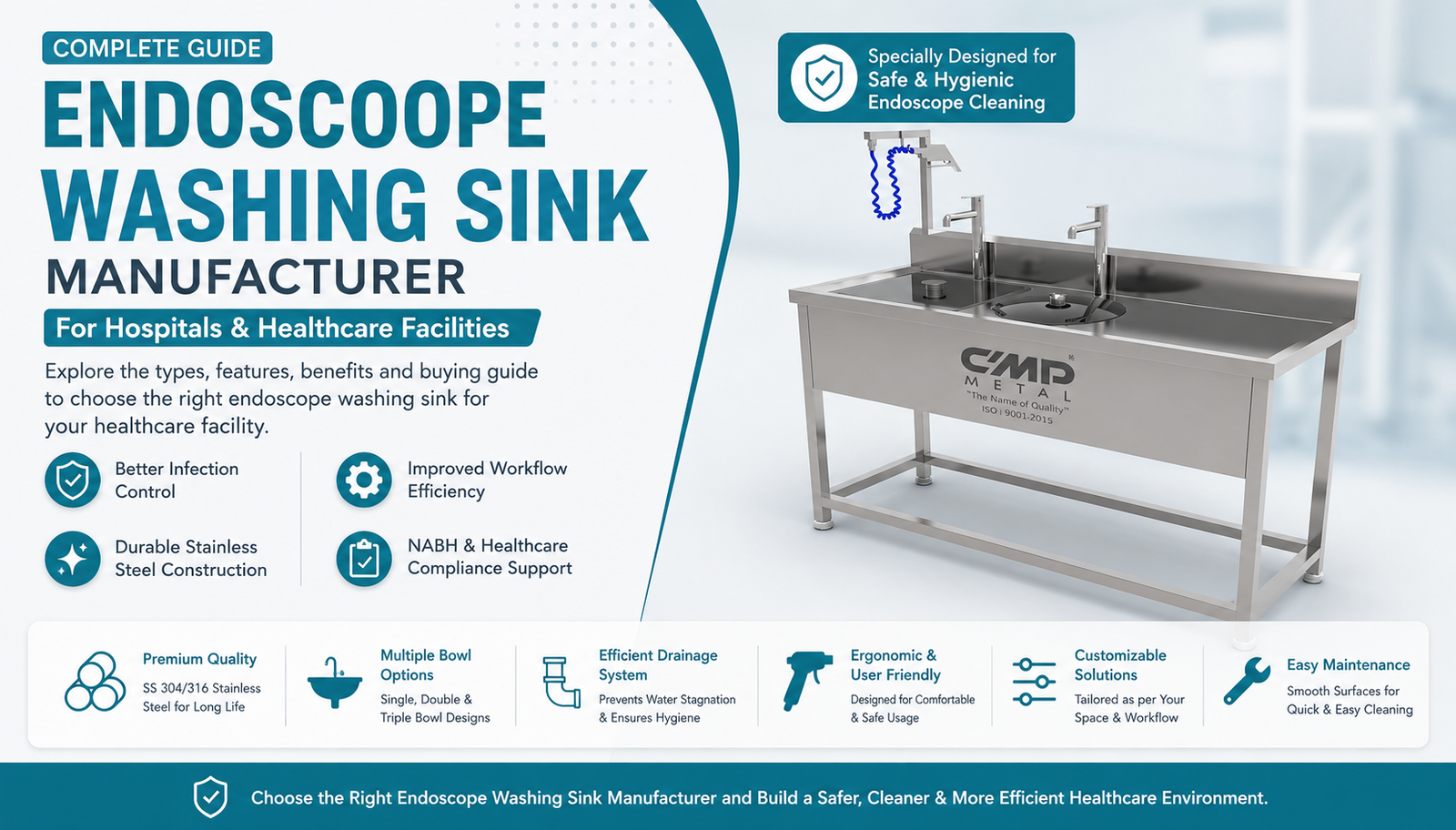
An endoscope sink is a specially designed stainless steel washing station used for cleaning, rinsing, and disinfecting endoscopes safely.
Unlike ordinary sinks, these systems are built specifically for healthcare environments and include:
- Multi-stage washing areas
- Smooth hygienic surfaces
- Chemical-resistant stainless steel
- Proper drainage systems
- Ergonomic workflow design
These sinks are commonly used in:
- Hospitals
- CSSD departments
- Gastroenterology units
- Diagnostic centers
- Modular operation theatres
- Endoscopy labs
Types of Endoscope Washing Sink Systems
Single Bowl Endoscope Washing Sink
Suitable for small clinics and diagnostic centers with limited daily procedures.
Best for:
- Small healthcare facilities
- Basic endoscope cleaning
Double Bowl Endoscope Cleaning Sink
Designed for washing and rinsing processes separately.
Advantages:
- Better hygiene control
- Improved workflow efficiency
Triple Bowl Endoscope Washing Sink
Ideal for high-volume hospitals and CSSD areas.
Used for:
- Washing
- Rinsing
- Disinfection
Customized Endoscope Sink Systems
Many manufacturers provide customized sink sizes and bowl configurations according to hospital layouts and workflow needs.
Endoscope Washer vs Endoscope Washing Sink
Healthcare professionals often confuse an endoscope washer with an endoscope washing sink. Both play important roles but serve different purposes.
| Feature | Endoscope Washing Sink | Endoscope Washer |
|---|---|---|
| Cleaning Type | Manual or semi-manual | Automated |
| Installation Cost | Lower | Higher |
| Workflow | Flexible | Fully programmed |
| Maintenance | Easy | Requires technical servicing |
| Suitable For | Most hospitals & clinics | Large healthcare facilities |
An endoscope washing machine is usually part of advanced automated disinfection systems, while sinks remain essential for pre-cleaning and manual handling.
Important Features to Look for
Stainless Steel Construction
High-grade SS 304 or SS 316 stainless steel ensures:
- Corrosion resistance
- Long lifespan
- Easy cleaning
- Infection control
Seamless Hygienic Design
Smooth edges and seamless welding help prevent bacterial growth.
Ergonomic Structure
Healthcare staff use these systems continuously, so ergonomic height and workflow design reduce fatigue.
Proper Drainage System
Efficient drainage prevents water accumulation and contamination.
Chemical Resistance
Cleaning chemicals and disinfectants should not damage the sink surface.
Integrated Accessories
Advanced sinks may include:
- Spray guns
- Storage cabinets
- Drip trays
- Drying areas
- Foot-operated controls
Benefits of Using an Advanced Endoscope Cleaning Sink
Better Infection Control
A properly designed sink supports healthcare hygiene protocols and reduces contamination risks.
Improved Workflow Efficiency
Separate washing and rinsing areas help staff work faster and more efficiently.
Equipment Protection
Sensitive endoscopes remain safer during cleaning and handling.
Easy Maintenance
Stainless steel surfaces are easy to sanitize and maintain.
Compliance Support
Modern systems help hospitals maintain NABH and infection control standards.
Step-by-Step Buying Guide
Step 1: Understand Your Daily Volume
Estimate how many endoscopes are cleaned daily.
Step 2: Check Available Space
Measure the CSSD or cleaning room properly before installation.
Step 3: Choose the Right Bowl Configuration
- Single bowl for small clinics
- Double or triple bowl for hospitals
Step 4: Verify Material Quality
Always select medical-grade stainless steel construction.
Step 5: Ask About Customization
A good manufacturer should provide layout-based customization options.
Step 6: Evaluate Drainage and Plumbing
Ensure the sink supports smooth water flow and waste management.
Step 7: Compare After-Sales Support
Maintenance and installation support are important for healthcare equipment.
Common Mistakes to Avoid
- Ignoring workflow design
- Choosing low-quality stainless steel
- Overlooking drainage systems
- Not considering future expansion
- Focusing only on price
Expert Tips for Healthcare Facilities
- Prioritize infection control standards
- Choose experienced manufacturers
- Consider customized sink systems
- Train healthcare staff properly
- Combine sinks with automated cleaning systems
FAQs
What is an endoscope washing sink used for?
An endoscope washing sink is used for cleaning, rinsing, and disinfecting endoscopes safely in hospitals and diagnostic centers.
What material is best for an endoscope cleaning sink?
SS 304 and SS 316 stainless steel are considered ideal because they are corrosion-resistant and hygienic.
What is the difference between an endoscope washer and an endoscope washing machine?
Both terms usually refer to automated systems designed for endoscope cleaning and disinfection.
Why do hospitals need dedicated endoscope sinks?
Dedicated sinks improve infection control, workflow efficiency, and healthcare compliance.
Can endoscope washing sinks be customized?
Yes, manufacturers often provide custom sizes, bowl configurations, and accessories according to hospital requirements.
Are endoscope cleaning sinks important for NABH compliance?
Yes, proper cleaning infrastructure supports infection control standards and healthcare compliance requirements.
Conclusion
A high-quality endoscope washing sink plays a major role in maintaining hygiene, improving workflow efficiency, and protecting sensitive medical equipment in healthcare facilities.
Choosing the right endoscope washing sink manufacturer helps hospitals, CSSD departments, and diagnostic centers maintain better infection control standards while improving operational efficiency.
Healthcare facilities should focus on stainless steel quality, ergonomic design, drainage systems, and customization options while selecting an endoscope cleaning solution for long-term reliability and performance.