

Surgical Scrub Sink Manufacturer: Complete Guide for Hospitals & Operating Rooms
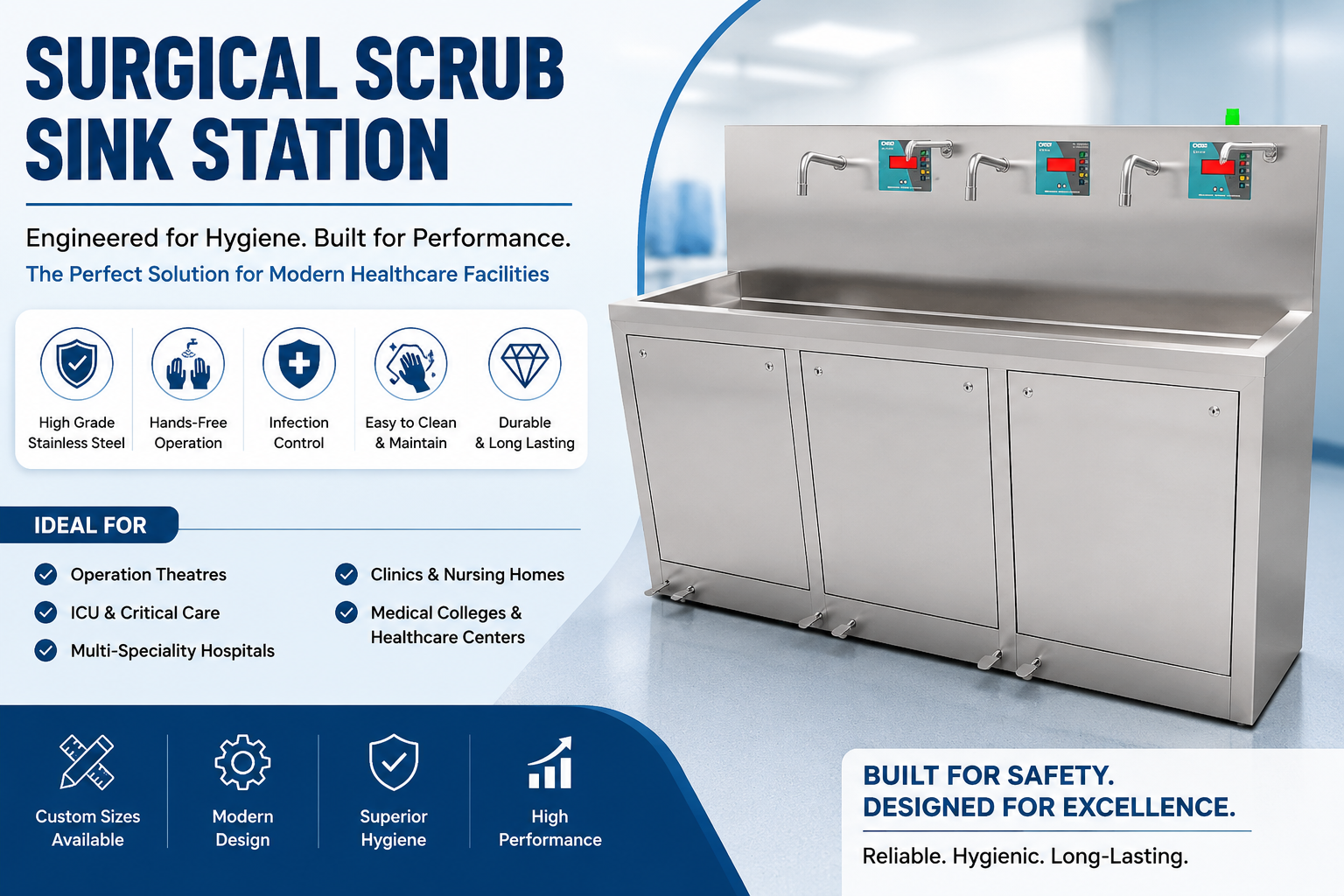
Surgical Scrub Sink Manufacturer: Complete Guide for Hospitals & Operating Rooms
Introduction
In hospitals and healthcare facilities, hygiene is not just important — it is critical. A small mistake in sanitation can increase the risk of infections, especially inside operation theatres. That is why choosing the right surgical scrub sink manufacturer becomes a major decision for hospitals, clinics, and healthcare infrastructure projects.
A high-quality hospital scrub sink helps surgeons and medical staff maintain strict hand hygiene before entering the operating room. Modern healthcare environments now require durable, easy-to-clean, and ergonomically designed scrub stations that support infection control standards.
Whether you are building a new hospital, upgrading an OT setup, or searching for an ot scrub sink manufacturer, understanding the right features and buying process can help you make a better long-term investment.
Why Surgical Scrub Sinks Matter in Hospitals
Before every surgery, doctors and surgical staff must properly scrub their hands and arms to reduce contamination risks. A standard wash basin is not enough for this process. Hospitals require specially designed surgical scrub sink station systems that support sterile practices.
These sinks are commonly installed in:
- Operation theatres
- Pre-operative areas
- Emergency surgery departments
- ICU surgical preparation zones
- Specialty healthcare centers
A professionally manufactured operating room scrub sink improves workflow efficiency and helps maintain strict hygiene protocols.
Common Problems Hospitals Face
1. Rust and Corrosion
Low-grade stainless steel often starts corroding after continuous exposure to water and disinfectants.
2. Difficult Cleaning
Poor sink design creates corners and joints where bacteria can accumulate.
3. Water Splashing
Improper basin depth can lead to water splashing on surgical clothing and surrounding floors.
4. Touch-Based Operation
Traditional taps require physical contact, increasing contamination risks.
5. Poor Drainage
Inadequate drainage systems can cause water stagnation and hygiene concerns.
Choosing an experienced ss scrub sink manufacturer india helps avoid these issues and ensures long-lasting performance.
What Is a Surgical Scrub Sink Station?
A surgical scrub sink station is a specially designed stainless steel sink unit used by surgeons and medical staff for pre-surgical hand washing.
Unlike regular sinks, these stations are designed with:
- Deep bowls
- Sensor taps
- Knee-operated controls
- Seamless welding
- Splash prevention
- Medical-grade stainless steel
The goal is to support sterile hand preparation while minimizing contamination risks.
Types of Surgical Scrub Sinks
Single Station Scrub Sink
Suitable for:
- Small clinics
- Dental surgery rooms
- Diagnostic centers
Features:
- Compact design
- Space-saving installation
- Cost-effective option
Double Station Scrub Sink
Suitable for:
- Medium-sized hospitals
- Multi-doctor OT rooms
Features:
- Allows two users simultaneously
- Better workflow management
Triple or Multi-Station Scrub Sink
Suitable for:
- Large hospitals
- Advanced surgical centers
Features:
- High efficiency
- Supports multiple surgeons
- Ideal for busy operation theatres
Wall-Mounted Scrub Sink
- Easy floor cleaning
- Modern appearance
- Better hygiene maintenance
Key Features to Look For
Medical-Grade Stainless Steel
Most premium sinks use SS 304 stainless steel because it offers:
- Corrosion resistance
- Long life
- Easy cleaning
- Smooth surface finish
Hands-Free Operation
Touchless systems reduce cross-contamination.
Common options include:
- Sensor taps
- Knee-operated valves
- Foot-operated controls
Seamless Construction
A seamless design prevents dirt and bacteria buildup.
Ergonomic Design
Good sink depth and height improve comfort during long surgical procedures.
Efficient Drainage System
Proper drainage prevents water accumulation and supports faster cleaning.
Benefits of Choosing a Professional OT Scrub Sink Manufacturer
| Feature | Professional Manufacturer | Low-Quality Supplier |
|---|---|---|
| Material Quality | Medical-grade SS | Low-grade steel |
| Hygiene Standards | High | Inconsistent |
| Durability | Long-lasting | Short lifespan |
| Customization | Available | Limited |
| Maintenance | Easy | Frequent repairs |
| Compliance | Hospital standards | Often missing |
Step-by-Step Buying Guide
Step 1: Assess Hospital Requirements
- Number of OT rooms
- Daily surgical load
- Space availability
- User capacity
Step 2: Check Material Quality
- SS 304 grade
- Anti-rust finish
- Smooth welded construction
Step 3: Decide the Operation Type
- Sensor-operated
- Knee-operated
- Foot-operated systems
Step 4: Verify Hygiene Features
- Rounded corners
- Easy cleaning
- Splash control
- Seamless welding
Step 5: Ask for Customization
- Multiple stations
- Custom dimensions
- Special plumbing setups
- Integrated soap dispensers
Step 6: Compare Manufacturer Experience
- Hospital project experience
- OT equipment expertise
- Positive client history
- Technical support availability
Common Mistakes to Avoid
Ignoring Stainless Steel Grade
Using poor-quality steel can lead to rust and contamination problems.
Choosing Based Only on Price
Cheap products often result in:
- Frequent repairs
- Hygiene issues
- Short product life
Poor Space Planning
Improper installation affects movement inside surgical preparation areas.
Skipping Maintenance Considerations
Complex designs can make daily cleaning difficult.
Not Checking Water Flow Design
Improper faucet positioning increases splashing and water wastage.
Expert Tips for Better Performance
Use Sensor-Based Systems
Touch-free systems improve infection control significantly.
Prefer Rounded Edges
Sharp edges trap dirt and are harder to clean.
Install Proper Lighting Near the Sink
Good visibility improves cleaning and maintenance efficiency.
Schedule Regular Maintenance
Routine inspection helps prevent:
- Water leakage
- Drain blockage
- Sensor malfunction
Train Staff Properly
Even the best scrub the sink process becomes ineffective without proper hand hygiene training.
How Surgical Scrub Sinks Support Infection Control
Hospital-acquired infections remain a major challenge worldwide. Proper scrub stations help reduce contamination risks before surgery.
Benefits include:
- Better surgical hygiene
- Reduced bacterial transfer
- Improved OT safety
- Compliance with healthcare standards
Modern operating room scrub sink systems are designed specifically to support infection prevention protocols.
FAQ Section
1. What is a surgical scrub sink used for?
A surgical scrub sink is used by surgeons and medical staff to wash and disinfect their hands before entering the operation theatre.
2. Which material is best for hospital scrub sinks?
SS 304 stainless steel is considered the best choice because it is corrosion-resistant, durable, and easy to clean.
3. Why are touchless scrub sinks preferred in hospitals?
Touchless systems reduce physical contact and help prevent bacterial contamination during surgical preparation.
4. How many scrub stations should a hospital install?
The number depends on the size of the OT department, surgical workload, and staff requirements.
5. What is the difference between a normal sink and an operating room scrub sink?
An operating room scrub sink is specially designed for sterile surgical hand washing and includes hygiene-focused features like deep basins and touch-free operation.
6. Can scrub sinks be customized?
Yes, many professional manufacturers provide customized sizes, multi-station setups, and additional accessories based on hospital needs.
7. How do I choose the right OT scrub sink manufacturer?
Look for manufacturers with healthcare industry experience, high-quality stainless steel fabrication, customization options, and strong hygiene standards.
Conclusion
Selecting the right surgical scrub sink manufacturer is essential for maintaining hygiene, improving workflow, and supporting infection control in healthcare environments.
A well-designed hospital scrub sink not only enhances safety for surgeons and patients but also ensures long-term durability and easier maintenance.
Whether you need a compact scrub station for a clinic or a multi-user surgical scrub sink station for a large hospital, focusing on material quality, ergonomic design, hygiene standards, and reliable manufacturing can help you make the right decision.
Investing in a high-quality operating room scrub sink ultimately supports safer surgeries and better healthcare outcomes.